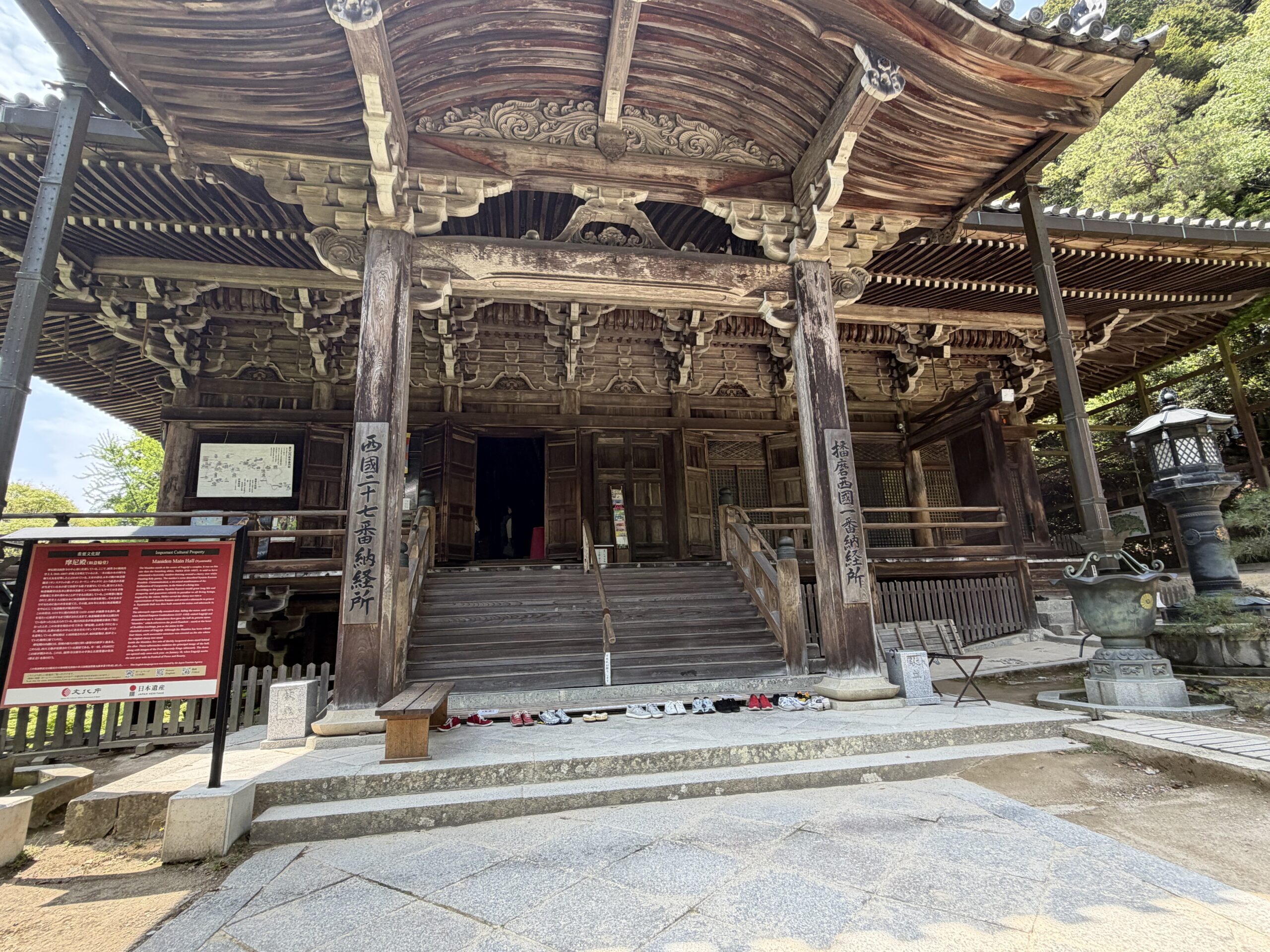
For more than 1,300 years, pilgrims have walked a winding route through the Kansai region and beyond, stopping at thirty-three temples dedicated to Kannon, the Bodhisattva of Compassion. Along the way, one quiet act binds them to the deities they visit: the copying and offering of sacred scripture. This practice, known in Japanese as shakyo (写経, sutra copying) and nokyo (納経, offering of the copied sutra), lies at the very heart of the Saikoku Sanjusankasho pilgrimage. Many first-time visitors assume that collecting temple seals is much like gathering stamps at tourist sites, yet the origin of the tradition is something far more devotional.
The Saikoku 33 pilgrimage, or Saikoku Sanjusankasho (西国三十三箇所), is often described as Japan’s oldest established pilgrimage route. Understanding why pilgrims copy scripture, how they do it, and what it means to offer that scripture at a temple opens a window into a devotional culture that has quietly endured for over a millennium.
What Is the Saikoku 33 Pilgrimage?
The Saikoku 33 pilgrimage links thirty-three sacred sites of Kannon spread across the two urban prefectures and four rural prefectures of the Kinki region, together with Gifu Prefecture. It is widely regarded as the oldest pilgrimage circuit in Japan. Every temple on the route enshrines Kannon Bosatsu (観音菩薩), and the number thirty-three is anything but arbitrary. It derives from a teaching found in Buddhist scripture: that Kannon transforms into thirty-three different forms in order to save people wherever and however they need help.
The pilgrimage remains a living tradition rather than a museum piece. In the sixth year of the Reiwa era (2024), a commemorative memorial service for the “Day of Japanese Pilgrimage Culture” was held at Imakumano Kannon-ji, the fifteenth temple of the Saikoku circuit. Efforts to share the pilgrimage with a wider public are clearly ongoing.
The pilgrimage has also reached across national and religious borders. In the fifth year of Reiwa (2023), the Saikoku circuit concluded a friendship partnership on pilgrimage culture with the Camino de Santiago (Santiago de Compostela) in Spain, a UNESCO World Heritage pilgrimage route. Two of the world’s great walking traditions, born of entirely different faiths, now recognize a shared spirit.
Why “Nokyo” Was the Original Form of Pilgrimage
Today the familiar image is that of receiving goshuin (御朱印) — a handwritten inscription in black ink accompanied by a red temple seal — in a dedicated stamp book. Yet the word nokyo itself tells a different story. It literally means “offering the sutra.” In its original form, a pilgrim would copy out a passage of scripture by hand, offer it at the temple, and receive the seal as proof of that offering. In other words, the seal was never the point. It was a receipt for an act of devotion. Sutra copying and sutra offering are, in truth, inseparable halves of a single practice.
What Does Copying a Sutra Mean During Pilgrimage?
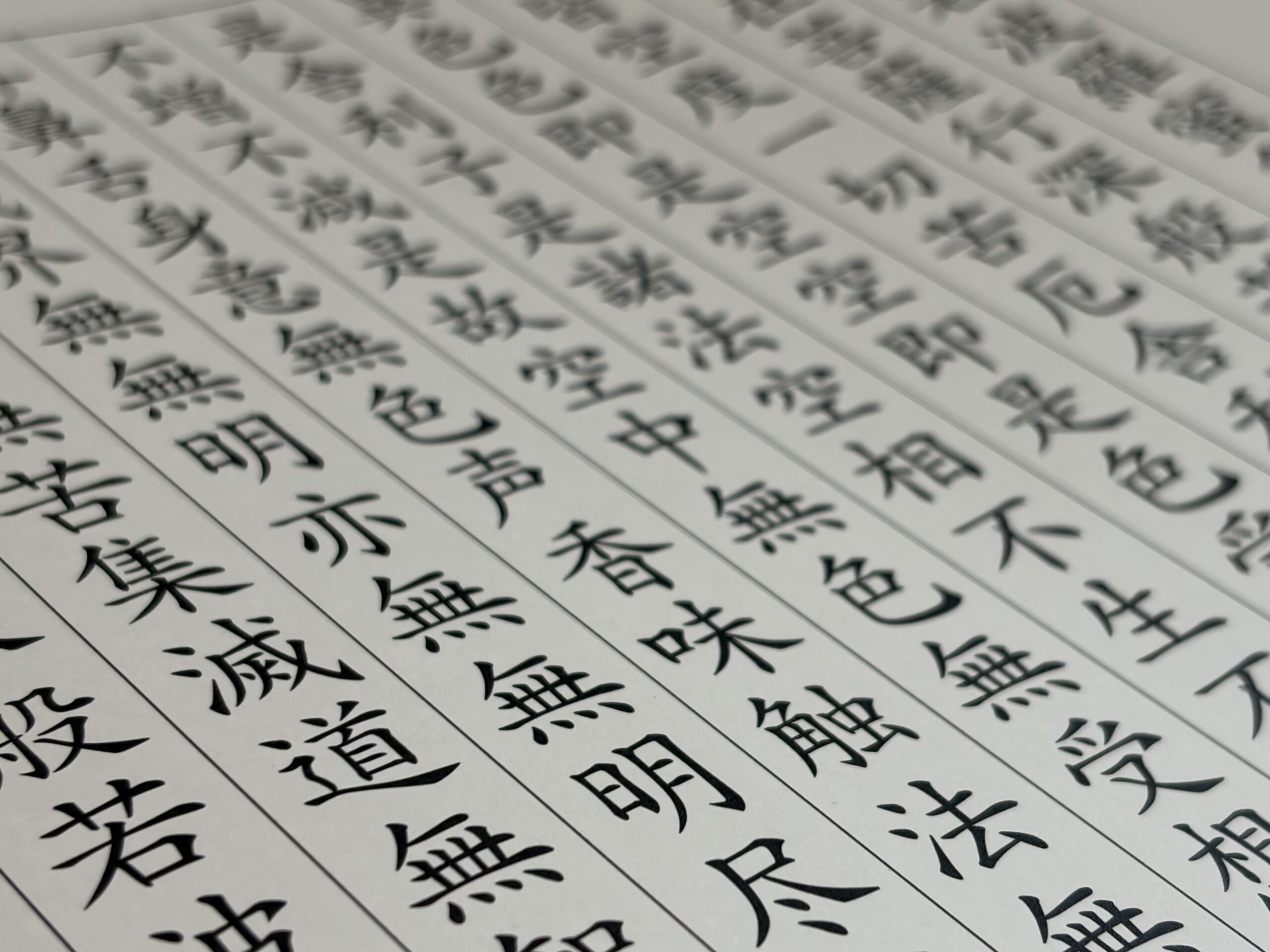
Shakyo refers to the act of transcribing a sutra one character at a time. It is not simply reproduction. The very act of moving the brush becomes a form of prayer and a quiet discipline for settling the mind. Practitioners often describe the experience less as writing and more as sitting with themselves.
- Calming the mind: Concentrating on each individual character draws attention away from distracting thoughts, and breathing naturally deepens.
- Memorial and prayer: The copied scripture can be dedicated to the memory of ancestors or infused with a personal wish.
- Proof of pilgrimage: The offered sutra becomes a genuine trace of one’s visit to that particular temple — a mark left in devotion rather than ink.
Anyone who steps into a temple’s copying hall will notice the contrast immediately. In a hushed space touched by the scent of ink, pilgrims move their brushes in silence. It is a striking counterpoint to the bustle of a popular sightseeing destination — a pocket of introspection carved out of an ordinary day.
The Heart Sutra Is the Standard Choice
By far the most commonly copied text on the Saikoku pilgrimage is the Hannya Shingyo (般若心経), known in English as the Heart Sutra. At roughly 262 characters, it is remarkably short, yet it is said to distill the very core of Buddhist teaching. Its brevity makes it a beloved entry point for newcomers to sutra copying. For those who find the full text daunting, alternatives are entirely acceptable — one may write the invocation Namu Kanzeon Bosatsu (南無観世音菩薩, “I take refuge in Kannon”) or even practice shabutsu (写仏), the tracing of a Buddhist figure’s image rather than words.
How to Copy a Sutra: Etiquette and What to Prepare
You can begin sutra copying without any special equipment, but for those who wish to approach the practice with greater care, here is an outline of the basic flow and the items involved.
What to Bring
- Sutra-copying paper (sheets pre-printed with a faint model text for tracing are especially convenient)
- A brush, or a brush pen
- An inkstone and ink stick (not needed if using a brush pen)
- A paperweight
- A model sutra to follow
Many temples along the route provide copying paper and tools on site, and some allow you to take part completely empty-handed. It is wise to contact individual temples in advance to confirm what is available.
The Basic Sequence of Sutra Copying
- Purify yourself by washing your hands and rinsing your mouth.
- Straighten your posture and let your breathing settle quietly.
- Press your palms together (gassho, 合掌), bow once, and then take up the brush.
- Copy each character carefully, one at a time.
- After the main text, write your wish (kigan, 祈願), the date, and your name.
- When finished, join your palms once more to bring the session to a close.
A point that often surprises newcomers: if you make a mistake partway through, the customary approach is not to erase or rewrite it, but simply to carry on. Perfection is not the goal. What is valued is the sincerity with which you face the page — the attitude of the heart, not the flawlessness of the hand.
How to Offer Your Copied Sutra: The Nokyo Process
Once completed, your copied sutra is offered at the temple you are visiting, either at its nokyosho (納経所, the office for receiving offerings) or at a designated place within the main hall. It is common for pilgrims to prepare their copies at home in advance and bring them along on the day of the visit.
The Steps of Offering
- First, pay your respects at the main hall to the enshrined Kannon, offering a recitation of the sutra or joining your palms in prayer.
- Place your copied sutra in the nokyosho or the designated offering box.
- Receive the goshuin — the black-ink inscription and red seal — in your nokyocho (納経帳, sutra-offering book), on your oizuru (笈摺, white pilgrim’s vest) or white garment, or on a hanging scroll.
The proper order is to complete your worship first and only then receive the seal. The goshuin is proof of having worshipped, and when you consider it alongside the spirit of offering a copied sutra, its meaning is felt far more deeply. The seal is the closing note of a devotional act, not a collectible sought for its own sake.
Offering Fees Were Partially Revised in 2024
On April 1 in the sixth year of Reiwa (2024), the Saikoku 33 circuit partially revised its offering fees (nokyoryo, 納経料). According to the official information, the changes are as follows:
- Sutra-offering book (nokyocho): 300 yen previously → 500 yen after revision
- Pilgrim’s vest / white garment (oizuru / byakue): 200 yen previously → 300 yen after revision
Do note that, due to various circumstances, some temples have not adopted the revision, so it is best to confirm the actual amount at each temple. In addition, the bestowal of eika gofu (詠歌護符, pilgrimage hymn amulets) ended on March 31 in the seventh year of Reiwa (2025).
Latest Travel Information to Know Before You Visit
When planning a pilgrimage, it pays to check the most recent transportation and access details, as conditions can change from year to year.
- Shosha-zan Ropeway suspension: At Engyo-ji, the twenty-seventh temple of the Saikoku circuit, the Shosha-zan Ropeway will be out of service from February 5 (Friday) to October 31 (Sunday) in the ninth year of Reiwa (2027) for maintenance and renovation work to ensure safe operation. During this period, access to Engyo-ji will be on foot only, so allow plenty of extra time in your plans.
- Change of transport at Sefuku-ji: At Sefuku-ji, the fourth temple of the circuit, the Orange Bus ceased operation as of January 31 in the sixth year of Reiwa (2024), and a new service called “Choisoko Izumi” has begun operating in its place.
- Digital stamp rally: A digital stamp rally titled “The Saikoku 33 Pilgrimage That Begins at the Station” is also being held, encouraging pilgrims to make their journey by rail.
Procedures can also vary from temple to temple. At Kami-Daigo Juntei-do within Daigo-ji, the eleventh temple, the goshuin for the Saikoku Kannon Mandala is issued at the Kannon-do (the seal and offering office), while reception duties and confirmation of pilgrimage completion are handled separately at the temple office. To avoid confusion, always follow the guidance posted at each individual temple.
Frequently Asked Questions
- Q: Do I have to copy a sutra in order to receive a goshuin?
- A: These days it is generally accepted to receive a goshuin after worshipping, and sutra copying is not strictly required at every temple. That said, the word “nokyo” itself points back to the tradition of offering a copied sutra, so if you wish to experience the practice in its original spirit, copying and offering scripture is the deeper path.
- Q: Which sutra should a beginner copy?
- A: The Heart Sutra (Hannya Shingyo) is the standard choice on the Saikoku pilgrimage. At only around 262 characters, it is short and approachable, which is why it is so often recommended for newcomers. If the full text feels too demanding, you may instead write the invocation “Namu Kanzeon Bosatsu” or try tracing a Buddhist image (shabutsu).
- Q: What should I do if I make a writing mistake?
- A: The customary approach is not to erase or rewrite the mistake, but simply to continue. The practice values sincerity and a settled heart over technical perfection, so a small error need not trouble you.
- Q: Can I prepare my sutra at home before the pilgrimage?
- A: Yes. Many pilgrims copy the sutra at home in advance and carry it with them to offer on the day of their visit. Temples that provide copying facilities on site are also available if you prefer to write in the sacred atmosphere of the temple itself.
- Q: In what order should I worship and receive the seal?
- A: First pay your respects at the main hall to the enshrined Kannon, then offer your copied sutra, and only afterward receive the goshuin. The seal is proof of having worshipped, so it comes at the end of the sequence rather than the beginning.
Conclusion
Stripped of its modern reputation as a stamp-collecting hobby, the Saikoku 33 pilgrimage reveals itself as an act of devotion carried out one brushstroke at a time. To copy the Heart Sutra, to sit in the ink-scented stillness of a temple hall, and to offer that scripture to Kannon is to take part in a rite that pilgrims have repeated for well over a thousand years. The goshuin you receive afterward is not the destination but the quiet confirmation of a promise kept.
Whether you plan to copy every character with a brush at home or simply wish to understand what unfolds inside those hushed copying halls, approaching the pilgrimage through the lens of shakyo and nokyo transforms it entirely. It becomes less a route to be completed and more a relationship to be built — between the traveler and the compassionate Bodhisattva said to take thirty-three forms for the sake of those who seek her. Before you set out, confirm the latest fees and access details at each temple, and give yourself the time this journey deserves.
References
- Saikoku Sanjusankasho Official Site — Saikoku 33 Pilgrimage (https://www.saikoku33.gr.jp/)
- Japan Heritage (Agency for Cultural Affairs) — Saikoku 33 Digital Stamp Rally News (https://japan-heritage.bunka.go.jp/ja/news/3845/)
- JR Odekake Net — The Saikoku 33 Pilgrimage That Begins at the Station (https://www.jr-odekake.net/navi/saigoku_wester)
- Japan Heritage Saikoku Association Facebook — Latest Updates (https://www.facebook.com/jhsa)