In the early Heian period, a Japanese monk who had just returned from Tang China set out to explain a distinction that would reshape the entire landscape of Japanese Buddhism. His name was Kukai (774–835), posthumously honored as Kobo Daishi, the founder of the sacred mountain monastery of Koyasan. The two categories he brought into sharp focus were mikkyo (密教, esoteric Buddhism) and kengyo (顕教, exoteric Buddhism) — terms many people have heard but few can actually explain. Understanding the difference between esoteric and exoteric Buddhism unlocks not only Kukai’s genius but also the living traditions still practiced on Koyasan today, and even the ancient pilgrimage routes of western Japan.
What follows is a walk through Kukai’s landmark treatise, the practices that set esoteric Buddhism apart, and the surprising ways all of this connects to the Saigoku pilgrimage. Along the way, a few of these teachings turn out to be things you can still experience in person.
What Is the Difference Between Esoteric and Exoteric Buddhism?
Buddhism contains a great many schools and lineages. But when you sort them by how the teaching is transmitted, two broad positions emerge: kengyo (exoteric) and mikkyo (esoteric). Kukai set these two side by side deliberately, and in doing so he demonstrated the distinctiveness of the Shingon esoteric Buddhism he had carried home from China.
Exoteric Buddhism: The Teaching Spoken in Words
Kengyo refers to the teachings that Shakyamuni Buddha — the historical Buddha — expressed in words, adapted to the understanding of ordinary people. The character 顕 (ken) means “clear” or “revealed,” and true to its name, this is the body of teaching laid out through scriptures so that it can be grasped logically and step by step. Kukai classified many established schools, including the Tendai and Hosso sects, within this exoteric framework.
The defining features of exoteric Buddhism can be summarized like this:
- Teachings that Shakyamuni Buddha delivered in words, tailored to each listener
- Understanding deepened by reading scriptures and studying doctrine
- Enlightenment reached only after an immense span of time — described as sandai asogikou (三大阿僧祇劫), an almost unimaginably vast number of eons
Esoteric Buddhism: The Hidden Teaching
Esoteric Buddhism, by contrast, refers to the profound truth itself — a reality said to be taught by Dainichi Nyorai (大日如来), the Cosmic Buddha, and one that words cannot easily capture. The character 密 (mitsu) is the same one used in “secret,” and the hallmark of this tradition is that it is transmitted directly from master to disciple through rituals such as kanjo (灌頂, consecration or initiation).
Central to esoteric practice is sanmitsu (三密), the “three mysteries”:
- Shinmitsu (身密) — forming sacred hand gestures, or mudra
- Kumitsu (口密) — chanting shingon (真言), the sacred mantras
- Imitsu (意密) — visualizing the Buddha in the mind
By bringing body, speech, and mind into unity with the Buddha, the practitioner aims for sokushin jobutsu (即身成仏) — becoming a Buddha in this very body, in this very life. Against the exoteric view that enlightenment unfolds gradually across countless ages, the claim that one could attain Buddhahood in the present world was a strikingly bold assertion in the Buddhist world of Kukai’s day.
What Kind of Book Is Kukai’s Benkenmitsu Nikyoron?
Kukai laid out the theoretical distinction between exoteric and esoteric teaching in a work titled Benkenmitsu Nikyoron (弁顕密二教論). The title means, roughly, “a treatise distinguishing the two teachings, exoteric and esoteric” — in other words, a work devoted to clarifying exactly how these two paths differ.
The Argument at the Heart of the Treatise
In this text, Kukai drew a distinction based on who is speaking. Exoteric teaching, he argued, was expounded by Shakyamuni Buddha in the form of the ojin (応身), the “response body” of the Buddha that appears in the world to meet the needs of sentient beings. Esoteric teaching, meanwhile, was the truth voiced by Dainichi Nyorai as the hosshin (法身), the “Dharma body” — reality itself. Because esoteric Buddhism is the truth spoken by the Buddha in his most fundamental form, Kukai positioned it as the more original and superior teaching.
Here is what makes his approach so interesting: Kukai did not dismiss exoteric Buddhism. He held that the two simply differ in depth and in mode of transmission. While he placed esoteric teaching at the highest rank, he also organized both into a coherent system. That very act of systematic classification stands as one of the great intellectual achievements in the history of Japanese Buddhism.
Shingon Buddhism and Koyasan
The sacred center of the Shingon esoteric Buddhism that Kukai founded is Koyasan, in Wakayama Prefecture. With Kongobuji, the head temple of the Koyasan Shingon sect, at its heart, the mountain continues to transmit esoteric teaching and practice to this day. Visitors to Koyasan can even take part in ajikan (阿字観), an esoteric meditation technique — and a special lecture event scheduled for September of Reiwa 8 includes a dedicated ajikan practice session. This emphasis on experiencing the teaching through the body, rather than merely grasping it intellectually, captures the spirit of esoteric Buddhism perfectly.
What Is the Kanjo Initiation Ritual in Esoteric Buddhism?
No account of esoteric Buddhism is complete without kanjo (灌頂), the consecration ritual. Its origins lie in the ancient Indian rite of pouring water over a king’s head at his enthronement. In Buddhism, that gesture was inherited and transformed into an important ceremony for conferring the rank of the Buddha.
Kechien Kanjo: A Ritual Open to Ordinary Visitors
There are several types of kanjo, but among them the kechien kanjo (結縁灌頂) — a rite for forming a karmic bond with the Buddha — is notable for being open to lay visitors, not only ordained monks. Blindfolded, the participant tosses a flower onto a mandala (曼荼羅), and the Buddha upon whom the flower falls becomes that person’s guardian deity. It is a mysterious rite in the truest esoteric style.
Koyasan holds kechien kanjo ceremonies according to the seasons. For the year Reiwa 8, the Autumn Kongokai (Diamond Realm) Kechien Kanjo is scheduled for October 1 through 3, to be conducted in the Kondo hall of the Danjo Garan complex on Koyasan. The entry fee is 5,000 yen per person, with multiple entry groups arranged each day. Utterly different from exoteric Buddhism, which teaches through words, this is a precious opportunity to encounter the teaching through direct experience.
How Are the Saigoku Pilgrimage and Esoteric Buddhism Connected?
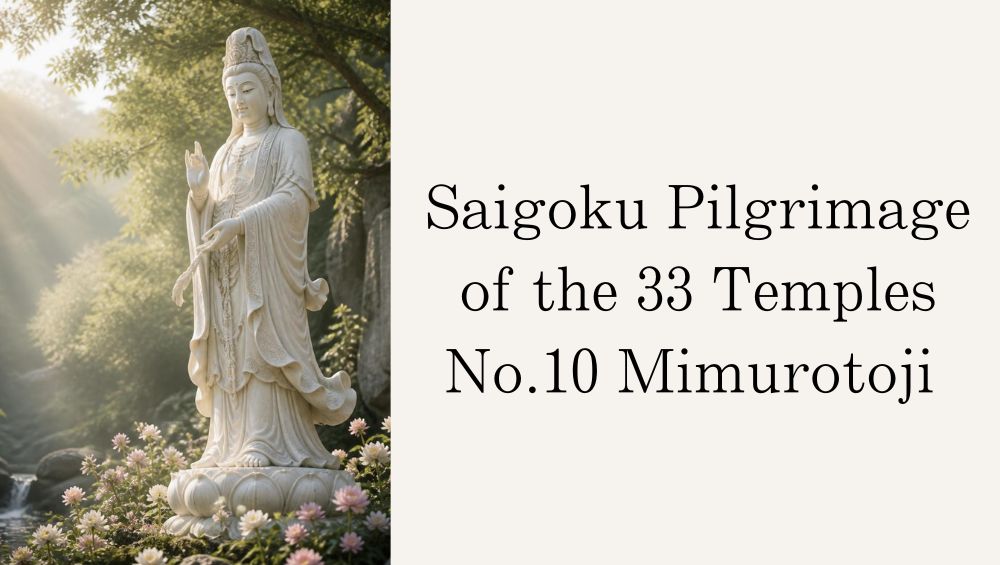
The “Saigoku pilgrimage” refers to the Saigoku Sanjusansho (西国三十三所) — a circuit of thirty-three sacred sites dedicated to Kannon, the Bodhisattva of Compassion, centered on the Kinki region of western Japan. Following temples that enshrine Kannon as their principal image, it is known as one of the oldest pilgrimage routes in all of Japan.
The Pilgrimage and the Temples of Shingon Esoteric Buddhism
Many of the temples along the Saigoku Sanjusansho belong to esoteric lineages, Shingon foremost among them. Devotion to Kannon spread across both exoteric and esoteric traditions alike, but worshipping Kannon at a Shingon temple and chanting mantras as one travels the route is precisely a place where exoteric faith and esoteric practice meet.
At each temple, or fudasho (札所), pilgrims chant the shingon mantra, receive a temple seal, and walk from one site to the next. This accumulation of steps, this act of turning inward to re-examine one’s own heart along the way, resonates in a curious way with the esoteric idea of the three mysteries — the striving to bring body, speech, and mind closer to the Buddha. It is a faith you cannot fully taste by memorizing names or theories alone. The “faith of experience” — of walking and praying — breathes through both the pilgrimage and esoteric Buddhism.
Marking 1,250 Years Since the Birth of Kobo Daishi
In recent years, a major milestone has been commemorated: the 1,250th anniversary of the birth of Kobo Daishi Kukai. To mark the occasion, the Tokyo National Museum has held the commemorative special exhibition “Kukai and the Treasures of Shingon,” for which the secret Buddhist image known as the Kobo Daishi Zazo (弘法大師坐像) — a seated statue of Kobo Daishi — has been sent out from Kongobuji for public display.
In connection with this loan of the hidden image, during the exhibition period a replica known as the Manichi Daishi-zo (萬日大師像, replica) has been enshrined and opened for viewing in the Jibutsu-ma of Kongobuji’s main hall. Through images that are ordinarily difficult to see, this is a rare chance to feel closer once again to Kukai, the monk who brought esoteric Buddhism to Japan. More than a thousand years on, the esoteric teaching he introduced still endures.
Frequently Asked Questions
- Q: What is the simplest way to describe the difference between esoteric and exoteric Buddhism?
- A: Exoteric Buddhism (kengyo) is the teaching that Shakyamuni Buddha expressed openly in words, understood through studying scriptures over a very long time. Esoteric Buddhism (mikkyo) is the profound truth attributed to Dainichi Nyorai, transmitted directly from master to disciple through rituals and practiced through body, speech, and mind. Esoteric Buddhism also teaches that one can become a Buddha in this very life.
- Q: Can non-monks take part in esoteric Buddhist rituals?
- A: Yes. The kechien kanjo (a rite for forming a karmic bond with the Buddha) is open to lay visitors. Blindfolded, participants toss a flower onto a mandala, and the Buddha it lands on becomes their guardian deity. Koyasan holds these ceremonies seasonally.
- Q: What are the “three mysteries” (sanmitsu)?
- A: They are the three modes of esoteric practice: shinmitsu (forming sacred hand gestures called mudra), kumitsu (chanting mantras known as shingon), and imitsu (visualizing the Buddha in the mind). Uniting body, speech, and mind with the Buddha aims at sokushin jobutsu — attaining Buddhahood in this very body.
- Q: How does the Saigoku pilgrimage relate to esoteric Buddhism?
- A: The Saigoku Sanjusansho is a circuit of thirty-three Kannon temples across western Japan, many of which belong to the Shingon and other esoteric lineages. Worshipping Kannon and chanting mantras while walking the route brings together exoteric faith and esoteric practice.
- Q: Where can I experience esoteric Buddhism today?
- A: Koyasan in Wakayama Prefecture is the sacred center of Shingon esoteric Buddhism. Visitors can experience ajikan meditation, and seasonal kechien kanjo ceremonies are open to the public. For Reiwa 8, the Autumn Kongokai Kechien Kanjo is scheduled for October 1–3 in the Kondo of the Danjo Garan.
Conclusion
The distinction between exoteric and esoteric Buddhism is far more than a piece of doctrinal trivia. It represents a genuine intellectual turning point, one that Kukai articulated with remarkable clarity in his Benkenmitsu Nikyoron. Where exoteric teaching invites us to study, read, and understand across vast stretches of time, esoteric teaching insists that the truth can be embodied here and now — through gesture, chant, and vision, and through rituals passed from master to disciple.
What makes this tradition so compelling is that it has never been confined to books. On Koyasan, in the flower-tossing rite of the kechien kanjo, in the meditation of ajikan, and along the walking paths of the Saigoku pilgrimage, the esoteric spirit remains something to be lived rather than merely learned. As the 1,250th anniversary of Kobo Daishi’s birth reminds us, the teaching he carried back from Tang China continues to speak — quietly, but unmistakably — more than a thousand years later.
References
Kukai & Saicho — Recommended Reading
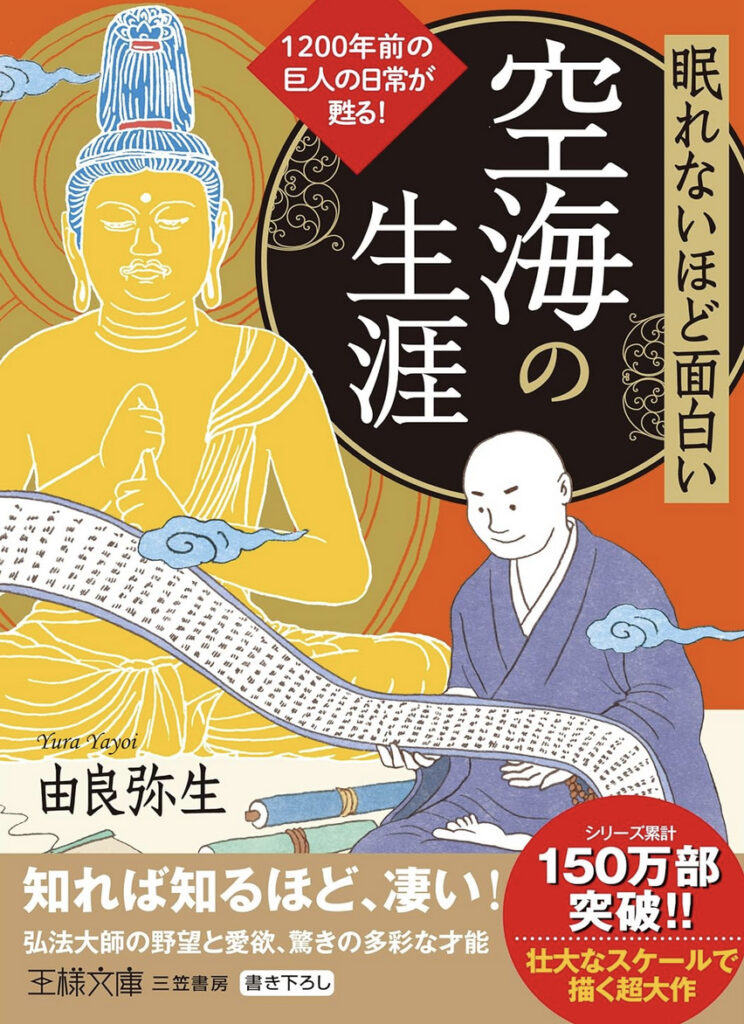
The Life of Kukai
The everyday world of a giant who lived 1,200 years ago, brought back to life!
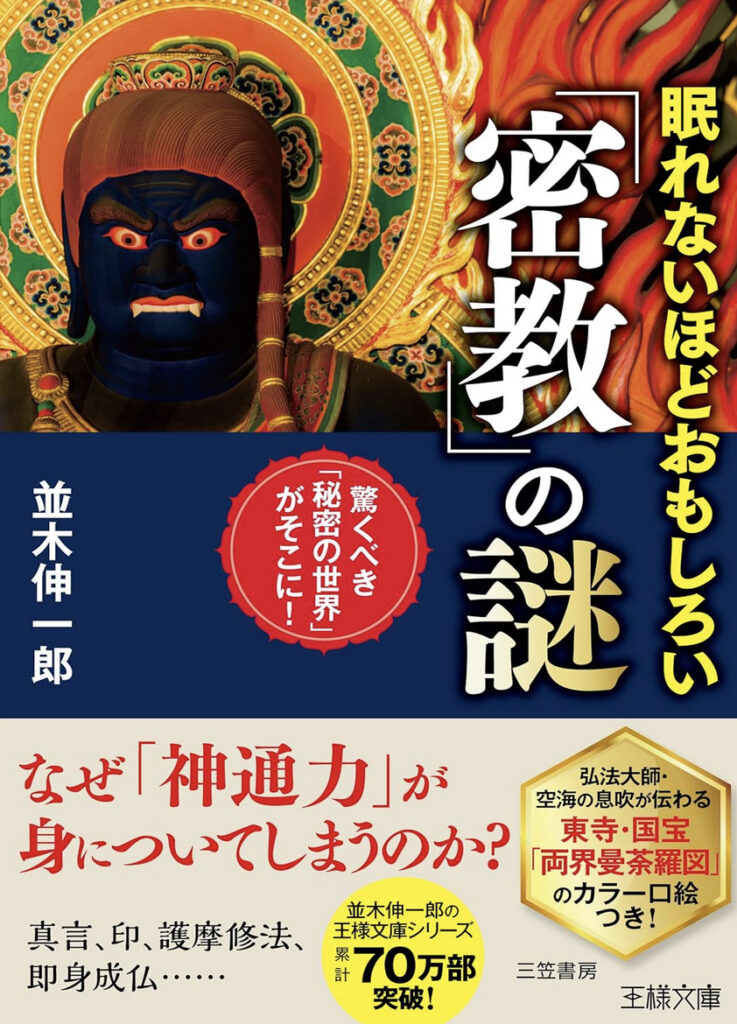
The Mysteries of Esoteric Buddhism
A world of astonishing secrets awaits!!
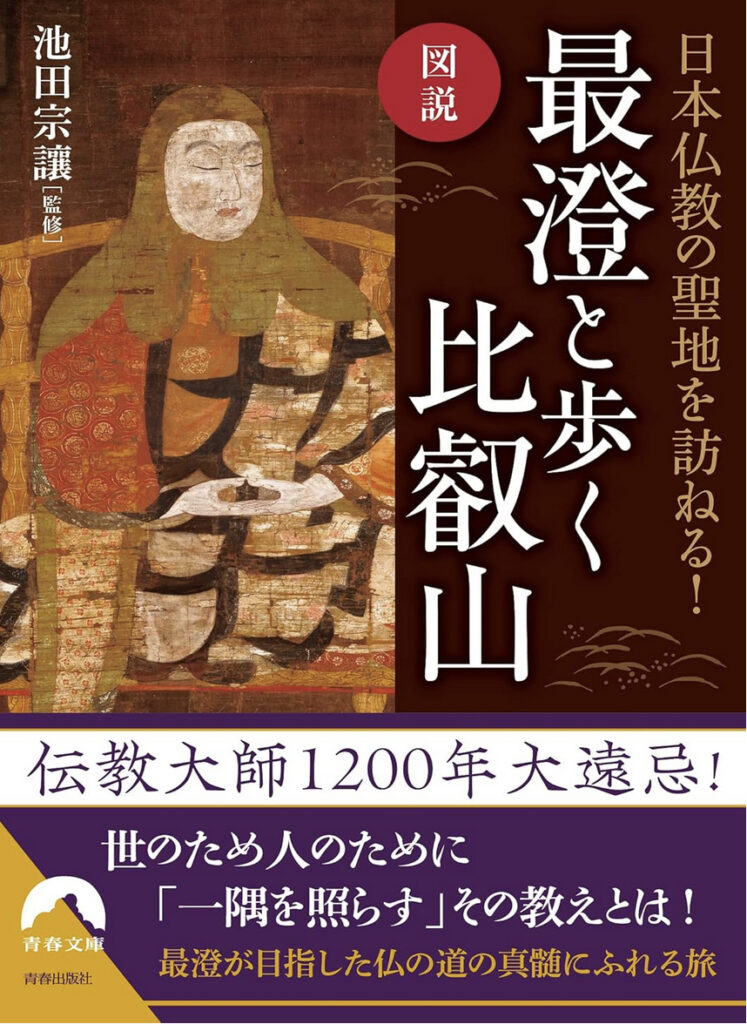
Walking Mount Hiei with Saicho
Visiting the Sacred Sites of Japanese Buddhism!