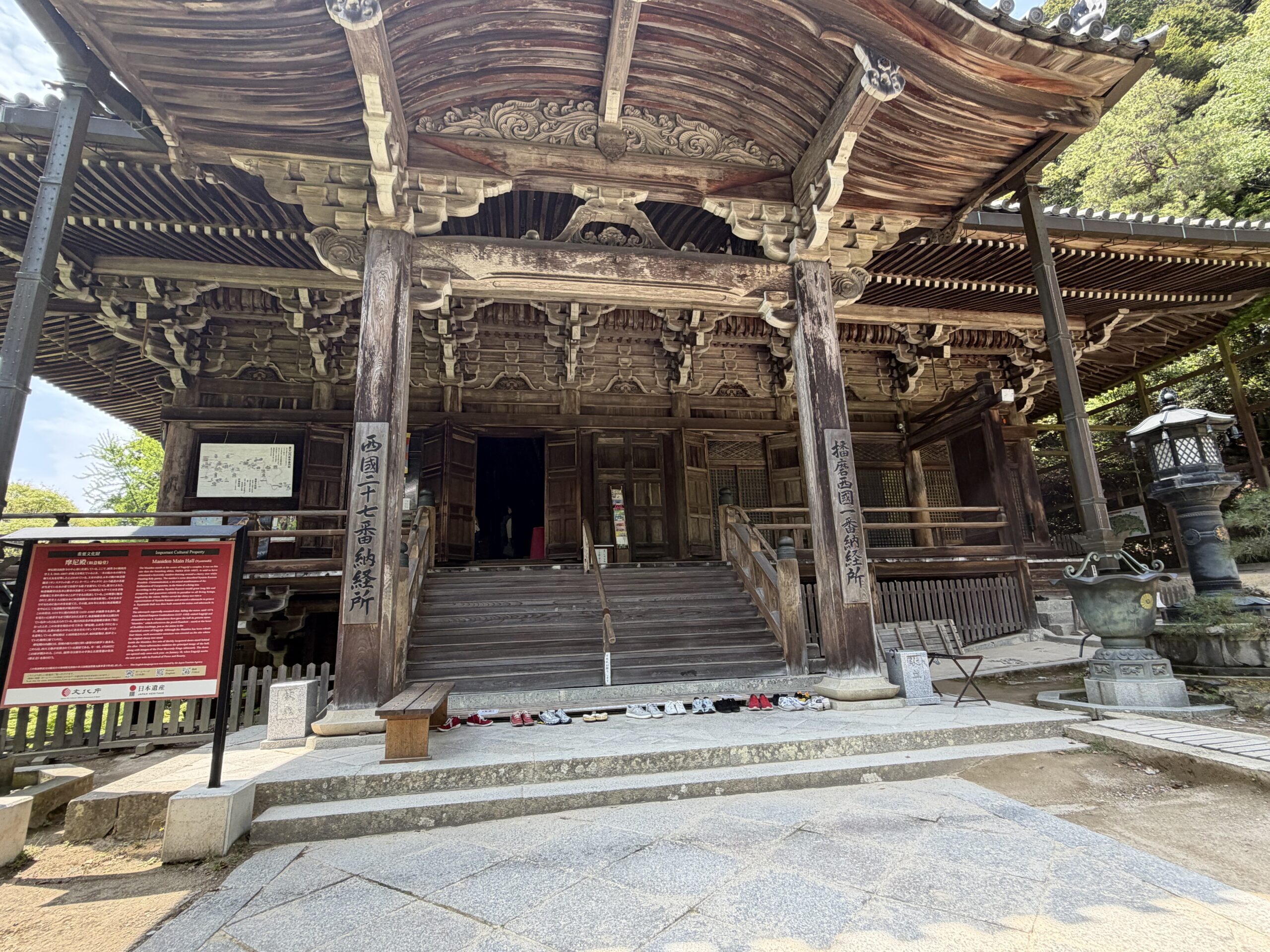
I began the Saigoku Pilgrimage of the Thirty-Three Temples in 2026. For the sacred sites I have already visited, I have written articles accompanied by my own photographs.
From here, I will have AI write support articles about the sites I have yet to visit — as a way of preparing for the journey ahead.
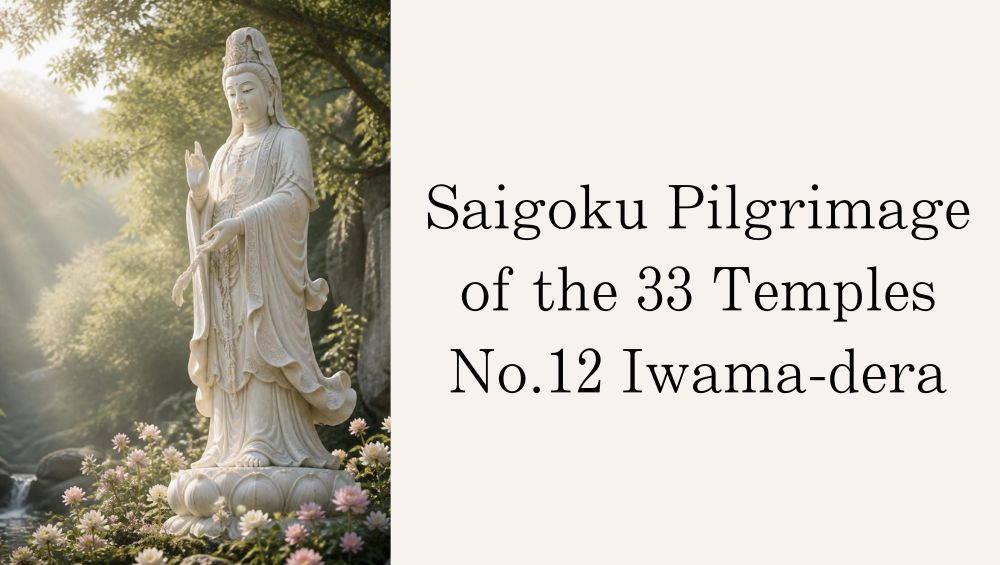
High on the slopes of Mount Iwama, where the borders of Shiga and Kyoto Prefectures meet, sits a quiet temple that has welcomed pilgrims for over a thousand years. Iwama-dera (officially known as Shoho-ji) is the twelfth temple on the famous Saigoku Kannon Pilgrimage, a sacred route of 33 temples dedicated to Kannon, the Buddhist goddess of mercy. Surrounded by lush nature and offering sweeping views of Lake Biwa and the city of Kyoto, this temple is celebrated for its blessings of good health, protection from lightning, and a surprising connection to one of Japan’s most beloved poems. Let’s explore what makes Iwama-dera such a treasured destination.
What Is Iwama-dera (Shoho-ji)?
Iwama-dera is a Buddhist temple of the Shingon Daigo school, located in Otsu City, Shiga Prefecture. Perched near the summit of Mount Iwama at an elevation of about 443 meters, it boasts a breathtaking, scenic location overlooking Lake Biwa—Japan’s largest freshwater lake—and the streets of Kyoto below.
According to tradition, the temple was founded in the year 722, during the Nara period, by the great monk Taicho Daishi, who is also credited with opening the sacred Mount Hakusan in Kaga. The temple’s principal image of worship is a statue of Senju Kannon (the Thousand-Armed Goddess of Mercy), said to have been carved by Taicho Daishi himself from the wood of a katsura tree. This sacred statue is a hibutsu—a “hidden Buddha” kept carefully enshrined within a special cabinet and rarely shown to the public.
The Legend of the “Sweating Kannon”
The principal image of Iwama-dera is affectionately known as the “Sweating Kannon” (Asekaki Kannon). This nickname comes from a charming legend: it is said that every night, the goddess slips out of her enshrined cabinet to rush about saving people in need, returning home drenched in sweat from her tireless efforts. As a compassionate deity who stays close to ordinary people and relieves their suffering, this Kannon has inspired deep devotion across the centuries.
The Blessings of Iwama-dera
Iwama-dera is known for several distinct blessings, or goriyaku—the spiritual benefits believers hope to receive. The most famous include:
- Boke-fuji (warding off senility): Visitors pray for a long, healthy life with a sound mind and body. In Japan’s rapidly aging society, this blessing has made the temple especially popular among today’s pilgrims.
- Protection from lightning: Drawing from a legend in which Taicho Daishi sealed away a thunder god, the temple is believed to offer protection against lightning strikes.
- Warding off misfortune and inviting good fortune: Through the power of Kannon, who removes human suffering, the temple is said to drive away calamity and open the path to better luck.
Iwama-dera is also the fourth temple on the “Boke-fuji Kinki Ten Kannon Pilgrimage,” a dedicated route for those seeking healthy aging. Many visitors combine this pilgrimage with their Saigoku journey.
Highlights Within the Temple Grounds
The Old Pond of Matsuo Basho
One of the most fascinating features of Iwama-dera is its connection to literature. Within the grounds lies an old pond said to be the inspiration for one of Japan’s most famous haiku, composed by the revered poet Matsuo Basho:
“Furuike ya / kawazu tobikomu / mizu no oto”
(An old pond — a frog leaps in — the sound of water)
This deceptively simple poem captures a moment of perfect stillness broken by a single sound, and it is considered a masterpiece of the haiku form. Standing beside this quiet pond, literature lovers can imagine the silence and serene beauty that Basho once felt here.
Ancient Trees and Sacred Giants
The temple grounds are home to a magnificent ginkgo tree said to be over 500 years old, along with a towering katsura tree. Their grand presence is awe-inspiring, and in autumn the leaves turn brilliant shades of gold and crimson. The chance to enjoy the changing beauty of the four seasons is one of Iwama-dera’s great charms.
The Main Hall and Fudo Hall
The Main Hall (Hondo), which enshrines the Thousand-Armed Kannon, is the spiritual heart of the temple. Nearby stands the Fudo Hall, dedicated to Fudo Myo-o, a fierce Buddhist guardian deity often depicted surrounded by flames. As you press your palms together in prayer amid the quiet of the mountain, you may feel your mind grow naturally calm and at peace.
Visitor Information and Access
Because Iwama-dera is nestled deep in the mountains, a little preparation goes a long way before your visit.
- Address: 82 Ishiyama Uchihata-cho, Otsu City, Shiga Prefecture
- Buddhist school: Shingon Daigo
- Principal image: Senju Kannon (Thousand-Armed Goddess of Mercy)
- Access: From Ishiyama Station (JR or Keihan lines), take a bus or taxi. On the 17th of each month, a direct bus is sometimes available from Ishiyama Station.
Since the route involves mountain roads, many visitors choose to drive—though caution is strongly advised. Comfortable walking shoes and weather-appropriate clothing are recommended for a pleasant visit.
Conclusion
Iwama-dera, the twelfth temple of the Saigoku Kannon Pilgrimage, is a tranquil sanctuary cradled in nature and renowned for its blessings of healthy aging and protection from lightning. From the historic pond linked to Matsuo Basho to its majestic, centuries-old sacred trees, the temple offers many soothing sights for the soul. Combined with its sweeping views over Lake Biwa and Kyoto, it provides the perfect setting for a peaceful moment of pilgrimage. Whether you are praying for long life and good health, or simply hoping to connect with Japan’s nature, history, and literature, Iwama-dera is well worth the journey. Pay a visit, and receive the gentle protection of the compassionate Kannon.
References
About Goshuin Stamp Books and Related Items
I usually collect the pre-written kakioki type of goshuin stamps, but for the Thirty-Three Temple Pilgrimage I wanted stamps written directly into a dedicated book, so I purchased one especially for the journey.
Goshuincho stamp books are also sold at the temples of the Saigoku Pilgrimage. However, the accordion-fold (jyabara) style can cause ink to bleed through to the other side. For that reason, I would recommend a bound style rather than accordion-fold — ideally one where each page is separated by an interleaving sheet of paper.
Nokyo-cho — Saigoku Thirty-Three Temples
Gold brocade binding (with vinyl cover) · Lightweight, quick-drying special washi paper that resists ink bleed-through
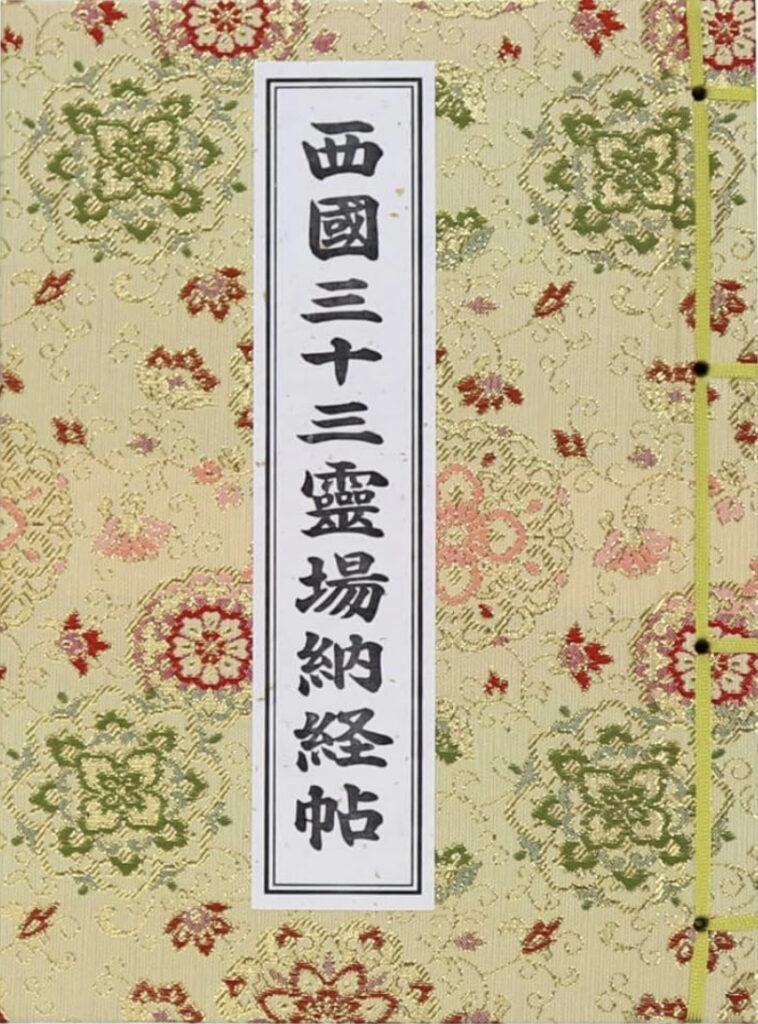
Nokyo-cho — Saigoku Thirty-Three Temples
Hinoki (Japanese cypress) solid wood binding · Handmade washi paper, accordion-fold double-layer style
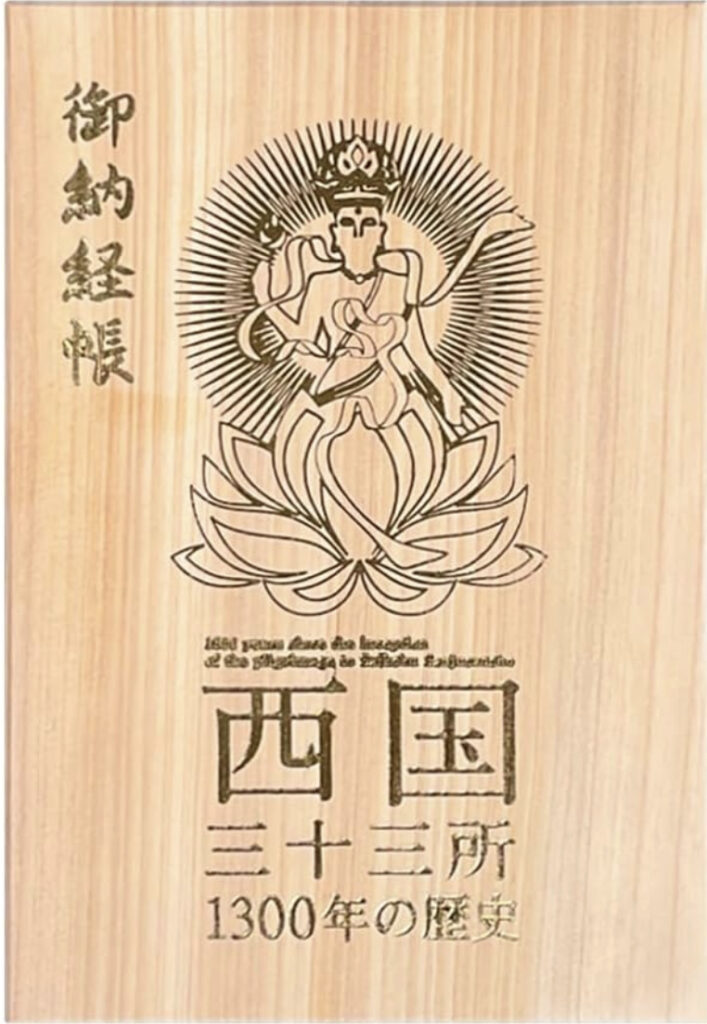
Walking the Saigoku Thirty-Three Temples
Otona no Ensoku BOOK
A guidebook for enjoying the pilgrimage and the pleasures of dedicated walking
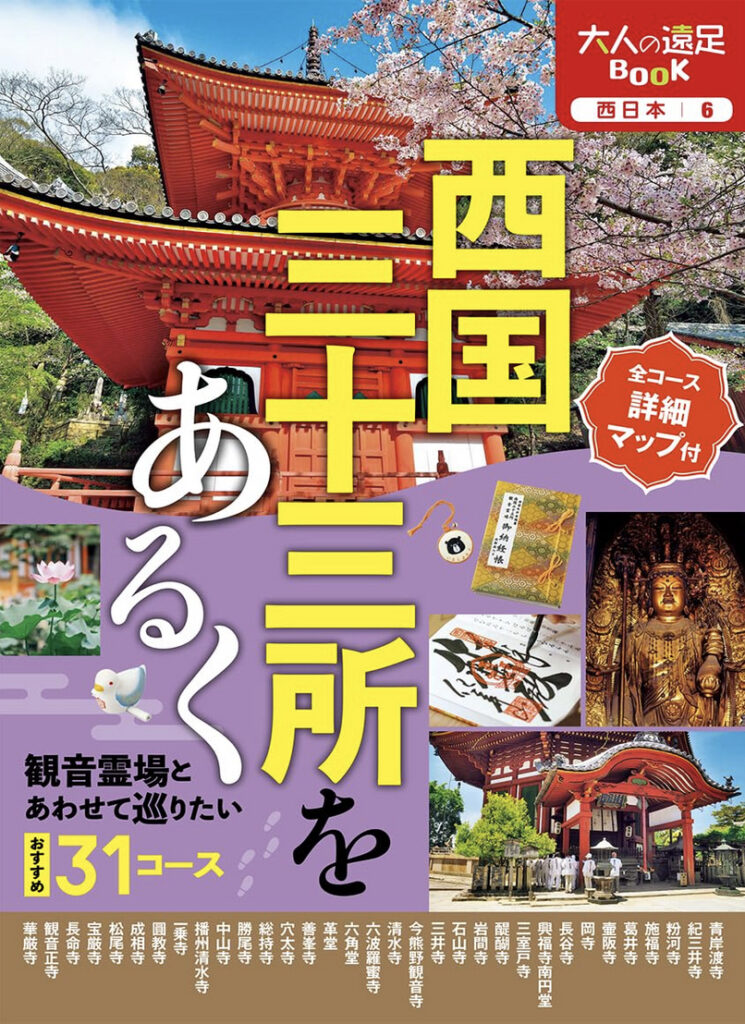
Introduction & Overview
- What Is Esoteric Buddhism? Tendai and Shingon Explained in Simple Terms
- The Deep Connection Between the Saigoku Pilgrimage and Esoteric Buddhism | Why We Journey to Kannon Bodhisattva
Buddhas & Bodhisattvas
- What Are the 33 Forms of Kannon Bodhisattva? A Complete Guide to the Principal Images of the Saigoku Pilgrimage
- What Is the Difference Between Nyorai, Bosatsu, Myōō, and Ten? An Illustrated Guide to the Deities of Esoteric Buddhism
Practices & Culture
- The Meaning of the Heart Sutra Explained Simply | The World of the Sutras Chanted on Pilgrimage
- What Are Goshuin, Omiei, and Sange? The Esoteric Buddhist Culture You Encounter on the Saigoku Pilgrimage
Temples & History
Saigoku Pilgrimage of the Thirty-Three Temples — List of Sacred Sites
- No.12 Syohoji
- No.13 Ishiyamadera
- No.14 Miidera
- No.15 Imakumano-Knnonji
- No.16 Kiyomizudera
- No.17 Rokuharamitsuji
- No.18 Rokkakudo-Chohoji
- No.19 Kaudo-Gyoganji
- No.20 Yoshiminedera
- No.21 Anaoji
- No.22 Sojiji
- No.23 Katsuoji
- No.24 Nakayamadera
- No.25 Bansyu-Kiyomizudera
- No.26 Ichijyoji
- No.27 Engyoji
- No.28 Nariaiji
- No.29 Matsunoodera
- No.30 Chikubusima-Hogonji
- No.31 Chomeiji
- No.32 Kannonsyoji
- No.33 Kegonji