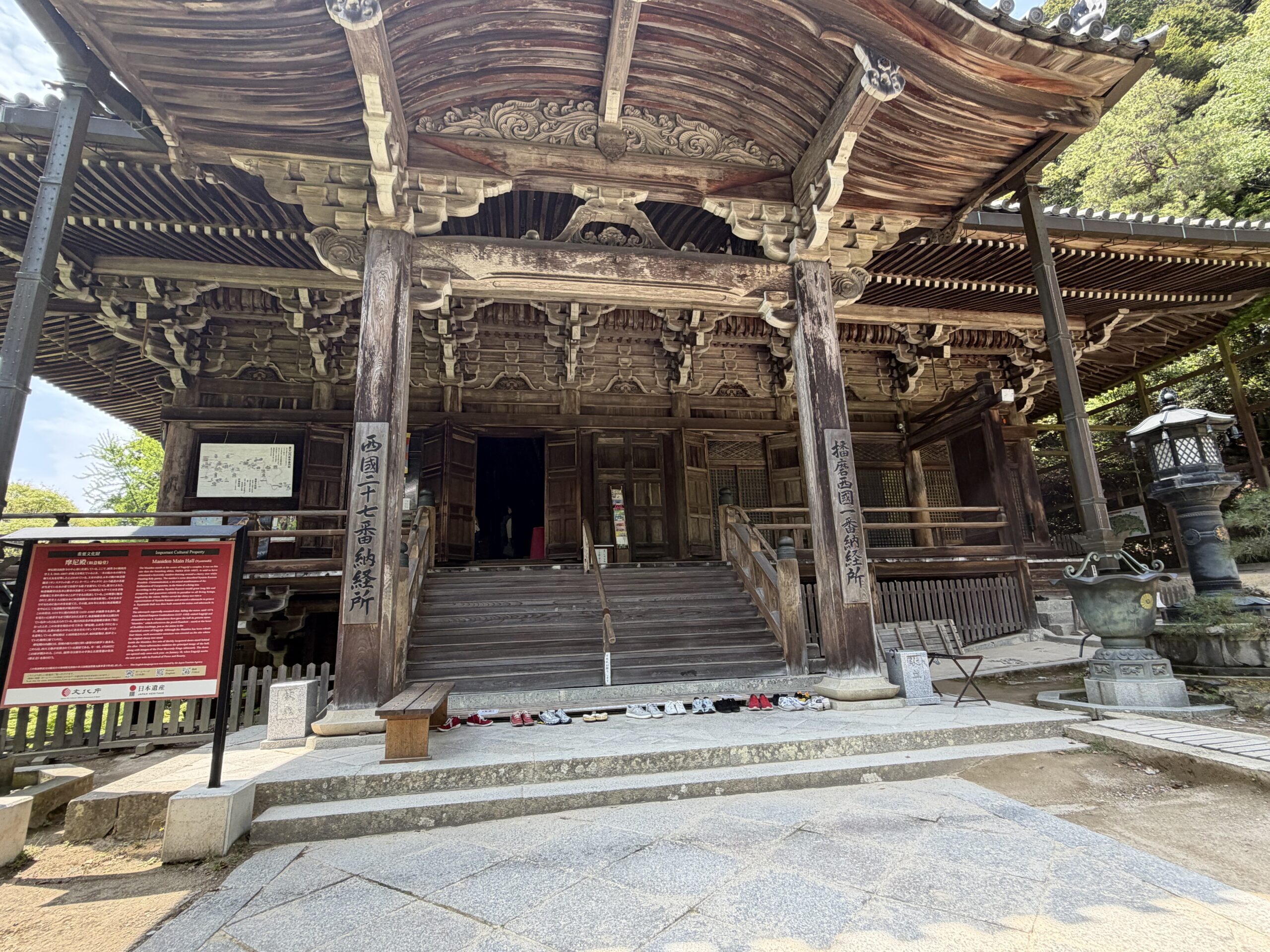
I began the Saigoku Pilgrimage of the Thirty-Three Temples in 2026. For the sacred sites I have already visited, I have written articles accompanied by my own photographs.
From here, I will have AI write support articles about the sites I have yet to visit — as a way of preparing for the journey ahead.
Tucked into the forested mountains of Nachikatsuura in Wakayama Prefecture, Seiganto-ji (青岸渡寺) is one of the most breathtaking temples in all of Japan. As the very first stop on the Saikoku Thirty-Three Kannon Pilgrimage (Saikoku Sanjūsankasho), it draws worshippers and travelers from across the country and beyond. Standing right beside it is Nachi Falls, the tallest single-drop waterfall in Japan, whose thunderous roar seems to fuse sacred nature and human faith into a single unforgettable scene. In this article, we’ll walk through the history, highlights, and practical tips for visiting this remarkable Kannon sanctuary.
What Is Seiganto-ji Temple?
Seiganto-ji sits on the slopes of Nachisan in Higashimuro District, Nachikatsuura, Wakayama. It belongs to the Tendai school of Japanese Buddhism, and its principal object of worship is Nyoirin Kannon (Nyoirin Kanzeon Bosatsu), a form of the Bodhisattva of Compassion. As the first of the thirty-three temples on the Saikoku pilgrimage route, it holds a special place in the hearts of pilgrims beginning their long journey.
What makes the temple particularly fascinating is its close relationship with the neighboring Kumano Nachi Taisha shrine. Together with two other sacred sites, they form the Kumano Sanzan (Three Grand Shrines of Kumano), one of Japan’s most important centers of religious devotion. For centuries, temple and shrine were worshipped as a single unified entity under shinbutsu shūgō, the syncretic blending of Buddhism and Shinto. That changed in the Meiji era, when the government’s separation edict (shinbutsu bunri) formally divided the two, giving us the arrangement we see today.
In 2004, Seiganto-ji was inscribed as part of the UNESCO World Heritage Site “Sacred Sites and Pilgrimage Routes in the Kii Mountain Range.” Walking through the grounds, the deep forest, vermilion-painted structures, and the ceaseless sound of falling water layer over one another. It becomes easy to understand, in a very physical way, why this place has drawn people here since ancient times.
How Old Is Seiganto-ji? A Look at Its History
According to tradition, the temple’s founding is tied to Ragyō Shōnin, a holy man said to have traveled to Japan from India. The story goes that Ragyō Shōnin experienced a spiritual revelation of a Kannon image at the plunge pool of Nachi Falls, then enshrined it — an event regarded as the origin of the temple itself. The idea that a waterfall’s basin could give rise to a sacred image speaks volumes about how deeply nature and worship were intertwined in the Kumano region.
The Main Hall Linked to Toyotomi Hideyoshi
The current main hall (hondō) has a dramatic backstory. After suffering through the fires of war during the Sengoku (Warring States) period, it is said to have been rebuilt by the powerful warlord Toyotomi Hideyoshi. The imposing structure retains the style of the Momoyama period and is designated an Important Cultural Property of Japan. Its stately presence rewards a slow, careful look.
Rebuilt again and again across the centuries, the temple has been faithfully preserved as a center of Kannon worship. That long chain of restoration and devotion is a large part of what gives Seiganto-ji its sense of gravity and depth.
What Are the Highlights of Seiganto-ji?
If you’re planning a visit, here are the features you’ll want to be sure not to miss:
- The Main Hall (hondō): An Important Cultural Property said to have been rebuilt by Toyotomi Hideyoshi.
- Nyoirin Kanzeon Bosatsu: The principal image of worship and the focus of devotion as the first temple of the Saikoku route.
- The Three-Storied Pagoda and Nachi Falls: A viewpoint where you can capture the vermilion pagoda and the waterfall together in a single frame.
- Nachi Falls: The tallest single-drop waterfall in Japan, revered as sacred since ancient times.
The Iconic View of the Pagoda and Nachi Falls
If any single image represents Seiganto-ji, it is the angle that frames the vermilion three-storied pagoda alongside Nachi Falls. The bright red tower set against deep green mountains, contrasted with the white cascade tumbling down behind it, has become a favorite spot among photographers. Standing there in person, many visitors find that the postcard-perfect scene they’d seen in pictures unfolds exactly as promised right before their eyes — and more than a few catch their breath at the sight.
The First Step of the Saikoku Pilgrimage
The Saikoku Thirty-Three Kannon Pilgrimage is a route linking Kannon sanctuaries spread mainly across the Kinki (Kansai) region, and Seiganto-ji is number one. Pilgrims typically begin here by receiving their nōkyōchō (a book for pilgrimage stamps) or a goshuin (a temple seal and calligraphy), then set out on the long road ahead. Starting your journey from the very first temple tends to deepen the sense of meaning behind the pilgrimage.
How to Make the Most of Your Visit
The classic way to experience Seiganto-ji is to combine it with the adjacent Kumano Nachi Taisha and Nachi Falls. Climbing the stone steps, you follow a walking course that puts you in direct contact with both the natural beauty and the religious history of Kumano.
- Visiting alongside Kumano Nachi Taisha lets you feel one part of the greater Kumano Sanzan pilgrimage tradition.
- You can walk right up to Nachi Falls and experience its sheer force up close.
- Collecting a goshuin or nōkyō is a popular keepsake of the Saikoku pilgrimage.
Because there are many stone steps, it’s wise to wear comfortable, sturdy shoes. The mountains of Kumano shift their expression with each of the four seasons, and taking in those seasonal changes is itself one of the great pleasures of the trip.
Frequently Asked Questions
- Q: What is the principal object of worship at Seiganto-ji?
- A: The principal image is Nyoirin Kanzeon Bosatsu (Nyoirin Kannon). As the Kannon of the first temple on the Saikoku Thirty-Three route, it is revered by countless pilgrims.
- Q: What is the relationship between Seiganto-ji and Kumano Nachi Taisha?
- A: The two were once worshipped as a unified whole under shinbutsu shūgō, the syncretic blending of Buddhism and Shinto. The Meiji-era separation of Buddhism and Shinto divided them into a temple and a shrine. They remain adjacent to each other today and together form part of the Kumano Sanzan.
- Q: Is Seiganto-ji a World Heritage Site?
- A: Yes. It is included as part of “Sacred Sites and Pilgrimage Routes in the Kii Mountain Range,” which was inscribed as a UNESCO World Heritage Site in 2004.
- Q: When was the current main hall built?
- A: The current main hall is said to have been rebuilt by Toyotomi Hideyoshi. It retains the Momoyama-period style and is designated an Important Cultural Property of Japan.
Conclusion
Seiganto-ji is the first temple of the Saikoku Thirty-Three Kannon Pilgrimage and a Kannon sanctuary that has watched over the Nachi Falls through a long and storied history. The legend of its founding by Ragyō Shōnin, the main hall said to have been rebuilt by Toyotomi Hideyoshi, and the stunning scenery woven together by the three-storied pagoda and the waterfall all leave a lasting impression on those who visit. By combining it with Kumano Nachi Taisha and Nachi Falls, you can fully savor both the faith and the natural splendor of Kumano. Whether you’re hoping to begin the Saikoku pilgrimage or simply want to witness an unforgettable view, this is a temple well worth your time.
References
- Wikipedia — Seiganto-ji (青岸渡寺) https://ja.wikipedia.org/wiki/青岸渡寺
- Saikoku Sanjūsansho Pilgrimage — Temple No. 1, Nachisan Seiganto-ji https://www.saikoku33.gr.jp/place/1
About Goshuin Stamp Books and Related Items
I usually collect the pre-written kakioki type of goshuin stamps, but for the Thirty-Three Temple Pilgrimage I wanted stamps written directly into a dedicated book, so I purchased one especially for the journey.
Goshuincho stamp books are also sold at the temples of the Saigoku Pilgrimage. However, the accordion-fold (jyabara) style can cause ink to bleed through to the other side. For that reason, I would recommend a bound style rather than accordion-fold — ideally one where each page is separated by an interleaving sheet of paper.
Nokyo-cho — Saigoku Thirty-Three Temples
Gold brocade binding (with vinyl cover) · Lightweight, quick-drying special washi paper that resists ink bleed-through
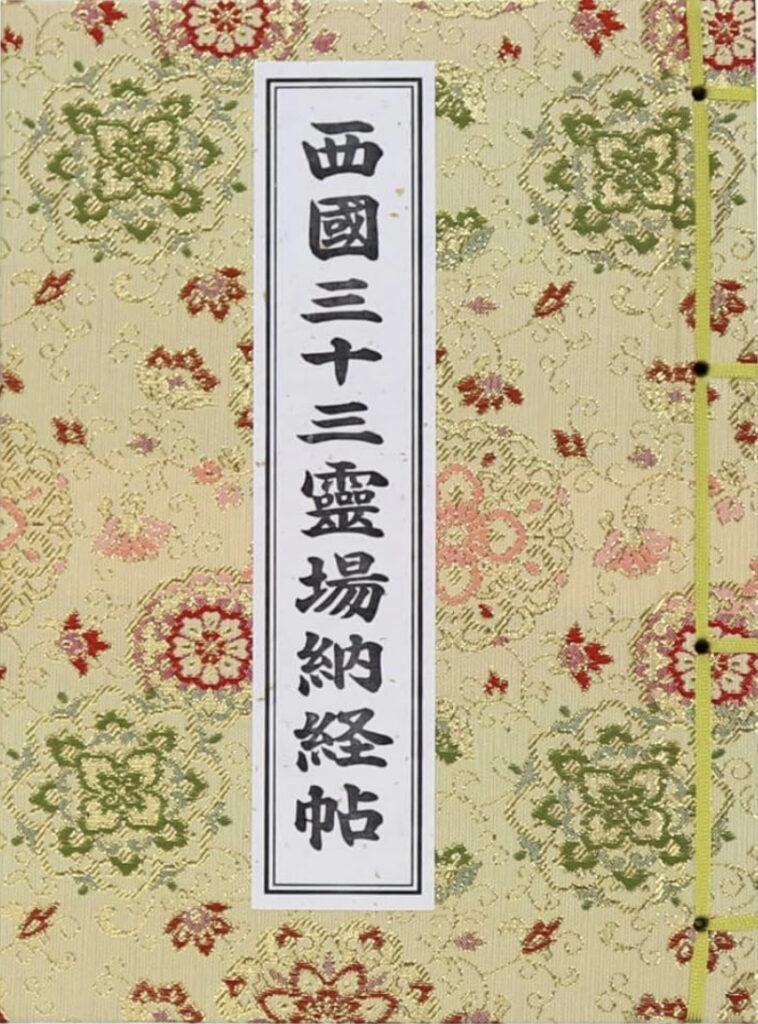
Nokyo-cho — Saigoku Thirty-Three Temples
Hinoki (Japanese cypress) solid wood binding · Handmade washi paper, accordion-fold double-layer style
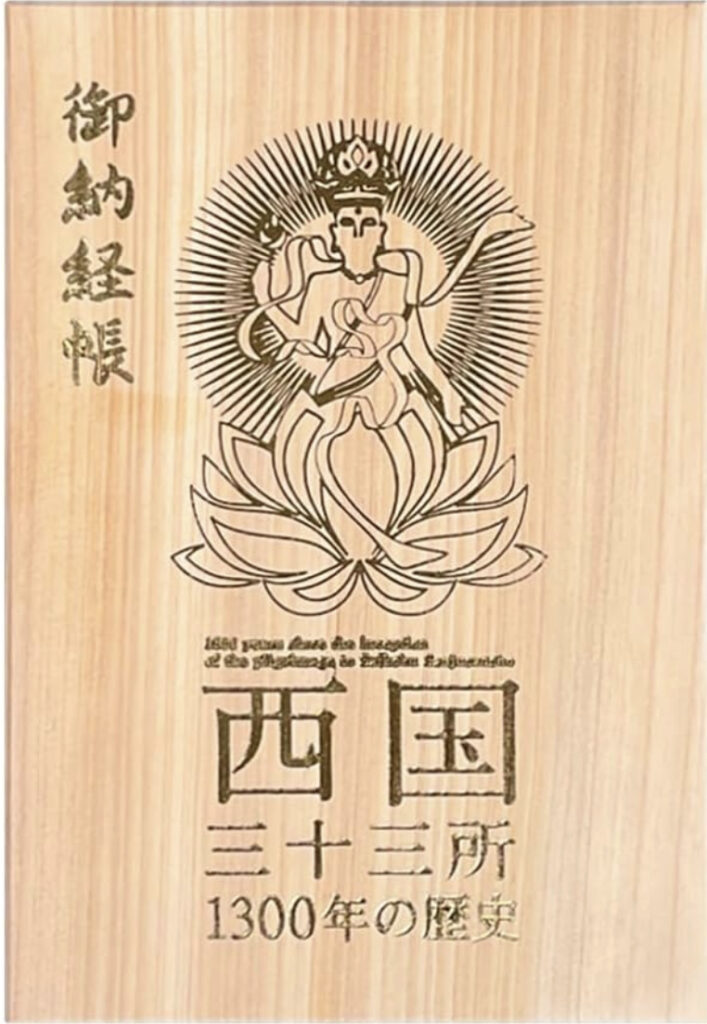
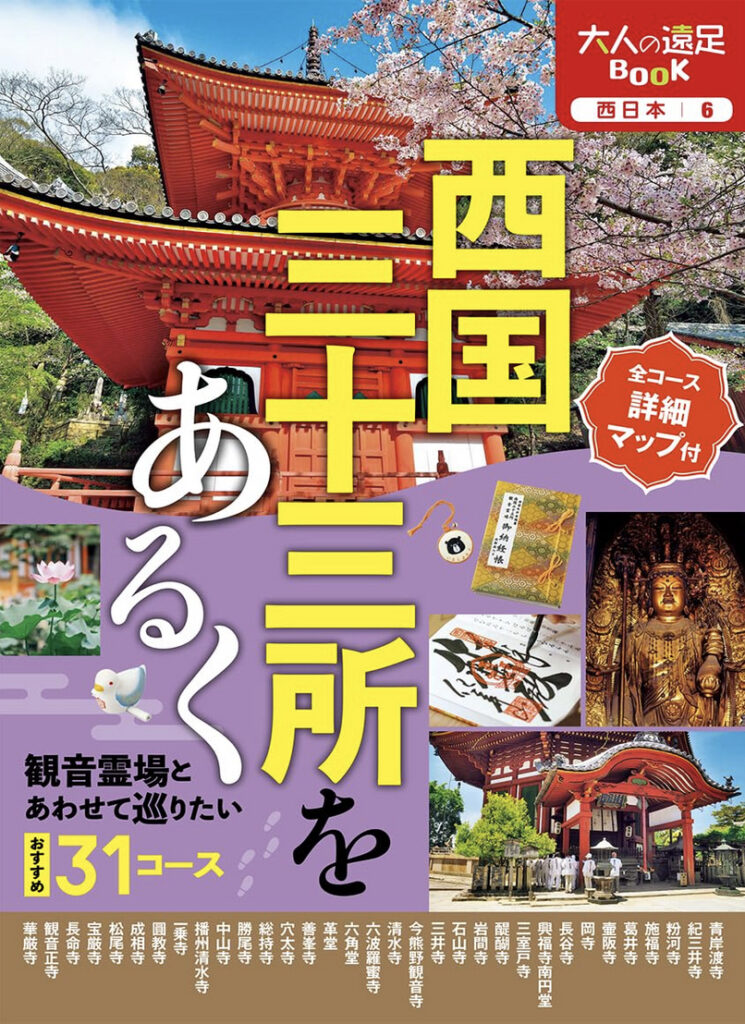
Walking the Saigoku Thirty-Three Temples
Otona no Ensoku BOOK
A guidebook for enjoying the pilgrimage and the pleasures of dedicated walking
Introduction & Overview
- What Is Esoteric Buddhism? Tendai and Shingon Explained in Simple Terms
- The Deep Connection Between the Saigoku Pilgrimage and Esoteric Buddhism | Why We Journey to Kannon Bodhisattva
Buddhas & Bodhisattvas
- What Are the 33 Forms of Kannon Bodhisattva? A Complete Guide to the Principal Images of the Saigoku Pilgrimage
- What Is the Difference Between Nyorai, Bosatsu, Myōō, and Ten? An Illustrated Guide to the Deities of Esoteric Buddhism
Practices & Culture
- The Meaning of the Heart Sutra Explained Simply | The World of the Sutras Chanted on Pilgrimage
- What Are Goshuin, Omiei, and Sange? The Esoteric Buddhist Culture You Encounter on the Saigoku Pilgrimage
Temples & History
Saigoku Pilgrimage of the Thirty-Three Temples — List of Sacred Sites
- No.12 Syohoji
- No.13 Ishiyamadera
- No.14 Miidera
- No.15 Imakumano-Knnonji
- No.16 Kiyomizudera
- No.17 Rokuharamitsuji
- No.18 Rokkakudo-Chohoji
- No.19 Kaudo-Gyoganji
- No.20 Yoshiminedera
- No.21 Anaoji
- No.22 Sojiji
- No.23 Katsuoji
- No.24 Nakayamadera
- No.25 Bansyu-Kiyomizudera
- No.26 Ichijyoji
- No.27 Engyoji
- No.28 Nariaiji
- No.29 Matsunoodera
- No.30 Chikubusima-Hogonji
- No.31 Chomeiji
- No.32 Kannonsyoji
- No.33 Kegonji