Mount Koya (Koyasan), the head temple complex of Shingon Esoteric Buddhism (Shingon Mikkyo), stands as one of Japan’s most revered spiritual destinations. Founded by the monk Kobo Daishi Kukai, this religious city sits roughly 800 meters above sea level in northern Wakayama Prefecture, drawing pilgrims and curious travelers alike. It also shares a meaningful connection with the Saikoku pilgrimage, the country’s oldest route. In this post, we’ll explore Mount Koya’s history, what makes it so compelling, and how it ties into the Saikoku Sanjusankasho pilgrimage.
What Is Mount Koya?
Tucked into a highland basin in the mountains of northern Wakayama, Mount Koya is a religious city unlike anywhere else in Japan. Its origins trace back to the year 816 (the 7th year of the Konin era), when Kobo Daishi Kukai received the land from Emperor Saga and established it as a training ground for Shingon Esoteric Buddhism.
The entire mountain is regarded as the precinct of a single temple — a concept expressed in the Japanese phrase issan keidaichi (“the whole mountain as temple grounds”). In 2004, it was inscribed as part of the UNESCO World Heritage Site “Sacred Sites and Pilgrimage Routes in the Kii Mountain Range.” Visitors who arrive for the first time often remark on the hush that settles over the place. Surrounded by towering cedar groves, the air feels almost severed from the ordinary world below.
Why Mount Koya Is the Head Temple of Shingon Buddhism
Among the various branches of the Shingon school, Mount Koya serves as the head temple (sohonzan) of Koyasan Shingon-shu. At its center stands Kongobu-ji, the spiritual headquarters for Shingon believers across Japan.
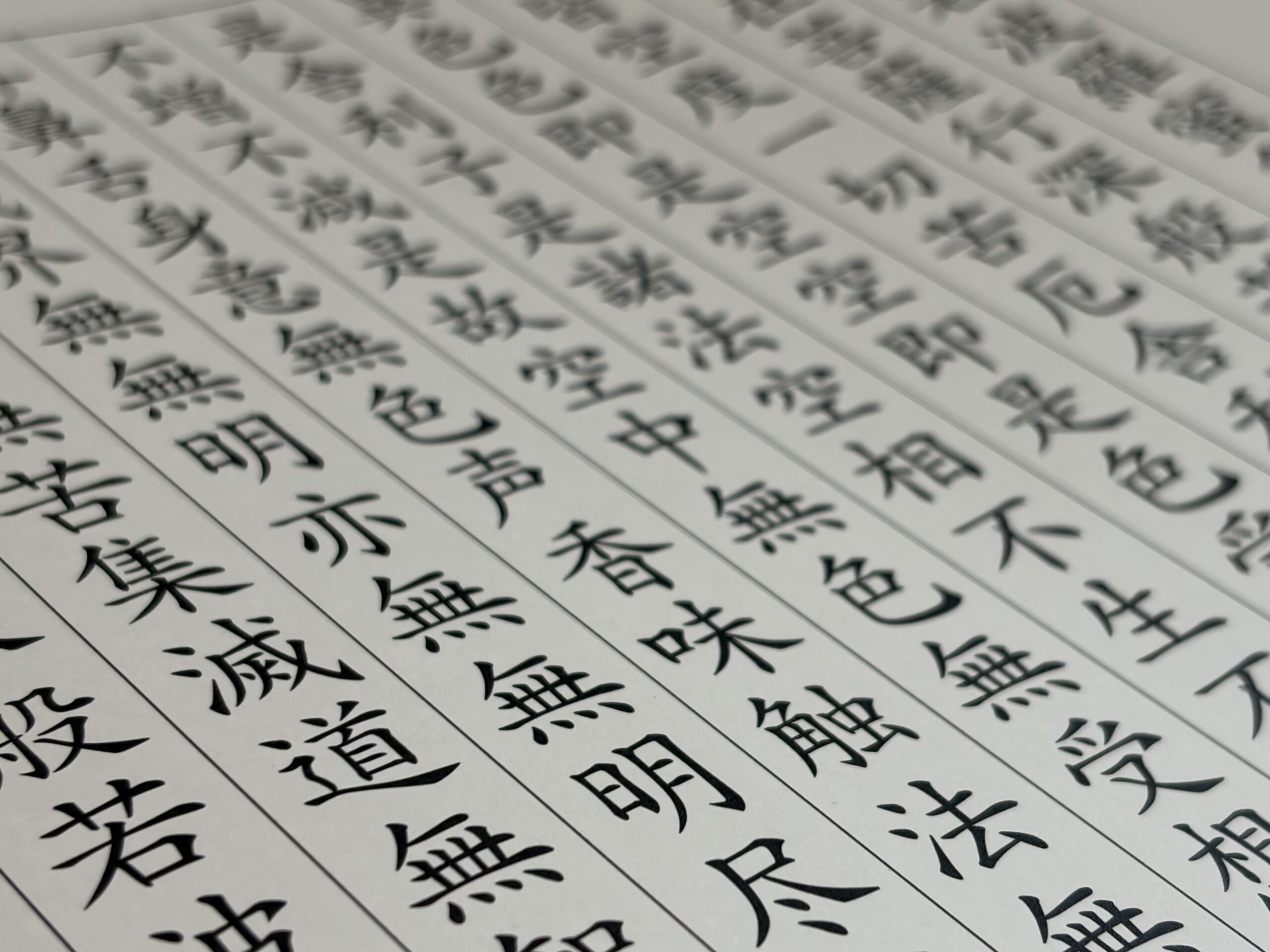
Shingon Esoteric Buddhism is a tradition that Kukai systematized after bringing teachings back from Tang-dynasty China. Its defining idea is sokushin jobutsu — the belief that one can attain enlightenment in this very body, in this very lifetime. That may sound like a forbiddingly complex doctrine, yet the mountain offers plenty of accessible entry points: the goma fire ritual, sutra copying (shakyo), and the vegetarian temple cuisine (shojin ryori) served at lodging temples. You don’t need to be a scholar to feel the tradition firsthand.
Okunoin and Danjo Garan: The Two Sacred Centers
No account of Mount Koya is complete without its two great spiritual hubs.
- Okunoin: Home to the mausoleum (gobyo) where Kobo Daishi Kukai is believed to remain in eternal meditation rather than death. The approach is lined with an estimated 200,000 gravestones and memorial pagodas, including the tombs of many Sengoku-era warlords.
- Danjo Garan: The first area Kukai developed when founding Mount Koya. The vivid vermilion Konpon Daito (Great Pagoda) rises here, expressing the cosmology of Shingon Esoteric Buddhism in three-dimensional form.
Walking the Okunoin approach is an experience in itself. Cedars several centuries old crowd the path, casting it in a solemn dimness even at midday. Arrive in the early morning and you’ll find far fewer visitors — a quieter, more contemplative window into the place.
How Is Mount Koya Connected to the Saikoku Pilgrimage?
The Saikoku pilgrimage — formally the Saikoku Sanjusankasho — is a route visiting 33 temples dedicated to Kannon, the Bodhisattva of Compassion. These sites are scattered across two metropolitan prefectures and five regular prefectures centered on the Kinki region, and the pilgrimage is often called Japan’s oldest. For centuries, travelers have walked it seeking Kannon’s blessings.
The Place for “Orei Mairi” After Completing the Pilgrimage
Here’s a point that surprises many: Mount Koya is not actually one of the 33 official Saikoku temples. Yet it plays an important role in tying the pilgrimage together, through a custom known as orei mairi — the “thanksgiving visit.”
After completing all 33 temples (an achievement called mangan), pilgrims traditionally make a final visit to express their gratitude. Okunoin at Mount Koya, along with Zenko-ji and Shitenno-ji, are well known as destinations for this concluding visit. As the heart of Kobo Daishi devotion, Mount Koya carries a special significance as the place to close out the journey.
Where Kannon Worship Meets Kobo Daishi Devotion
The Saikoku pilgrimage centers on faith in Kannon, while Mount Koya is rooted in devotion to Kobo Daishi Kukai. At first glance these seem like separate streams of belief — but among ordinary Japanese people, “Kannon-sama” and “O-Daishi-sama” have long been cherished side by side.
The flow of pilgrims who tour the Kannon temples and then head to Mount Koya captures this layered, overlapping faith beautifully. It reflects a distinctly Japanese spiritual culture — one that values connection (en) over rigid adherence to a single sect.
Tips for Visiting Mount Koya
If you’re heading to Mount Koya for the first time, a few practical notes will make the trip smoother.
- Stay at a temple lodging (shukubo): Mount Koya has over 50 shukubo where you can sample shojin ryori vegetarian cuisine and join the morning prayer service (gongyo). It’s a far cry from an ordinary inn — many guests describe it as a stay that genuinely settles the mind.
- Getting there: Take the Nankai Electric Railway Koya Line, then transfer to the cable car up to the summit. The straightforward access from the Osaka area is part of the appeal.
- What to wear: Temperatures at the summit run cooler than on the plains below. Pack warm layers, especially for early mornings and the autumn-winter months.
Give yourself plenty of time for Okunoin. Walking slowly from Ichinohashi (the first bridge) to the mausoleum takes around 30 minutes one way. Pausing to take in the memorial pagodas one by one, you can almost feel the weight of history settle around you.
Frequently Asked Questions
- Q: Is Mount Koya one of the Saikoku Sanjusankasho temples?
- A: No, Mount Koya itself is not included among the 33 official Saikoku temples. However, it is a sacred site frequently visited for the “orei mairi” thanksgiving visit after completing the pilgrimage.
- Q: Who founded Mount Koya?
- A: It was established in 816 (the 7th year of the Konin era) by Kobo Daishi Kukai, beginning as a training ground for Shingon Esoteric Buddhism.
- Q: Which temple is the center of Mount Koya?
- A: Kongobu-ji, the head temple of Koyasan Shingon-shu, is the central temple. Alongside it, Okunoin and Danjo Garan are known as the two great sacred sites.
- Q: Can you stay overnight on Mount Koya?
- A: Yes. You can lodge at more than 50 shukubo (temple lodgings), where you can enjoy unique experiences like shojin ryori cuisine and the morning prayer service.
Conclusion
Mount Koya is the head temple of Shingon Esoteric Buddhism, founded by Kobo Daishi Kukai, and one of Japan’s foremost sacred grounds — anchored by Okunoin and Danjo Garan. Though it isn’t an official Saikoku temple, it is deeply woven into pilgrimage culture as the place for the thanksgiving visit after completion. Here, devotion to Kannon and devotion to Kobo Daishi quietly intersect, offering a rare chance to experience the layered nature of Japanese faith. If you ever find yourself drawing a pilgrimage to its close — or simply seeking a place of profound stillness — Mount Koya is well worth the journey.
References
About Goshuin Stamp Books and Related Items
I usually collect the pre-written kakioki type of goshuin stamps, but for the Thirty-Three Temple Pilgrimage I wanted stamps written directly into a dedicated book, so I purchased one especially for the journey.
Goshuincho stamp books are also sold at the temples of the Saigoku Pilgrimage. However, the accordion-fold (jyabara) style can cause ink to bleed through to the other side. For that reason, I would recommend a bound style rather than accordion-fold — ideally one where each page is separated by an interleaving sheet of paper.
Nokyo-cho — Saigoku Thirty-Three Temples
Gold brocade binding (with vinyl cover) · Lightweight, quick-drying special washi paper that resists ink bleed-through
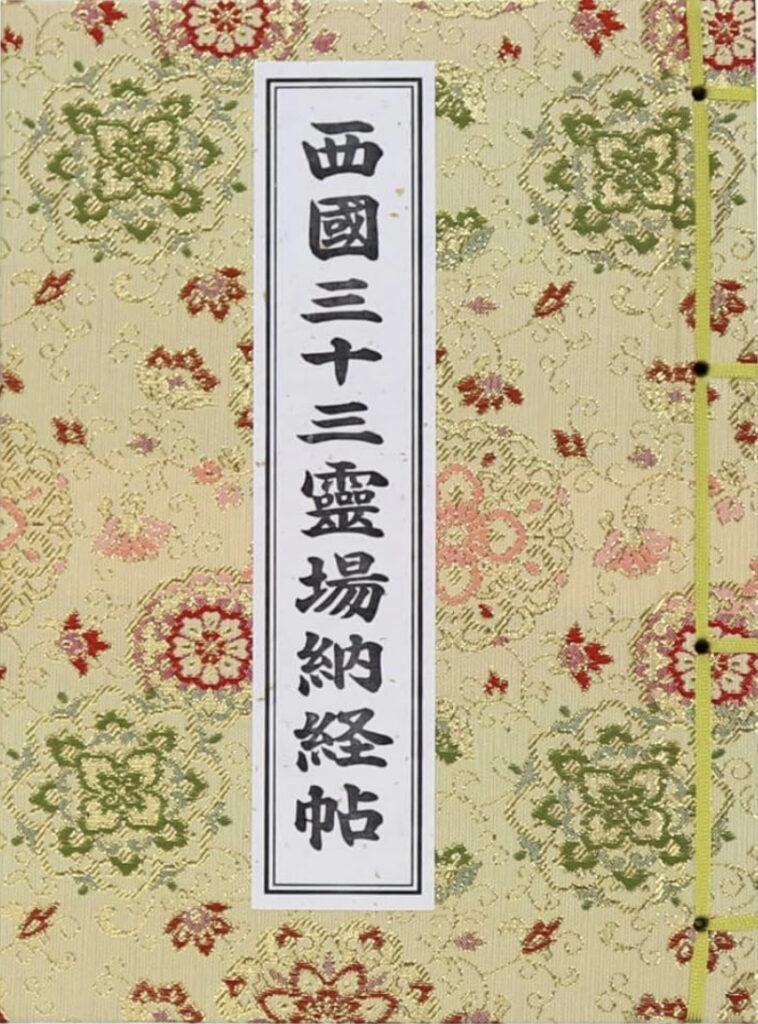
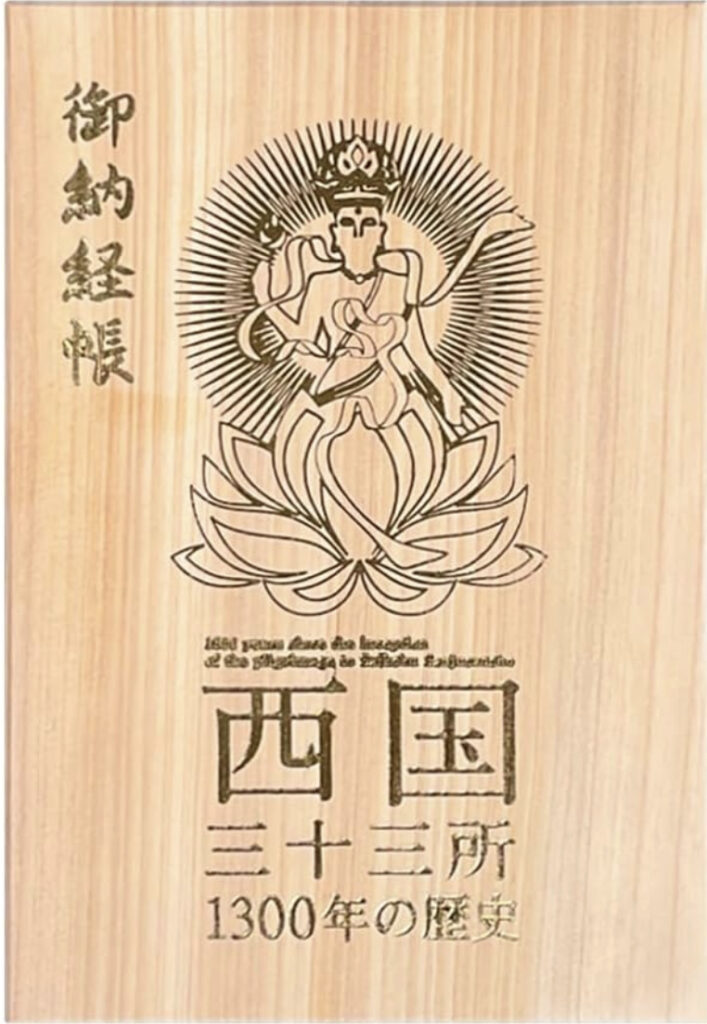
Nokyo-cho — Saigoku Thirty-Three Temples
Hinoki (Japanese cypress) solid wood binding · Handmade washi paper, accordion-fold double-layer style
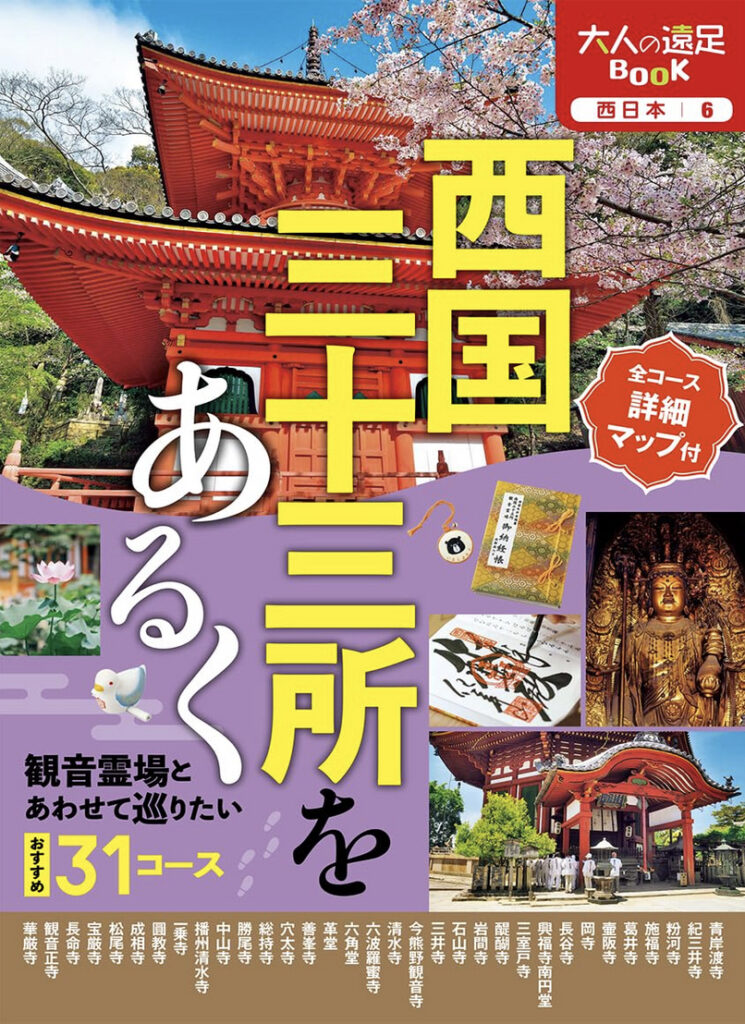
Walking the Saigoku Thirty-Three Temples
Otona no Ensoku BOOK
A guidebook for enjoying the pilgrimage and the pleasures of dedicated walking
Introduction & Overview
- What Is Esoteric Buddhism? Tendai and Shingon Explained in Simple Terms
- The Deep Connection Between the Saigoku Pilgrimage and Esoteric Buddhism | Why We Journey to Kannon Bodhisattva
Buddhas & Bodhisattvas
- What Are the 33 Forms of Kannon Bodhisattva? A Complete Guide to the Principal Images of the Saigoku Pilgrimage
- What Is the Difference Between Nyorai, Bosatsu, Myōō, and Ten? An Illustrated Guide to the Deities of Esoteric Buddhism
Practices & Culture
- The Meaning of the Heart Sutra Explained Simply | The World of the Sutras Chanted on Pilgrimage
- What Are Goshuin, Omiei, and Sange? The Esoteric Buddhist Culture You Encounter on the Saigoku Pilgrimage
Temples & History
Saigoku Pilgrimage of the Thirty-Three Temples — List of Sacred Sites
- No.12 Syohoji
- No.13 Ishiyamadera
- No.14 Miidera
- No.15 Imakumano-Knnonji
- No.16 Kiyomizudera
- No.17 Rokuharamitsuji
- No.18 Rokkakudo-Chohoji
- No.19 Kaudo-Gyoganji
- No.20 Yoshiminedera
- No.21 Anaoji
- No.22 Sojiji
- No.23 Katsuoji
- No.24 Nakayamadera
- No.25 Bansyu-Kiyomizudera
- No.26 Ichijyoji
- No.27 Engyoji
- No.28 Nariaiji
- No.29 Matsunoodera
- No.30 Chikubusima-Hogonji
- No.31 Chomeiji
- No.32 Kannonsyoji
- No.33 Kegonji