I decided to study a little about Buddhist temples before embarking on my Saigoku Pilgrimage of the Thirty-Three Temples.
I had AI write some support articles about Esoteric Buddhism (Mikkyō).
Esoteric Buddhism, known in Japanese as mikkyo (密教), arrived in Japan between the Nara and Heian periods and remains one of the most mysterious branches of Japanese religious life. The word literally means “secret teaching”—wisdom passed orally from master to disciple rather than printed in any public text. If you have ever stood before a roaring fire ritual at a mountain temple and felt the chanting vibrate in your chest, you have already brushed against the heart of esoteric Buddhism. In this guide, I’ll walk you through what mikkyo actually is, then unpack the real differences between the two great schools—Tendai and Shingon—drawing on visits to temples in Kyoto and Wakayama.
What Is Esoteric Buddhism (Mikkyo)?
Rooted in Sanskrit teachings carried along the Silk Road, mikkyo is often translated as “secret Buddhism.” The distinction matters: ordinary, openly taught Buddhism is called kengyo (顕教), the “revealed teaching.” Esoteric masters argued that the deepest truths simply cannot be packaged into words and handed out to crowds. Instead, they must be transmitted directly, body to body, from teacher to student.
At the center of this universe sits Dainichi Nyorai (大日如来), the cosmic Buddha whom esoteric practitioners regard as the very fabric of reality. From this idea grew a whole vocabulary of ritual: intricate mandala (曼荼羅) that map the Buddhist cosmos, the goma fire ceremony, and the practice of forming hand seals while chanting sacred syllables. When I watched a goma ritual at Kongobu-ji on Mount Koya, the flames climbing several feet high against the rhythm of the priests’ chanting, the experience felt less like observing a service and more like being pulled into a different layer of the world.
The Three Mysteries (Sanmitsu)
Central to esoteric training is the concept of the “Three Mysteries,” or sanmitsu (三密). These three practices align the body, speech, and mind of the practitioner with those of the Buddha:
- Shinmitsu (身密): forming sacred hand gestures, or mudra, with the body
- Kumitsu (口密): reciting mantra—sacred sound formulas—with the voice
- Imitsu (意密): visualizing the Buddha within the mind
When all three are unified with the Buddha’s own activity, the practitioner aims for sokushin jobutsu (即身成仏)—”becoming a Buddha in this very body.” This is a striking claim. Most Buddhist schools teach that enlightenment unfolds over countless lifetimes, yet mikkyo insists awakening is possible in your present flesh, here and now. That radical optimism is one of esoteric Buddhism’s defining signatures.
What Is the Difference Between Tendai and Shingon?
Japan’s esoteric tradition flows through two great rivers: the Tendai and Shingon schools. Both trace back to monks who sailed to Tang China in the very same year—804—and returned with teachings that would reshape Japanese spirituality. People often blur the two together, but their founders, head temples, and temperaments are genuinely distinct.
The Tendai School and Its Founder, Saicho
Tendai was established by Saicho (最澄, 767–822), a thoughtful and systematic monk. Its head temple is Enryaku-ji on Mount Hiei in Shiga Prefecture, and its foundational scripture is the Lotus Sutra (Hokekyo).
What makes Tendai fascinating is its breadth. Rather than specializing narrowly, Saicho built a “comprehensive Buddhism” that wove together esoteric ritual, Lotus teachings, Zen meditation, monastic discipline, and Pure Land devotion under one roof. The consequences were enormous. Honen of the Pure Land school, Shinran of True Pure Land, Dogen of Soto Zen, and Nichiren of the Nichiren school all trained at Mount Hiei before founding their own movements. For this reason Enryaku-ji is affectionately called the “mother mountain of Japanese Buddhism.” The esoteric strand within Tendai earned its own name: taimitsu (台密).
The Shingon School and Its Founder, Kukai
Shingon was founded by Kukai (空海, 774–835), posthumously honored as Kobo Daishi and arguably the most celebrated monk in Japanese history. His school centers on Kongobu-ji on Mount Koya in Wakayama and To-ji in Kyoto. Where Tendai cast a wide net, Shingon went deep, devoting itself entirely to esoteric practice—a purity that earned it the label junmitsu (純密), or “pure esotericism.”
Shingon’s esoteric tradition is called tomitsu (東密). Kukai built his system on the Mahavairocana Sutra and the Diamond Peak Sutra, codifying the doctrine of becoming a Buddha in this very body. Even today, at Okunoin on Mount Koya, sits the mausoleum where Kukai is believed to have entered eternal meditation (nyujo) in 835. Monks have delivered him two meals a day—a ritual called shojingu—without missing a single day for nearly 1,200 years. Walking the cedar-lined paths of Okunoin at dusk, past tens of thousands of moss-covered gravestones, you feel the weight of that unbroken devotion settle quietly over you.
Comparing the Two Schools Side by Side
- Founder: Tendai = Saicho / Shingon = Kukai
- Head temple: Tendai = Enryaku-ji on Mount Hiei / Shingon = Kongobu-ji on Mount Koya and To-ji
- Name of its esotericism: Tendai = taimitsu / Shingon = tomitsu
- Character: Tendai = comprehensive Buddhism (including esotericism) / Shingon = pure esotericism
- Core scriptures: Tendai = Lotus Sutra / Shingon = Mahavairocana & Diamond Peak Sutras
Here’s a detail that brings the rivalry to life: Saicho and Kukai were originally friends. Saicho, the elder of the two, even borrowed esoteric texts from Kukai to deepen his own knowledge. But the friendship fractured—famously over a request to lend a particular scripture that Kukai refused, insisting esoteric truth could only be transmitted through practice, not reading. Knowing this falling-out makes the doctrinal differences feel far more human and three-dimensional.
Which Temples Let You Experience Esoteric Buddhism?
To truly grasp mikkyo, books take you only so far—you need to be there. At To-ji in Kyoto, the lecture hall houses a breathtaking arrangement of 21 Buddhist statues known as the “three-dimensional mandala” (rittai mandara), a physical staging of Kukai’s cosmic vision that you can walk around and absorb.
On Mount Koya, you can stay overnight in a temple lodging (shukubo), wake for the early-morning service, and eat the vegetarian Buddhist cuisine known as shojin ryori. Meanwhile, Enryaku-ji on Mount Hiei still preserves brutally demanding traditions, including the rozangyo, a twelve-year confinement on the mountain. These living atmospheres carry something no website can transmit—the smell of incense, the cold of the dawn air, the murmur of sutras before sunrise.
Frequently Asked Questions
- Q: How is esoteric Buddhism different from ordinary Buddhism?
- A: Ordinary Buddhism (kengyo) teaches openly through words and scripture, while esoteric Buddhism (mikkyo) is transmitted secretly from master to disciple. It relies on distinctive rituals—mandala, the goma fire ceremony, and mantra—and aims at becoming a Buddha in this very lifetime.
- Q: Which is older, Tendai or Shingon?
- A: They are nearly contemporaneous. Both Saicho and Kukai sailed to China with the same 804 embassy. After returning, Saicho founded Tendai in 806, and Kukai began spreading esoteric teaching in earnest soon after, so their origins essentially overlap.
- Q: Who are Kobo Daishi and Dengyo Daishi?
- A: Kobo Daishi is the posthumous title of Kukai, founder of Shingon, while Dengyo Daishi is the posthumous title of Saicho, founder of Tendai. Both honorific names were bestowed by the imperial court.
- Q: Can ordinary visitors try esoteric practice?
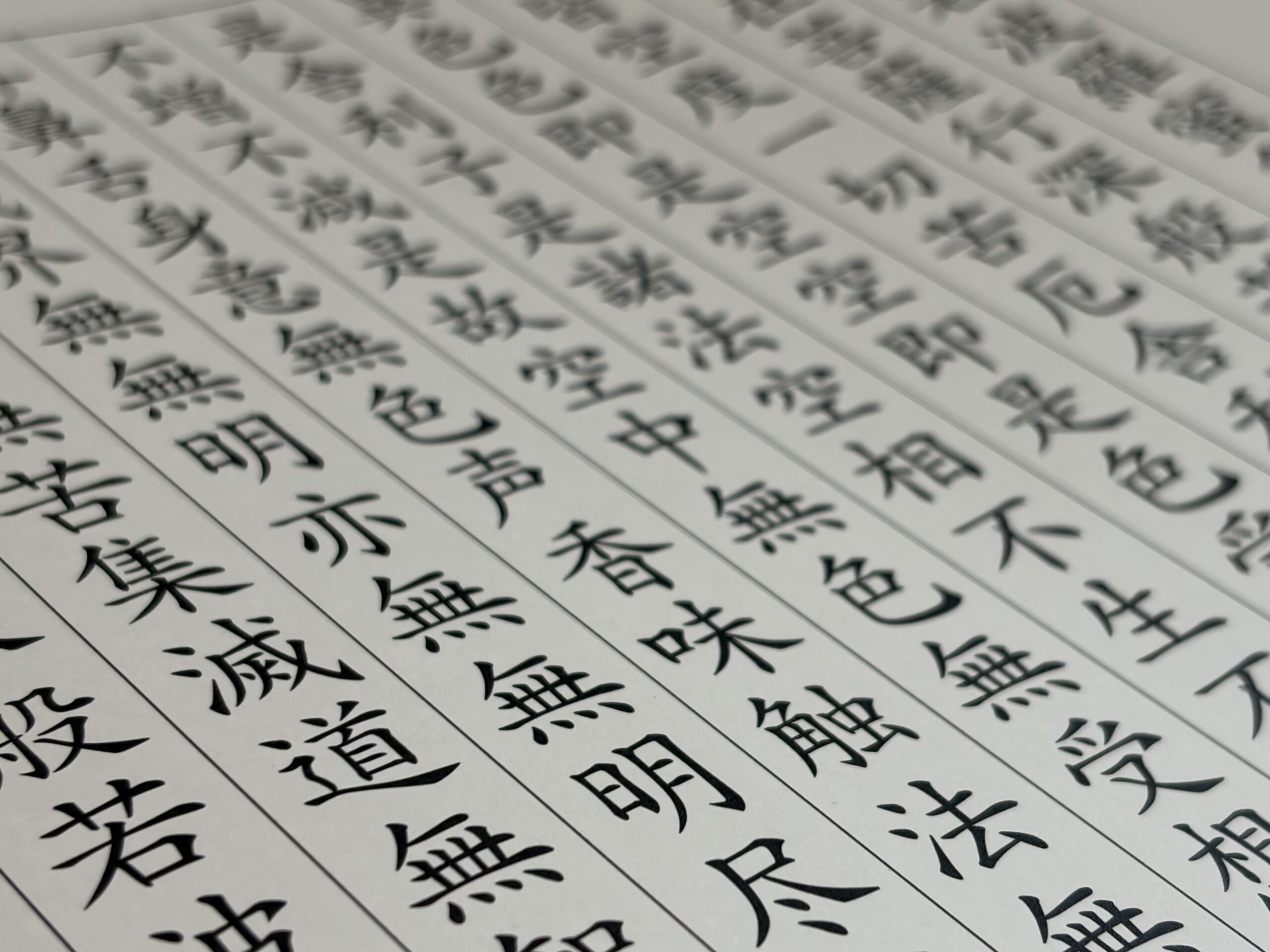
- A: Yes. Temple lodgings on Mount Koya and Mount Hiei offer beginner-friendly experiences such as sutra copying (shakyo) and Ajikan meditation. Full ritual training is reserved for ordained monks, but introductory experiences are open to everyone.
Conclusion
Esoteric Buddhism places Dainichi Nyorai at the center of the cosmos and, through the discipline of the Three Mysteries, seeks awakening within this very body. In Japan, the tradition split into two mighty currents: Saicho’s Tendai school (taimitsu) and Kukai’s Shingon school (tomitsu). The crucial difference is one of scope—Tendai embraced a wide spectrum of teachings as a comprehensive Buddhism, while Shingon dedicated itself purely to mastering the esoteric path.
With these distinctions in mind, I encourage you to visit To-ji, Mount Koya, or Mount Hiei for yourself. Standing before a real mandala or watching the goma flames leap upward, you’ll feel the depth of a tradition carried unbroken for more than a thousand years—and it tends to stay with you long after you’ve left the mountain.