It was kimono that first sparked my renewed appreciation for Japanese culture. From there, I discovered senbu (fan dancing), hoping to make use of a fan in performance, and that eventually led me to kenbu. Here, with the help of AI (Claude), I’ve put together some of the basics.
Kenbu (剣舞), the Japanese sword dance, is one of those traditional arts that almost defies easy explanation until you have seen it performed. A single dancer, dressed in a pleated hakama and gripping a gleaming blade, moves through a sequence of cuts and sweeps—yet the air is filled not with battle cries but with the slow, resonant chanting of classical poetry. That chanting is called shigin (詩吟), and the two arts are so deeply intertwined that you almost never find one without the other. So why were the sword dance and poetry recitation born together? The answer takes us back to the turbulent final years of the samurai era.
What Is Kenbu? Understanding the Sword Dance
Kenbu is a Japanese performing art in which a dancer moves with a sword or fan in time with shigin—the chanted recitation of Chinese-style poems (kanshi, 漢詩) and Japanese waka verse. Watch a live performance and the contrast hits you immediately: the violent arc of the blade set against the unhurried, almost meditative melody of the poem. That tension between force and stillness is precisely the point.
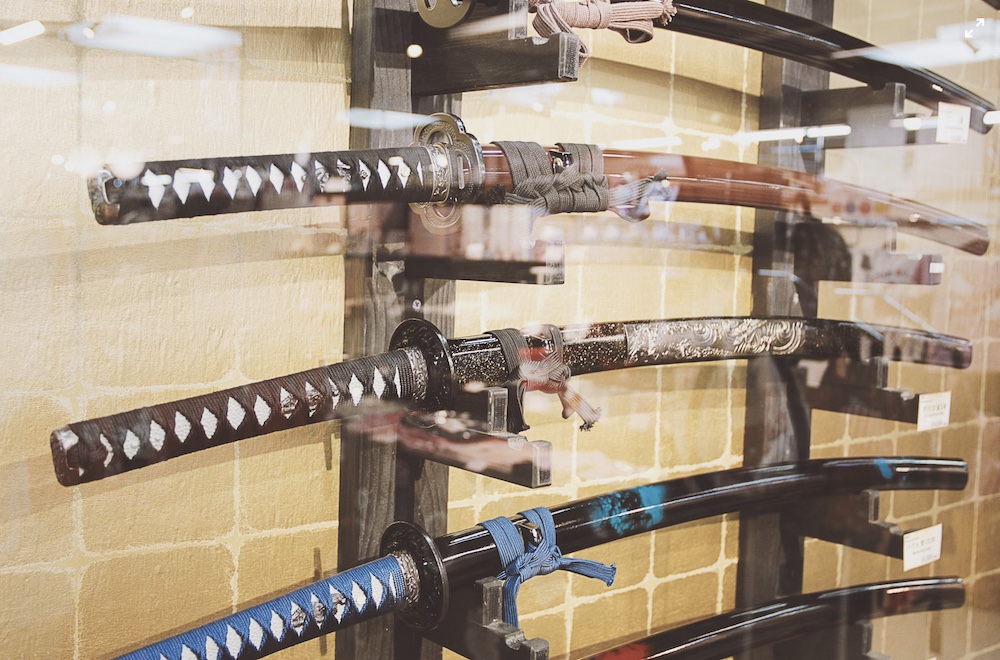
There is an important distinction in vocabulary worth knowing. A performance using an actual sword is called kenbu, while a piece danced with only a folding fan is known as shibu (詩舞), or “poetry dance.” In kenbu, everything begins with a formal bow to the blade (torei, 刀礼), proceeds through the drawing and re-sheathing of the sword, and ends in the same ceremonial spirit. Instructors often tell beginners that “the sword is not something you swing around—it is a mirror that reflects your heart.”
Key Features of Kenbu
- It is performed as a unified whole with shigin, the chanting of Chinese and Japanese poetry
- It uses distinctive equipment—a sword, a fan, and the shihakama (詩袴) trousers
- Its appeal lies in the contrast between bold movement (“dō,” 動) and poetic stillness (“sei,” 静)
- It carries the spiritual legacy of the idealistic warriors of the late Edo period
Why Were Kenbu and Shigin Born Together?
To understand the bond between the sword dance and poetry recitation, you have to look at the flourishing of Chinese poetry culture from the late Edo period into the bakumatsu (幕末, the final years of the Tokugawa shogunate, roughly the 1850s–1860s). Samurai and political idealists of the age expressed their convictions through composing and reciting kanshi. As they chanted aloud, the swelling emotion of the verse naturally spilled over into physical movement—and that, scholars believe, is the true origin of kenbu.
The poems of Rai San’yō (頼山陽, 1781–1832) remain especially beloved as standard kenbu pieces. His verse “Kawanakajima” (川中島) and the famous lines beginning “Bensei shukushuku” (鞭声粛々, “the whisper of the whip, silent and grave”) describe fierce historical battles. It is no coincidence that poems about combat paired so beautifully with the act of drawing a blade and dancing.
The Sword Dance and the Idealists of the Bakumatsu
During the upheaval of the bakumatsu, kenbu became something far greater than mere entertainment. Young men burning with patriotic fervor would gather at drinking parties and political meetings, chant kanshi, and brandish their swords to rouse their spirits. For them, shigin and kenbu together formed a kind of physical language—a way to share ideals and passion when ordinary speech felt insufficient. The very spirit that drove the Meiji Restoration of 1868 was, in part, kept alive within these cultural rituals. Knowing this, it becomes hard to watch a performance today without sensing the ghosts of those restless young samurai.
How Did Kenbu Develop from Meiji to Today?
With the arrival of the Meiji era (1868–1912), kenbu began to organize itself into formal schools, or ryūha (流派). From the 1900s onward, kenbu and shibu schools sprang up across Japan, and the forms (kata, 型) and etiquette were codified into the structured curricula we recognize today. Contemporary practice is supported by nationwide organizations and competitions, including those overseen by bodies such as the Nippon Budokan and dedicated promotional associations for shigin and kenshibu.
The art did fall somewhat out of fashion in the immediate postwar years, but from the late Shōwa period (the 1970s and 80s) it enjoyed a revival as part of school education and community culture. Visit a local cultural festival or a dedication ceremony at a shrine, and you may well see performers ranging from elementary school children to people in their eighties. There is something genuinely moving about watching an elderly chanter intone a poem in a rich, carrying voice while a teenager stands before them, sword poised—a living chain of transmission across generations.
What Modern Kenbu Values Most
- A martial spirit that “begins with a bow and ends with a bow”
- Expressive depth, dancing only after truly understanding the meaning of the poem
- A sense of unity in which the chanter and the dancer breathe as one
In recent years, kenbu has been performed at overseas events and Japanese cultural showcases, drawing growing international attention. A number of schools now offer hands-on experience programs aimed at inbound visitors, so even a short-term traveler can try holding a practice sword and learning the opening bow.
Frequently Asked Questions
- Q: What is the difference between kenbu and shibu?
- A: Kenbu is danced using a sword, while shibu (poetry dance) is performed with only a folding fan. Both are danced in time with shigin poetry recitation, which is what unites them.
- Q: Can I learn kenbu with no prior experience?
- A: Yes. Many schools run classes for beginners, where you start with a practice sword (a bladeless iaitō) or a fan and learn the basic movements first. One of its charms is that you can begin at almost any age.
- Q: Which poems are most often used in kenbu?
- A: Standards include Rai San’yō’s “Kawanakajima,” along with kanshi associated with figures such as Ōshio Heihachirō and Saigō Takamori. Poems celebrating heroic battles and noble ideals are especially favored.
- Q: Are the swords used in kenbu real?
- A: In performances, practitioners generally use bladeless practice swords (iaitō). They are designed with safety in mind, so even beginners can handle them with confidence.
Conclusion
Kenbu was born from the meeting of two forces: the burning passion that the idealists of the bakumatsu poured into their Chinese poetry, and the chanting tradition of shigin that gave that passion a voice. Codified into formal schools after the Meiji era, the art is now handed down across generations and increasingly across national borders as well. The world it creates—where the melody of a poem meets the discipline of the blade, where movement and stillness answer one another—is in many ways a mirror of the Japanese spirit itself. If you ever have the chance, do try to experience a performance up close. The quiet intensity of it lingers long after the final bow.
References
Postscript
At the studio I actually attend, students range from kindergarteners to people in their 80s and 90s — men and women of all ages training together.
And watching young children wield a sword and dance is truly something else — cool and utterly adorable at the same time.
Each student works toward their own goals, dedicating themselves to practice and enjoying it for years to come.
Recently, online classes have also been launched for those who live far away. In an age where you can take trial lessons and train no matter where you are, students join from other prefectures and even from overseas.
Related Book
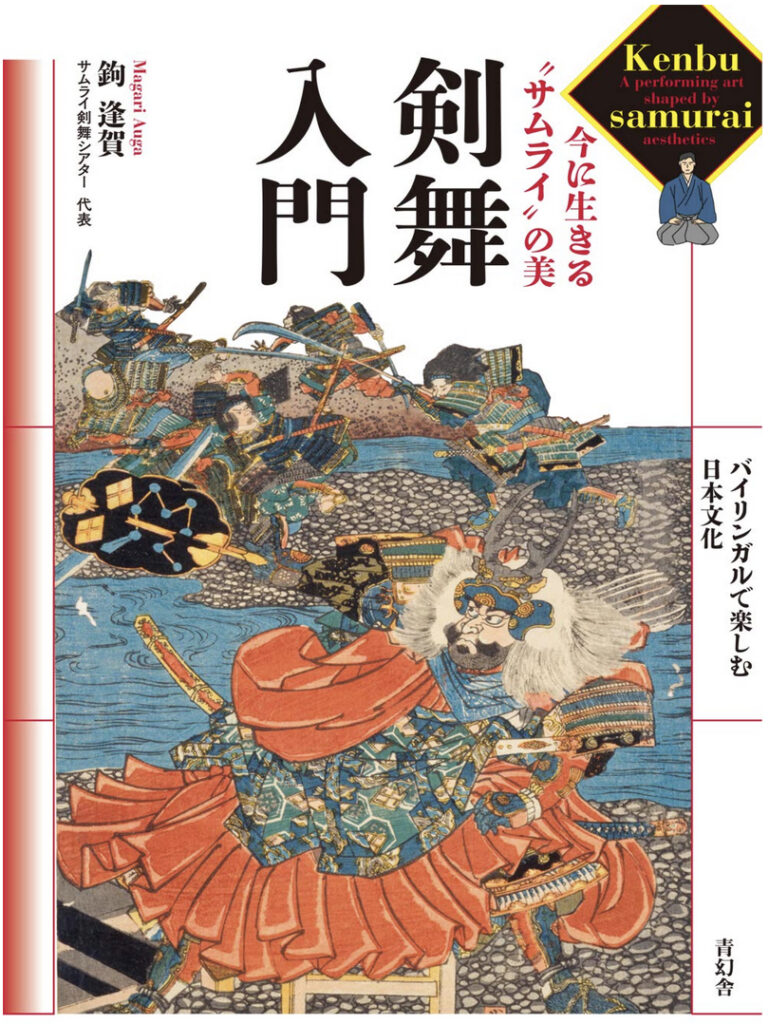
Kenbu Nyūmon: The Living Beauty of the Samurai
The first-ever introductory guide to kenbu — a traditional Japanese performing art with over one hundred schools across the country!
Written by Kōaga-shi, a female kenbu master and representative of the “Samurai Kenbu Theater” in Kyoto — a venue that ranked in the Top 10 of TripAdvisor’s “Most Popular Tourist Spots in Japan Among Foreign Visitors” for three consecutive years.
From the foundational knowledge needed to appreciate a performance, to technical explanations, and interviews with masters from across Japan — this book explores the appeal of kenbu from a wide range of perspectives, with illustrations and diagrams to make it easy to understand!