It was kimono that first sparked my renewed appreciation for Japanese culture. From there, I discovered senbu (fan dancing), hoping to make use of a fan in performance, and that eventually led me to kenbu. Here, with the help of AI (Claude), I’ve put together some of the basics.
The art of kenbu (剣舞), Japan’s traditional sword dance, relies on more than graceful movement—its costumes and props carry layers of meaning that bring an entire poetic world to life. Every fan, every blade, and every fold of the kimono speaks on behalf of a performer who never utters a word. Once you understand the symbolism woven into these objects, watching a kenbu performance becomes a far richer experience. In this guide, we’ll explore the swords, fans, and garments of this Japanese sword dance, what they represent, and how practitioners choose them.
What Is Kenbu and Why Do Costumes and Props Matter?
Kenbu is a Japanese performing art danced to shigin (詩吟), the chanted recitation of Chinese-style poems (kanshi) and Japanese waka verse. It flourished during the Meiji era (1868–1912) as a way for the former samurai class to preserve their spiritual and cultural values, and today it is passed down by schools and preservation societies across Japan.
What sets kenbu apart from other forms of Japanese dance is its expressive use of the sword and fan to embody the scenery and emotions described in the poem. Because no spoken dialogue accompanies the dance, the costume and props effectively become the storytellers. When watching a live performance, audiences invariably catch their breath at the moment a white hakama sweeps through the air, or when a fan flashes open in a single decisive motion. These are not decorative flourishes—they are the language of the dance itself.
What Types of Swords Are Used in Kenbu?
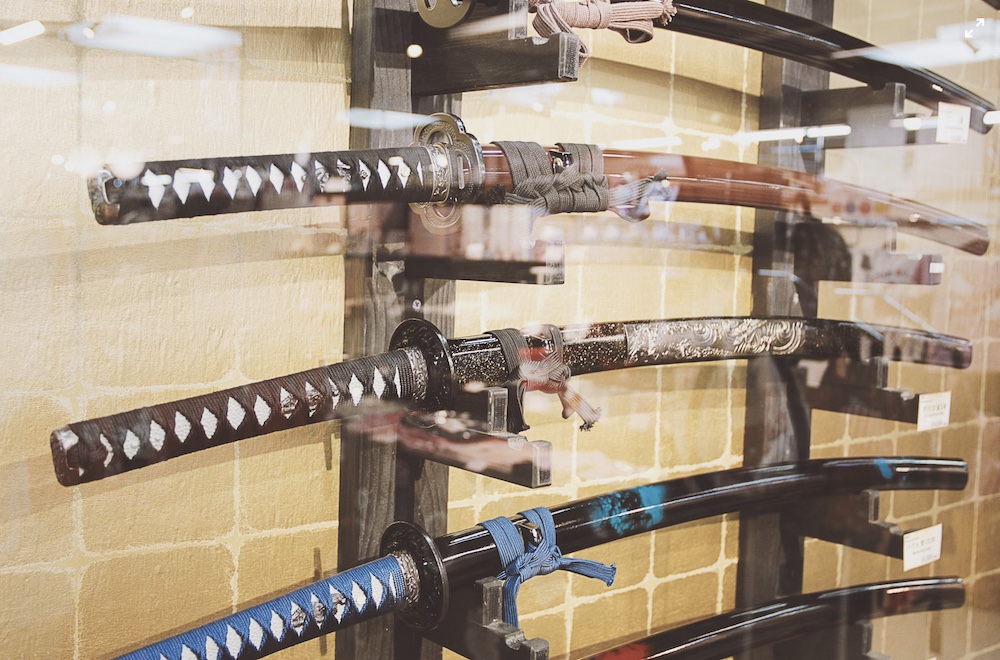
The sword (ken or katana) is arguably the star of any kenbu prop collection. Yet, contrary to what newcomers often assume, a genuine razor-sharp blade is almost never used in training or on stage.
The Practice Sword (Iaitō) Is the Standard
Most schools use a mogitō (模擬刀), also called an iaitō (居合刀)—an unsharpened replica sword. Typically cast from a zinc alloy, these blades are weighted to roughly 700–900 grams, close to the heft of a real katana. That deliberate weight is what gives the drawing (battō) and sheathing (nōtō) motions their genuine sense of tension. A dancer who has trained with a properly weighted blade moves differently from one who has only handled a toy.
Beginners Start With a Wooden or Lightweight Sword
Those just beginning their studies usually start with a bokutō (木刀, wooden sword) or a lightweight aluminum blade. One kenshibu (sword-and-poetry dance) studio I came across follows a clear progression: students spend their first six months mastering forms with a wooden sword before graduating to an iaitō. It’s a sensible sequence that balances safety with the gradual development of proper technique.
- Mogitō / Iaitō: the standard practice sword used on stage
- Bokutō: a wooden sword for early training and learning forms
- Lightweight sword: easy to handle for children and older practitioners
The Meaning and Types of the Dancing Fan
Beyond the sword, the fan (maiōgi, 舞扇) is an indispensable prop. In fact, there is an entire category of performance danced with the fan alone and no sword at all—known as shibu (詩舞), or “poetry dance,” prized for its elegant and delicate expression.
The Fan Is a Brush That Paints Scenery
A skilled dancer uses the fan as a tool of mitate—visual metaphor. In one moment it suggests the moon hanging in the sky; in another, the flow of a river or petals drifting on the wind. A single fan might become a sake cup in one scene and a gust of wind in the next. This shape-shifting versatility is the very heart of the fan’s appeal.
Size and Materials of the Dancing Fan
The maiōgi used in kenshibu is noticeably larger than an ordinary decorative fan, with ribs measuring around 9 sun 5 bu—about 29 centimeters. The ribs are made slightly heavier on purpose, so that opening and closing the fan produces a crisp, satisfying snap. Gold or silver grounds bearing a rising-sun (hinomaru) motif are classic choices, and some schools specify particular patterns for their members. That audible snap, often timed to a beat in the recitation, is a detail many casual viewers never consciously notice—yet it shapes the rhythm of the entire piece.
Kenbu Costumes: Types and How They’re Worn
The costume sets the formality and scene of a performance. The foundation is the montsuki hakama (紋付袴), the formal crested kimono and divided trousers, though the attire can change dramatically depending on the piece being performed.
The Standard Crested Hakama
For both men and women, a black crested kimono paired with hakama is the formal standard. The hakama is often made from striped Sendai-hira silk, lending the dancer the dignified bearing of a samurai. White tabi socks complete the look, and on stage a pristine, spotless white is preferred for its sense of cleanliness and discipline.
Special Costumes for Specific Pieces
For works depicting historical warlords—such as pieces honoring Kusunoki Masashige, the celebrated 14th-century loyalist samurai, or dramatizing the Battle of Kawanakajima—dancers may add a jinbaori (battle surcoat) or a hachimaki headband. At recitals, you can see performers carefully matching their attire to the poem’s content: somber white robes to convey the tragedy of a death poem, or vivid, colorful garments to evoke a festive, celebratory mood.
- Black crested hakama: the most formal foundational attire
- White robes: for pieces expressing farewell poems or tragedy
- Jinbaori and hachimaki: for heroic pieces depicting battle
Things to Keep in Mind When Choosing Costumes and Props
If you’re considering taking up kenbu, there’s no need to rush out and buy an expensive iaitō straightaway. Most studios lend practice equipment, so the wise approach is to try the art first, then choose a weight and length that genuinely suits you. Fans are frequently subject to school-specific requirements as well, so it’s best to confirm with your instructor (shihan) before purchasing anything. Building your own set gradually, as your skill develops, is both economical and instructive.
Frequently Asked Questions
- Q: Are real swords ever used in kenbu?
- A: Experienced practitioners occasionally use a live blade in certain demonstrations, but for safety, an unsharpened practice sword (mogitō / iaitō) is standard for both stage and training.
- Q: Are there pieces danced with only a fan?
- A: Yes. A form called shibu (poetry dance) is performed using only the fan, with no sword. It is known for its graceful, delicate expression and is distinguished from sword-based kenbu.
- Q: Do I need to provide my own costume?
- A: As a beginner, studios will often lend you everything you need. When you eventually assemble a full outfit for recitals, be sure to check your school’s specific requirements.
- Q: How heavy is a practice sword?
- A: Typically 700–900 grams, adjusted to feel close to a real blade. Beginners are encouraged to start with a lightweight sword or a wooden one.
Conclusion
In kenbu, costumes and props are never mere decoration—they are essential tools for conveying the world of the poem to the audience. The sword embodies the spirit of the samurai, the fan serves as a brush that paints scenery, and the costume expresses both the formality and the story of the piece. Keep these meanings in mind the next time you watch a performance, and each gesture will reveal a deeper layer of beauty. For anyone hoping to start this Japanese sword dance, the best path is to experience it first with a studio’s loaned equipment, then gradually gather the sword and fan that feel right for you.
References
Postscript
At the studio I actually attend, students range from kindergarteners to people in their 80s and 90s — men and women of all ages training together.
And watching young children wield a sword and dance is truly something else — cool and utterly adorable at the same time.
Each student works toward their own goals, dedicating themselves to practice and enjoying it for years to come.
Recently, online classes have also been launched for those who live far away. In an age where you can take trial lessons and train no matter where you are, students join from other prefectures and even from overseas.
Related Book
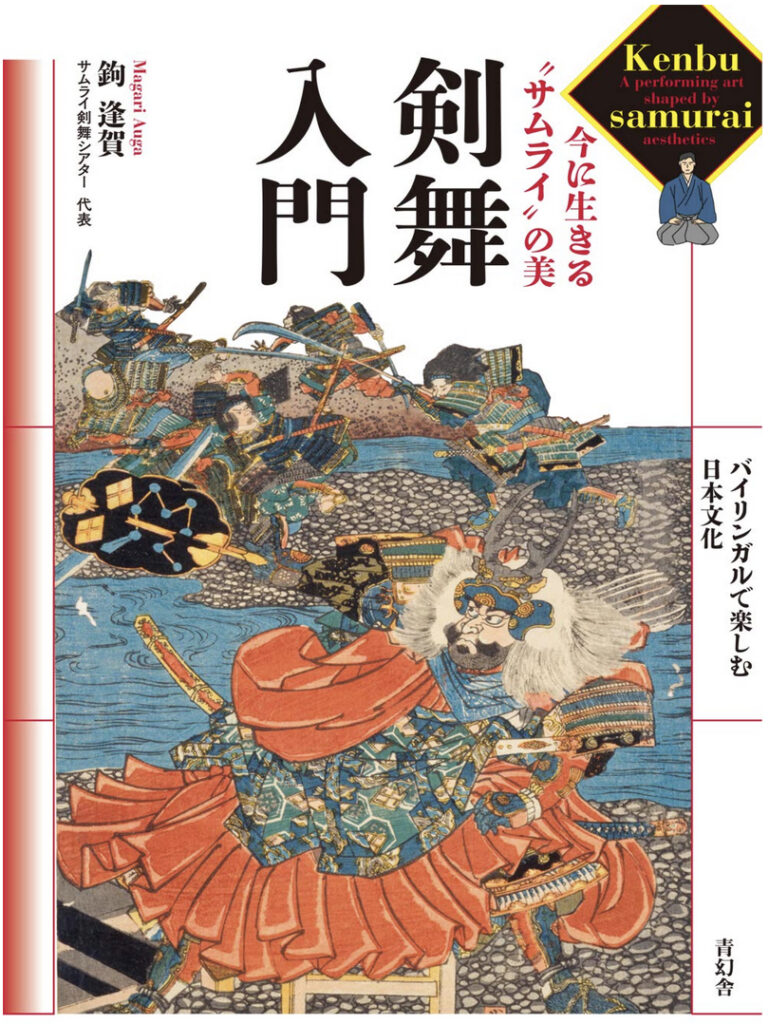
Kenbu Nyūmon: The Living Beauty of the Samurai
The first-ever introductory guide to kenbu — a traditional Japanese performing art with over one hundred schools across the country!
Written by Kōaga-shi, a female kenbu master and representative of the “Samurai Kenbu Theater” in Kyoto — a venue that ranked in the Top 10 of TripAdvisor’s “Most Popular Tourist Spots in Japan Among Foreign Visitors” for three consecutive years.
From the foundational knowledge needed to appreciate a performance, to technical explanations, and interviews with masters from across Japan — this book explores the appeal of kenbu from a wide range of perspectives, with illustrations and diagrams to make it easy to understand!