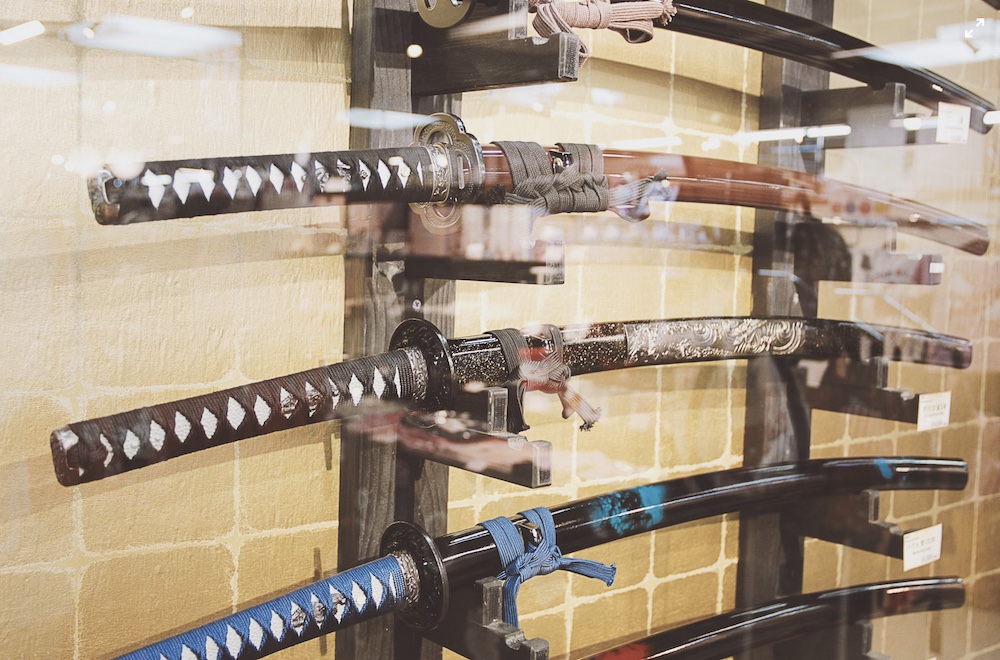
The shigin piece known as Ekisui Soubetsu (易水送別, “Farewell at the Yi River”), used in kenbu sword dance, is based on a Chinese classical poem.
As it has become one of my kenbu practice pieces, I’m writing this article to record the background of the poem for my own reference.
Shigin (詩吟) — the art of chanting classical Chinese and Japanese poetry — has been cherished in Japan for centuries.
Among its many celebrated pieces, Ekisui Soubetsu (“Farewell at the Yi River”) stands out as one of the most beloved in the shigin repertoire. It captures the solemn resolve of a man departing on a mission from which he will never return, and the grief of those who see him off.
In this article, I’ll introduce the historical background of this poem, the life of the assassin Jing Ke (荊軻), and what makes this piece so compelling as a shigin performance.
What Is “Ekisui Soubetsu”?
Ekisui Soubetsu is a Chinese classical poem set during the final years of the Warring States period.
It depicts the scene at the banks of the Yi River (易水), where the assassin Jing Ke held a farewell banquet with his friends before setting out to assassinate Qin Shi Huang — the king who would go on to become China’s first emperor.
The poem distills the fierce resolve of a man who has accepted that he will not return alive, and the sorrow of those gathered to bid him farewell. In the world of shigin, it is revered as a masterwork of hifun kōgai — passionate, righteous lamentation.
The Famous Lines: “Fū shōshō toshite ekisui samushi”
When people hear Ekisui Soubetsu, these are the lines that come to mind:
風蕭蕭兮易水寒
Fū shōshō toshite ekisui samushi壮士一去兮不復還
Sōshi hitotabi satte mata kaerazu
“The wind blows cold and desolate; the Yi River runs chill.
The warrior departs — and shall never return.”
In just two lines, the poem captures Jing Ke’s determination to face death, and the heartbreak of farewell.
Jing Ke and the Historical Background
Jing Ke was an assassin living in the final years of the Warring States period.
At the time, the state of Qin was growing ever more powerful, absorbing neighboring kingdoms one by one as it drove toward unifying all of China under one rule.
Facing this existential threat, Crown Prince Dan of Yan (燕) devised a plan to assassinate the King of Qin — and chose Jing Ke as his instrument.
A Journey of No Return
For his mission, Jing Ke would carry two offerings to present to the Qin court: the severed head of General Fan Yuqi (樊於期) — a Qin defector living in exile in Yan — and a map of Yan’s most fertile territories.
Whether the assassination succeeded or failed, Jing Ke had almost no chance of returning alive.
At the farewell banquet held by the Yi River, his friend Gao Jianli (高漸離) played an instrument called the zhu (筑), and to its music, Jing Ke sang the lines that would become immortal: “Fū shōshō toshite ekisui samushi…”
Everyone present wept as they watched him go.
The Outcome of the Assassination
Granted an audience with the King of Qin, Jing Ke drew a short blade hidden within the map and lunged at the king — but fell just short of success.
The king fought back, and Jing Ke was cut down.
The assassination failed. Yet Jing Ke’s willingness to sacrifice his life in service of a righteous cause has been told and retold across the centuries.
The Appeal of “Ekisui Soubetsu” as Shigin
What makes Ekisui Soubetsu so beloved in the shigin world is not only its content, but the richness of expression it demands from the performer.
- Emotional range: The piece asks the performer to hold two opposing emotions simultaneously — the grief of parting and the steely resolve to face death.
- Lingering resonance: Though brief, the poem contains a depth of imagery that stays with the listener long after the chanting ends.
- Power: The line “Sōshi hitotabi satte mata kaerazu” strikes the heart with a force that needs no explanation.
In shigin, understanding the meaning of the poem and then shaping each phrase through vocal inflection and ma (間, the artful use of silence and timing) allows the performer to channel Jing Ke’s inner world with increasing depth.
It is also considered an accessible piece for beginners, as the emotions it expresses are immediate and powerful.
Tips for Chanting “Ekisui Soubetsu”
Before chanting, it helps to picture Jing Ke’s state of mind — a man who has made peace with his own death.
In the opening phrase “Fū shōshō toshite”, let the voice evoke the chill and desolation of the scene. In the closing “mata kaerazu”, let a sense of absolute, quiet resolve come through. Shifting the color of the voice between these two moments can move your listeners deeply.
Ekisui Soubetsu — by Luo Binwang (駱賓王)
Kono chi, Entan ni wakaru
At this place, I part from Crown Prince Dan of Yan.Sōshi, hatsu kanmuri wo tsuku
The warrior’s hair stands up against his crown with resolve.Sekiji, hito sudeni bosshi
The man of that day is long gone.Konjitsu, mizu nao samushi
Today, the water runs cold still.
Summary
Ekisui Soubetsu is a masterwork of Chinese classical poetry, capturing the fierce farewell and unshakeable resolve of the assassin Jing Ke.
Though the story unfolded more than two thousand years ago, the image of a man who gave his life in service of a cause still moves people profoundly today.
Encountering this poem through shigin opens a doorway into the depth of classical Chinese verse and the historical romance of ancient China.
Try speaking aloud the line “Fū shōshō toshite ekisui samushi” — just once.
You may find that Jing Ke’s resolve, and the sorrow of that farewell, feel suddenly, unexpectedly close.
References
- Shiji, “Biographies of Assassins” (司馬遷, Sima Qian)
- Kotobank: “Jing Ke”:https://kotobank.jp/word/%E8%8D%8A%E8%BB%BB-58590
- Wikipedia: “Jing Ke”:https://ja.wikipedia.org/wiki/%E8%8D%8A%E8%BB%BB