Honestly, I had never seen kenbu — Japanese sword dance — until I reached this point in life.
It was kimono that first sparked my renewed appreciation for Japanese culture. From there, I discovered senbu (fan dancing), hoping to make use of a fan in performance, and that eventually led me to kenbu. Here, with the help of AI (Claude), I’ve put together some of the basics.
Picture a darkened stage. A single voice rises in a slow, haunting chant of classical Chinese poetry, and a figure in a black kimono draws a gleaming blade in one fluid motion. This is kenbu (剣舞), the Japanese sword dance—a centuries-old performing art that fuses poetry recitation, martial discipline, and pure aesthetic expression into something quietly electrifying.
If you’ve explored Japanese martial arts like kendo or iaido but never encountered kenbu, you’re in for a discovery. In this guide, we’ll walk through what the sword dance actually is, where it came from, the major schools, and how a curious beginner can give it a try.
What Is Kenbu? Understanding the Japanese Sword Dance
At its core, kenbu is a dance performed to shigin (詩吟)—the recitation of Chinese and Japanese poems in a distinctive, drawn-out melodic style. The performer interprets the poem’s meaning and mood using a sword, a folding fan, or both. The umbrella term for the whole art is shibu-kenbu (詩舞剣舞), and there’s a useful distinction within it:
- Shigin (詩吟): chanting classical poetry in a unique tonal style
- Kenbu (剣舞): dancing to that chant primarily with a sword
- Shibu (詩舞): a more graceful form danced mainly with a fan
When watching a live performance for the first time, most newcomers are struck by the contrast between stillness and explosive motion—what the Japanese call sei to dō (静と動). The dancer may hold a pose for several long beats, then snap the blade free in a flash of steel. That deliberate tension is exactly where kenbu’s magic lives.
Where Did Kenbu Come From? A Short History
The roots of the sword dance reach deep—into Shinto rituals where blades were offered to the gods, and into the combat training of the samurai class. But the kenbu we recognize today crystallized much more recently, between the late Edo period and the Meiji era (roughly the mid-1800s to the early 1900s).
The Bakumatsu Spirit and Modern Kenbu
During the turbulent Bakumatsu (幕末)—the final years of the Tokugawa shogunate—young loyalist shishi would chant rousing Chinese verse to steel their nerve and stir their patriotic fervor. That cultural current gave kenbu a powerful push forward.
One poem stands above the rest: “Kawanakajima (川中島)” by the scholar-poet Rai San’yō (頼山陽, 1781–1832). It dramatizes the legendary single combat between warlords Takeda Shingen and Uesugi Kenshin, and to this day it remains one of the most performed pieces on kenbu stages across Japan. If you attend a single recital, there’s a strong chance you’ll see it.
By the Meiji period, the art was being systematized as a way to transmit the spirit of the old samurai class, and regional schools began to take shape. The result is a uniquely Japanese tradition where martial technique and theatrical art are genuinely inseparable.
What Are the Main Schools of Kenbu?
Modern kenbu is held together by nationwide organizations. The two pillars are the Nippon Shigin Gakuin (公益財団法人 日本詩吟学院, Japan Shigin Academy) and the Nihon Kenshibudō Sōrenmei (公益社団法人 日本剣詩舞道総連盟, the Japan Sword and Poetry Dance Federation). Dozens of individual schools affiliate with these bodies, each preserving its own forms (kata) and staging.
- Shintō-ryū (神刀流)
- Lineages descended from Musō Jikiden Eishin-ryū, a classical swordsmanship tradition
- Numerous regional schools rooted in local communities
The differences can be surprisingly granular—how you draw the blade, how you flick the fan open. Practitioners often say that “the same poem becomes a completely different dance depending on the school.” If you’re thinking about enrolling, it’s worth finding out which lineage a nearby class belongs to before you commit.
Why Practice Kenbu? The Real Appeal
The draw of kenbu goes well beyond looking cool with a sword (though that doesn’t hurt). Talk to people who’ve stuck with it for years, and a few themes come up again and again.
Better Posture and More Graceful Movement
Kenbu begins with a straight spine and an awareness of the tanden (丹田)—the energy center just below the navel that’s central to many Japanese arts. Over time, that carriage seeps into everyday life. “Even the way I walk changed,” is a remark you’ll hear often.
A Deeper Grasp of Poetry and History
Because you study a poem’s meaning before you dance it, you absorb classical verse and Japanese history almost by osmosis. More than a few practitioners admit they fell down a rabbit hole into the Sengoku warring-states era after performing “Kawanakajima” enough times.
Something You Can Enjoy at Any Age
Unlike a high-impact sport, kenbu lets you move at your own pace. It’s genuinely common to find active performers in their 70s and 80s. That longevity explains why so many people take it up as a form of lifelong learning.
Can Beginners Start Kenbu?
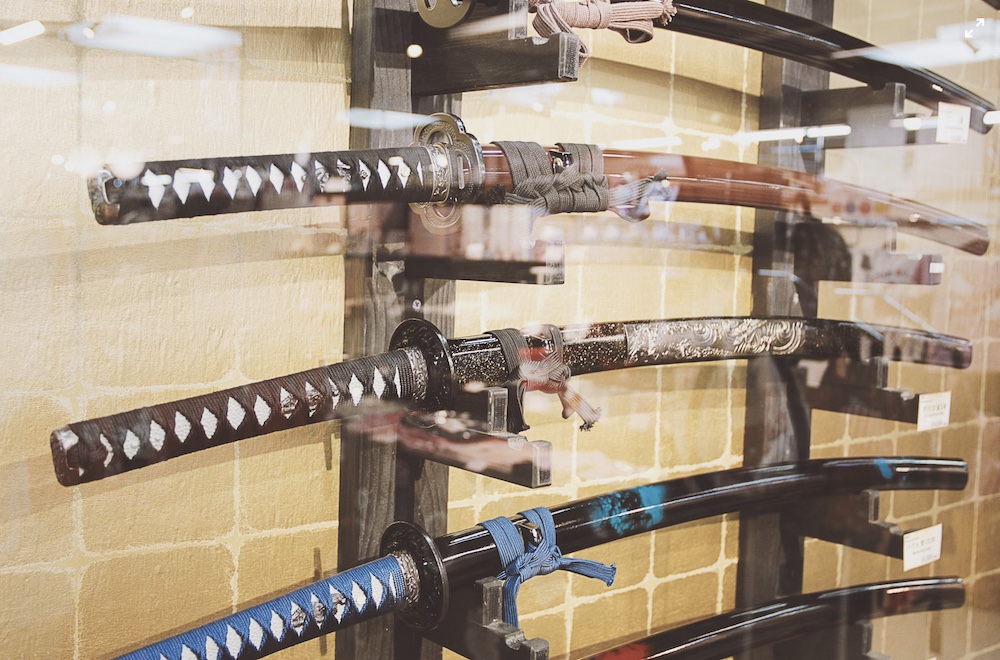
“Handling a real sword sounds dangerous,” you might be thinking—but relax. Beginners almost always train with a blunt mogi-tō (模擬刀), also called an iaitō, a practice sword with no cutting edge. You learn the forms and safe handling first, then advance step by step.
The starter kit is modest: a practice robe, an obi sash, tabi socks, and eventually your own mock sword and fan. Many studios let you try your first few sessions empty-handed. Monthly fees typically run around ¥3,000–6,000, which makes kenbu one of the more accessible traditional pursuits to begin.
Frequently Asked Questions
- Q: How is kenbu different from iaido?
- A: Iaido is a martial art that refines sword technique against an imagined opponent. Kenbu is an artistic form that expresses the emotion and imagery of a poem through dance. Both use a sword, but their goals are fundamentally different.
- Q: Can children learn kenbu?
- A: Yes. Many studios accept students from elementary-school age. Because it builds focus and etiquette, a growing number of families choose it as an after-school activity for their kids.
- Q: What if I’m not athletic?
- A: No problem at all. Kenbu centers on slow, controlled movement, and you progress at your own speed. Even those with little confidence in their fitness can keep up comfortably.
- Q: Are there opportunities to perform?
- A: Plenty—school recitals, national competitions, and local festivals all offer stages. Having a performance to aim for tends to make practice far more rewarding.
Conclusion
Kenbu is a distinctly Japanese performing art: a sword dance carried on the melody of shigin poetry recitation, expressed through steel and fan. Forged in the Bakumatsu and Meiji eras and handed down alongside poems like Rai San’yō’s “Kawanakajima,” it improves your posture, deepens your cultural knowledge, and rewards a lifetime of practice. Those are qualities you can only truly feel by experiencing it yourself.
If any of this has sparked your curiosity, consider visiting a trial lesson at a studio near you. The moment a mock sword rests in your hands, a new doorway into Japanese culture may quietly swing open.
References
Postscript
At the studio I actually attend, students range from kindergarteners to people in their 80s and 90s — men and women of all ages training together.
And watching young children wield a sword and dance is truly something else — cool and utterly adorable at the same time.
Each student works toward their own goals, dedicating themselves to practice and enjoying it for years to come.
Recently, online classes have also been launched for those who live far away. In an age where you can take trial lessons and train no matter where you are, students join from other prefectures and even from overseas.
Related Book
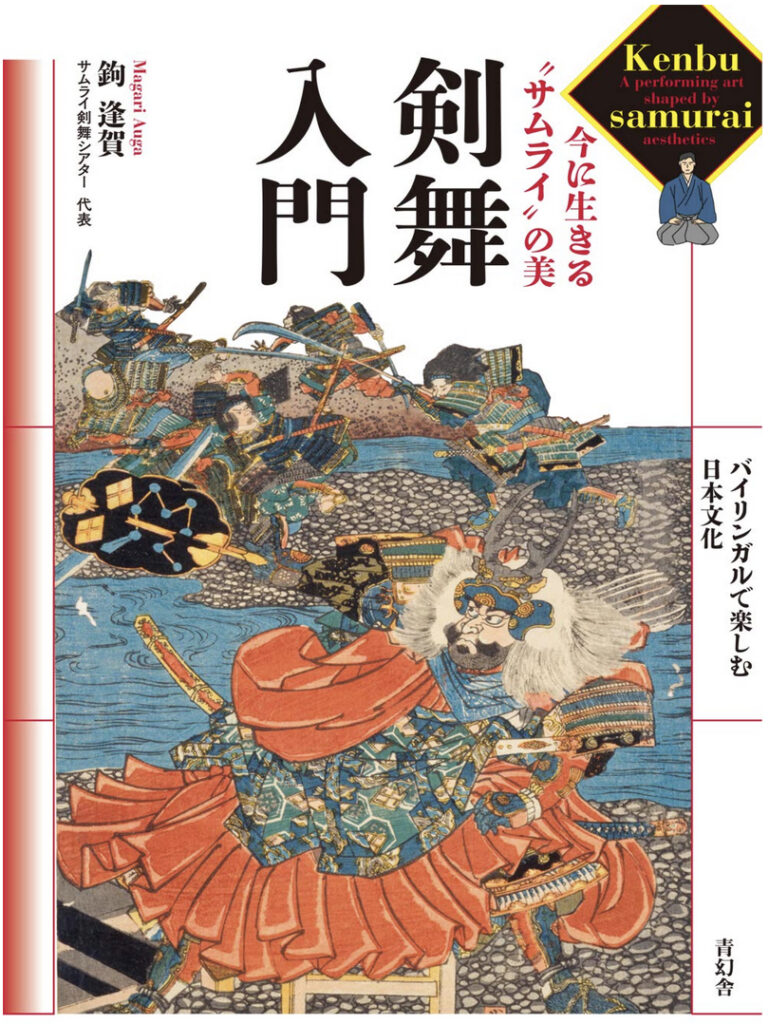
Kenbu Nyūmon: The Living Beauty of the Samurai
The first-ever introductory guide to kenbu — a traditional Japanese performing art with over one hundred schools across the country!
Written by Kōaga-shi, a female kenbu master and representative of the “Samurai Kenbu Theater” in Kyoto — a venue that ranked in the Top 10 of TripAdvisor’s “Most Popular Tourist Spots in Japan Among Foreign Visitors” for three consecutive years.
From the foundational knowledge needed to appreciate a performance, to technical explanations, and interviews with masters from across Japan — this book explores the appeal of kenbu from a wide range of perspectives, with illustrations and diagrams to make it easy to understand!