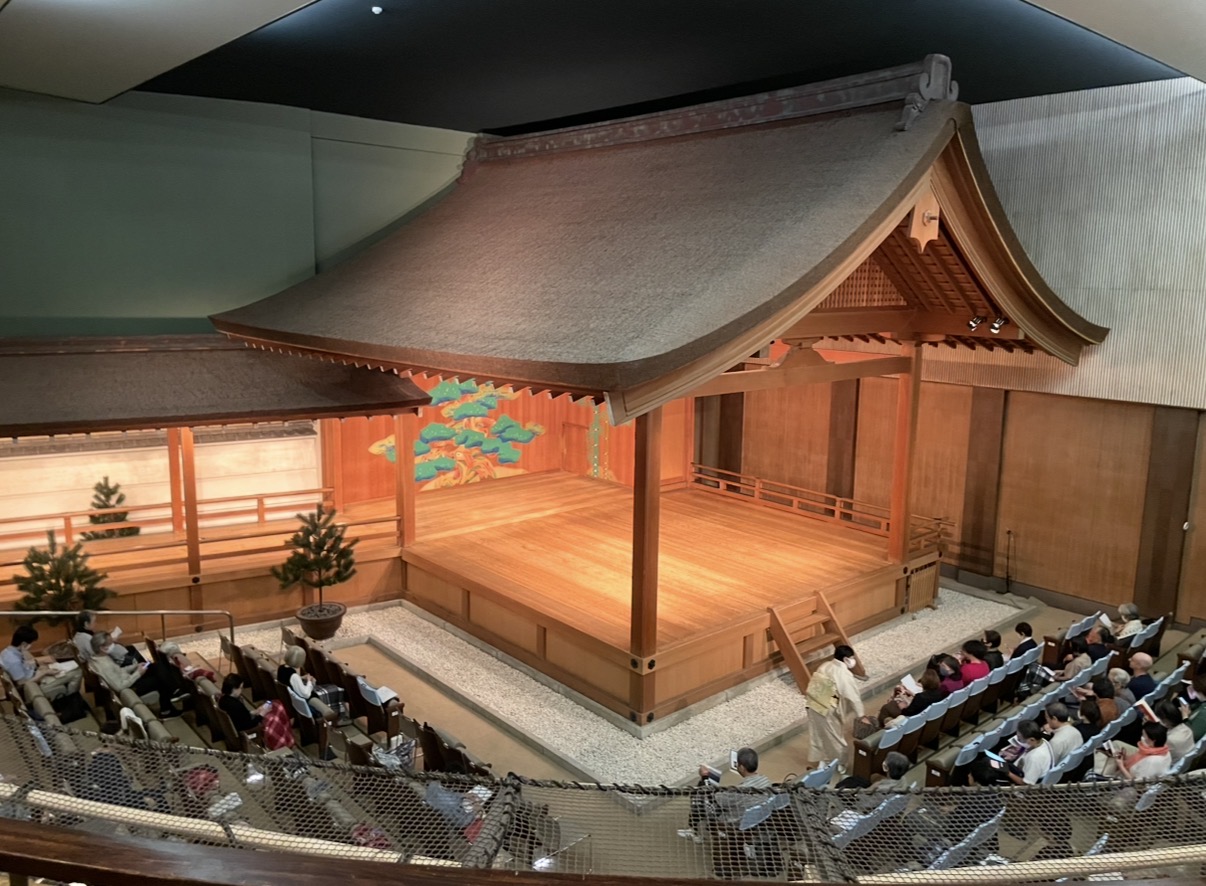
“Hisureba hana, hisezuba hana narubekarazu.” “Riken no ken.” — These are words recorded in Fushikaden (also known as Kadensho), written by Zeami, the man who brought nohgaku to its greatest heights.
These sayings carry a deep, universal truth that is cited not only in the world of noh, but in modern business and the arts as well. In this article, I explain the meaning and background of “Hisureba Hana” and “Riken no Ken” in a way that is easy to understand.
Who Was Zeami, and What Is Fushikaden?
Zeami (c. 1363–1443) was the man who, together with his father Kan’ami, elevated nohgaku to the level of high art.
Discovered by Ashikaga Yoshimitsu, shogun of the Muromachi shogunate, he refined his art while absorbing the refinement of aristocratic culture.
Fushikaden (also called Kadensho), written by Zeami, is a work that systematizes the theory of training, performance, and aesthetics in nohgaku, and is considered one of the oldest works of art theory in Japan. Written with the intention of passing its teachings on to disciples and descendants, it was long kept as a closely guarded secret.
It is within this work that the words “Hisureba Hana” and “Riken no Ken” are recorded.
What Is “Hisureba Hana”?
“Hisureba hana, hisezuba hana narubekarazu” — this passage from Fushikaden means: “It becomes the flower because it is kept hidden. If it is not hidden, it cannot become the flower.”
The “flower” referred to here is a moment of brilliance that surprises and moves the audience. Zeami believed that this brilliance arises from novelty — from the unexpected.
No matter how accomplished a technique may be, if everything is laid bare, the audience grows accustomed to it and the sense of wonder fades. By deliberately leaving something unseen, the performer stimulates the imagination of the audience, and a deeper emotion is born.
This is at once a theory of noh performance and a truth that resonates in the modern world.
In an age where disclosing everything has become the norm, Zeami was speaking, 650 years ago, about the importance of being mindful of “negative space” and “depth.”
What Is “Riken no Ken”?
“Riken no ken” means: “Do not view your own performance through your own eyes — view it instead through the eyes of the audience watching from the seats, a gaze that is detached and separate.”
On the noh stage, performers wear a mask (omote), which means they cannot directly see their own expressions.
Moreover, it is inherently difficult to grasp one’s own movements objectively.
Here, Zeami teaches the performer to abandon gaken — a way of seeing trapped within one’s own perspective alone — and instead approach the art with riken: the objective viewpoint of a detached third party.
Only when the performer holds an awareness of observing themselves from the outside can a truly complete performance come into being. This is the essence of “Riken no Ken.”
In the modern world, this concept is often discussed in parallel with “metacognition” — the ability to objectively understand oneself — in the contexts of sport, management, and education. It holds a universality that transcends its time.
What the Two Sayings Have in Common
What “Hisureba Hana” and “Riken no Ken” share is the message: “Be aware of what lies beyond yourself.”
“Hisureba Hana” is born from an awareness of the audience’s perspective and sensibility.
“Riken no Ken” is refined through holding the ability to see oneself objectively from the outside.
Both are grounded in the idea that art reaches its completion not through self-centered expression, but within the relationship between the performer and others.
Through these words, Zeami transmitted to future generations a “philosophy of art” that goes far beyond mere technical theory. And 650 years on, it continues to breathe quietly on the noh stage.
A Hint for When You Watch Noh
Knowing “Hisureba Hana” changes the way you see the moments when a performer “deliberately does not move” on the noh stage.
The tension that lurks within stillness, the emotion that dwells in what is left unspoken — that is the “flower” of noh.
Knowing “Riken no Ken” allows you to watch while imagining how the performer is controlling themselves on stage.
Grasping the space while wearing a mask, moving with an awareness of the audience’s eyes — that depth of mental concentration is itself one of the great attractions of nohgaku.
If these two sayings bring noh — which may have seemed difficult — a little closer to you, I am glad.