Despite having lived for a long time in Osaka, close to Kyoto, I knew nothing about the traditional performing arts of the Kamigata region. Simply because I had never had the opportunity to encounter them.
I had never watched a noh performance either, but being close to Kyoto means there are plenty of opportunities to encounter nohgaku. I intend to make better use of that advantage going forward.
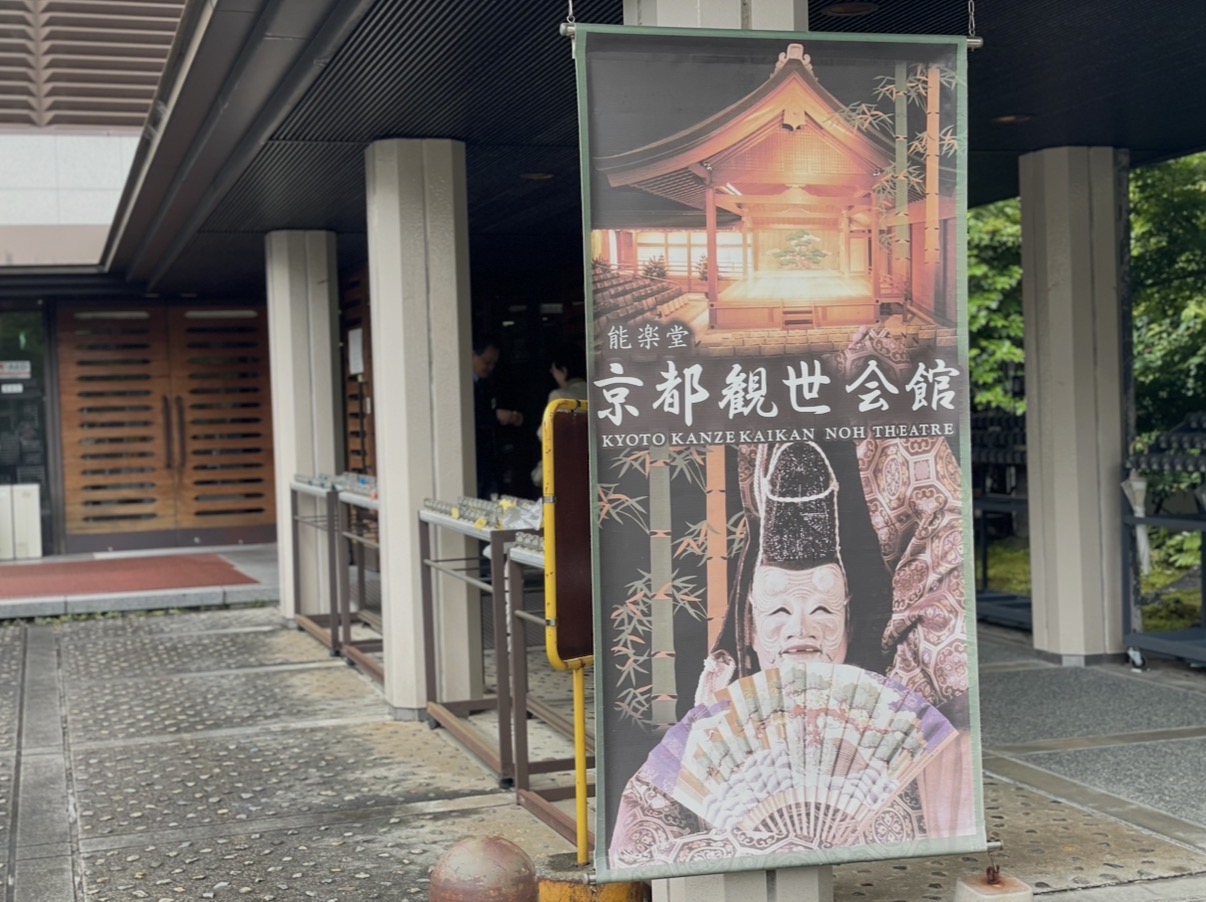
The noh theater I now visit most often is the Kanze Kaikan in Kyoto. This time, I asked AI to put together a summary of the Kyoto Kanze school for me.
Kyoto and nohgaku share a deep bond that cannot be severed. Within the Kanze school — the largest school of noh — “Kyoto Kanze,” based in Kyoto, has cultivated its own distinct tradition and refinement. Born under the patronage of the Muromachi shoguns and shaped in harmony with the culture of the court nobility, Kyoto’s noh has polished a style all its own.
Here I introduce its history and the Kyoto Kanze Kaikan, the current base of its activities.
The Connection Between the Kanze School and Kyoto
The Kanze school is the school of nohgaku established in the 14th century by the father-and-son duo Kan’ami and Zeami, and is today the largest school with the greatest number of noh performers. Although it was born in Yamato (Nara), from the time it gained recognition from Ashikaga Yoshimitsu, shogun of the Muromachi shogunate, the Kanze school became deeply intertwined with Kyoto — the city at the shogun’s feet.
The Kanze families based in Kyoto, known collectively as “Kyoto Kanze,” possess a distinctive dignity and refinement cultivated through their involvement with the imperial court and the world of the court nobility.
Even after the Edo period, they continued to be at the heart of Kyoto’s performing arts culture, sustained by the devoted support of wealthy Kyoto merchants known as dannashu and by the city’s cultural figures.
Kyoto Kanze Kaikan — The Home of Kyoto Noh
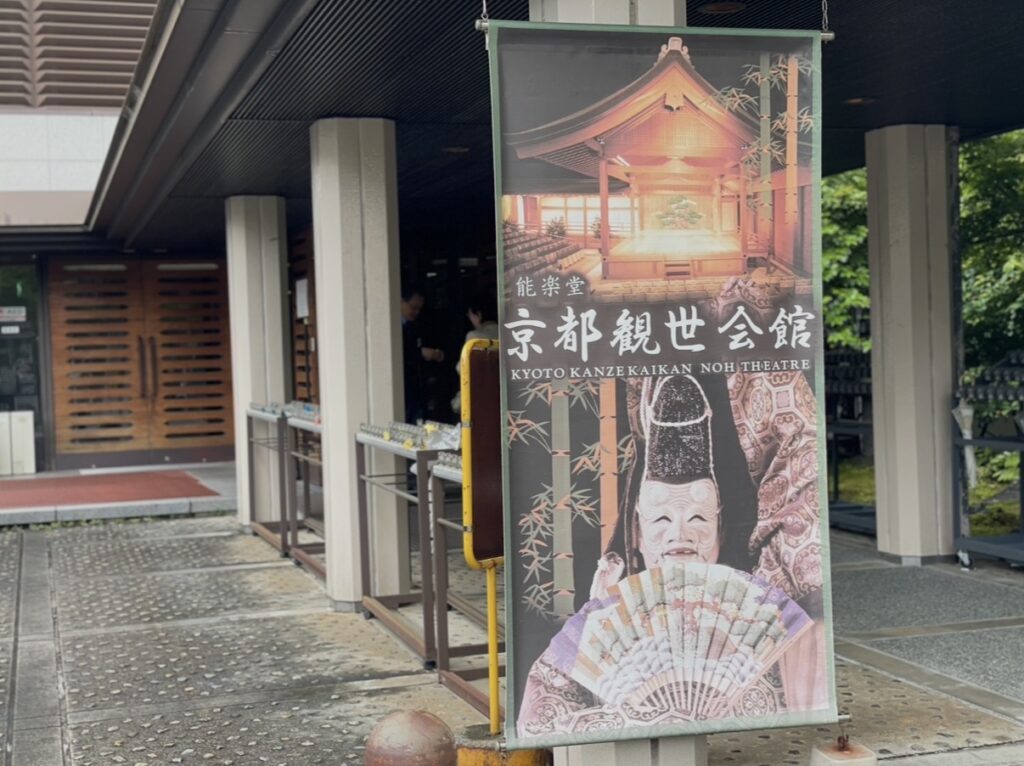
The base of operations for the Kyoto Kanze school is the Kyoto Kanze Kaikan.
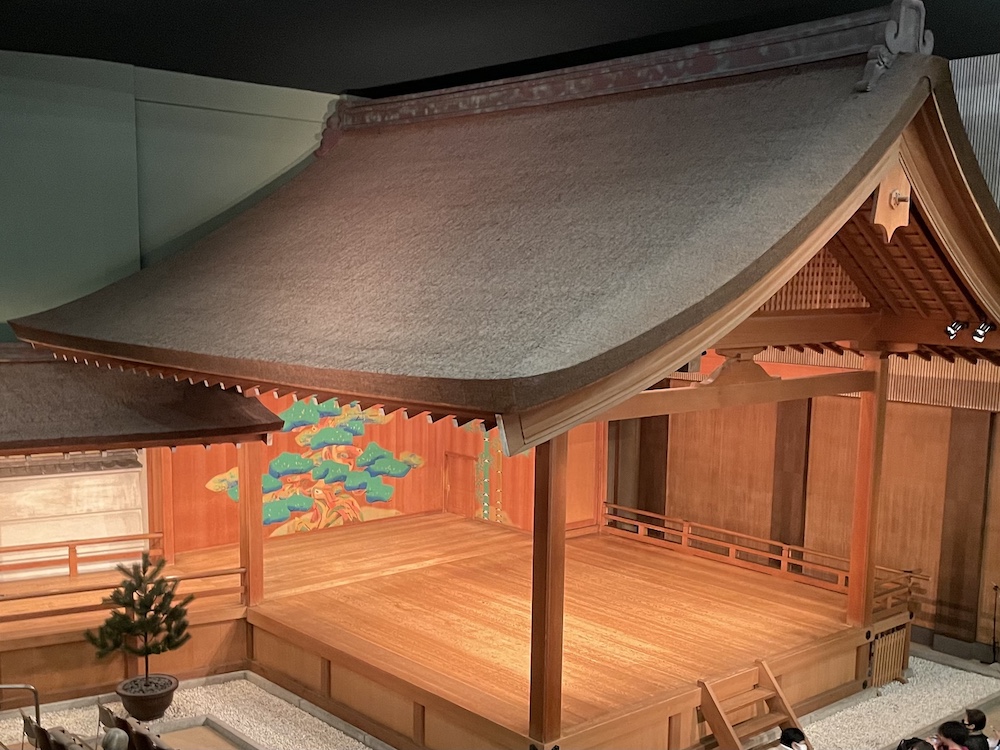
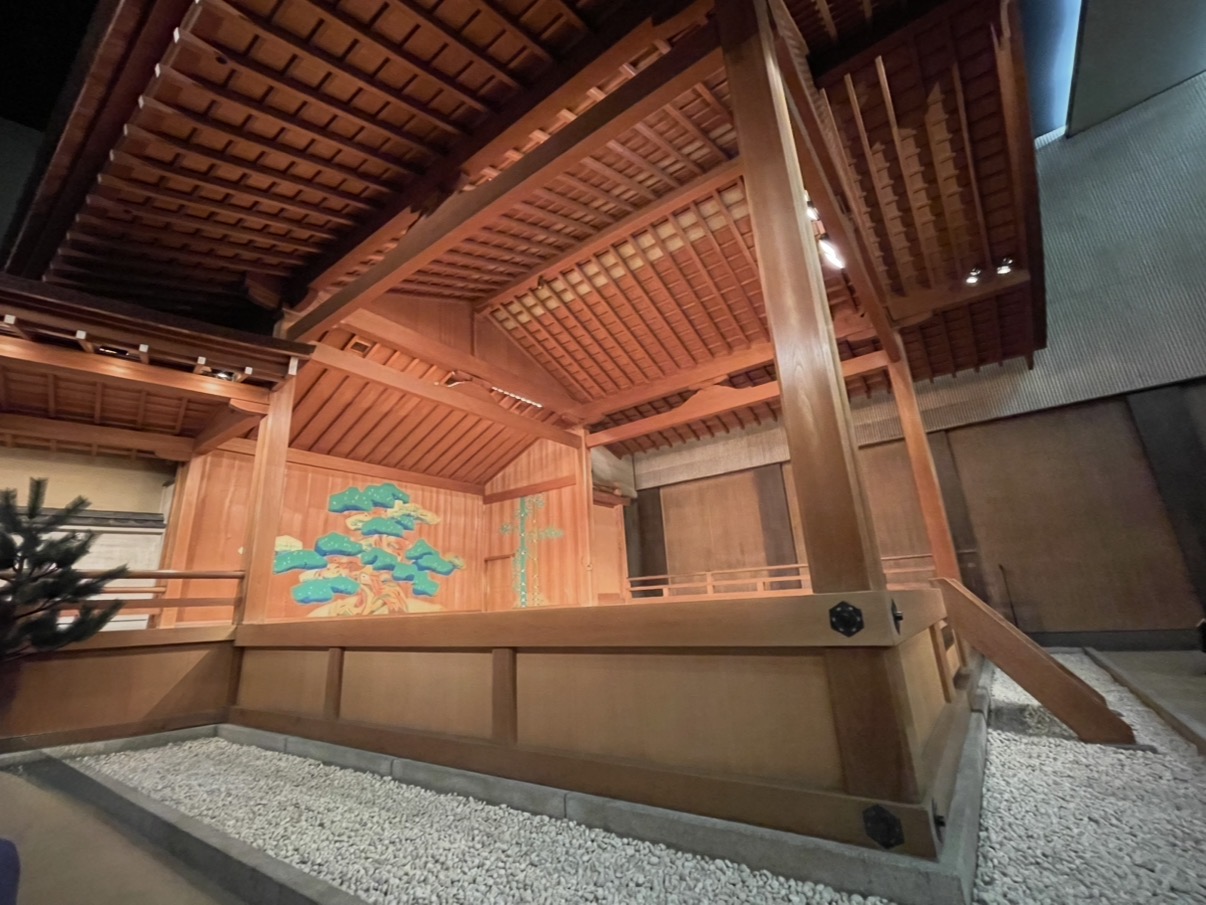
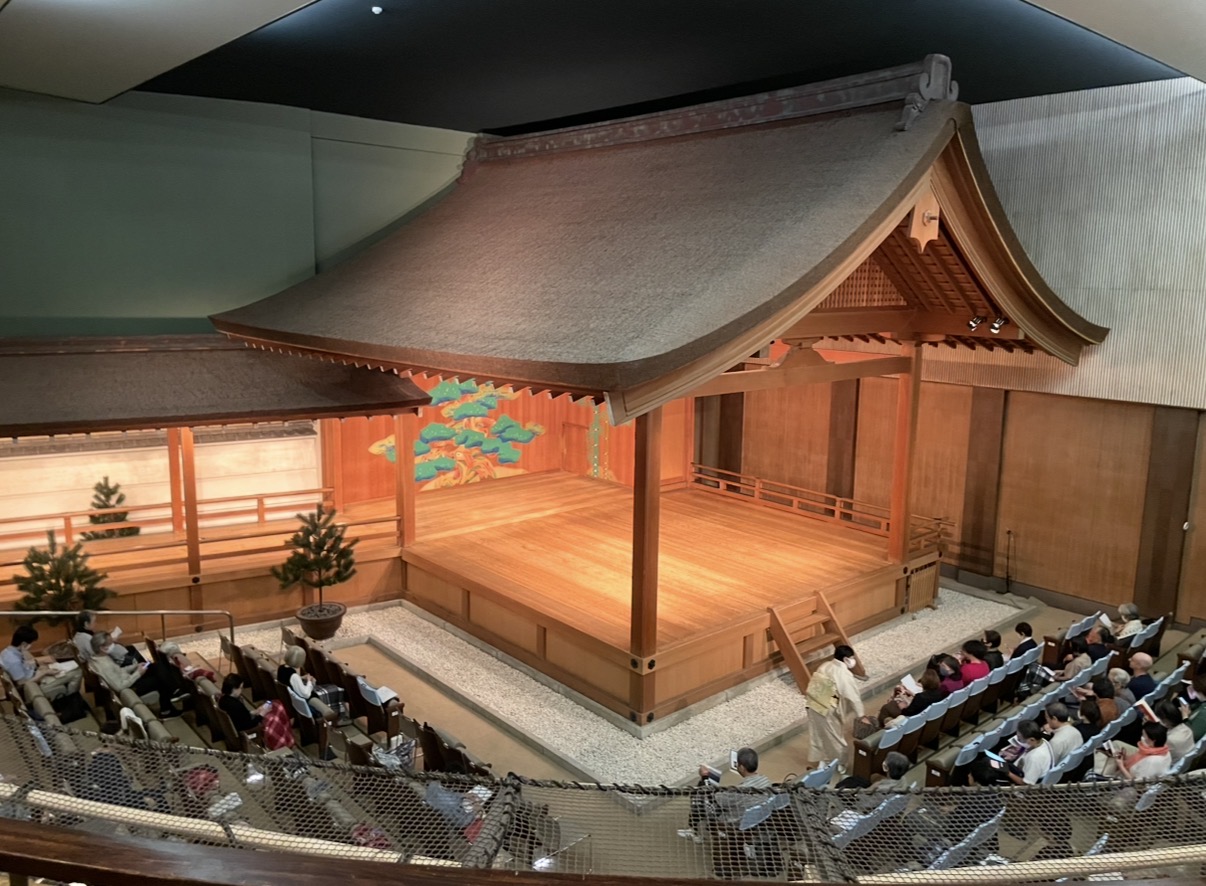
Located in Okazaki, Sakyo-ku, this venerable noh theater is equipped with a full-scale noh stage and hosts a wide variety of performances throughout the year.
At the monthly regular noh program “Kyoto Kanzekai,” noh performers based in Kyoto present a range of productions.
Commentary-guided performances for beginners and workshops offering a hands-on introduction to the basics of noh are also held regularly, as part of an ongoing effort to make noh feel more accessible.
For those watching noh for the first time, starting with a commentary-guided performance is a great way to deepen your understanding.
Takigi-Noh — A World of Fantasy Enjoyed Outdoors
In Kyoto, in addition to performances at noh theaters, takigi-noh (torch noh) is held at shrines and temples throughout the city.
Among these, the “Heian Jingu Takigi-Noh,” held every June at Heian Jingu Shrine, is widely known as one of Kyoto’s most representative outdoor noh events.
Performed against the backdrop of the shrine’s vermilion halls, illuminated by the light of burning torches, the noh stage has a fantastical beauty quite unlike that of an indoor theater.
Dedicatory noh performances (hono-no) are also held at shrines throughout Kyoto, including Shimogamo Shrine and Kamigamo Shrine, offering precious opportunities to experience nohgaku in a sacred setting.
The Culture of Utai Practice — Noh Rooted in Everyday Life
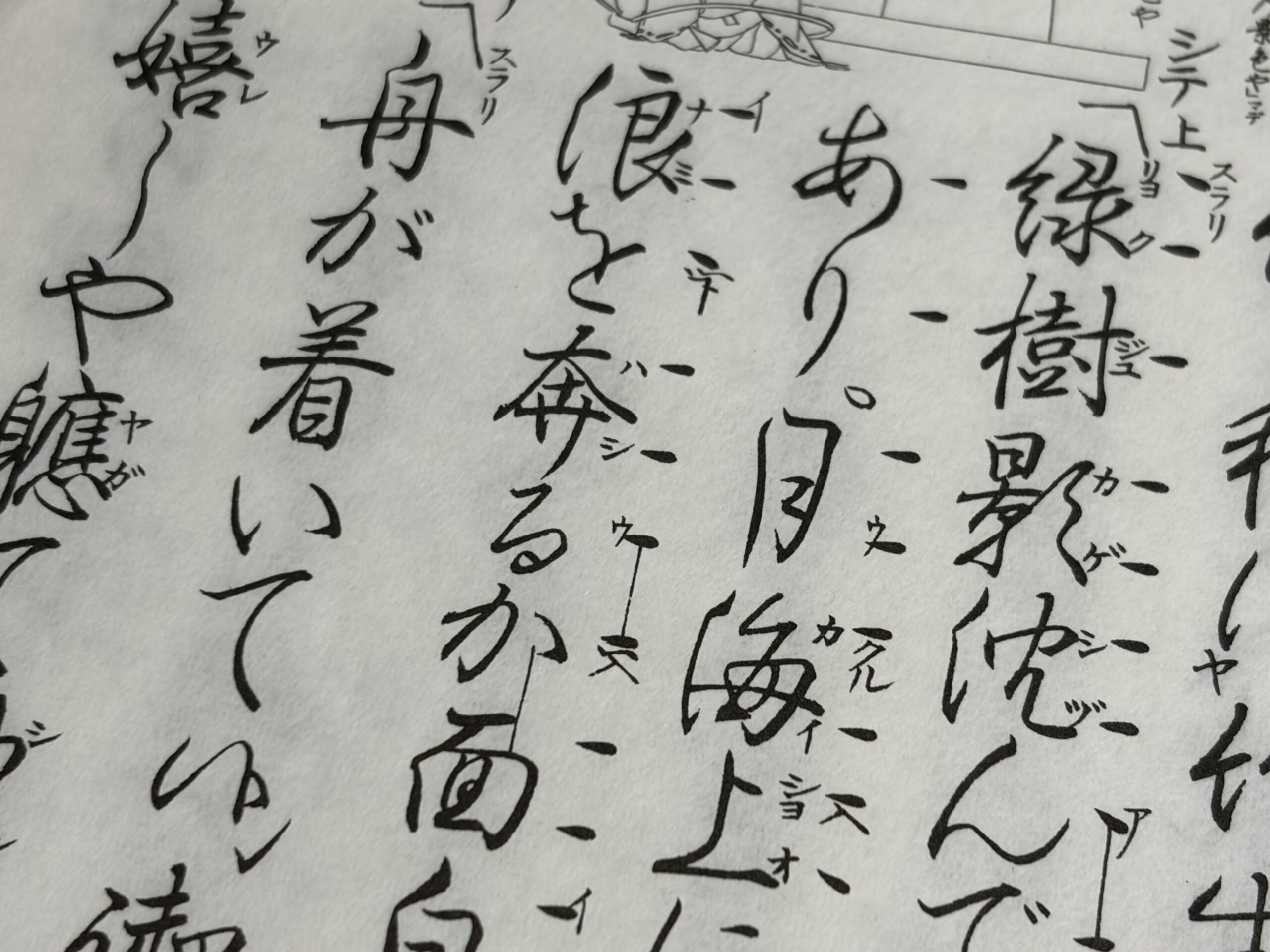
Inseparable from any discussion of the Kanze school is the culture of utai (chanting) practice.
Utai is the sung portion of noh, and in former times the practice of utai was widely enjoyed as a hobby among merchants and craftspeople in Kyoto and Osaka.
Su-utai — a form in which participants simply voice the chant aloud, without stage costumes or dance — has been passed down to the present day and has taken root as a culture for enjoying noh in a more casual, everyday way.
Even today, Kyoto has many utai practice spaces, where office workers and homemakers alike can be seen learning utai as part of their daily lives.
Nohgaku is not only an art to be watched — it is also an art to be enjoyed through the voice.
Ways to Experience Noh in Kyoto
- Kyoto Kanze Kaikan: 44 Okazaki Enshoji-cho, Sakyo-ku, Kyoto. Check the official website for regular performance and workshop information.
- Heian Jingu Takigi-Noh: Held in early June each year. One of Kyoto’s most iconic outdoor noh venues.
- Shimogamo Shrine & Kamigamo Shrine: Dedicatory noh and special performances on the shrine grounds are not to be missed.
- National Noh Theatre (Tokyo): Offers a rich program of regular performances by each school, with many commentary-guided events as well.
The tradition of nohgaku breathes quietly on in the streets of Kyoto. Please, come and experience for yourself the 650 years of history that the Kanze school has built — here, in the city of Kyoto.
References
- Kyoto Kanze Kaikan Official Website
- Nohgaku Performers’ Association (Public Interest Incorporated Association) Official Website
Afterword
“Kyoto Kanze” long nurtured a culture of su-utai practice in Kyoto.
I understand that they have since unified with the Tokyo branch of the Kanze school, but until then they had their own distinct tradition of utai practice. (Apparently even the chanting itself was slightly different before the unification.)
Kyoto also has several noh theaters scattered throughout the city, where su-utai and shimai (dance) lessons are held, along with recitals and other events.
Rather than simply watching noh, entering the world through su-utai practice is a fascinating path in its own right.