The story of Kukai and Saicho crossing to Tang China is, at its heart, a tale of two young monks who risked their lives at sea to bring esoteric Buddhism (mikkyo) back to Japan. What these two men learned on the Chinese mainland would go on to become a cornerstone of Japanese Buddhism for the next twelve centuries. In this article, we’ll trace their footsteps alongside the official Japanese envoys to Tang, and unpack—in plain language—exactly what the teachings they carried home actually meant.
Both figures are known today by their posthumous titles: Kukai as Kobo Daishi and Saicho as Dengyo Daishi. But before they became legends, they were two ambitious travelers boarding wooden ships bound for one of the greatest civilizations the world had ever seen.
What Kind of Country Was Tang China?
The Tang dynasty (618–907) unified the Chinese mainland and stood as the cultural and religious center of Asia at the time. Its capital, Chang’an—modern-day Xi’an—was a cosmopolitan metropolis of more than one million people. Along the Silk Road flowed goods, ideas, and people from Persia and India, and within its walls Buddhism, Nestorian Christianity, and Islam coexisted side by side.
Japan drew heavily from this powerhouse, actively importing the ritsuryo legal system, Buddhism, and the culture of Chinese characters. The messengers sent to absorb all of this were the kentoshi—the official Japanese embassies to Tang. Dispatched only once every few decades, these missions were monumental undertakings that required crossing the treacherous East China Sea, and shipwrecks were a grim and frequent reality. It was as members of one such embassy that Kukai and Saicho made their journey.
804: The Fateful Embassy Ships
In 804 (the 23rd year of the Enryaku era), the two men set out for Tang at almost exactly the same time—though aboard separate ships. The vessels of that era were wooden, and this was long before the compass had reached these waters. Tossed by rough seas, the fleet scattered. Saicho’s ship reached Tang in relatively good order, while Kukai’s was swept far to the south, eventually washing ashore, tradition tells us, along the coast of Fujian Province.
What makes this moment fascinating is the sheer gap in status between the two travelers. Saicho was already a distinguished monk enjoying the confidence of Emperor Kanmu, traveling as a gengakusho—a short-term scholar expected to return quickly. Kukai, by contrast, was still virtually unknown, classified as a rugakusho, an ordinary student whose posting officially required a full twenty years of study abroad. One arrived a favored dignitary; the other, an obscure young monk with everything to prove.
Why Did Kukai Cross to Tang in Search of Esoteric Buddhism?
From his youth, Kukai had wandered across Japan, determined to exhaust every teaching Buddhism had to offer. Yet he hit a wall: no master in Japan at the time could systematically transmit the teachings of esoteric Buddhism. What he sought was not merely words and doctrine, but the very essence of mikkyo—the path to enlightenment reached through the practice of ritual and discipline, not intellect alone.
Meeting His Master at Qinglong Temple in Chang’an
After arriving in Tang, Kukai eventually made his way to Chang’an and sought out the monk Huiguo (Keika) at Qinglong Temple. Huiguo was the foremost authority on esoteric Buddhism in that era. According to tradition, when the two met for the first time, Huiguo received Kukai almost as though he had been waiting for him all along—and transmitted the deepest secrets of the teaching without holding anything back.
In the span of just a few months, Kukai received kanjo—an initiation rite in which water is poured over the head to forge a bond with the Buddha—marking him as the legitimate successor of the esoteric lineage. Huiguo died that very same year, which means Kukai inherited the teaching at the last possible moment. Had his ship sailed a season later, the entire course of Japanese Buddhism might have been different.
Though officially bound to a twenty-year stay, Kukai judged that he had mastered what he came to learn and resolved to return home after roughly two years. Breaking the rules in this way was viewed as a serious problem at first. But the sheer volume of sutras, ritual implements, and mandalas he carried back proved so valuable that it would reshape the history of Japanese Buddhism entirely.
The Birth of a Sacred Mountain: Koyasan
After returning to Japan, Kukai established a base for spreading Shingon esoteric Buddhism on Mount Koya (Koyasan) in Wakayama Prefecture. According to the Koyasan Shukubo Association, Koyasan is “the sacred site of Shingon esoteric Buddhism, opened by Kobo Daishi at the beginning of the Heian period.”
Remarkably, the kechien kanjo—the initiation rite that forges a bond between a person and the Buddha—is still carried on at Koyasan today. For example, the autumn Kongokai (Diamond Realm) kechien kanjo for the 2026 season is scheduled to be held over three days, October 1–3, 2026, at the Kondo of the Danjo Garan complex on Koyasan, with an entrance fee of 5,000 yen per person. That a ritual Kukai brought home from Tang more than 1,200 years ago remains open to ordinary members of the public is nothing short of astonishing. When you consider that an unbroken chain of teachers connects that autumn ceremony to a monk who received the same rite in ninth-century Chang’an, the weight of that continuity is hard to overstate.
What Did Saicho Learn in Tang China?
Saicho, for his part, had already encountered the Tendai teachings at Mount Hiei, but his goal was to study them more deeply at their source: Mount Tiantai in China. Unlike Kukai, he did not head for Chang’an but instead traveled to Mount Tiantai in Zhejiang Province.
Study at Mount Tiantai and Yuezhou
At Mount Tiantai, Saicho studied Tendai doctrine under eminent monks such as Daosui (Dozui) and Xingman (Gyoman), inheriting the orthodox transmission of the teaching. On his return journey, he also encountered esoteric teachings at Yuezhou. The defining feature of Saicho’s approach was his ambition to bring back to Japan a synthesis: Tendai as the central pillar, combined with esoteric Buddhism, Zen meditation, and monastic precepts.
There was a catch, however. The esoteric Buddhism Saicho was able to study in Tang was limited in scope. This single fact would go on to shape the relationship between the two men after they returned home—in ways neither of them could have anticipated.
The Founding of Enryakuji on Mount Hiei
Back in Japan, Saicho founded Enryakuji on Mount Hiei. According to the official Hieizan Enryakuji website, the temple “has produced countless eminent monks as a hall of learning and practice, and is revered as the ‘mother mountain of Japanese Buddhism.'” This is no exaggeration. In later centuries, the founders of some of Japan’s most influential schools all trained on Mount Hiei: Honen of the Pure Land school (Jodo-shu), Shinran of True Pure Land (Jodo Shinshu), Dogen of Soto Zen, and Nichiren of the Nichiren school.
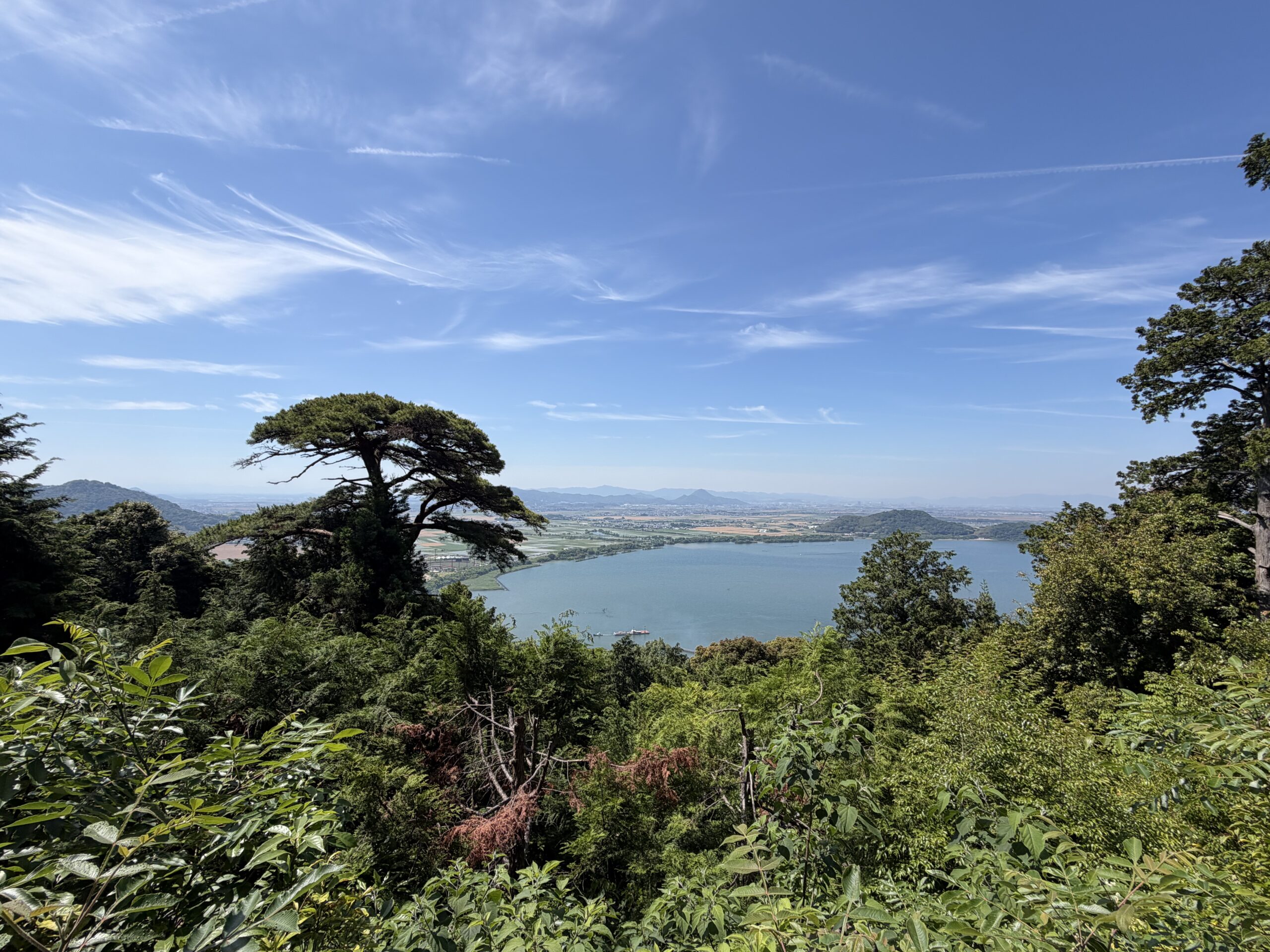
Enryakuji is divided into three areas—Todo (the Eastern Pagoda district), Saito (the Western Pagoda district), and Yokawa—and is registered as a UNESCO World Cultural Heritage site. Set in a scenic location overlooking Lake Biwa, Japan’s largest lake, the mountain still offers visitors the chance to experience zazen seated meditation and shakyo sutra copying. Many visitors describe the walk through the towering cedar groves between the temple halls as one of the most atmospheric experiences in all of Japanese pilgrimage.
What Happened Between Kukai and Saicho?
After returning to Japan, the two enjoyed a cordial and cooperative relationship at first. Because Kukai had studied esoteric Buddhism far more deeply, Saicho went so far as to take the position of a disciple in order to request instruction. Saicho borrowed sutras from Kukai and even received the kanjo initiation from him—a striking reversal, given that Saicho was the older and more established of the two.
Over time, however, the differences in their thinking rose to the surface. The most famous episode concerns the moment Saicho asked to borrow the Rishushakukyo (a commentary on esoteric scripture). Kukai refused, insisting that esoteric Buddhism is something transmitted through practice, not through the written word. This fundamental clash over the very nature of learning is what ultimately drove the two men down separate paths.
- Kukai (Shingon school): Inherited the deepest secrets of esoteric Buddhism directly in Tang and established Shingon esoteric Buddhism with Koyasan as its base.
- Saicho (Tendai school): Built upon Tendai doctrine while integrating esoteric Buddhism, Zen, and the precepts, making Mount Hiei the “mother mountain of Japanese Buddhism.”
Their approaches diverged sharply, but there is no doubt that the shared act of crossing to Tang to study gave birth to the two great currents of Heian-period Buddhism. In a very real sense, the entire spiritual landscape of medieval Japan traces back to those two ships that scattered across the East China Sea in 804.
Frequently Asked Questions
- Q: Who was older, Kukai or Saicho?
- A: Saicho was the elder of the two. Saicho is believed to have been born in 766 (some sources say 767), while Kukai was born in 774, making Saicho roughly seven or eight years older. When it came to esoteric Buddhism, however, the roles reversed—there were occasions when the older Saicho sought instruction from the more deeply trained Kukai.
- Q: What exactly is esoteric Buddhism (mikkyo)?
- A: It is a branch of Buddhism that seeks to reach enlightenment not through words and theory alone, but through the practice of rituals and disciplined training. It makes use of tools such as mandalas and the kanjo initiation rite, in which water is poured over the head to forge a bond with the Buddha.
- Q: Can ordinary visitors still experience these traditions today?
- A: Yes. At Koyasan, the kechien kanjo initiation is still held for the general public—for example, the 2026 autumn Kongokai kechien kanjo is scheduled for October 1–3, 2026, with an entrance fee of 5,000 yen per person. At Enryakuji on Mount Hiei, visitors can experience zazen seated meditation and shakyo sutra copying.
- Q: Why did Kukai and Saicho travel to different places in China?
- A: They had different goals. Kukai went to Qinglong Temple in the capital, Chang’an, specifically to receive the transmission of esoteric Buddhism from Master Huiguo. Saicho traveled to Mount Tiantai in Zhejiang Province to study Tendai doctrine at its source, encountering esoteric teachings only later, at Yuezhou on his return journey.
- Q: How was it possible for Kukai to return after only two years when he was assigned a twenty-year stay?
- A: Kukai judged that he had mastered what he set out to learn in a remarkably short time, having received the full transmission from Master Huiguo, and decided to return home early. While breaking his twenty-year obligation was initially seen as a serious problem, the enormous collection of sutras, ritual implements, and mandalas he brought back proved so valuable that his decision was ultimately vindicated.
Conclusion
The journeys of Kukai and Saicho remind us that some of the most profound cultural transformations begin with individual acts of courage. Two young monks boarded fragile wooden ships, trusted their lives to a stormy sea, and returned carrying teachings that would echo through Japanese history for over a millennium. Kukai founded Koyasan and established Shingon esoteric Buddhism; Saicho founded Enryakuji and made Mount Hiei the training ground for nearly every major school of Japanese Buddhism that followed.
If you ever have the chance to visit these sacred mountains, remember that you’re stepping into a living tradition. The rituals still practiced at Koyasan and the quiet halls of Enryakuji are direct descendants of what two determined travelers learned in the great city of Chang’an twelve centuries ago—a bridge, still standing, between Tang China and modern Japan.
References
- Koyasan Shukubo Association — Koyasan Official Site (Notice of the 2026 Autumn Kongokai Kechien Kanjo)
- Hieizan Enryakuji — Head Temple of the Tendai School Official Site
Addendum
It is said that Kukai drifted ashore on the coast of Fujian Province, and from there traveled more than 2,000 kilometers toward Qinglong Temple in Chang’an.
Xiapu (Chigan Town) → Fuzhou → Nanping → Hangzhou → Suzhou → Xuzhou → Zhengzhou → Luoyang → Xi’an (Chang’an) (with stops omitted)
Saicho, on the other hand, took longer to make landfall, but his destination was much closer: Mingzhou → Mount Tiantai.
At the time, Saicho held the title of gengakusho (還学生) — a senior monk sent abroad with the full trust of Emperor Kanmu. Kukai, by contrast, was an utterly unknown rugakusho (留学生) — a long-term student with no reputation to his name.
And yet, Kukai had already immersed himself deeply in Buddhist teachings and could speak Chinese. Perhaps that is why he was able to receive kanjō (灌頂) — formal initiation as the rightful successor of Esoteric Buddhism — in just two years, rather than the allotted twenty.
He must have been the right-brain type: someone who grasps things intuitively.
Saicho, for his part, was earnest to a fault — so much so that he eventually sought teachings from Kukai, his junior. Rather than learning through practice, he seemed to prefer studying the sutras and understanding things through reason. A left-brain thinker, perhaps.
Neither approach is better than the other. Their circumstances were different, their times were different, and what the world needed from each of them was different.
Whatever the case, there is no doubt that these two men — envoys to Tang China over 1,200 years ago — transformed the landscape of Japanese Buddhism forever.
Kukai & Saicho — Recommended Reading
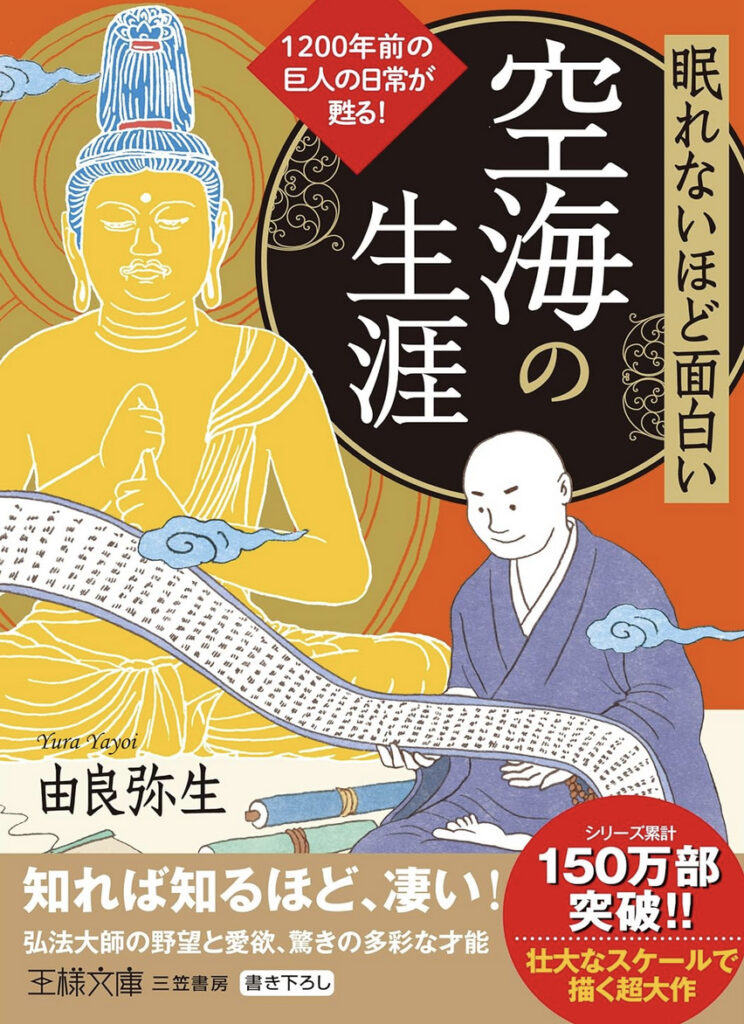
The Life of Kukai
The everyday world of a giant who lived 1,200 years ago, brought back to life!
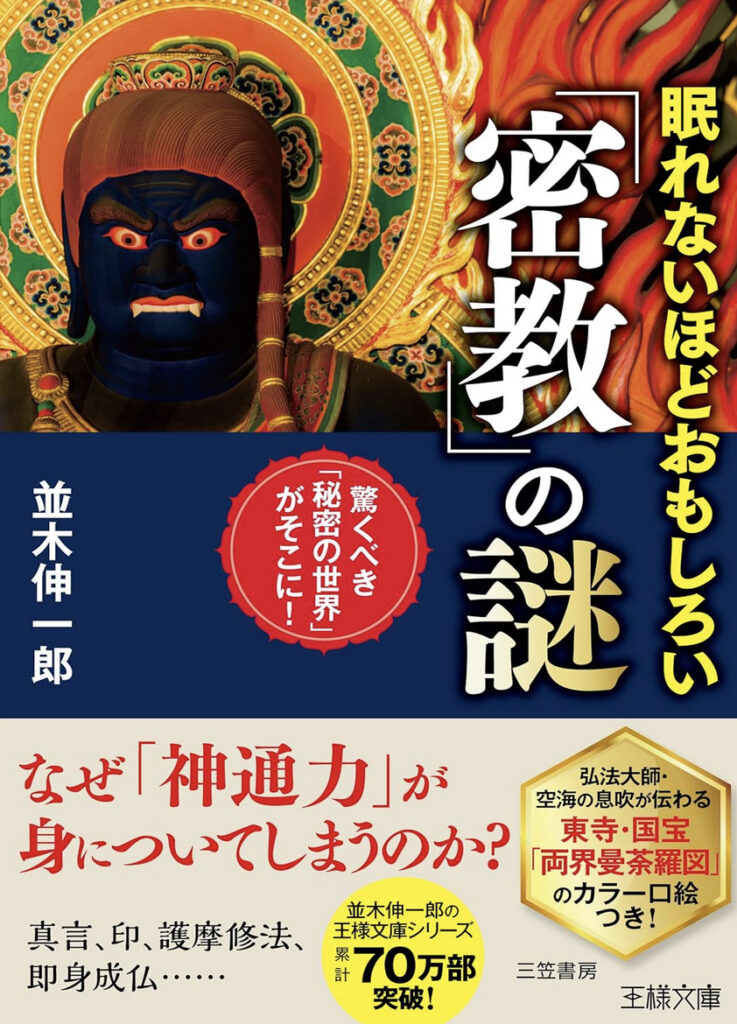
The Mysteries of Esoteric Buddhism
A world of astonishing secrets awaits!!
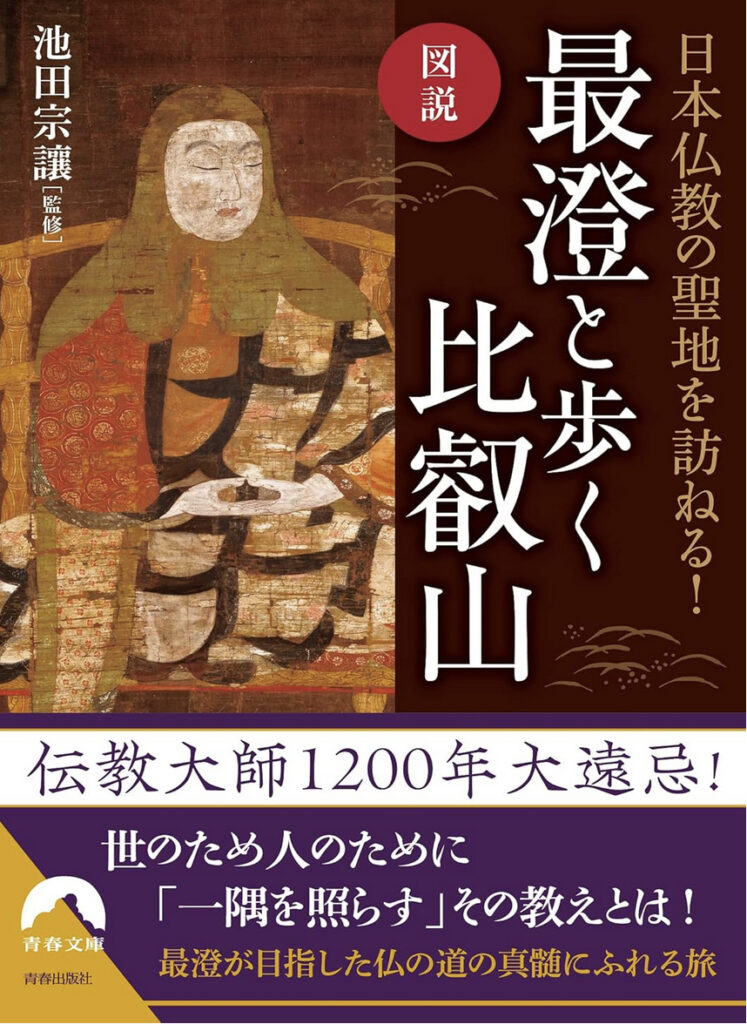
Walking Mount Hiei with Saicho
Visiting the Sacred Sites of Japanese Buddhism!
Introduction & Overview
- What Is Esoteric Buddhism? Tendai and Shingon Explained in Simple Terms
- The Deep Connection Between the Saigoku Pilgrimage and Esoteric Buddhism | Why We Journey to Kannon Bodhisattva
Buddhas & Bodhisattvas
- What Are the 33 Forms of Kannon Bodhisattva? A Complete Guide to the Principal Images of the Saigoku Pilgrimage
- What Is the Difference Between Nyorai, Bosatsu, Myōō, and Ten? An Illustrated Guide to the Deities of Esoteric Buddhism
Practices & Culture
- The Meaning of the Heart Sutra Explained Simply | The World of the Sutras Chanted on Pilgrimage
- What Are Goshuin, Omiei, and Sange? The Esoteric Buddhist Culture You Encounter on the Saigoku Pilgrimage
Temples & History