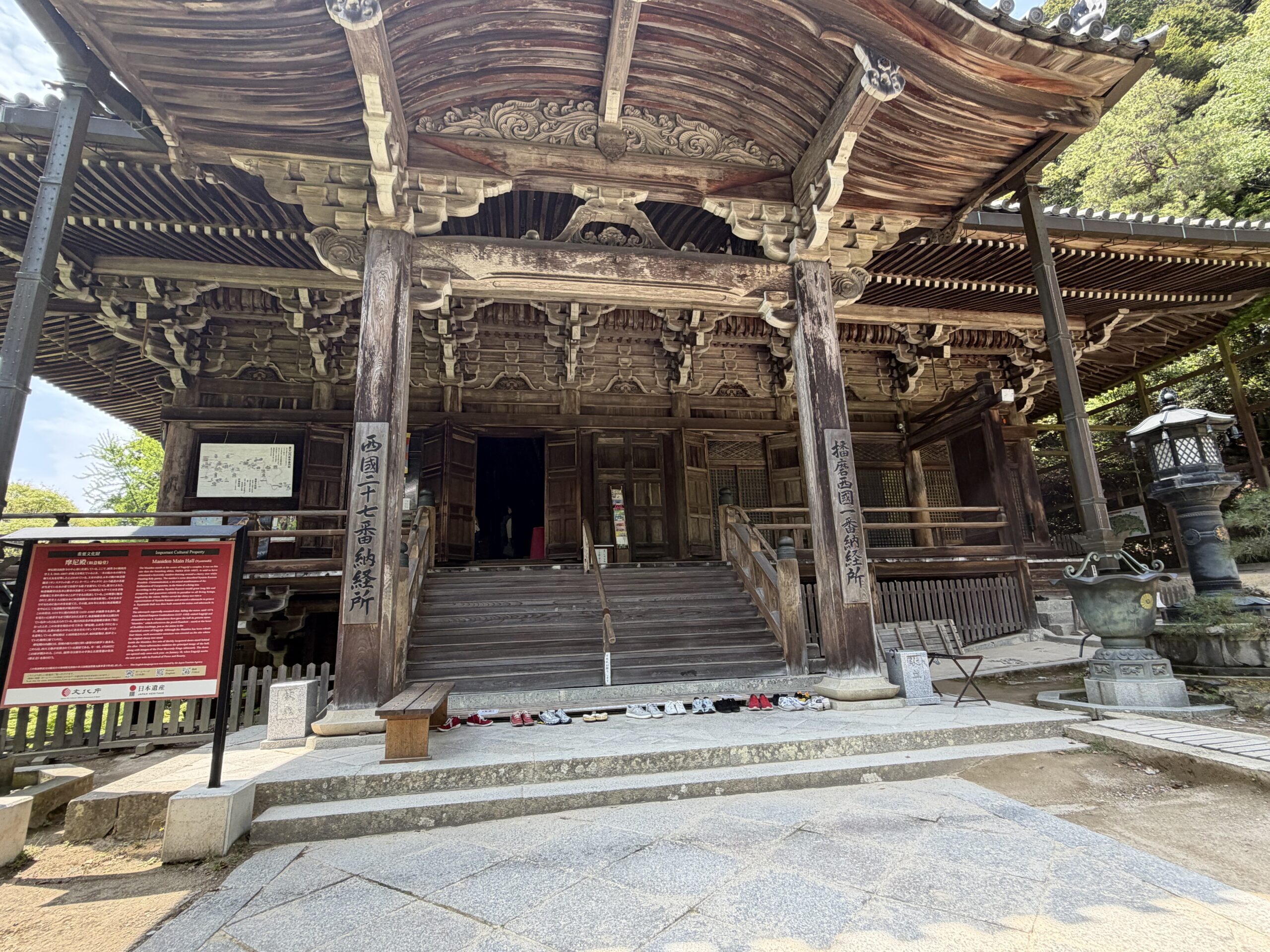
The 33 forms of Kannon (Kannon Bosatsu) refer to the shape-shifting manifestations that the Bodhisattva of Compassion takes to rescue people, adapting to whoever needs help. Walk the famous Saikoku Sanjūsankasho pilgrimage across western Japan and you’ll meet a surprising variety of principal images (gohonzon): the simple Shō Kannon, the eleven-headed Jūichimen Kannon, the thousand-armed Senju Kannon, and more. In this guide, I’ll unpack what these 33 forms actually mean and introduce the representative Kannon figures you can encounter on the road.
What Do the 33 Forms of Kannon Mean?
The number “33” comes straight from Kannon’s foundational scripture, the Kannon-gyō (formally the “Universal Gate” chapter of the Lotus Sutra, Myōhō Renge-kyō Kanzeon Bosatsu Fumon-bon). The text teaches that Kannon transforms into 33 different guises to reach out and save people according to their situation. These range from the form of a Buddha, to a bodhisattva, to a king, and even to a child. That flexibility, the willingness to become whatever the suffering person can best receive, is the heart of the concept.
Visit a temple hall and stand before the statues, and the differences become vivid. Some figures stack several small faces atop their heads (the eleven-headed Jūichimen Kannon), while others fan out a thousand arms (Senju Kannon). Collectively these dramatic versions are called henge Kannon, or “transforming Kannon,” and each carries its own associated blessings (goriyaku).
Why the Number 33 Became Tied to the Saikoku Pilgrimage
Tradition holds that in 718 (Yōrō 2), during the Nara period, the monk Tokudō Shōnin of Hasedera in Yamato received a revelation in a dream from Kannon and established thirty-three sacred sites. Centuries later, in the late 10th century, the retired Emperor Kazan revived the practice, shaping the route into the Saikoku Sanjūsankasho we know today. The count of thirty-three temples deliberately mirrors Kannon’s thirty-three forms, so the pilgrimage itself becomes a physical walk through the scripture.
Which Types of Kannon Will You Meet on the Saikoku Pilgrimage?
Every principal image among the thirty-three temples is a form of Kannon, yet the variety is remarkable. Here are six of the most important types to look for:
- Shō Kannon — The most basic form, with one face and two arms. You can see one at Temple 16, Kiyomizu-dera in Kyoto.
- Jūichimen Kannon (Eleven-Headed Kannon) — Crowned with eleven faces to watch over suffering in every direction. Temple 8, Hasedera, is especially famous for its towering version.
- Senju Kannon (Thousand-Armed Kannon) — With a thousand hands and a thousand eyes to save all beings. Enshrined at Temple 1, Seiganto-ji, near the Nachi Falls.
- Nyoirin Kannon — An elegant seated figure holding a wish-granting jewel, one knee raised in graceful contemplation. Known at Temple 2, Kimii-dera.
- Batō Kannon (Horse-Headed Kannon) — A rare wrathful form, the principal image of Temple 29, Matsuno-o-dera.
- Juntei Kannon — Associated with safe childbirth and conceiving children, enshrined at Temple 11, the Juntei Hall of Kami-Daigo.
Here’s a detail many casual visitors miss: of the thirty-three temples, the Jūichimen Kannon is the single most common principal image, accounting for roughly half of all the sites. Once you start paying attention to which Kannon each temple honors, the individual character of every hall snaps into sharper focus.
Many Principal Images Are Hidden Buddhas You Can’t Always See
One thing worth knowing before you set out: a great number of the Saikoku principal images are hibutsu, “hidden Buddhas” that are not on permanent display. The eleven-headed Kannon at Temple 8, Hasedera, can usually be viewed, but the thousand-armed Kannon at Temple 1, Seiganto-ji, is only revealed during special unveiling periods (gokaichō). I’d strongly recommend checking each temple’s official website in advance, since these openings can be tied to particular years or anniversaries.
How Do the 33 Forms Feel When You Walk the Pilgrimage?
When I walked sections of the Saikoku route myself, the temple that stayed with me most was Temple 21, Anao-ji, in the hills of Kameoka. Beyond its principal Shō Kannon, the main hall houses a reclining wooden “substitute Kannon” (migawari Kannon). Worshippers still come to gently rub the part of the statue that matches their own ailing body, then pray. Watching that quiet, almost domestic ritual, you sense how deeply Kannon devotion is woven into the daily life of the local community.
At each temple you can receive a goshuin, a hand-brushed seal and inscription. Comparing the principal Buddha’s name written on each one becomes its own small pleasure: “Ah, this one is Nyoirin Kannon.” Carry a single stamp book (nōkyōchō) the whole way, and the pilgrimage turns into a journey that traces all thirty-three forms with your own feet.
Frequently Asked Questions
- Q: Have all 33 forms of Kannon been made into statues?
- A: No. The 33 forms describe scriptural transformations, and not every one was ever sculpted as an image. In practice, only a handful are widely enshrined, chiefly Shō Kannon, the eleven-headed Kannon, and the thousand-armed Kannon.
- Q: Do I have to visit the Saikoku temples in numbered order?
- A: There’s no rule about it. Many pilgrims start at Temple 1, Seiganto-ji, but you’re also free to begin from whichever temple is nearest your home. Visiting in reverse (gyaku-uchi) or in scattered order (midare-uchi) is fully accepted.
- Q: Is there any point in visiting if the principal image is a hidden Buddha?
- A: Absolutely. With a hibutsu, you simply press your palms together and pray before the closed shrine cabinet, and you can still receive the goshuin seal. Many people enjoy returning in a future unveiling year to finally see the image revealed.
- Q: What’s the difference between Kannon and a bodhisattva?
- A: Kannon (Kannon Bosatsu) is one specific bodhisattva. A bodhisattva is a being who seeks enlightenment while saving others; among them, Kannon stands out as the figure who especially embodies compassion and mercy.
Conclusion
The 33 forms of Kannon are an expression of boundless compassion, the way the bodhisattva keeps transforming to meet each person where they are. Along the Saikoku Sanjūsankasho you can encounter that diversity firsthand, from the gentle Shō Kannon to the thousand-armed Senju Kannon, the eleven-headed Jūichimen Kannon, and even the fierce Batō Kannon. Knowing the type and the blessings tied to each image will make the experience far richer than ticking off temples one by one. Why not begin with a single nearby temple, stand before its Kannon, and quietly join your hands?
References
Introduction & Overview
- What Is Esoteric Buddhism? Tendai and Shingon Explained in Simple Terms
- The Deep Connection Between the Saigoku Pilgrimage and Esoteric Buddhism | Why We Journey to Kannon Bodhisattva
Buddhas & Bodhisattvas
- What Are the 33 Forms of Kannon Bodhisattva? A Complete Guide to the Principal Images of the Saigoku Pilgrimage
- What Is the Difference Between Nyorai, Bosatsu, Myōō, and Ten? An Illustrated Guide to the Deities of Esoteric Buddhism
Practices & Culture
- The Meaning of the Heart Sutra Explained Simply | The World of the Sutras Chanted on Pilgrimage
- What Are Goshuin, Omiei, and Sange? The Esoteric Buddhist Culture You Encounter on the Saigoku Pilgrimage
Temples & History