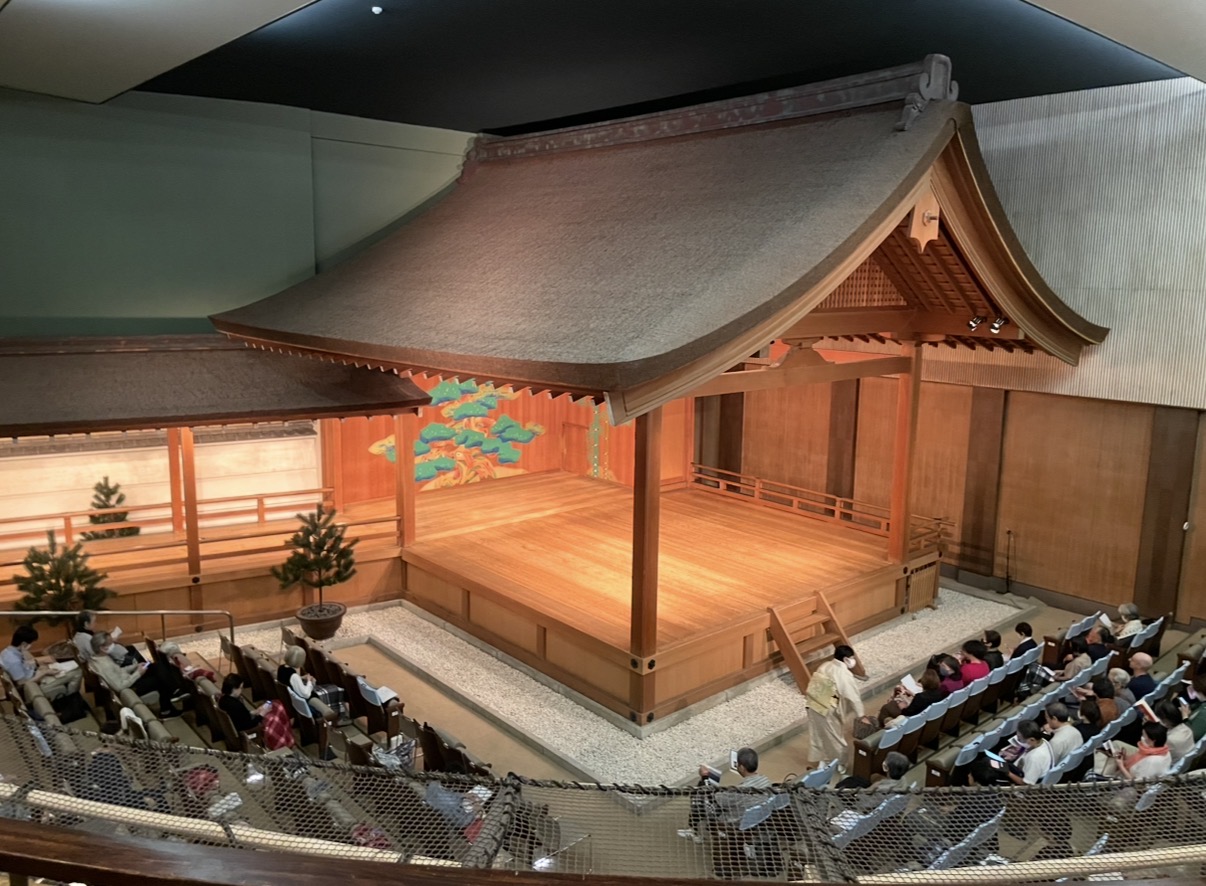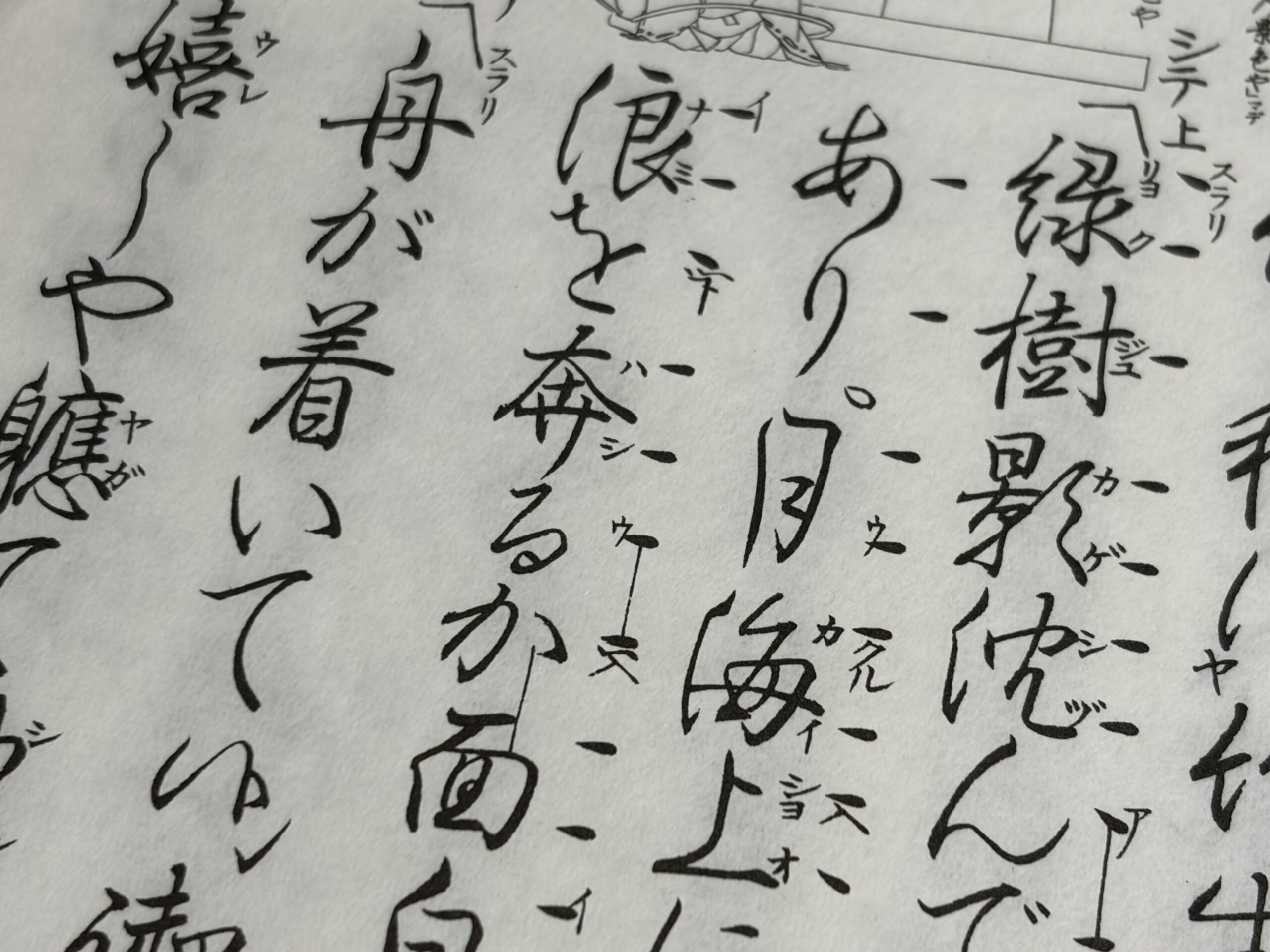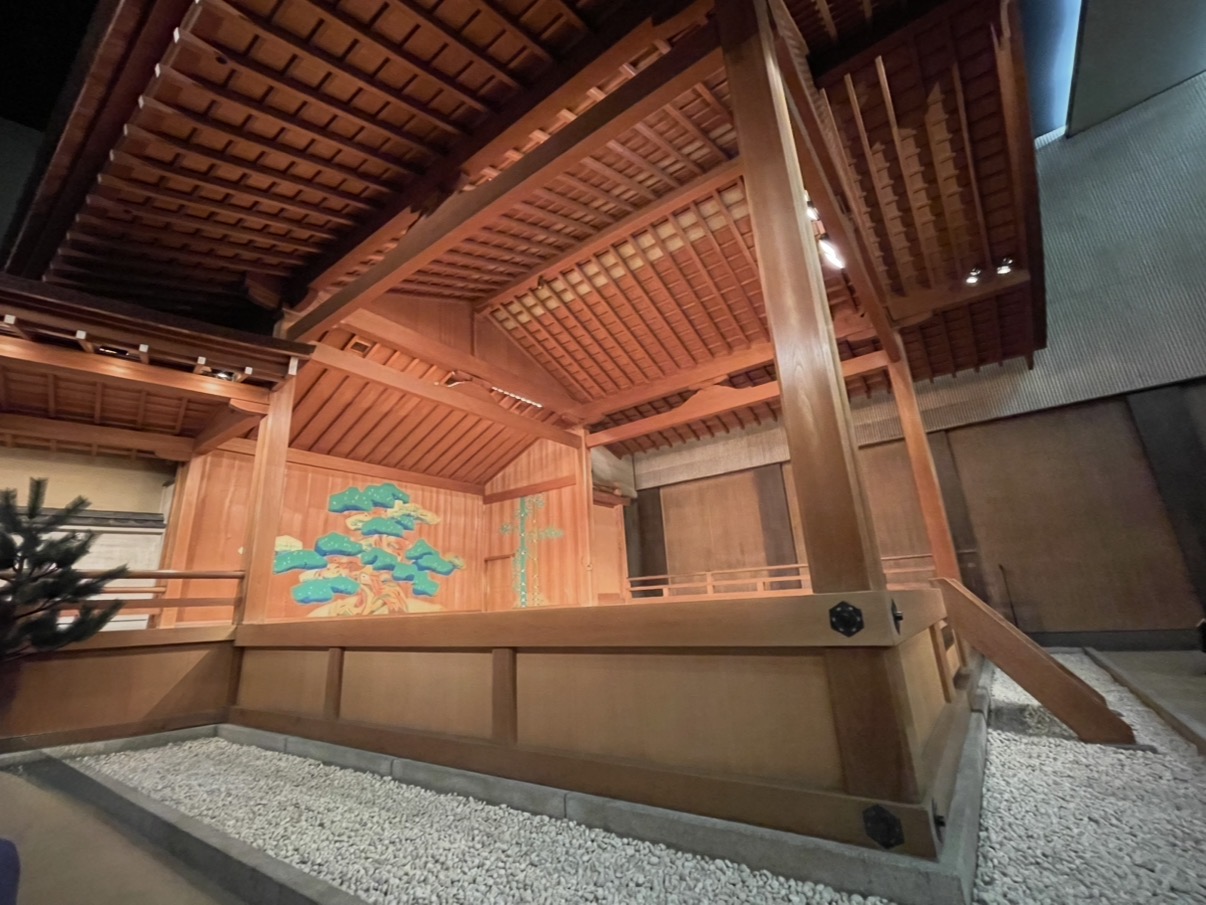
If you have ever attended a Noh performance in Japan and glanced at the program, chances are you saw the name Kanze-ryu (観世流) printed somewhere on the page. As the largest school in the world of Noh theater, Kanze-ryu traces its origins to the father-and-son duo Kan’ami and Zeami during the Muromachi period, and it has carried its art forward for more than 650 years. In this article, we will explore the lineage and history of Kanze-ryu from Kan’ami and Zeami down to the present-day head family, along with the story of its home stage, the Kanze Noh Theater.
Many people feel that Noh (能) is intimidating or overly formal. Yet when you trace its history, you discover something surprisingly human: family drama, political intrigue, and a lineage of performers who survived centuries of upheaval to keep an art form alive. Stick with me to the end, and I think you will see Noh in a warmer, more approachable light.
What Kind of School Is Kanze-ryu?
Before diving into the history, it helps to understand how Noh is organized. Rather than a single troupe of all-purpose actors, Noh divides its labor among specialist groups defined by role. There are the shite-kata (シテ方), who play the lead roles; the waki-kata (ワキ方), who perform supporting roles; the hayashi-kata (囃子方), the musicians; and the kyogen-kata (狂言方), who handle comic interludes.
Kanze-ryu belongs to the first group—the shite-kata—the performers who take on the central protagonist of each play. Within the shite-kata, there are five schools in total: Kanze-ryu, Hosho-ryu, Konparu-ryu, Kongo-ryu, and Kita-ryu. Collectively these are known as the goryu (五流), or “five schools.” Among them, Kanze-ryu stands out as the largest, boasting more performers and staging more productions than any of the others.
- It holds the largest body of practitioners among the five shite-kata schools.
- Its founders are Kan’ami and Zeami, the pair who perfected Noh as an art form.
- Its base of activity is the Kanze Noh Theater in Ginza, Tokyo.
- The organizing body known as the “Kanze-kai” was established in 1900.
Because of this scale, Kanze-ryu is simply the school most casual audiences are likely to encounter. When people say they have “seen Noh,” more often than not they have seen a Kanze-ryu production.
How Did Kanze-ryu Begin with Kan’ami and Zeami?
Kan’ami — The Father Who Elevated Sarugaku into Art
The story of Kanze-ryu opens during the Nanboku-cho period with a performer named Kan’ami (観阿弥). He led a sarugaku (猿楽) troupe called the Yuzaki-za (結崎座), based in Yamato Province—present-day Nara Prefecture. This Yuzaki-za would later become the Kanze-za, the direct source from which Kanze-ryu flows.
Sarugaku, at the time, was closer to popular entertainment for ordinary people than to refined art. Kan’ami changed that. By weaving in elegant song and dance, he polished sarugaku into a stage art of genuine sophistication—setting the foundation on which his son would build.
Zeami — The Prodigy Beloved by a Shogun
That artistic potential blossomed fully in Kan’ami’s son, Zeami (世阿弥). One of the most famous anecdotes in Noh history tells of a boyhood performance at Imakumano in Kyoto, where the third Muromachi shogun, Ashikaga Yoshimitsu, watched the young Zeami and was utterly captivated by his beauty and skill. Winning the patronage of a shogun—about as powerful a backer as one could hope for—propelled the Kanze-za to remarkable heights.
Zeami did far more than create a wealth of masterpieces. He also left behind theoretical writings on the art of Noh, most notably the Fushikaden (風姿花伝). Phrases from these texts, such as “shoshin wasuru bekarazu” (never forget your beginner’s spirit) and “hisureba hana” (what is hidden becomes the flower), are still quoted today—even in modern business books. Zeami’s gift for putting the essence of artistry into words has not faded in the slightest across the centuries.
The Successors Who Inherited the Art
After Zeami, the art passed to figures such as his nephew On’ami (音阿弥). From that point forward, the Kanze family took the hereditary title of Kanze-dayu (観世大夫) generation after generation, establishing a system in which the head family, or soke (宗家), governed the entire school.
What Is the Lineage of the Kanze-ryu Head Family?
In Kanze-ryu, the generations of the head family are counted from Kan’ami as the first. The soke stands at the pinnacle of the school and carries the crucial responsibility of deciding the kata (型)—the fixed forms of movement—and the overall staging of the plays.
The path was rarely smooth. Through the turmoil of the Warring States period, the protective patronage of the Edo shogunate, and the sweeping changes of the Meiji Restoration, Noh faced its survival being thrown into doubt again and again. The Meiji Restoration was especially brutal: with the fall of the Edo shogunate, Noh lost its single greatest patron, and many performers were suddenly cut off from their livelihoods. It was out of this hardship that a movement to rebuild Kanze-ryu as an organization took shape.
The great turning point in that revival was the founding of the Kanze-kai in 1900, which we turn to next.
Where Is Kanze-ryu Based Today? The Kanze Noh Theater and Kanze-kai
1900: The Founding of the Kanze-kai
According to the official Kanze materials, the Kanze Noh Theater (観世能楽堂)—the home base of the school’s activities—was built in conjunction with the establishment of the Kanze-kai in 1900. For an art form that had teetered on the edge of decline after the Meiji Restoration, this was a symbolic step toward organized revival.
From Omagari to Shoto, and Finally to Ginza
The theater has changed locations several times over the years. Here is the timeline in brief:
- In 1972, it moved from Shinogawa-machi (Omagari) in Shinjuku Ward to Shoto in Shibuya Ward, Tokyo.
- At Shoto, it devoted itself to the transmission and development of classical arts for 43 years.
- In the spring of 2015, its history in Shoto came to a close.
- On April 20, 2017, the beloved hinoki (cypress) stage from Shoto was relocated to Ginza 6-chome, and a new theater was born.
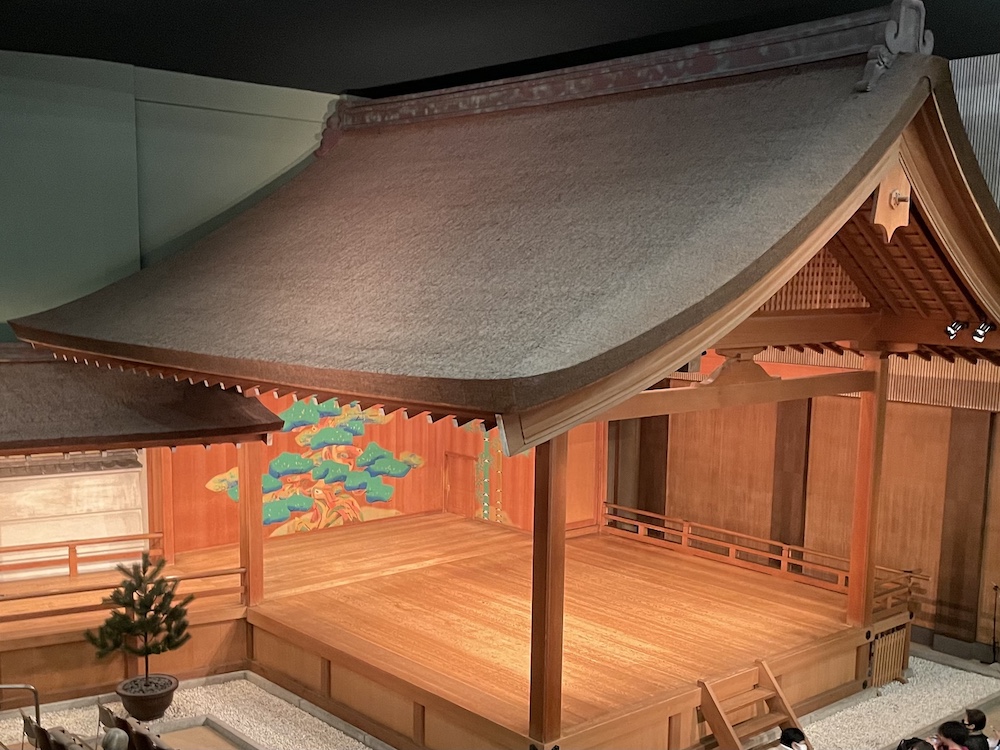
What deserves attention here is that this was not simply a matter of erecting a new building. The familiar cypress stage from Shoto was physically dismantled and reassembled in Ginza. In other words, the very stage carries its own history within it—an approach that let the theater be reborn as something new while still rooted in tradition. Today, the Kanze Noh Theater is located on the third basement floor of the upscale complex known as GINZA SIX.
Points to Know Before Attending a Performance
If you plan to visit the Kanze Noh Theater in person, it is worth understanding how Noh performances are structured. According to the official information, most Noh performances are held once per day. The program, cast, seat types, seating zones, and ticket prices all change from one performance to the next. Ticket reservation methods also vary by performance, so checking in advance is essential.
- For access, enter via GINZA SIX and take the escalator down to the third basement floor, on the Mihara-dori side next to the tourist information center.
- On Saturdays, Sundays, and public holidays, Chuo-dori becomes a pedestrian zone, so arriving by car is not possible.
- There is no restaurant inside the theater; visitors are advised to use the dining options within GINZA SIX or nearby.
- For parking, use the parking facilities within GINZA SIX.
- Entry for the sole purpose of buying merchandise is not permitted.
In recent years, the theater has also begun hosting events beyond conventional Noh performances. The official site has announced offerings such as a summer holiday parent-and-child Noh experience class and a uniquely modern crossover event titled “Noh & Animation Experience TOKYO.” These initiatives suggest an ongoing effort to make traditional performing arts feel more accessible—an attempt to broaden the base of Noh from the ground up, starting with hands-on practice and experience.
Where Does the Appeal of Kanze-ryu Lie?
Summing up the charm of Kanze-ryu in a single phrase is difficult, but if I had to try, I would point to two qualities: a refined, graceful beauty and a deep, resilient capacity for transmission. The art that Kan’ami and Zeami polished has been preserved by successive heads of the family while also being adapted to each new era. That balance of preservation and adaptation is precisely why it has endured as a living art for more than 650 years.
For those seeing Noh for the first time, I would gently suggest not worrying too much about “understanding” every line. When watching a live performance, many first-time viewers describe being drawn in less by plot and more by atmosphere—the slow, deliberate movements, the resonance of the chant, the stillness that suddenly gives way to motion. Approaching Kanze-ryu with that openness, rather than as a puzzle to be solved, tends to be the most rewarding way in.
Frequently Asked Questions
- Q: What exactly is Kanze-ryu?
- A: Kanze-ryu is a school of shite-kata (the performers of lead roles) in Noh theater. Founded by the father-and-son pair Kan’ami and Zeami in the Muromachi period, it is the largest of the five shite-kata schools in terms of both the number of performers and the number of productions staged.
- Q: Who were Kan’ami and Zeami?
- A: Kan’ami led the Yuzaki-za sarugaku troupe in Yamato Province and elevated sarugaku from popular entertainment into a refined art. His son Zeami won the patronage of shogun Ashikaga Yoshimitsu, created many masterpieces, and wrote influential theoretical works such as the Fushikaden.
- Q: Where is the Kanze Noh Theater located now?
- A: It is currently located on the third basement floor of GINZA SIX in Ginza 6-chome, Tokyo. The theater relocated there in April 2017, and notably, the cypress stage from its former Shoto location was reassembled at the new site.
- Q: How do I attend a Kanze-ryu performance?
- A: Most Noh performances run once a day, and the program, cast, seating, and ticket prices differ for each one. Reservation methods also vary by performance, so it is essential to confirm the ticket details with the organizer in advance. Note that there is no restaurant inside the theater and entry solely to buy merchandise is not allowed.
- Q: When was the Kanze-kai founded?
- A: The Kanze-kai was established in 1900, and the Kanze Noh Theater was built in connection with its founding. This marked an important step in the organized revival of Noh after the decline it faced following the Meiji Restoration.
Conclusion
Kanze-ryu is not merely the biggest name in Noh—it is a living thread that connects the medieval genius of Kan’ami and Zeami to the stages of contemporary Ginza. Along the way, the school weathered the collapse of shogunal patronage, rebuilt itself through the founding of the Kanze-kai in 1900, and even carried its cypress stage from Shoto to a modern shopping complex so that history could literally travel with it.
Whether you are drawn to Zeami’s timeless words about the “flower” of performance, curious about the hereditary lineage of the Kanze family, or simply hoping to catch a live show at GINZA SIX, there has never been a more approachable moment to encounter this 650-year-old tradition. Check the current program, book your ticket in advance, and let the quiet power of the Kanze stage speak for itself.
References
Addendum
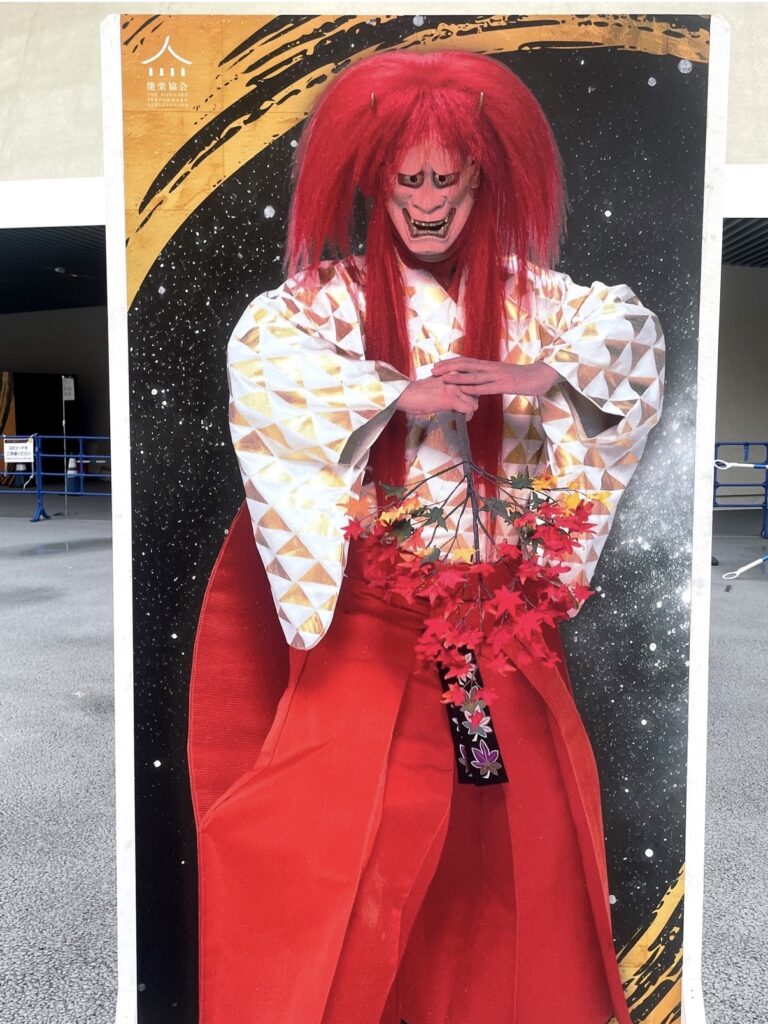
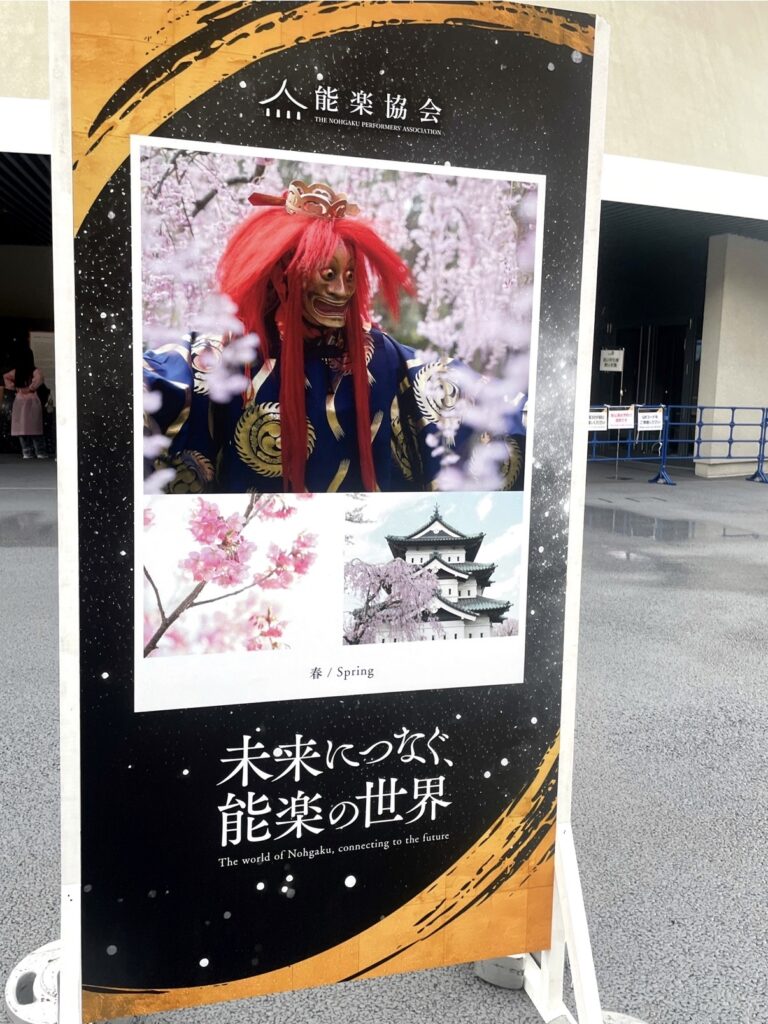
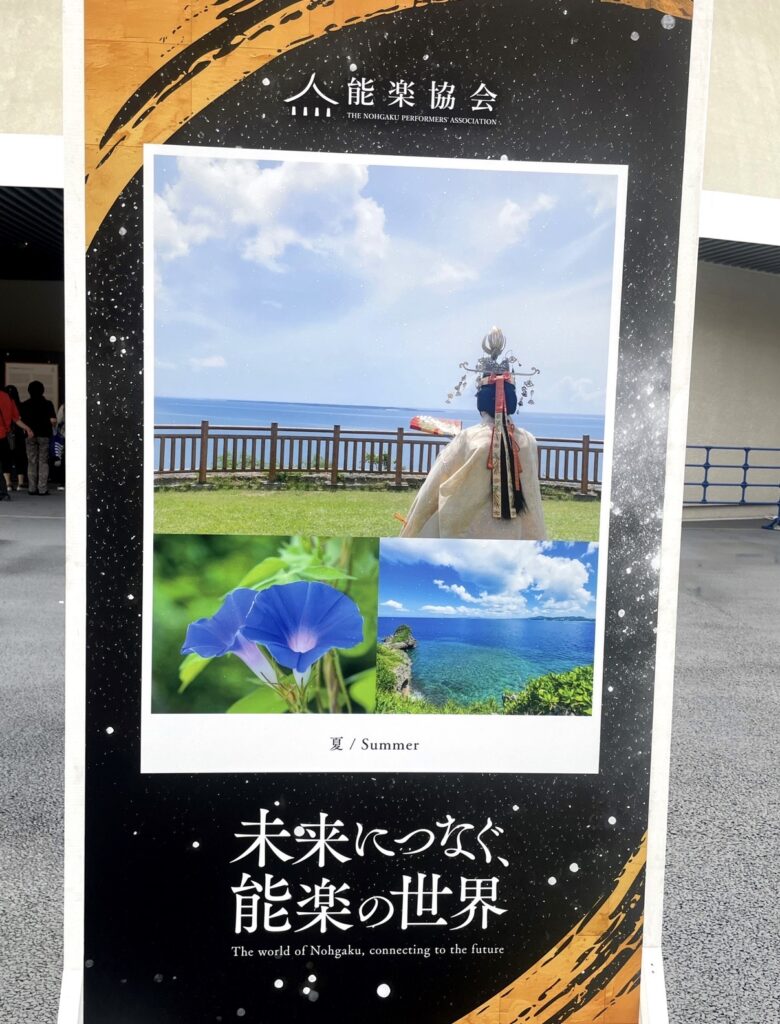
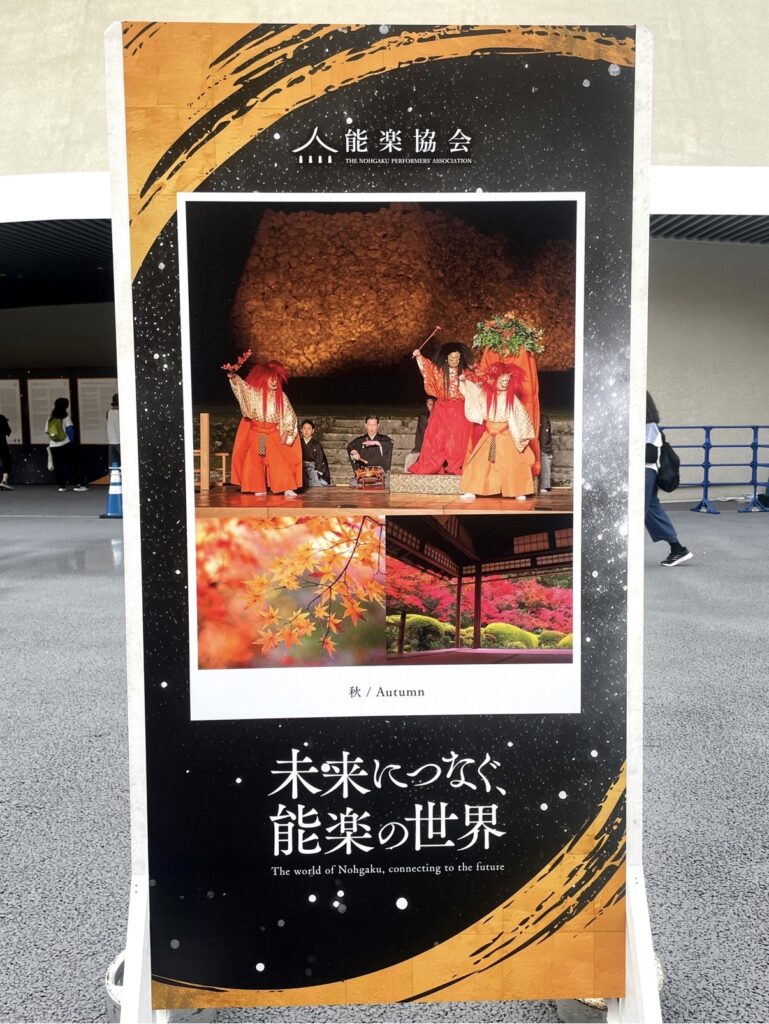
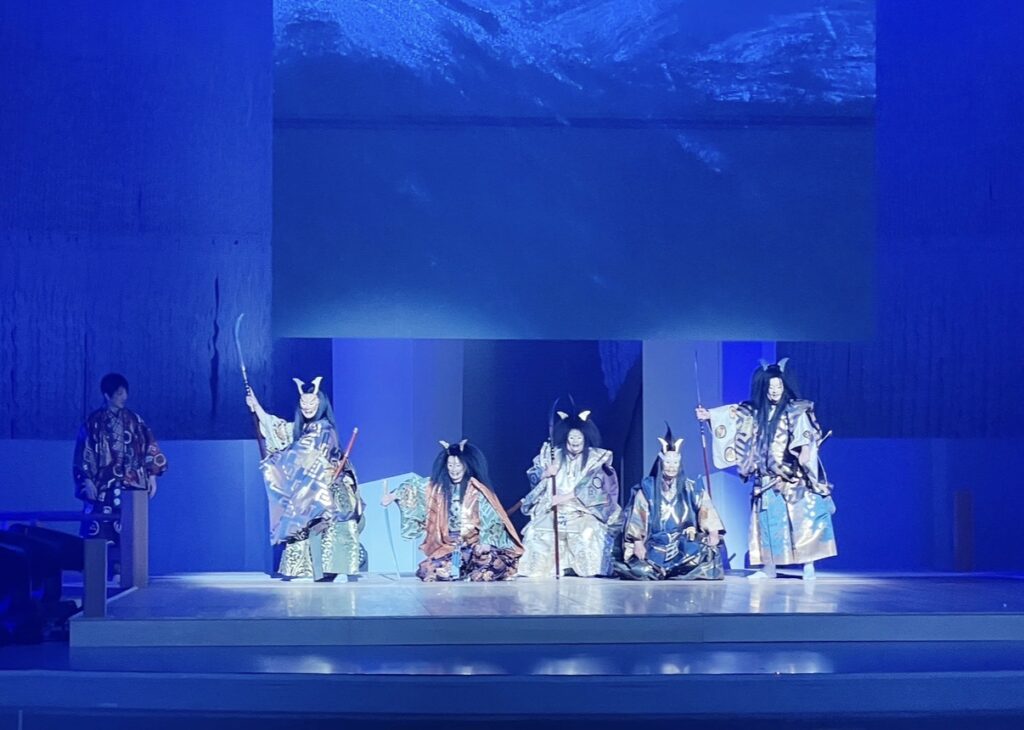
There was also a rather unusual Noh performance at the 2025 Osaka-Kansai Expo.
It was a digest-style production themed around the four seasons and demons (oni).
In a regular Noh performance, you would never see multiple demons gathered together on stage at once — so it truly was a one-of-a-kind event.