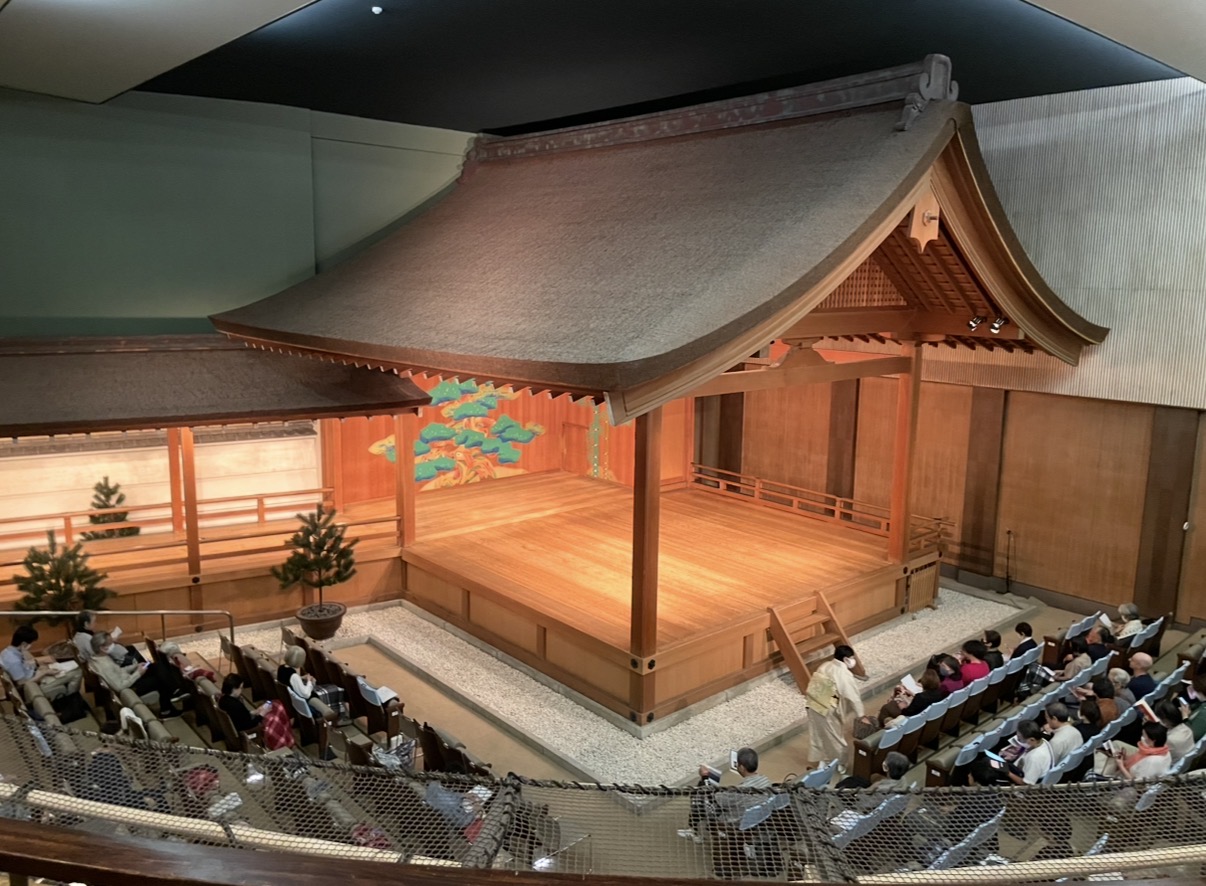
I myself visited a noh theater for the very first time in my life at the end of 2018.
There, at an event-style performance of traditional Japanese performing arts, I watched noh for the first time.
I had seen musicals, theater, and kabuki before, but noh was a completely new experience for me.
It was a performance unlike anything I had encountered — I could not make out the words, and my understanding could not keep up. Yet even though I could not grasp it intellectually, something seemed to reach my eyes and senses, and it left a deep impression on me.
I wanted somehow to understand it. The only way to understand it was to keep watching. And if I was going to watch, I wanted to see great performances. With that in mind, I spent the first year attending performances featuring a particular performer.
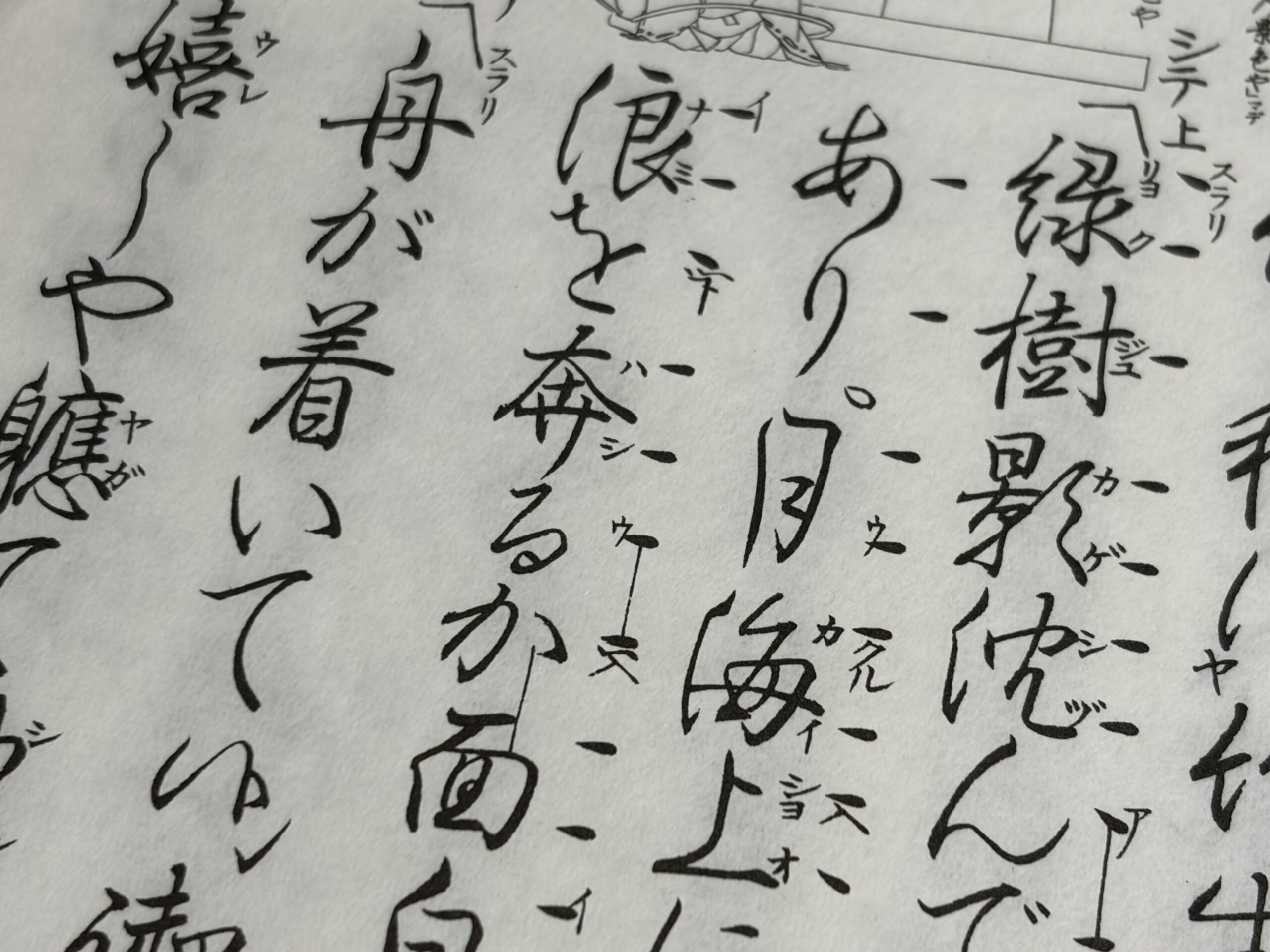
It may seem difficult to approach at first, but the more you go, the more you begin to understand how to enjoy it. Taking lessons in utai (chanting) or shimai (dance), or attending pre-performance study sessions, makes it even more fascinating.
So I encourage you to find your own way in, and discover your own way of enjoying noh.
From here, I will introduce noh with the help of AI. The photographs are my own.
Nohgaku is one of Japan’s traditional performing arts, a source of national pride. Registered as a UNESCO Intangible Cultural Heritage in 2008, it has a history of over 650 years. Yet many people feel it is “intimidating” or “too difficult to understand.”
In fact, nohgaku is an art form that becomes far more enjoyable once you know just a few of the basics. In this article, written for those watching noh for the first time, I introduce everything from its origins to its appeal and how to enjoy it.
What Is Nohgaku? — The Collective Term for Noh and Kyogen
Nohgaku is the collective term for noh and kyogen.
Noh is a musical drama in which performers wearing masks enact stories through dance and chanting (utai). The protagonists are often supernatural beings such as gods, ghosts, or demons, and the art is characterized by its ethereal, otherworldly aesthetic known as yugen.
Kyogen, by contrast, is a comedy performed without masks and in everyday language, depicting the humor of common people and the follies of human nature.
Noh and kyogen are typically performed alternately, with the tense, solemn noh and the lighthearted kyogen forming a complementary pair within a single program.
※ For ease of understanding I have used the word “mask” here, but within the world of noh the correct term is omote (面).
The Structure of the Noh Stage
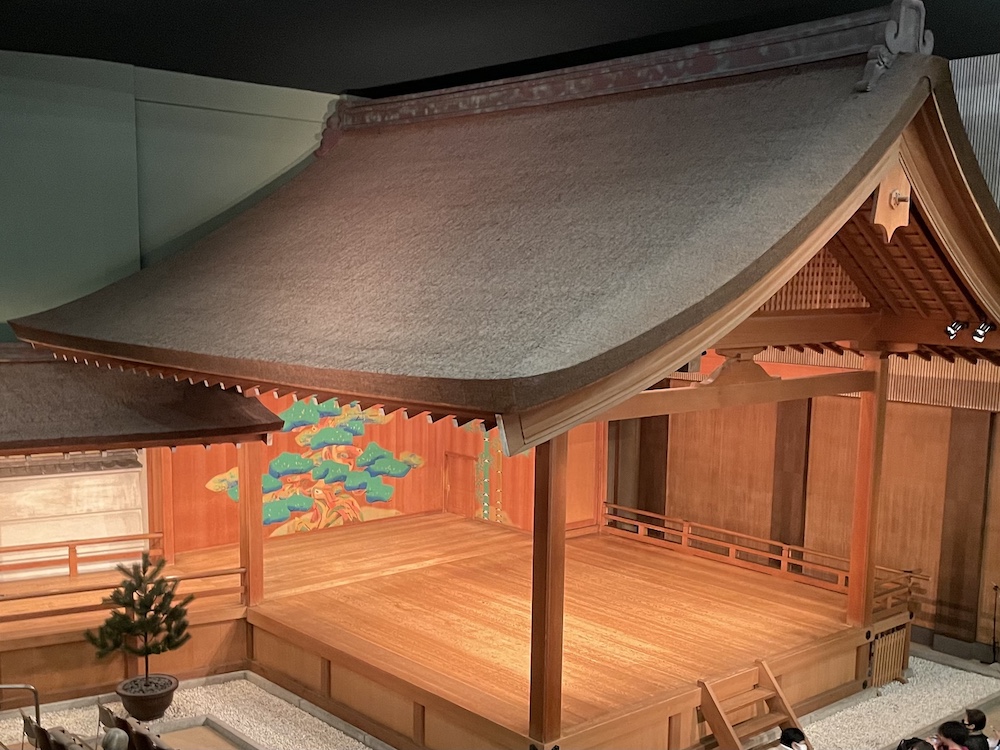
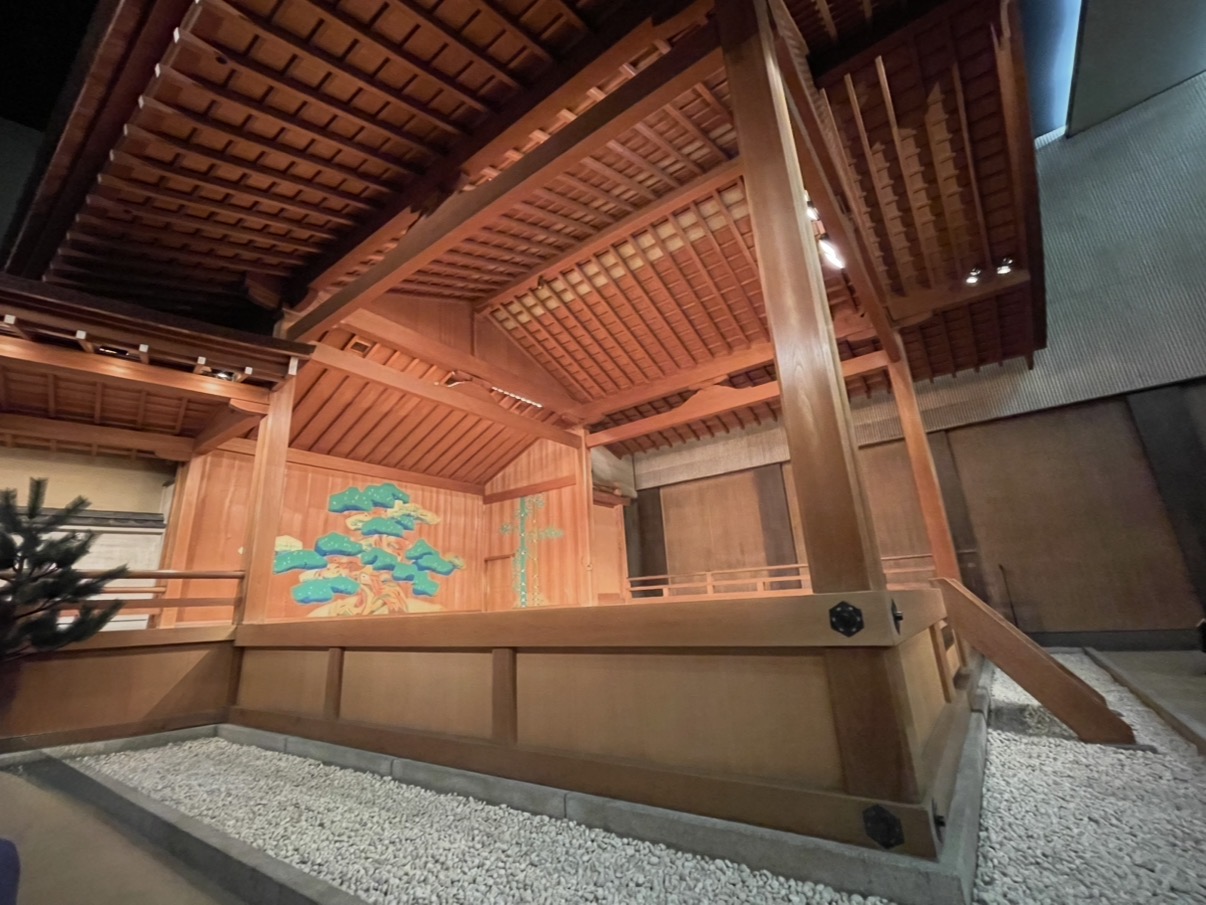
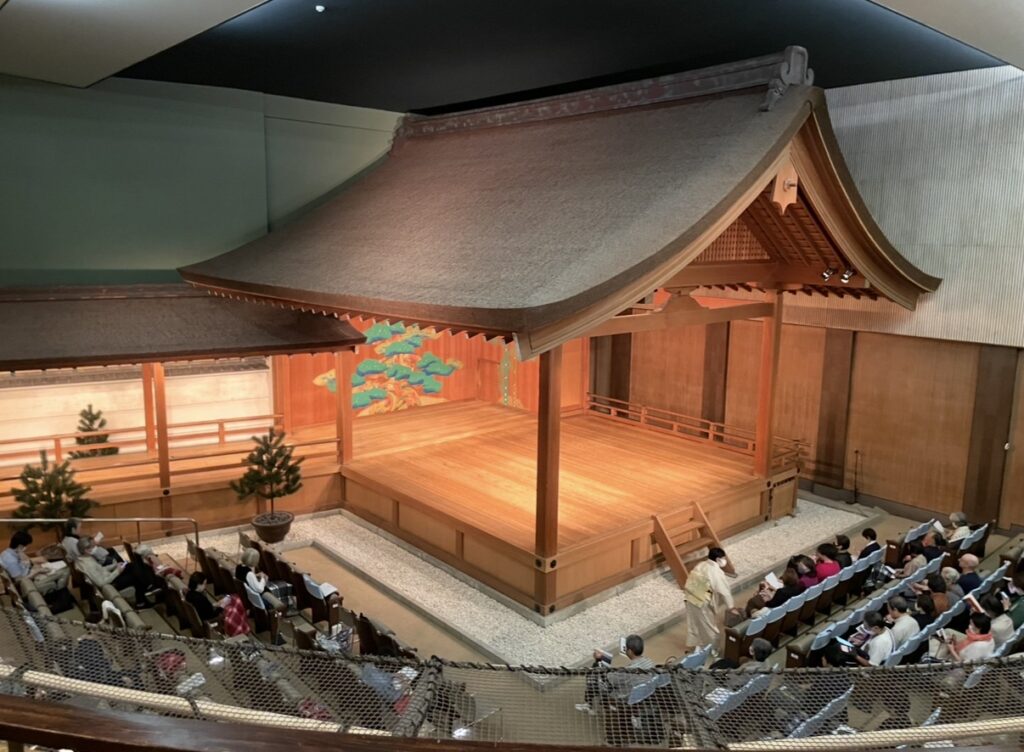
The noh stage consists of a long, narrow passageway called the hashigakari, and a square hon-butai (main stage).
The roofed stage is a vestige of the era when noh was performed outdoors. The stage has four pillars, each with its own name. Performers use these pillars as reference points to orient themselves while performing.
There is almost no stage scenery; the setting is conveyed through a painted backdrop of a pine tree (the kagami-ita) and a minimal number of props.
A chorus called the jiutai sits to the side of the stage and narrates the story. The musicians (hayashi-kata), playing flute, small hand drum, large hand drum, and stick drum, provide the music and create the atmosphere of the entire performance.
The World of Noh Masks
The most striking element of noh is the noh-men — the noh mask.
A noh mask condenses the full range of human emotion into a single expression, and its appearance shifts subtly depending on the angle of the lighting and the tilt of the performer’s face. Tilting the face slightly downward is said to convey sorrow, while tilting it upward expresses joy or anger. The phrase noh-men no you na hyojo (“an expression like a noh mask”) remains in the Japanese language, a testament to how widely its depth is recognized.
There are over 200 types of masks, used according to the role and the production. A rich variety exists — elderly figures, women, demons, gods — and they continue to be crafted today by artisans known as omote-uchi-shi.
Tips for Watching Noh for the First Time
For those watching noh for the first time, keeping the following points in mind will help you enjoy it more fully.
- Read the synopsis in advance: Reading the story beforehand makes it significantly easier to follow the performance. Make use of the program or any leaflets distributed at the venue.
- Choose a performance with subtitles or commentary: Many accessible performances (fukyu kouen) and workshop-style events are available for beginners, with subtitles or explanations provided. Performance information can be found on the official website of the Nohgaku Performers’ Association.
- Savor the sound and the silence: In noh, the “ma” — the pauses between sounds — is as important as the music itself. Let yourself be carried by the unhurried passage of time and feel the atmosphere with your whole body. That too is a way of enjoying noh.
- Start with takigi-noh (outdoor torch noh): Outdoor performances held at shrines and temples, lit by the flickering light of torches, offer a magical atmosphere and make for a special experience even for first-time visitors.
Visit a Noh Theater
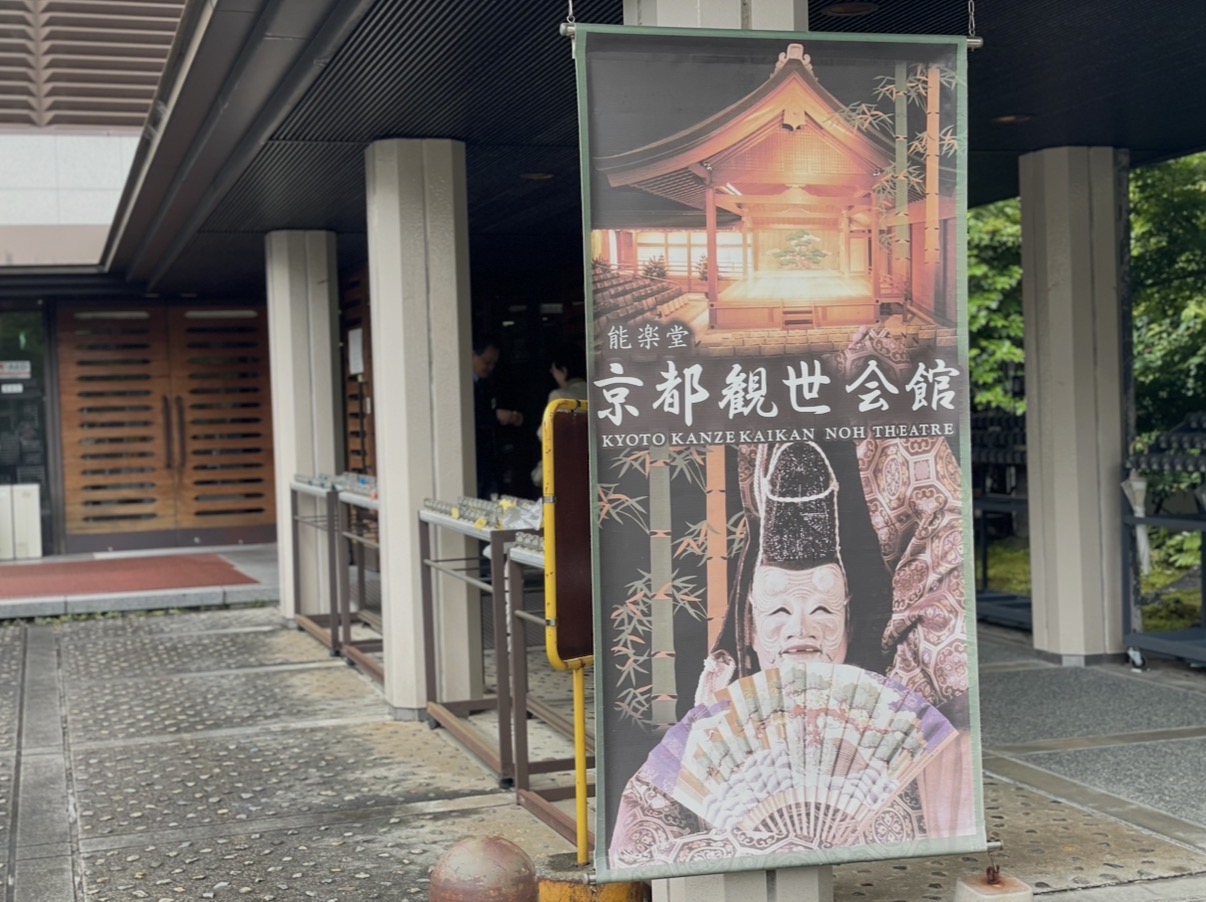
Kyoto is home to several noh theaters, including the Kyoto Kanze Kaikan.
Takigi-noh performances are also held at Heian Jingu Shrine and Shimogamo Shrine, among others.
The world of nohgaku — passed down for over 650 years. Please, open that door for yourself at least once.
References
- Nohgaku Performers’ Association (Public Interest Incorporated Association) Official Website
- UNESCO Intangible Cultural Heritage “Nogaku”
Afterword
Why not start by visiting a noh theater near you? Noh theaters typically have leaflets for upcoming performances and information about lessons available to take away.
Some teachers also hold pre-performance study sessions. If you find yourself wanting to learn more before attending, why not consider going along to one of those?