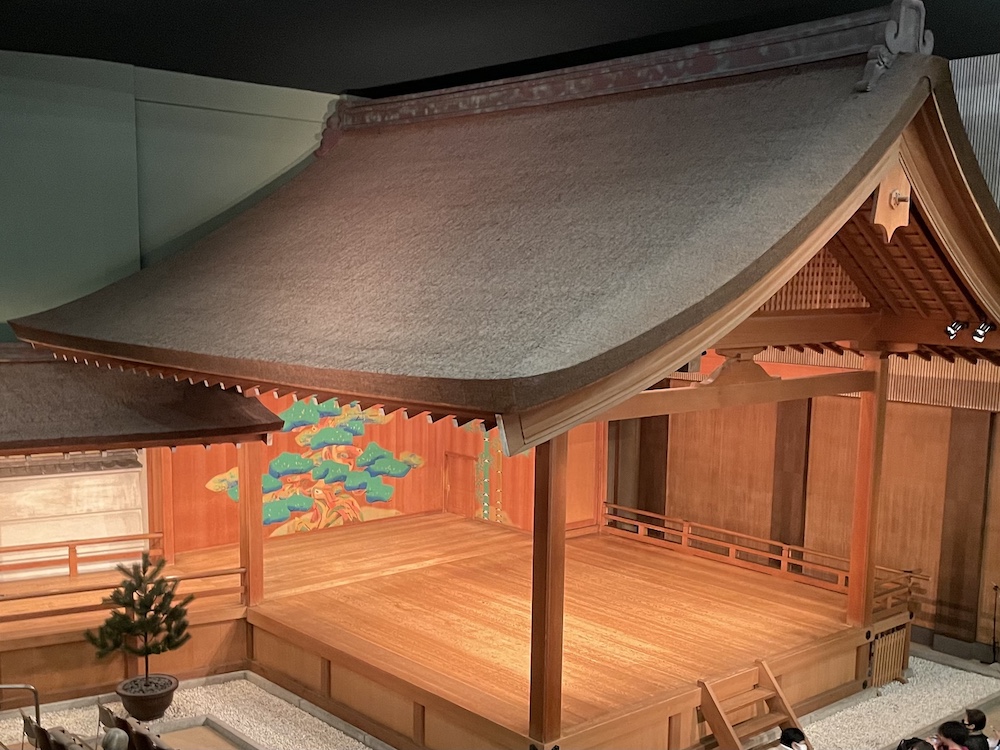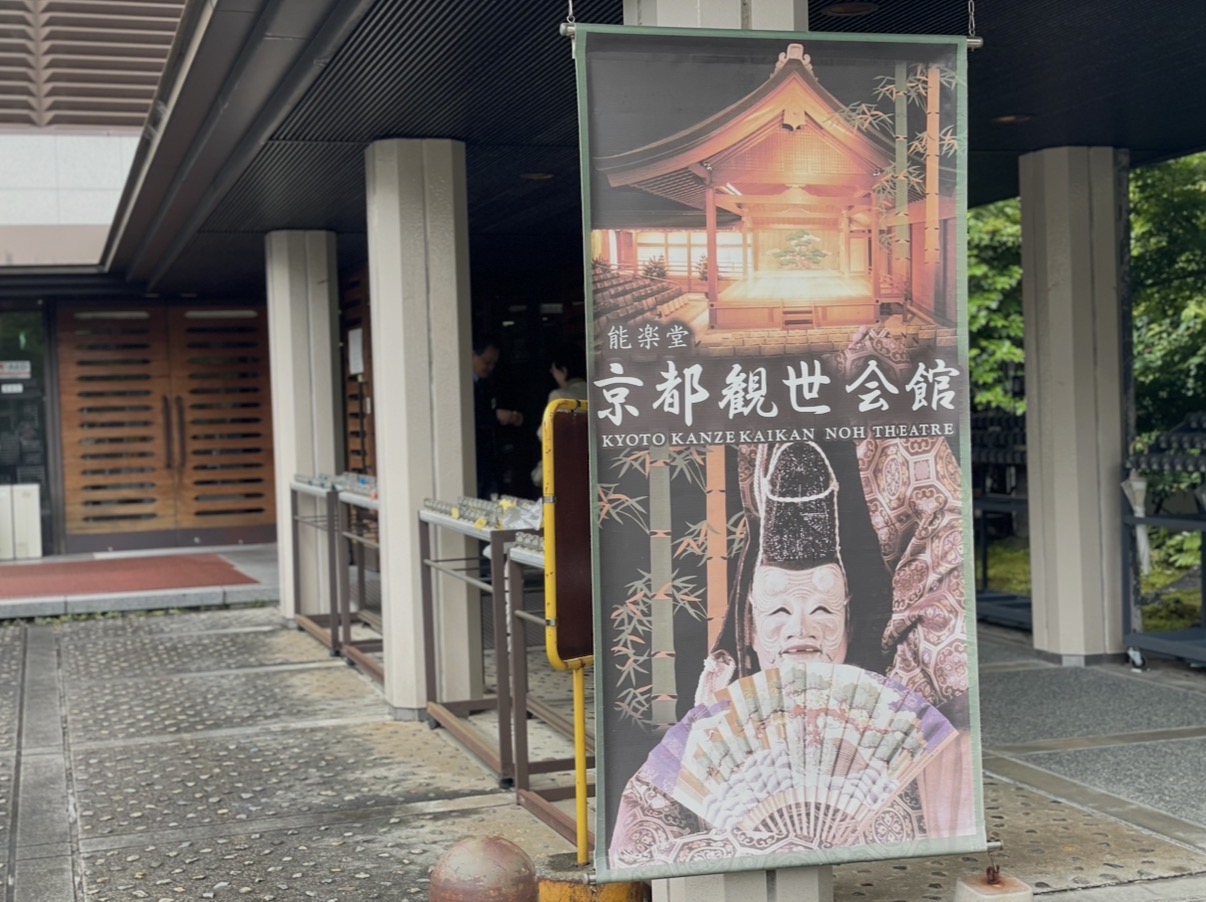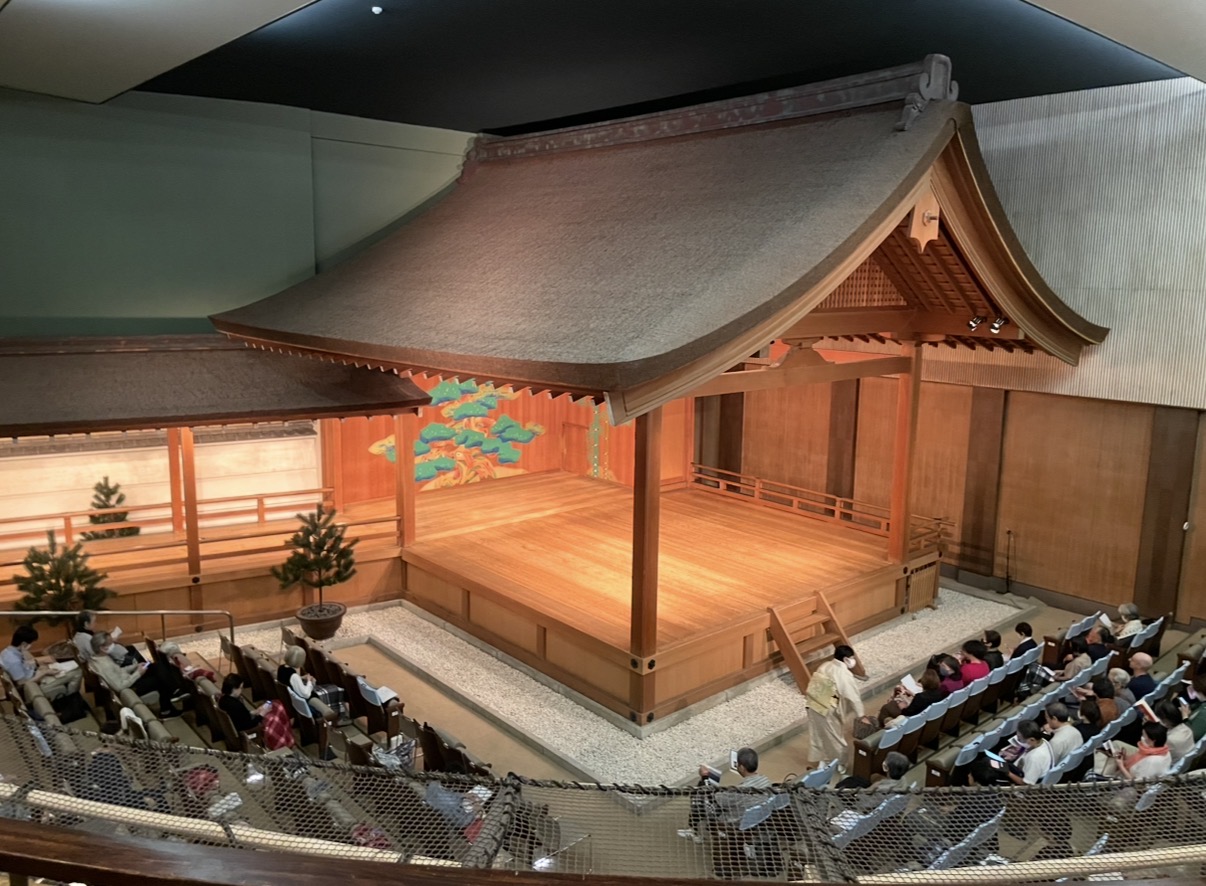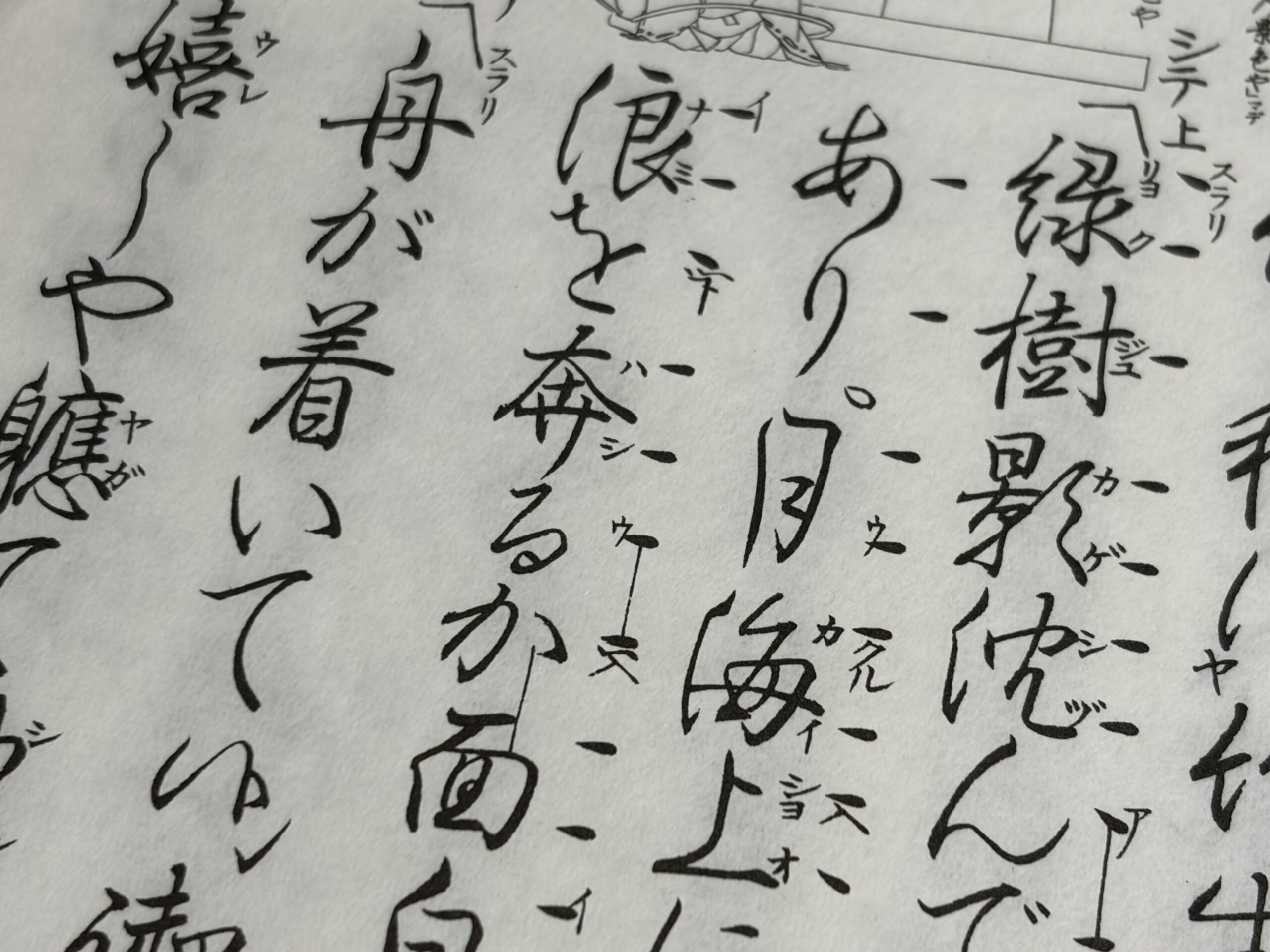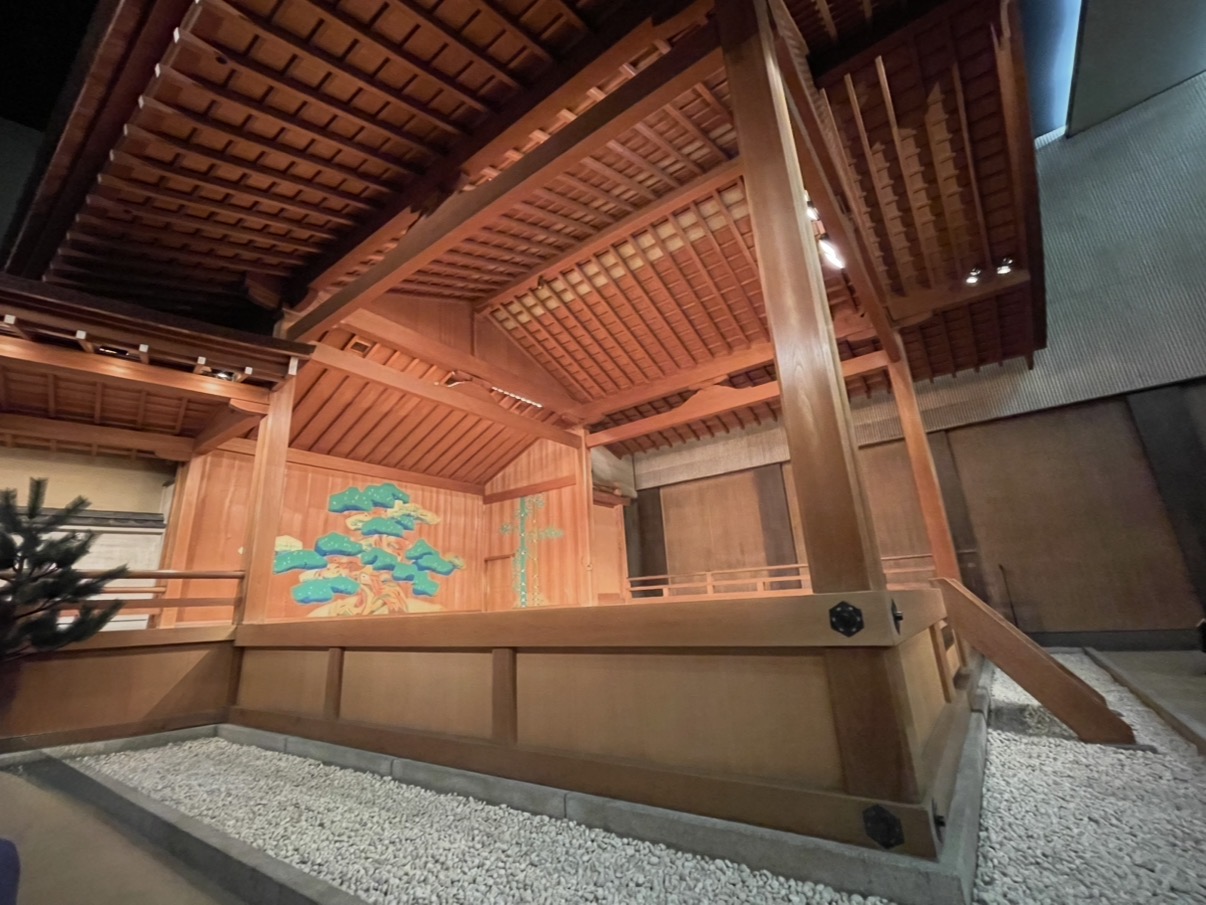
The first performance I saw was by the Kanze school.
I had heard the names Kan’ami and Zeami, but I knew nothing about the schools of noh.
So I asked AI to put together a summary of Kan’ami, Zeami, and the noh schools for me. The photographs are my own.
Nohgaku has multiple ryuha (schools), each carrying on its own unique traditions and styles.
The foundation of it all was laid by a father and son who were active in the 14th century: Kan’ami (観阿弥) and his son Zeami (世阿弥).
Their achievement in elevating sarugaku — an entertainment of the common people — into a sophisticated art form that captivated even the shogun remains, more than 650 years later, the very core of nohgaku.
In this article, I introduce in detail the formation of nohgaku and the origins of its schools.
Kan’ami — The Pioneer Who Laid the Foundations of Noh
Kan’ami (1333–1384) was a sarugaku performer based in Yamato (present-day Nara Prefecture).
At the time, sarugaku was a popular entertainment for commoners, but Kan’ami actively incorporated elements from other performing arts such as dengaku and kusemai, developing it into a more refined stage art.
A turning point came in 1374, at a performance in Imakunio, Kyoto.
Ashikaga Yoshimitsu, the third shogun of the Muromachi shogunate, was deeply moved by what he saw, and decided to take Kan’ami and his son Zeami under his patronage.
With the backing of the shogun, sarugaku gained acceptance among the aristocracy and warrior classes, and developed rapidly into the art of nohgaku.
Zeami — The Genius Who Established the Aesthetic of Yugen
Kan’ami’s son Zeami (c. 1363–1443) elevated his father’s talent still further, and is remembered in the history of Japanese art as the man who brought noh to its completion.
Cherished by Yoshimitsu from an early age, he honed his art while absorbing the refinement of aristocratic culture.
The aesthetic of yugen that Zeami established is the central concept of nohgaku. This philosophy, which prizes the beauty of unseen lingering emotion and negative space, has profoundly influenced Japanese art and culture as a whole.
Zeami also created many celebrated noh plays, and authored numerous theoretical writings, most notably Fushikaden (also known as Kadensho), which systematized the theory of nohgaku.
Sayings such as “Hisureba hana” (“What is kept hidden becomes the flower”) and “Riken no ken” (“The vision of the detached gaze”) continue to be passed down today as universal truths that resonate with contemporary artistic thought.
The Five Schools of Noh
Today, the “noh” element of nohgaku has five schools, each maintaining its traditions under its own iemoto (headmaster) system.
- Kanze school (観世流): The largest school. Its roots lie in the lineage of Kan’ami, from which Zeami emerged, and it has a wide network of students throughout Japan. The current head family is based in Tokyo, while in Kyoto a distinct tradition has taken root under the name “Kyoto Kanze.”
- Hosho school (宝生流): Known for the beauty of its chanting (utai), it is praised as “Hosho of the utai.” It flourished particularly in the Kaga domain (present-day Ishikawa Prefecture) and has many students in the Hokuriku region.
- Komparu school (金春流): Considered the school with the oldest history. Regarded as the legitimate heir to Yamato sarugaku, it is based in Nara and Osaka.
- Kongo school (金剛流): Based in Kyoto, it is characterized by powerful, dynamic dance. It is a school deeply rooted in Kyoto’s noh culture.
- Kita school (喜多流): The newest of the five schools, established in the early Edo period. It has many students in Kyushu and the Tohoku region.
The Two Schools of Kyogen
Kyogen, which forms a pair with noh, has two schools: the Okura school (大蔵流) and the Izumi school (和泉流).
The Okura school is an old school that developed with Kyoto as its base, while the Izumi school developed as the official kyogen performers of the Edo shogunate.
Both schools continue to give many performances today, adding color to the stage alongside noh.
Enjoying the Differences Between Schools
Even with the same play, the style of chanting, dance, and use of props differs from school to school.
Seasoned noh enthusiasts find great pleasure in comparing these differences between schools. As a starting point, I recommend attending a performance by the school that has taken root in your own region.
References
- Nohgaku Performers’ Association (Public Interest Incorporated Association) Official Website
- National Noh Theatre (Japan Arts Council)
Afterword
Living in Osaka, close to Kyoto, I have many opportunities to see Kanze school performances — but I have also been curious about the Komparu school.
Throughout history, the school favored by whoever held power at the time was the one that flourished.
Zeami was favored by Ashikaga Yoshimitsu, but as the power changed hands, so did the circumstances. Zeami’s son Motomasa’s cousin, On’ami, was favored by Ashikaga Yoshinori and went on to build up the Kanze-za.
Zeami’s son-in-law, Komparu Zenchiku, is said to have inherited many of Zeami’s written teachings.
It is said that Toyotomi Hideyoshi favored the Komparu school, Tokugawa Ieyasu the Kanze school, Tokugawa Hidetada the Kita school, and Tokugawa Tsunayoshi the Hosho school. I will write more about all of this on another occasion.