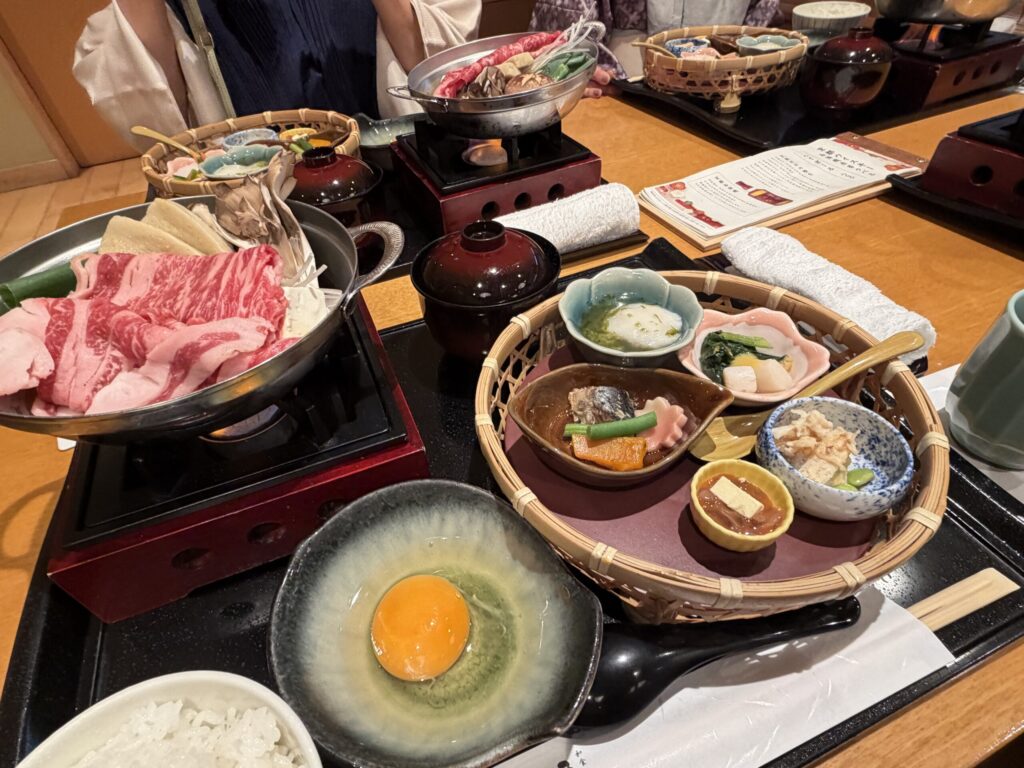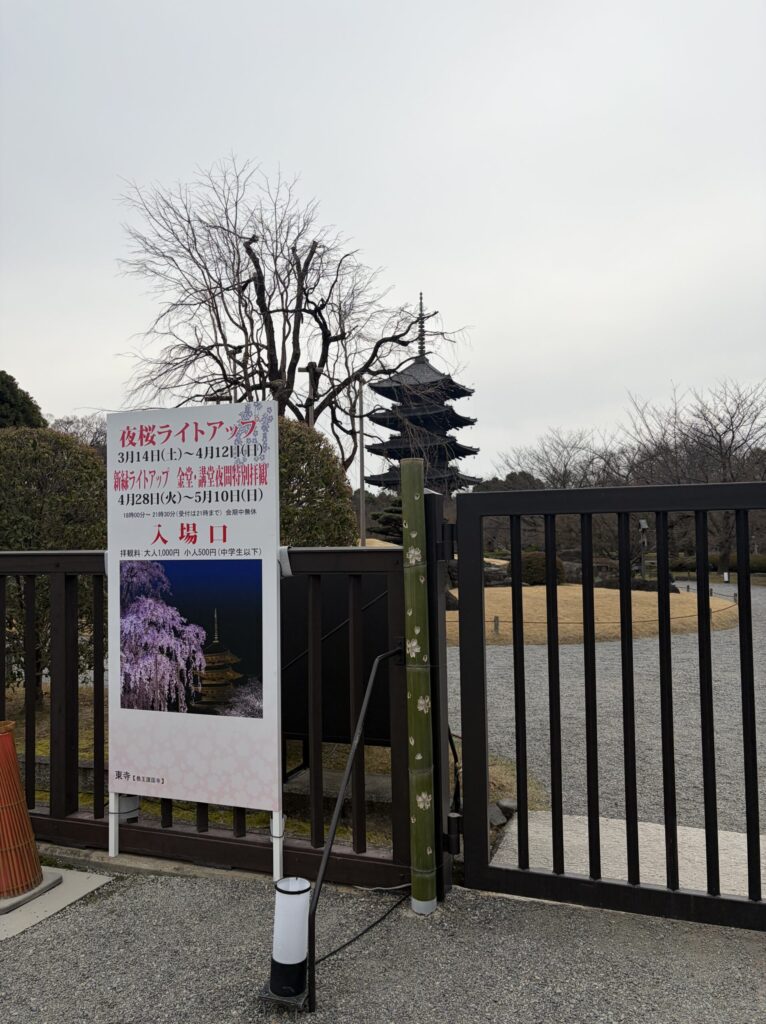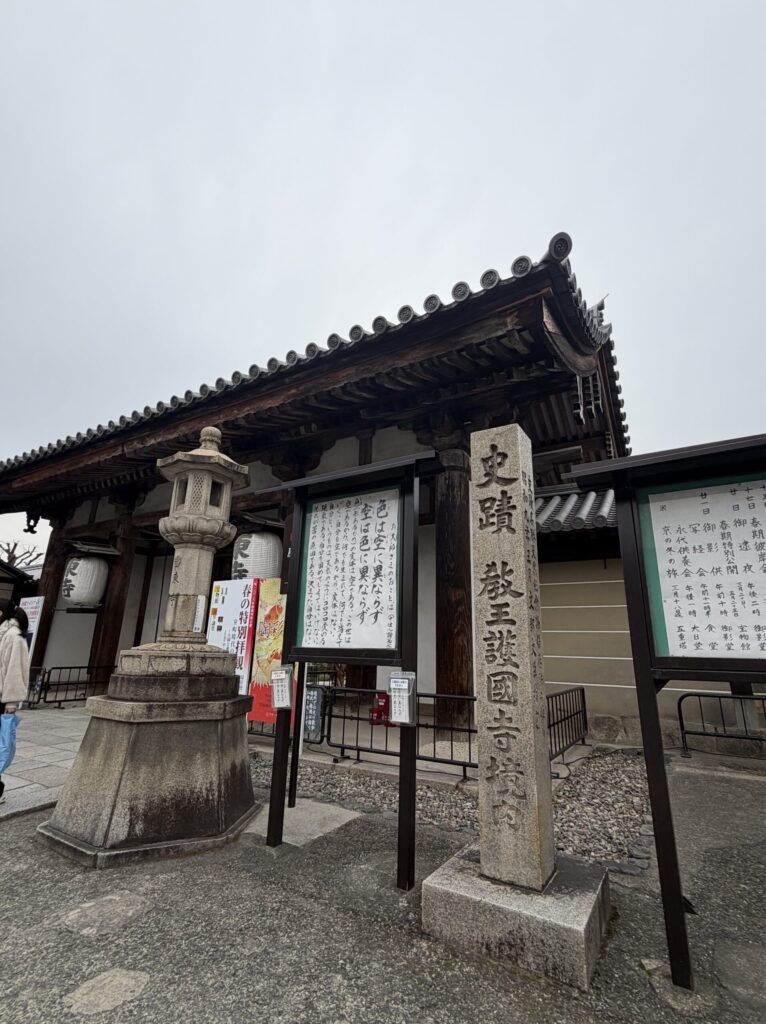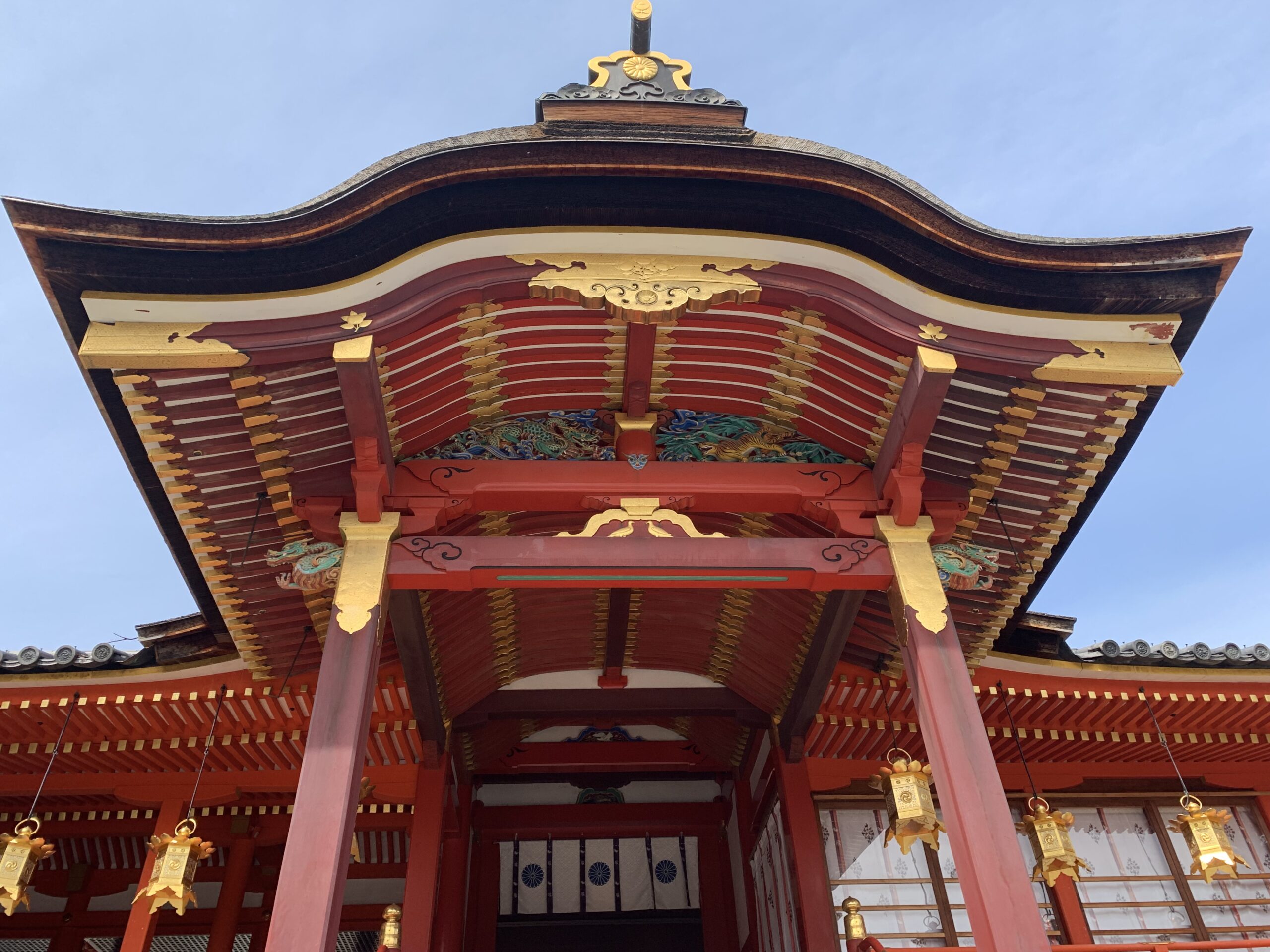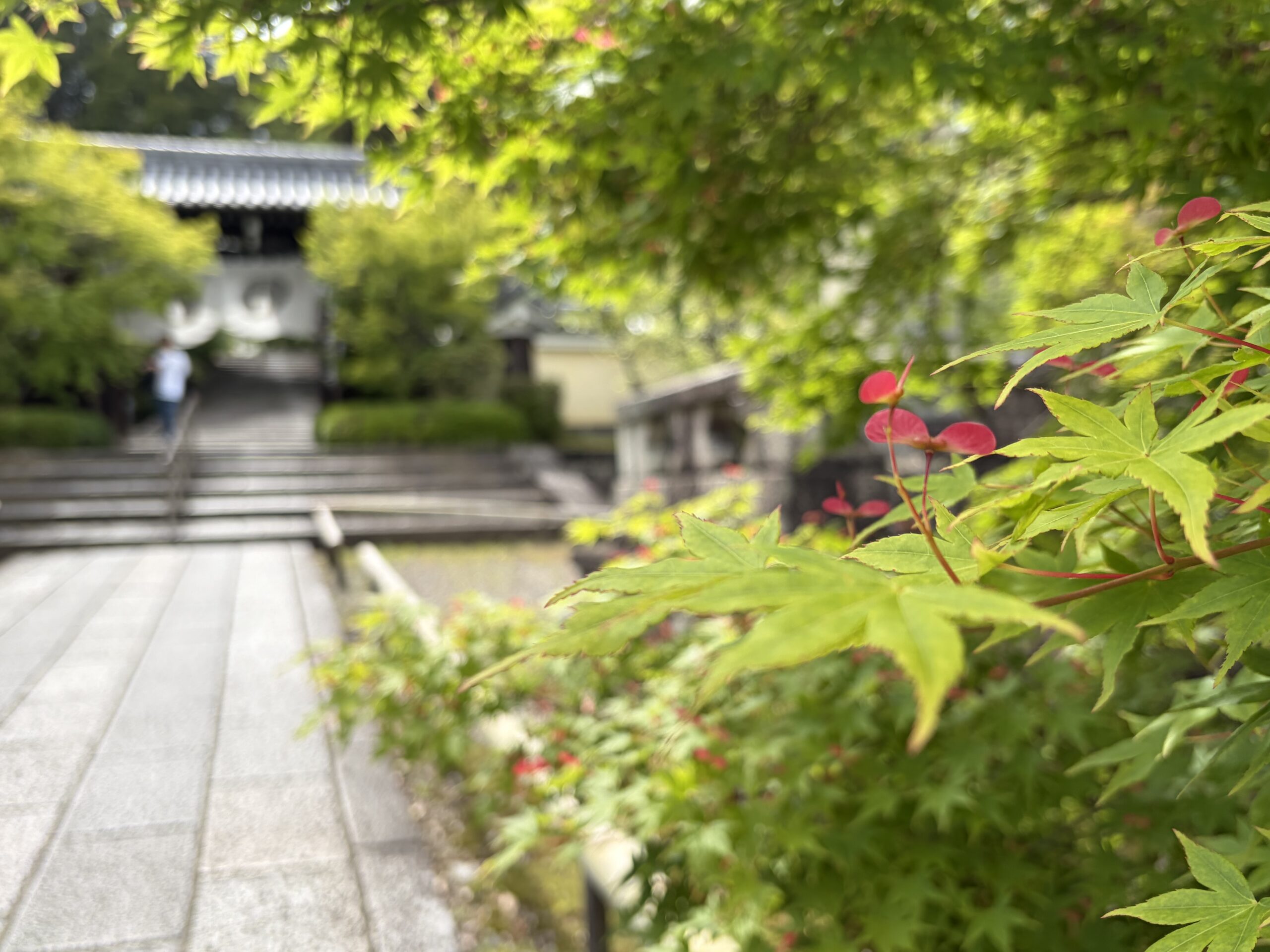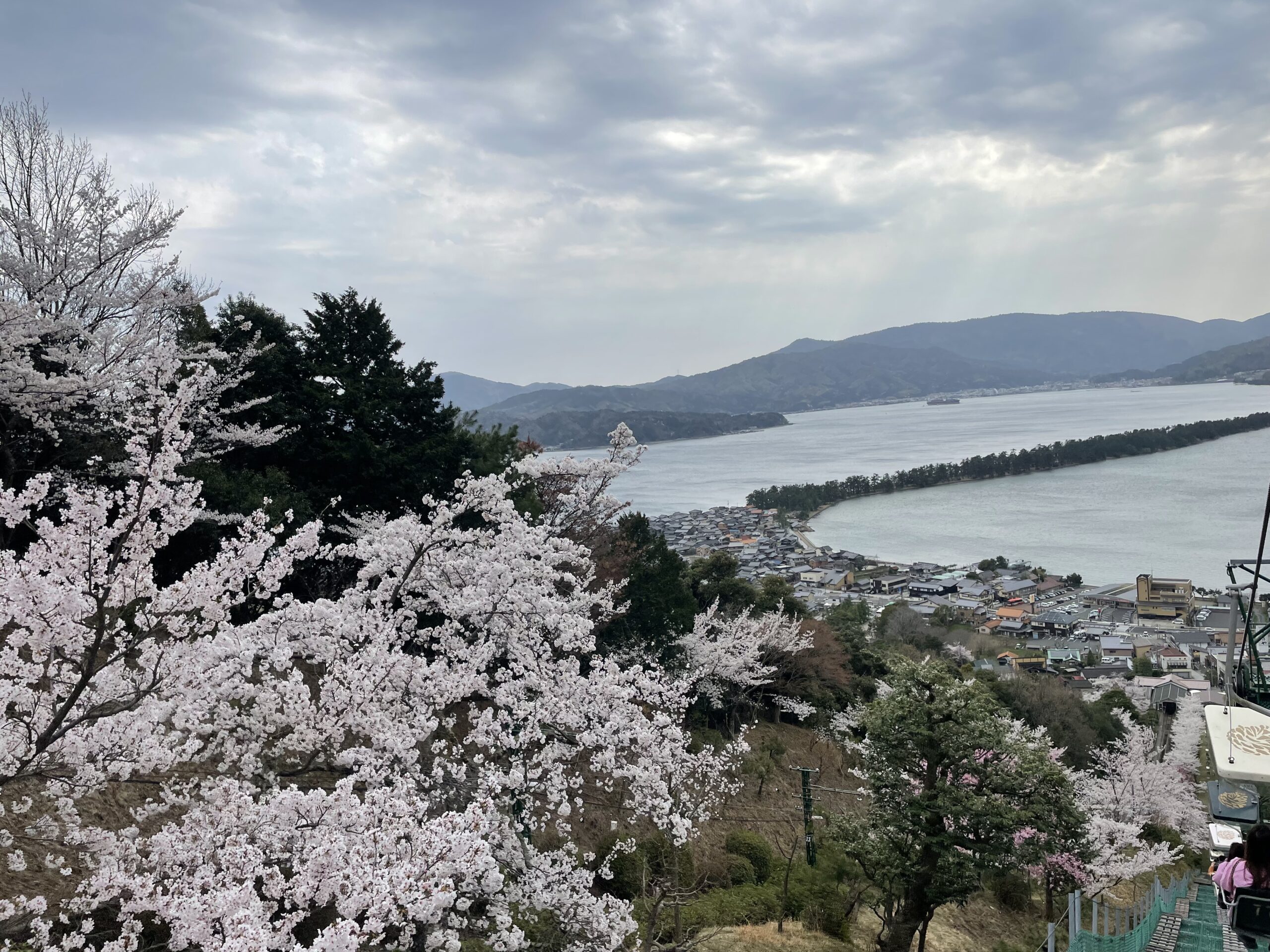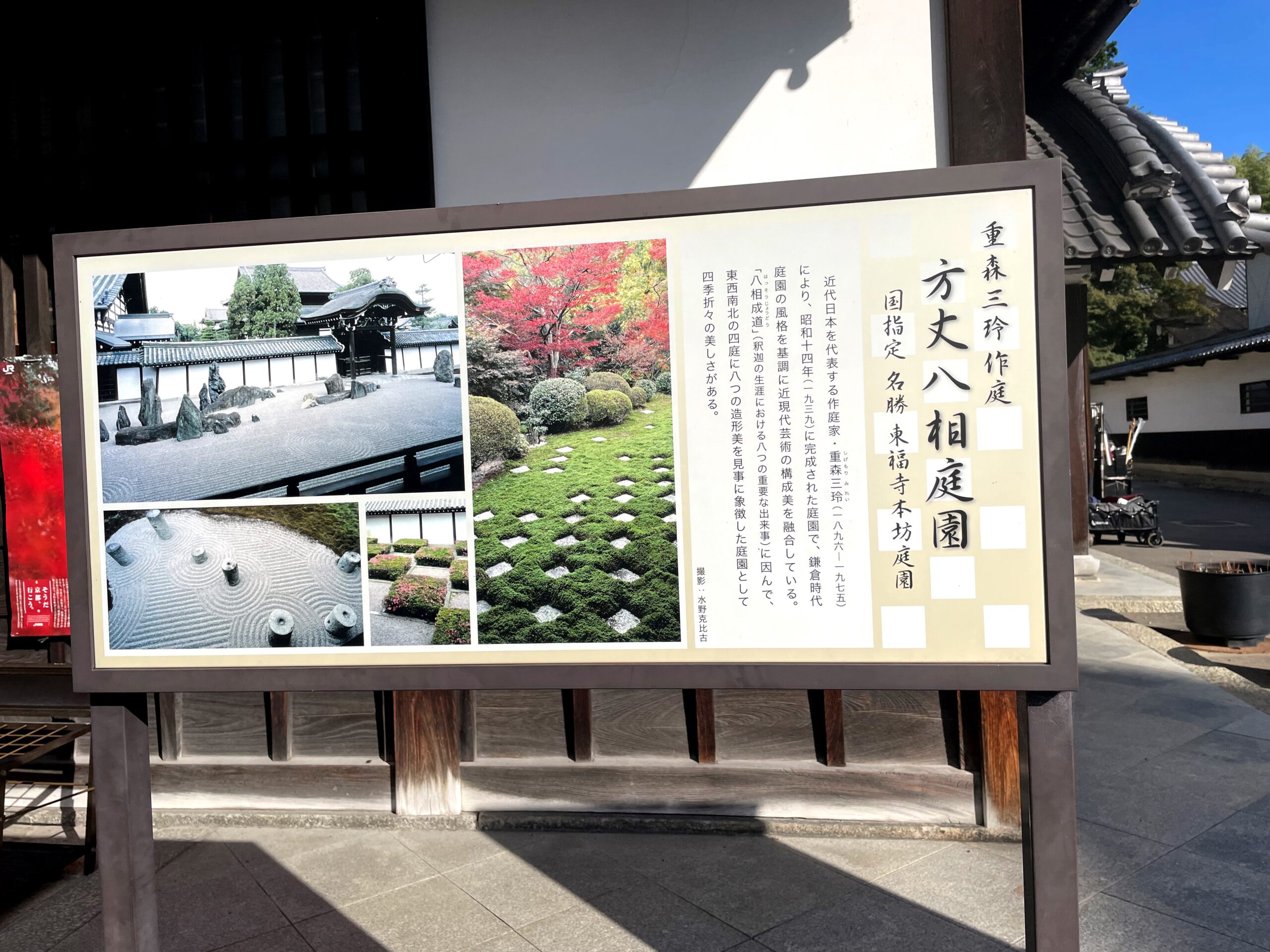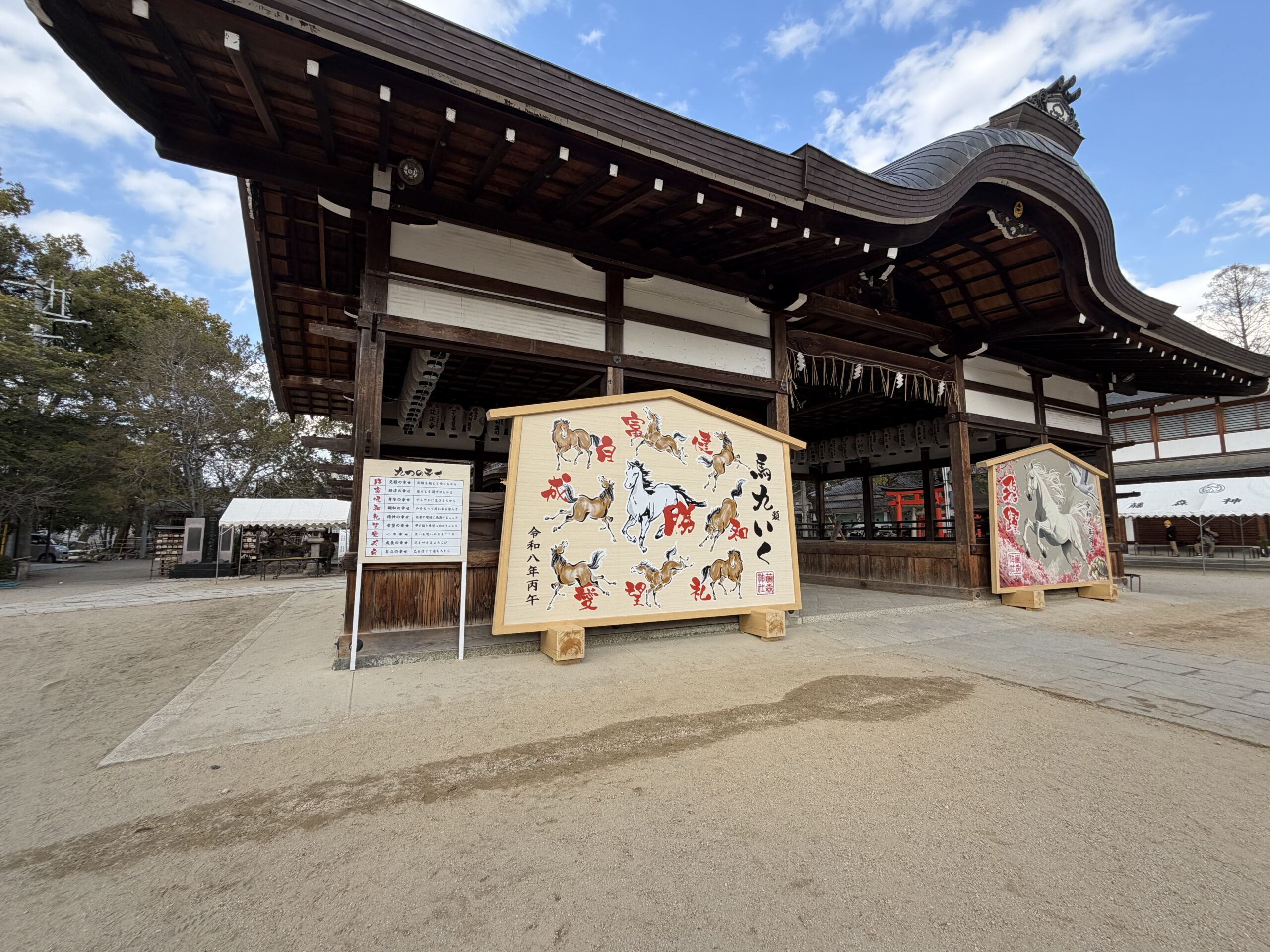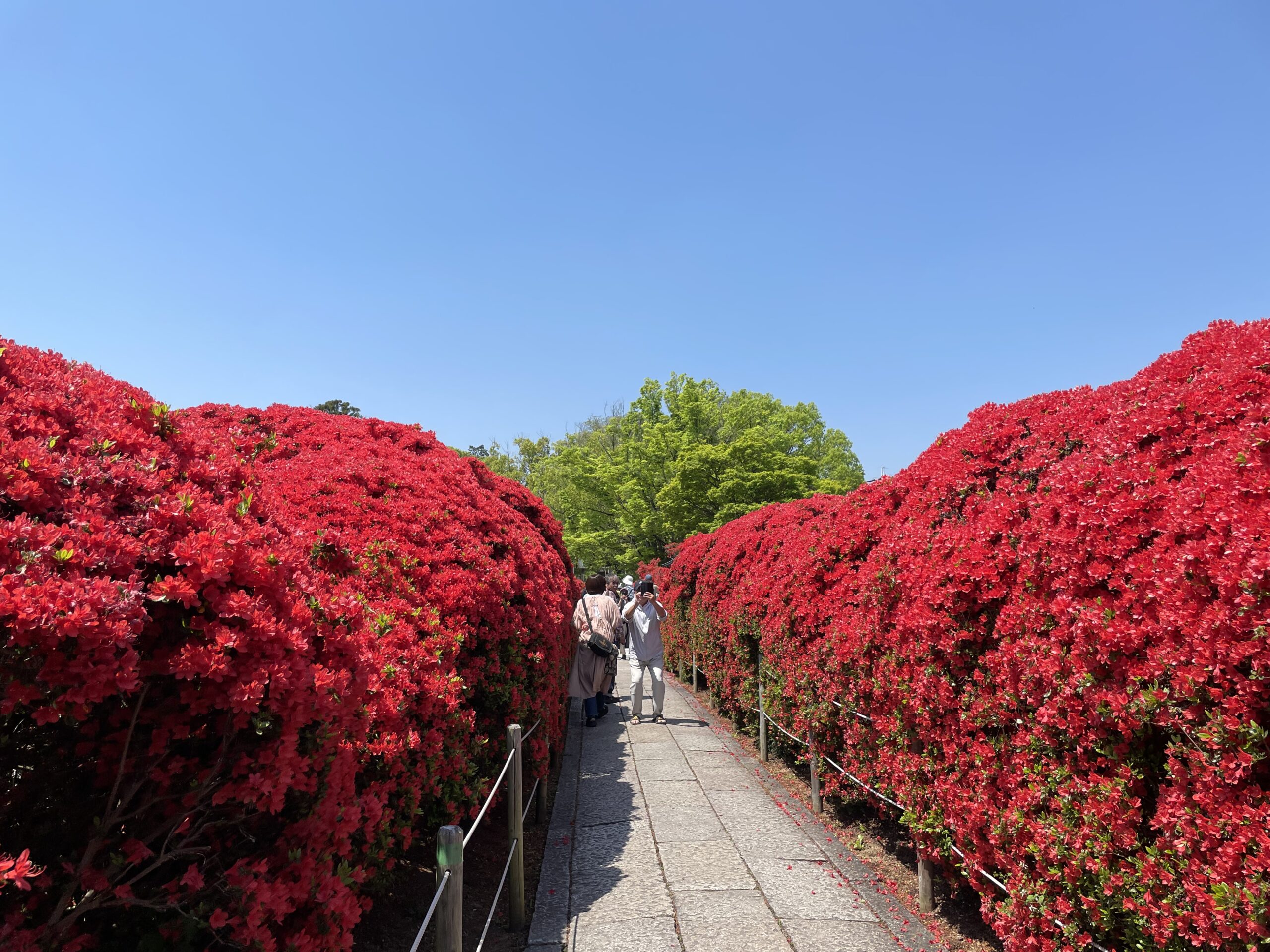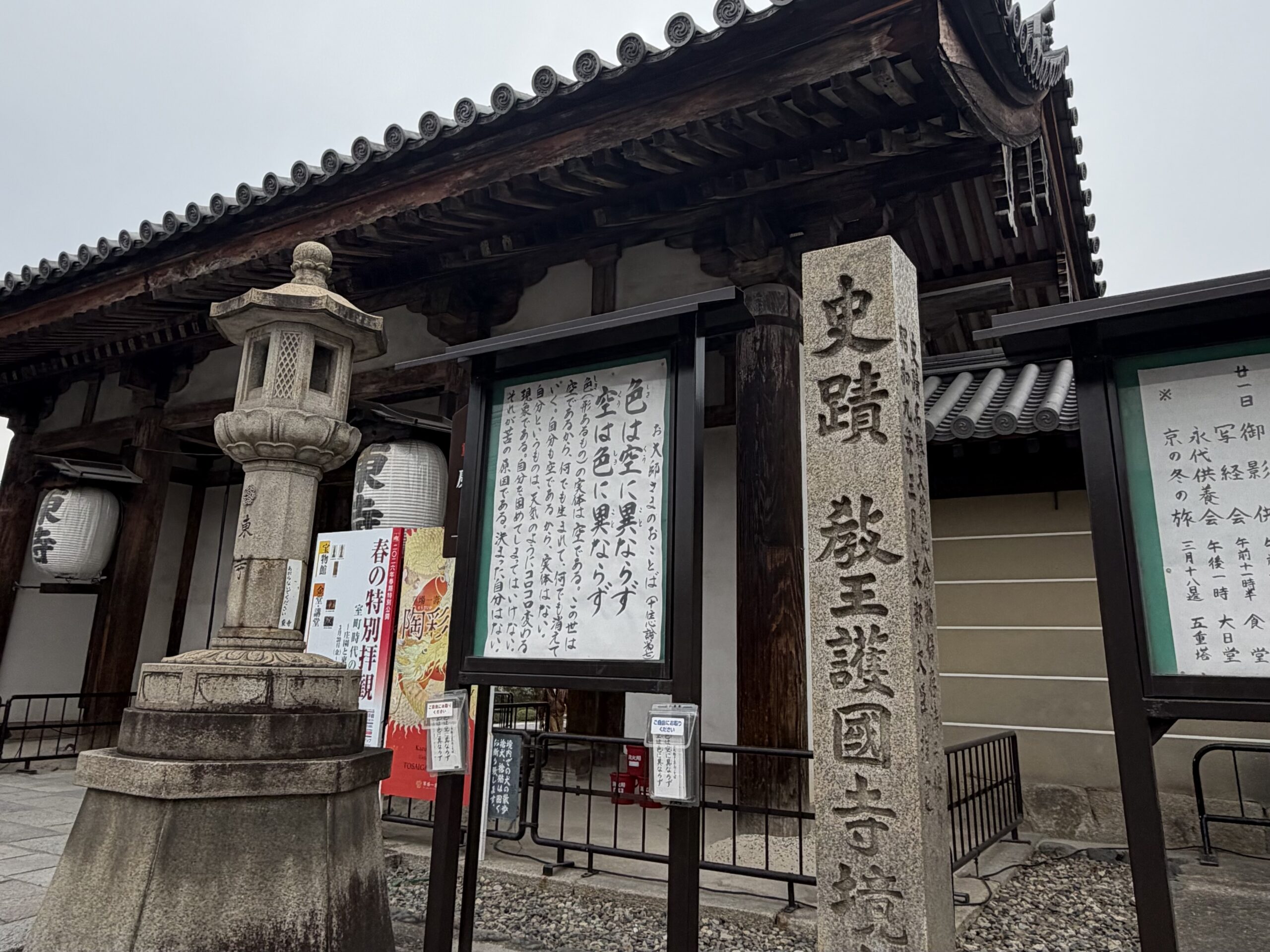
In March 2026, after hosting a kimono lunch gathering at the Miyako Hotel Kyoto Hachijo — right in front of JR Kyoto Station — I decided to take the short walk over to Toji Temple. Though I had passed by it countless times by car, this was my first actual visit.
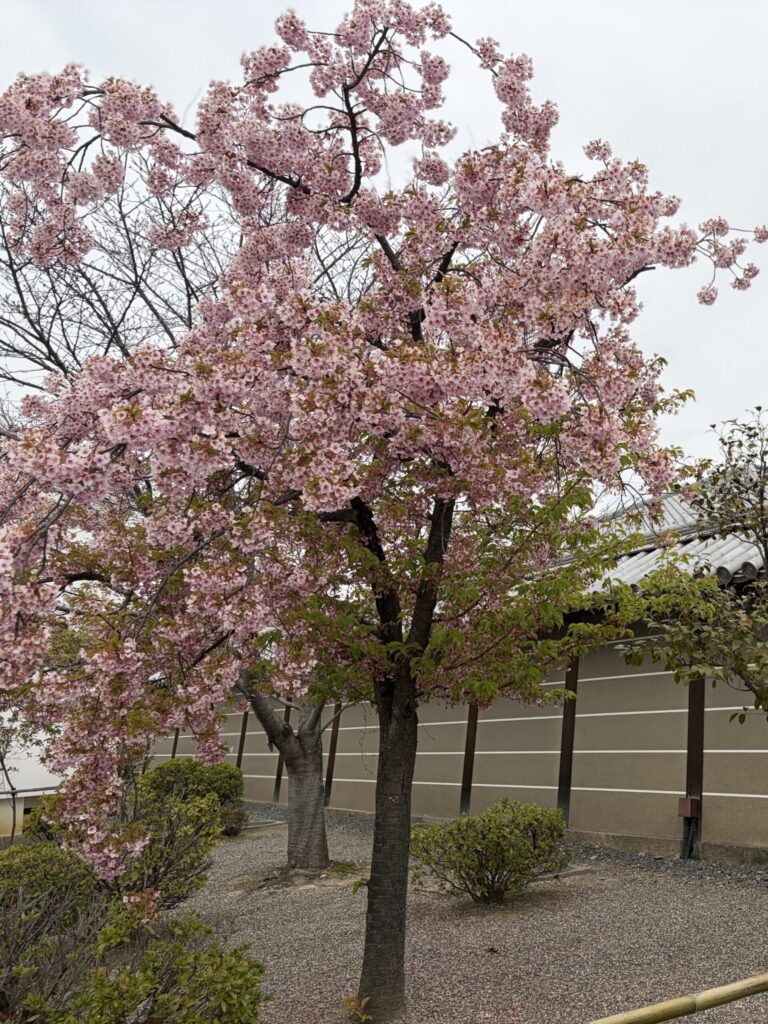
It was a little early for the cherry blossoms, so I wasn’t expecting much — but I was treated to the sight of kawazu-zakura, the early-blooming winter cherry, in soft pink bloom.
The following is an AI-written guide to Toji Temple. The photographs are my own, though the crowds made it difficult to capture as much as I’d have liked.
Toji Temple in Kyoto — known as the head temple of Shingon Buddhism and a UNESCO World Heritage Site — is one of the city’s most iconic sacred places. Walking through its grounds beneath the soaring five-story pagoda, surrounded by masterworks of Buddhist art, made for an unforgettable experience.
What Kind of Temple Is Toji?
Toji (東寺), formally known as Kyō-ō-gokoku-ji (教王護国寺), is the head temple of the Toji school of Shingon Buddhism, located in Minami-ku, Kyoto. It was founded in 796 CE alongside the establishment of the Heian capital, and was later granted by Emperor Saga to the monk Kobo Daishi (Kukai), who developed it into the central training ground for Esoteric Buddhism in Japan.
In 1994, it was inscribed as part of the UNESCO World Heritage Site “Historic Monuments of Ancient Kyoto.”
Highlights of Toji
The Five-Story Pagoda
At approximately 55 meters, Toji’s five-story pagoda is the tallest wooden tower in Japan. It has been destroyed by lightning and fire multiple times over the centuries, but has always been rebuilt. The current structure was erected in 1644 through the patronage of Tokugawa Iemitsu. Framed by cherry blossoms in spring and autumn leaves in fall, it is one of the most recognized silhouettes in all of Kyoto.
The Kondo and Kodo Halls
The Kondo (Golden Hall) enshrines the principal image of Yakushi Nyorai (the Medicine Buddha), flanked by Nikko and Gakko Bosatsu and the Twelve Divine Generals — a magnificent ensemble. The Kodo (Lecture Hall) houses what is known as the “three-dimensional mandala”: 21 Buddhist statues arranged by Kobo Daishi to represent the universe of Esoteric Buddhism in sculptural form. It is a truly singular experience.
The Jikido Refectory and the Scorched Shitenno
On the northern side of the grounds stands the Jikido — the refectory where monks once took their meals, now enshrining a Thousand-Armed Kannon. Inside, visitors encounter a striking and sobering sight: four guardian statues (Shitenno) that were blackened and scorched in a historical fire, and have been preserved in that condition ever since.
Rather than being restored or replaced, these figures have been kept exactly as the fire left them — as silent witnesses to the passage of time. Standing before them, one feels an unusual combination of awe and stillness. The sight of deities who have endured such damage and yet remain in place, still venerated after centuries, inspires an instinctive impulse to bow one’s head.
Kobo-ichi Market
On the 21st of every month — the anniversary of Kobo Daishi’s death — a lively market called Kobo-ichi fills the temple grounds with stalls selling antiques, vintage clothing, street food, and crafts. It draws locals and visitors alike and is well worth timing a visit around.
Practical Information and Access
- Address: 1 Kujo-cho, Minami-ku, Kyoto
- Sect: Toji School of Shingon Buddhism (Head Temple)
- Access: Approx. 5 min walk from Kintetsu Kyoto Line “Toji Station” / Approx. 15 min walk from JR Kyoto Station
- Hours: Grounds open freely; Kondo and Kodo: 8:00 AM – 5:00 PM (paid entry)
- Admission: Combined ticket for Kondo & Kodo: ¥500 (subject to change)
Summary
Toji is a place where over 1,200 years of history meet the highest achievements of Japanese Buddhist art. The three-dimensional mandala, the towering pagoda, the scorched guardian statues in the Jikido — each leaves its own lasting impression. For a temple so close to Kyoto Station, it rewards far more than a passing glance.
References
- Toji Temple Official Website
- Toji — Jikido Refectory
- UNESCO World Heritage — Historic Monuments of Ancient Kyoto
Postscript
The scorched Shitenno in the Jikido left a particularly deep impression on me.
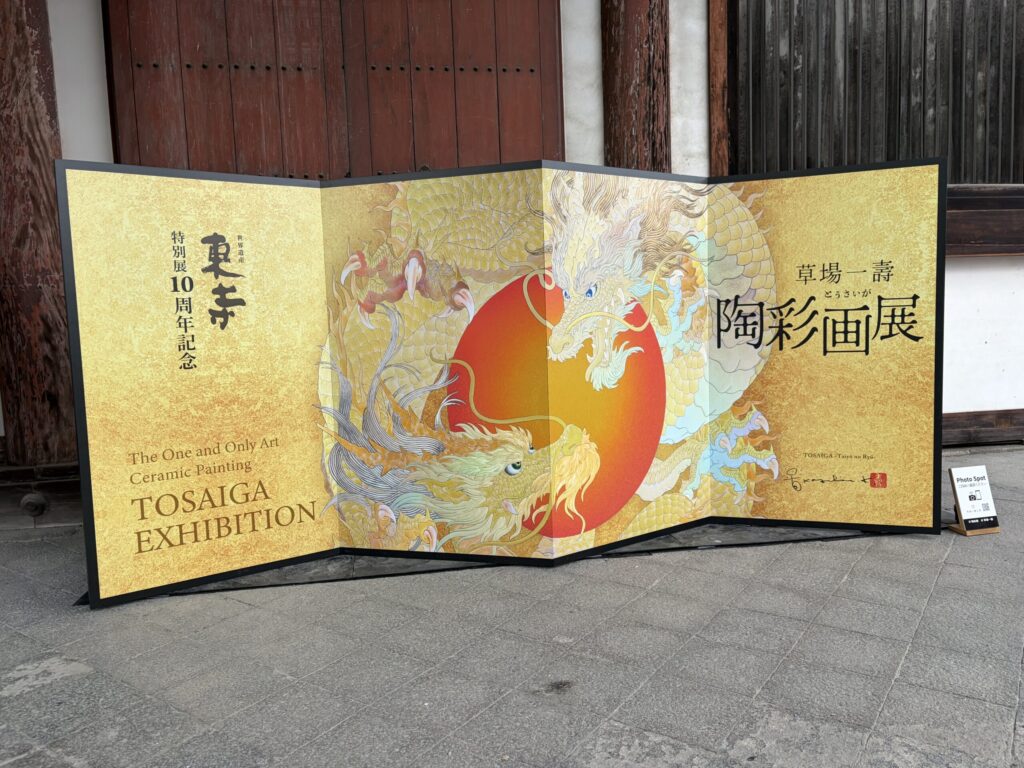
The hall was in the midst of a special exhibition — a show of tosaiga (ceramic paintings) — so there were quite a few visitors, yet even amid the crowds, I noticed someone quietly doing sutra-copying (shakyo) right in front of the statues. That image has stayed with me.
For lunch, we dined at Uoman, the restaurant inside the Miyako Hotel Hachijo just in front of JR Kyoto Station. It was wonderful.