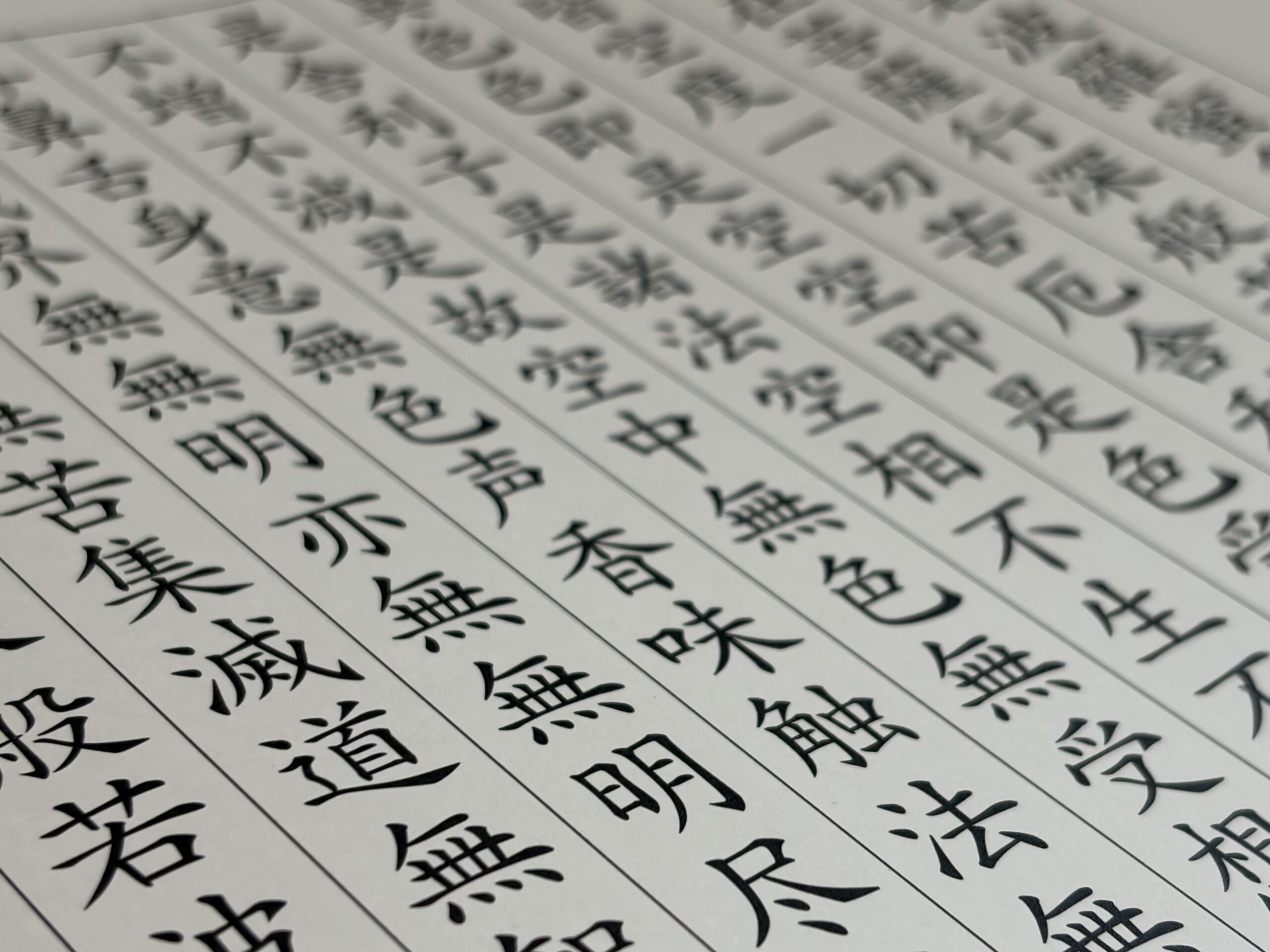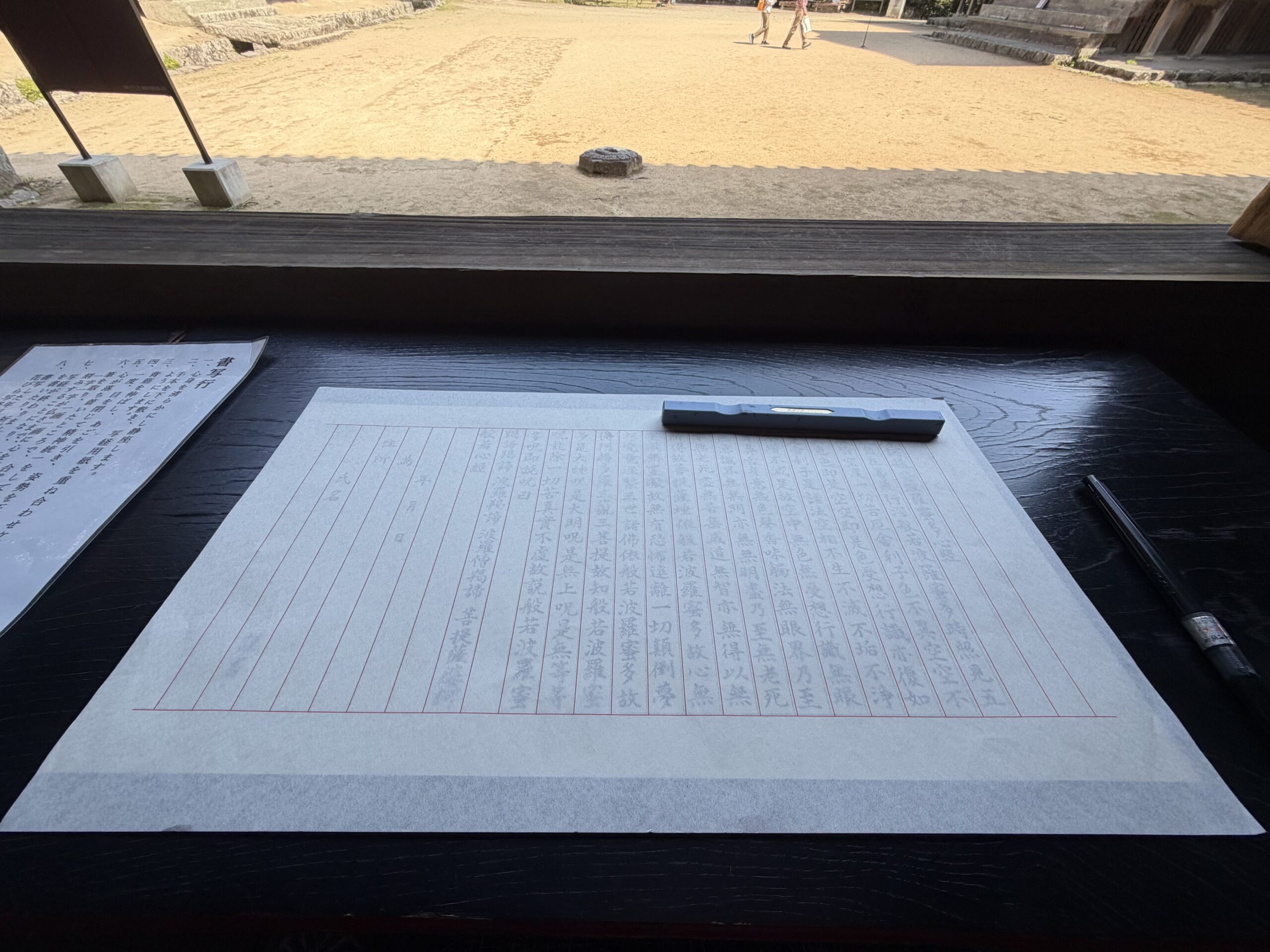
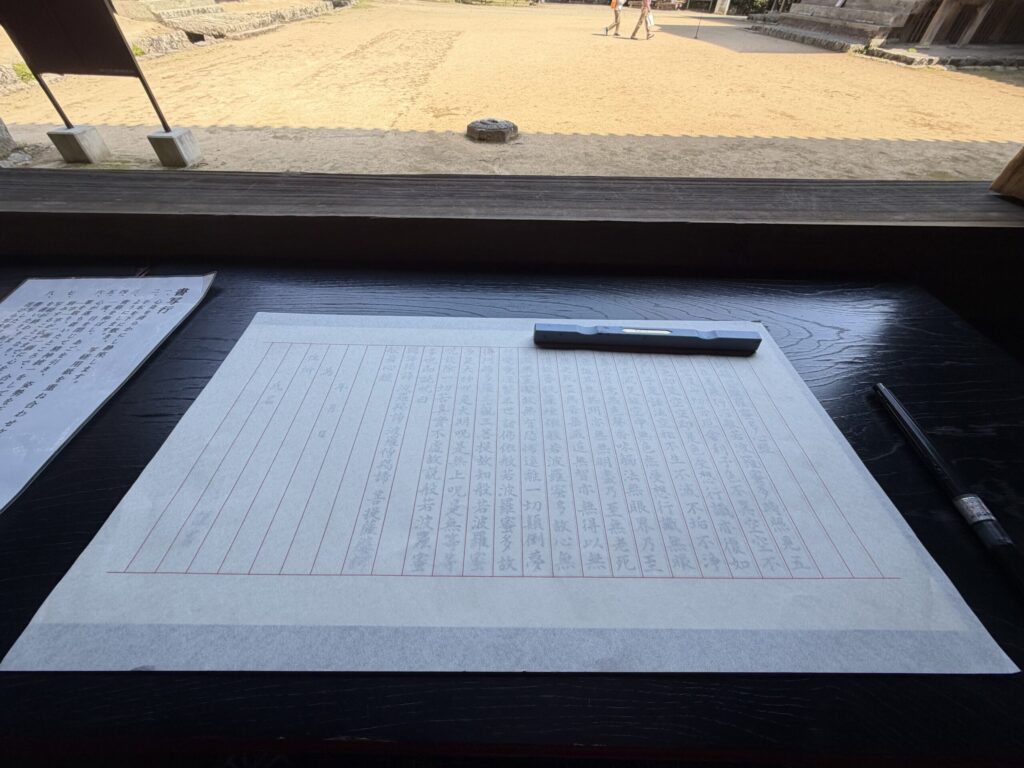
The Heart Sutra (Hannya Shingyō) is an essential sutra for the Saigoku Pilgrimage of the Thirty-Three Temples, and there are also opportunities along the way for nōkyō (sutra offerings) and shakyō (sutra copying).
This time I had AI write a support article about the Heart Sutra. The photos are all original.
If you have ever wondered about the Heart Sutra meaning, you are far from alone. This short Buddhist text—just 262 Chinese characters (some scholars count 266)—is one of the most beloved scriptures in all of Japan. Pilgrims chant it before temple halls across the country, and its compact verses pack centuries of Buddhist wisdom into a few breaths. In this guide, we’ll explore what the Heart Sutra actually means, why it matters, and what it feels like to chant it on the pilgrimage trail.
What Is the Heart Sutra?
Its full name is the Hannya Haramitta Shingyo (般若波羅蜜多心経), often shortened in English to the Heart Sutra. Let’s break down those words. Hannya means wisdom or insight. Haramitta refers to reaching the “other shore” of enlightenment. Shingyo means the scripture that explains the very heart, or core, of the teaching. What makes this sutra remarkable is that it distills the enormous body of Prajnaparamita (Perfection of Wisdom) literature into one astonishingly brief passage.
Walk the famous Shikoku Pilgrimage—the route of 88 sacred temples—and you will encounter pilgrims chanting the Heart Sutra in front of the main hall (hondo) and the Daishi hall (Daishido) again and again. Linger near a temple’s stamp office, the nokyojo, and you’ll hear something special: low, swaying voices overlapping in a way that creates a strange sense of unity. Because the sutra is so short, even complete beginners can repeat it comfortably.
Who Taught the Heart Sutra?
The sutra is structured as a teaching delivered by Avalokiteshvara—known in Japan as Kanzeon Bosatsu or Kanjizai Bosatsu (観自在菩薩), the bodhisattva of compassion—to Shariputra (舎利子), one of the Buddha’s chief disciples. The version most widely recited in Japan was translated into Chinese by the Tang dynasty monk Xuanzang, known in Japanese as Genjo Sanzo (玄奘三蔵). If that name rings a faint bell, it’s because he served as the historical model for the monk Tripitaka in the classic tale Journey to the West.
What Does the Heart Sutra Really Mean? Understanding “Emptiness”
If the Heart Sutra has one keyword, it is ku (空), usually translated as “emptiness.” Many people have heard the sutra’s most famous line: shiki soku ze ku, ku soku ze shiki (色即是空 空即是色), often rendered as “form is emptiness, emptiness is form.”
Here, shiki (色, “form”) refers to visible matter and phenomena. Crucially, ku does not mean “nothing exists.” Rather, it expresses the idea that nothing has a fixed, permanent essence—everything shifts and changes according to a web of conditions. Take a single cup of tea. It exists only because tea leaves, water, temperature, and time all come together in one moment. There is no eternal, unchanging “tea-in-itself” sitting behind the experience.
By understanding this concept of emptiness, the teaching goes, we can gradually loosen our grip on the things we cling to—and find a little more freedom. That, in essence, is the wisdom the Heart Sutra hopes to pass on.
- Form is emptiness: things that have shape possess no fixed, independent essence.
- Emptiness is form: precisely because there is no fixed essence, the world can appear as endless phenomena.
- Neither arising nor ceasing (fusho fumetsu, 不生不滅): a perspective in which things neither truly come into being nor truly pass away.
The Closing Mantra: “Gyate Gyate”
Toward the end of the sutra comes a passage with an unmistakable rhythm: gyate gyate, hara gyate (羯諦羯諦 波羅羯諦). This is a mantra (shingon)—a Sanskrit phrase transcribed directly into Chinese characters rather than translated. Tradition holds that no forced translation is needed, because the act of chanting the sound itself carries great power. Many pilgrims describe a curious calm settling over them as they voice these syllables aloud.
Why Do Pilgrims Chant the Heart Sutra?
On Japan’s great pilgrimage routes—the 88 temples of Shikoku, the 33 temples of the Saigoku Kannon circuit, and many others—the Heart Sutra sits at the center of the recitation. When you arrive at a temple, called a fudasho (札所), the customary flow is to follow the proper etiquette of worship, place your palms together, and offer the Heart Sutra to the principal image of the temple and to Kobo Daishi, the great monk Kukai who founded the Shingon school.
One thing first-time pilgrims often share is how the chanting evolves over the journey. “At first my recitation was clumsy,” they say, “but temple by temple, the words began to flow out of me naturally.” The simple act of chanting in unison seems to become a form of meditation in itself—a quiet gathering of the mind.
- You may chant while reading from a sutra book (kyohon), so memorization is not required.
- The standard practice is to chant at both the main hall and the Daishi hall.
- There’s no need to raise your voice or strain—your own pace is perfectly fine.
This accessibility is part of why the sutra endures. Whether you are a lifelong practitioner or a curious traveler, you can join the rhythm without first mastering a single line of doctrine.
Frequently Asked Questions
- Q: How many characters are in the Heart Sutra?
- A: The Chinese translation is generally counted as 262 characters, though depending on the counting method it is sometimes given as 266. Its brevity is exactly why it has become such a popular sutra to chant repeatedly.
- Q: Is it acceptable to chant even if I don’t understand the meaning?
- A: Yes. The closing mantra in particular is believed to hold meaning in its very sound. Even without fully grasping the content, chanting it with sincerity is considered what matters most.
- Q: Which Buddhist schools recite this sutra?
- A: It is recited across a wide range of schools, including Shingon, Tendai, and Zen. On the other hand, it is generally not used in the Jodo Shinshu (True Pure Land) or Nichiren traditions.
- Q: Do I need a sutra book when I go on pilgrimage?
- A: There’s no need to have it memorized—you can chant while reading from a sutra book without any problem. Many pilgrims recite with the book in hand.
Conclusion
The Heart Sutra packs the profound wisdom of “emptiness” into a tiny handful of characters, making it one of the most familiar scriptures in Japanese life. The teaching captured in “form is emptiness, emptiness is form” offers a gentle hint: by releasing our attachment to ever-changing things, we can lighten the heart.
Whether on a pilgrimage or in the midst of daily life, why not begin simply by chanting it aloud? As you savor the meaning little by little, the world of the Heart Sutra is bound to feel closer and more personal with every recitation.
References
- To-ji Temple — Head Temple of Shingon Buddhism
- Kongobuji Temple — Head Temple of Koyasan Shingon Buddhism
- Enryakuji Temple — Head Temple of Tendai Buddhism, Mt. Hiei
- Saigoku Sanjusan-sho Fudasho-kai — Saigoku Thirty-Three Sacred Sites Association
About Goshuin Stamp Books and Related Items
I usually collect the pre-written kakioki type of goshuin stamps, but for the Thirty-Three Temple Pilgrimage I wanted stamps written directly into a dedicated book, so I purchased one especially for the journey.
Goshuincho stamp books are also sold at the temples of the Saigoku Pilgrimage. However, the accordion-fold (jyabara) style can cause ink to bleed through to the other side. For that reason, I would recommend a bound style rather than accordion-fold — ideally one where each page is separated by an interleaving sheet of paper.
Nokyo-cho — Saigoku Thirty-Three Temples
Gold brocade binding (with vinyl cover) · Lightweight, quick-drying special washi paper that resists ink bleed-through
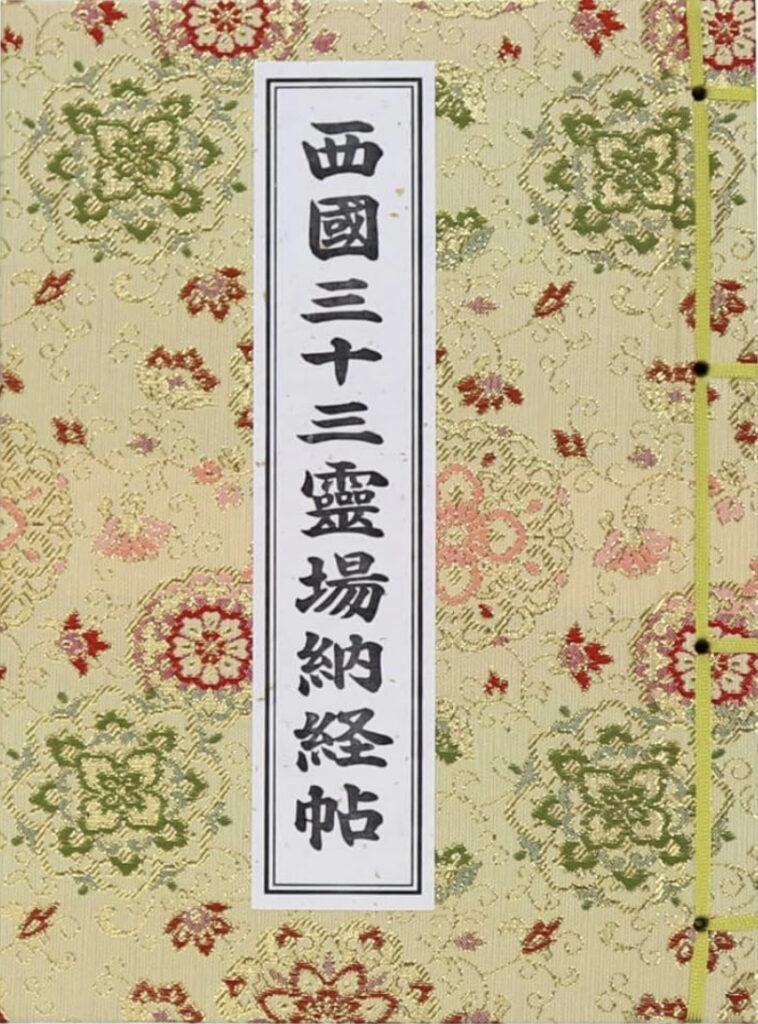
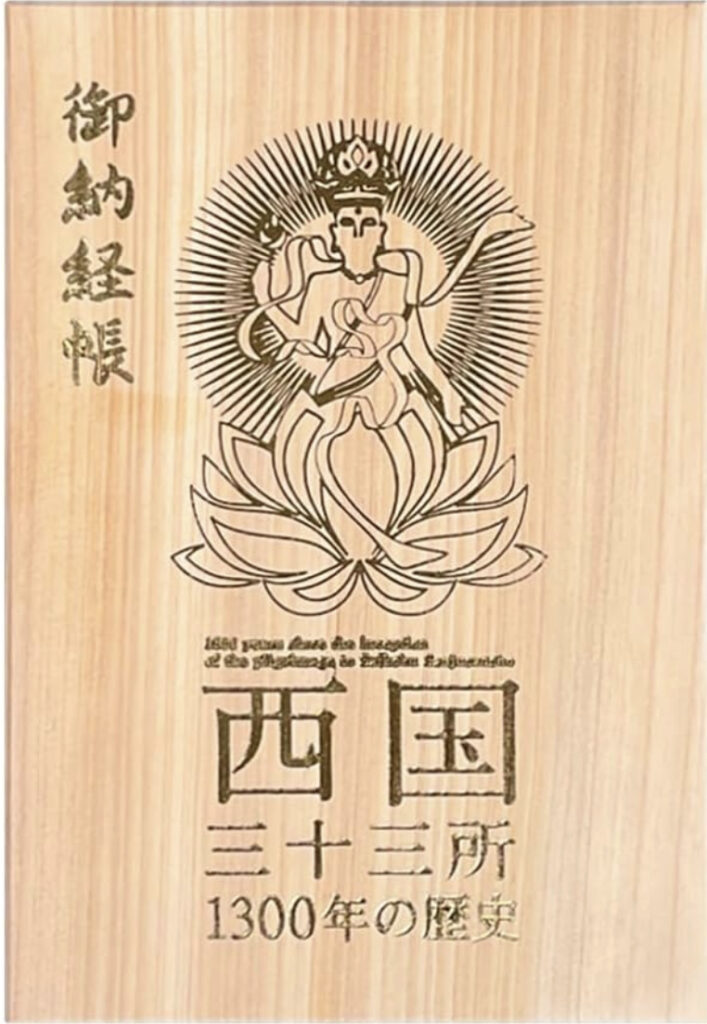
Nokyo-cho — Saigoku Thirty-Three Temples
Hinoki (Japanese cypress) solid wood binding · Handmade washi paper, accordion-fold double-layer style
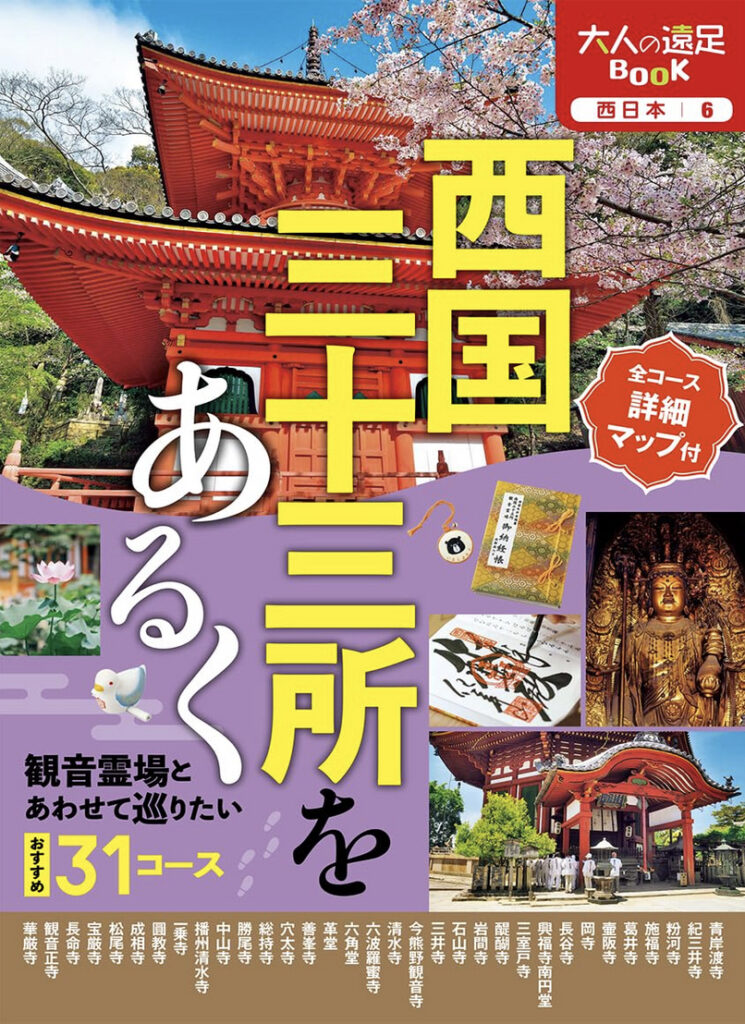
Walking the Saigoku Thirty-Three Temples
Otona no Ensoku BOOK
A guidebook for enjoying the pilgrimage and the pleasures of dedicated walking
Introduction & Overview
- What Is Esoteric Buddhism? Tendai and Shingon Explained in Simple Terms
- The Deep Connection Between the Saigoku Pilgrimage and Esoteric Buddhism | Why We Journey to Kannon Bodhisattva
Buddhas & Bodhisattvas
- What Are the 33 Forms of Kannon Bodhisattva? A Complete Guide to the Principal Images of the Saigoku Pilgrimage
- What Is the Difference Between Nyorai, Bosatsu, Myōō, and Ten? An Illustrated Guide to the Deities of Esoteric Buddhism
Practices & Culture
- The Meaning of the Heart Sutra Explained Simply | The World of the Sutras Chanted on Pilgrimage
- What Are Goshuin, Omiei, and Sange? The Esoteric Buddhist Culture You Encounter on the Saigoku Pilgrimage
Temples & History
Saigoku Pilgrimage of the Thirty-Three Temples — List of Sacred Sites
- No.12 Syohoji
- No.13 Ishiyamadera
- No.14 Miidera
- No.15 Imakumano-Knnonji
- No.16 Kiyomizudera
- No.17 Rokuharamitsuji
- No.18 Rokkakudo-Chohoji
- No.19 Kaudo-Gyoganji
- No.20 Yoshiminedera
- No.21 Anaoji
- No.22 Sojiji
- No.23 Katsuoji
- No.24 Nakayamadera
- No.25 Bansyu-Kiyomizudera
- No.26 Ichijyoji
- No.27 Engyoji
- No.28 Nariaiji
- No.29 Matsunoodera
- No.30 Chikubusima-Hogonji
- No.31 Chomeiji
- No.32 Kannonsyoji
- No.33 Kegonji