Kukai and Saicho are the two towering monks who introduced esoteric Buddhism (mikkyo) to Japan in the early Heian period. You may have come across their names in a history textbook, yet the story of their friendship, their rivalry, and the very different teachings they championed often goes untold. Let’s take a closer look at how these two pioneers shaped the spiritual landscape of Japan—and why their contrasting paths still matter more than a thousand years later.
Who Were Kukai and Saicho?
Kukai (774–835) and Saicho (767–822) both traveled to Tang China in the year 804 as members of a kentoshi mission—an official diplomatic embassy sent from Japan to the Tang court. According to tradition, they crossed the sea in the same fleet, though they returned home to found two entirely separate schools: Shingon Buddhism and Tendai Buddhism.
The difference in their standing at the time of departure is striking. Saicho, roughly seven years older, was already a respected monk recognized by the imperial court. Kukai, by contrast, was close to an unknown—a shidoso, meaning a privately ordained monk without official sanction. Two men of such unequal status set out on the same journey, only to return as equals who would eventually part ways. That contrast lies at the heart of one of the most fascinating chapters in Japanese Buddhist history.
Kukai: The Founder of Shingon, Affectionately Known as “O-Daishi-sama”
Kukai was born in Sanuki Province, today’s Kagawa Prefecture on the island of Shikoku. In the Tang capital of Chang’an, he received the orthodox transmission of esoteric teachings from Master Huiguo (Keika Osho), and remarkably, he returned to Japan after only about two years abroad. In 816 he established Kongobu-ji temple on Mount Koya (Koyasan), founding the Shingon school.
Posthumously honored as Kobo Daishi, he became beloved across the country, and devotion to “O-Daishi-sama” spread far and wide. He was also celebrated as a master of calligraphy—so much so that the Japanese proverb “Kobo nimo fude no ayamari” (“even Kobo’s brush makes mistakes,” meaning even experts err) keeps his name alive in everyday speech.
Saicho: The Founder of Tendai, Honored as “Dengyo Daishi”
Saicho came from Omi Province, present-day Shiga Prefecture. From an early age he secluded himself on Mount Hiei (Hieizan) for rigorous practice, and in China he studied primarily Tendai doctrine. After his return, Tendai Buddhism received official recognition in 806, and he made Enryaku-ji temple on Mount Hiei the base of his activities. He was later given the posthumous title Dengyo Daishi.
Enryaku-ji went on to nurture an extraordinary number of influential monks—including Honen, Shinran, Dogen, and Nichiren, the founders of the so-called Kamakura new Buddhist movements. For this reason the temple is often called the “mother mountain of Japanese Buddhism.”
How Did the Teachings of Kukai and Saicho Differ?
Their greatest difference lay in their attitude toward esoteric Buddhism. Here is a simple way to organize the distinction:
- Kukai (Shingon): Placed esoteric Buddhism at the very center, ranking it as the highest of all teachings. This pure focus is called “junmitsu,” or pure esotericism.
- Saicho (Tendai): Built his school around Tendai doctrine while comprehensively incorporating esoteric Buddhism, Zen, and monastic precepts—an integrated approach to Buddhism.
Here lies an irony worth pausing on. Saicho had not had enough time in China to fully master the esoteric tradition. So after returning home, the older, court-recognized Saicho actually sought to learn esoteric Buddhism from the younger Kukai. That reversal of roles would cast a subtle shadow over their relationship.
From Friendship to a Parting of Ways
In the early days, the two enjoyed a warm relationship—Saicho borrowed scriptures from Kukai and even sent his own disciples to study under him. But Kukai held a firm conviction: esoteric Buddhism could not be transmitted through books alone. It had to be received directly, face to face, from a master.
The decisive break came over a disciple named Taihan. Saicho sent this trusted student to study with Kukai, but Taihan chose to remain under Kukai’s guidance and never returned to Saicho. Adding to the rift, Kukai declined Saicho’s request to borrow an esoteric scripture known as the Rishushakukyo. These episodes deepened the gulf between them, and two men who had once cooperated walked off down separate roads.
What Did Kukai and Saicho Leave Behind in Japan?
The esoteric teachings and schools they brought home had a profound and lasting impact on Japanese culture. A few enduring legacies stand out:
- Mount Koya and Mount Hiei: Both remain sacred sites to this day, important spiritual centers connected to World Heritage designations.
- The Eighty-Eight Temple Pilgrimage of Shikoku: Linked to Kukai, this “o-henro” pilgrimage still draws countless pilgrims who walk the route in his memory.
- Later generations of Buddhists: Mount Hiei produced the founding teachers of the Kamakura new Buddhism.
Visit Mount Koya or Mount Hiei in person and you can feel the solemn atmosphere among towering cedar groves on your own skin. These are places where you sense, almost physically, that the spirit of these two monks has remained alive for well over a thousand years.
Frequently Asked Questions
- Q: Who was older, Kukai or Saicho?
- A: Saicho was born in 767 and Kukai in 774, making Saicho roughly seven years older. That said, it was Kukai who first mastered esoteric Buddhism in earnest.
- Q: What is the difference between Shingon and Tendai Buddhism?
- A: Shingon places esoteric Buddhism at its core—a “pure esoteric” (junmitsu) stance—while Tendai is built around Tendai doctrine and integrates esoteric Buddhism, Zen, and other elements in a more comprehensive way.
- Q: Did Kukai and Saicho dislike each other?
- A: Their relationship was good at first, but a rift formed over the matter of the disciple Taihan and the lending of scriptures, and they are said to have parted ways later on.
- Q: Who are “Kobo Daishi” and “Dengyo Daishi”?
- A: Kobo Daishi is the posthumous title given to Kukai, and Dengyo Daishi is the posthumous title given to Saicho.
Conclusion
Kukai and Saicho were two great monks who crossed to Tang China in the same era and brought esoteric Buddhism to Japan. Kukai founded the esotericism-centered Shingon school, while Saicho established the comprehensive Tendai school, and from their bases on Mount Koya and Mount Hiei they each left a deep imprint on the generations that followed. For a time they cooperated, only to diverge over their differing views of esoteric Buddhism. Knowing their contrasting journeys gives you a richer sense of just how deep Japanese Buddhism runs. If you have the chance, make your way to Mount Koya or Mount Hiei and breathe in that living tradition for yourself.
References
About Goshuin Stamp Books and Related Items
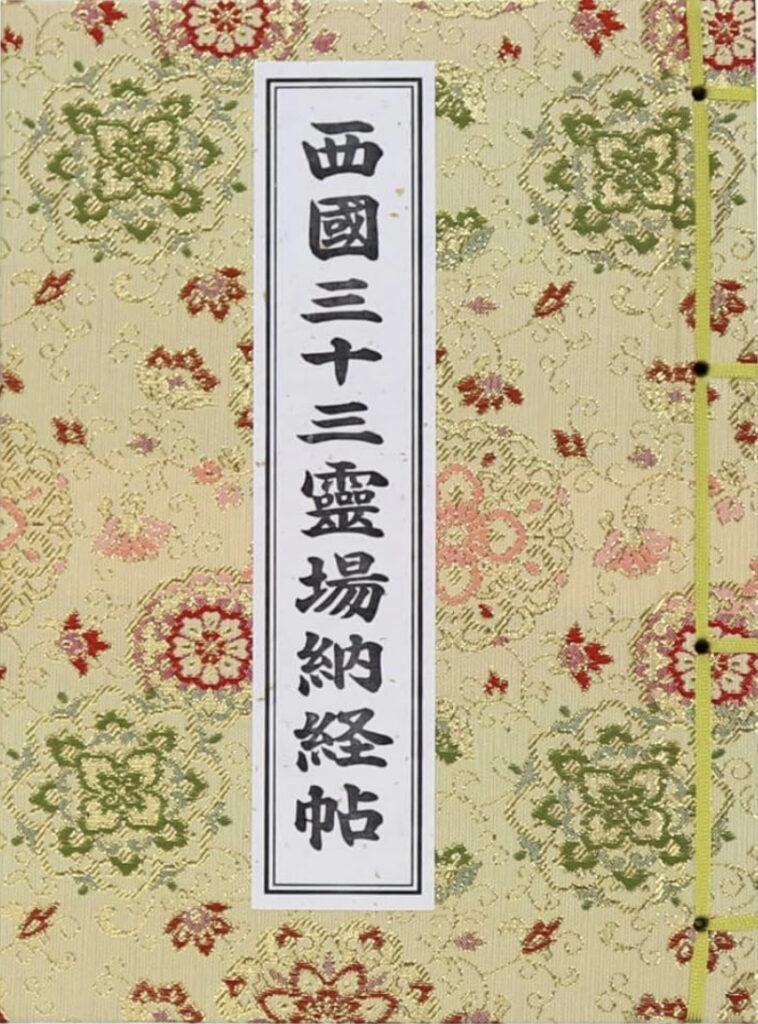
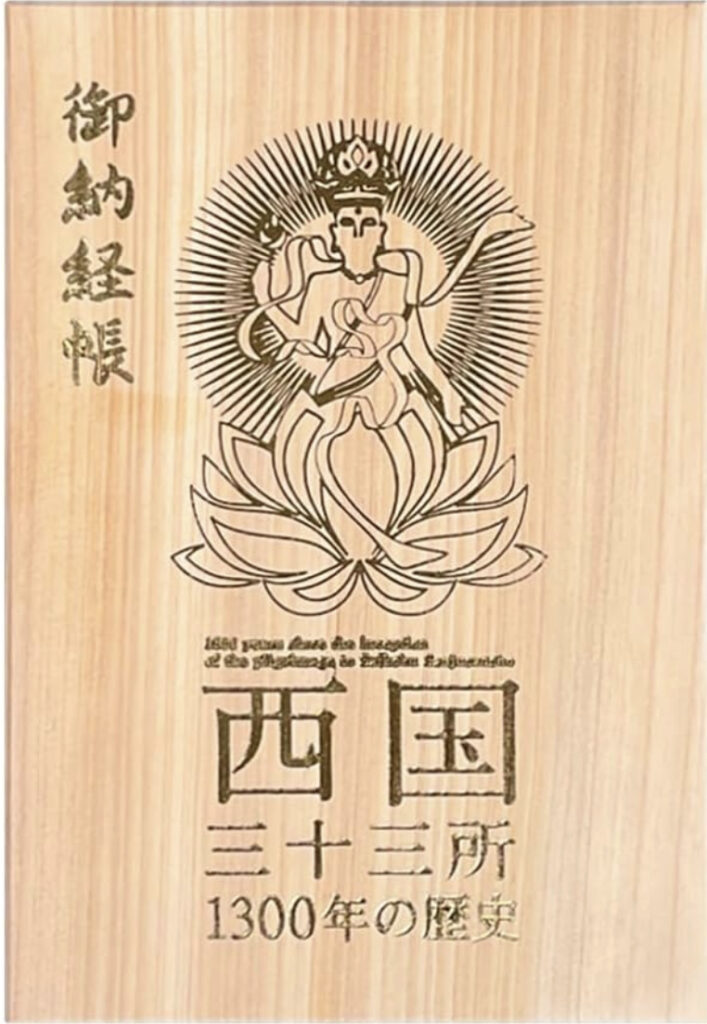
I usually collect the pre-written kakioki type of goshuin stamps, but for the Thirty-Three Temple Pilgrimage I wanted stamps written directly into a dedicated book, so I purchased one especially for the journey.
Goshuincho stamp books are also sold at the temples of the Saigoku Pilgrimage. However, the accordion-fold (jyabara) style can cause ink to bleed through to the other side. For that reason, I would recommend a bound style rather than accordion-fold — ideally one where each page is separated by an interleaving sheet of paper.
Nokyo-cho — Saigoku Thirty-Three Temples
Gold brocade binding (with vinyl cover) · Lightweight, quick-drying special washi paper that resists ink bleed-through
Nokyo-cho — Saigoku Thirty-Three Temples
Hinoki (Japanese cypress) solid wood binding · Handmade washi paper, accordion-fold double-layer style
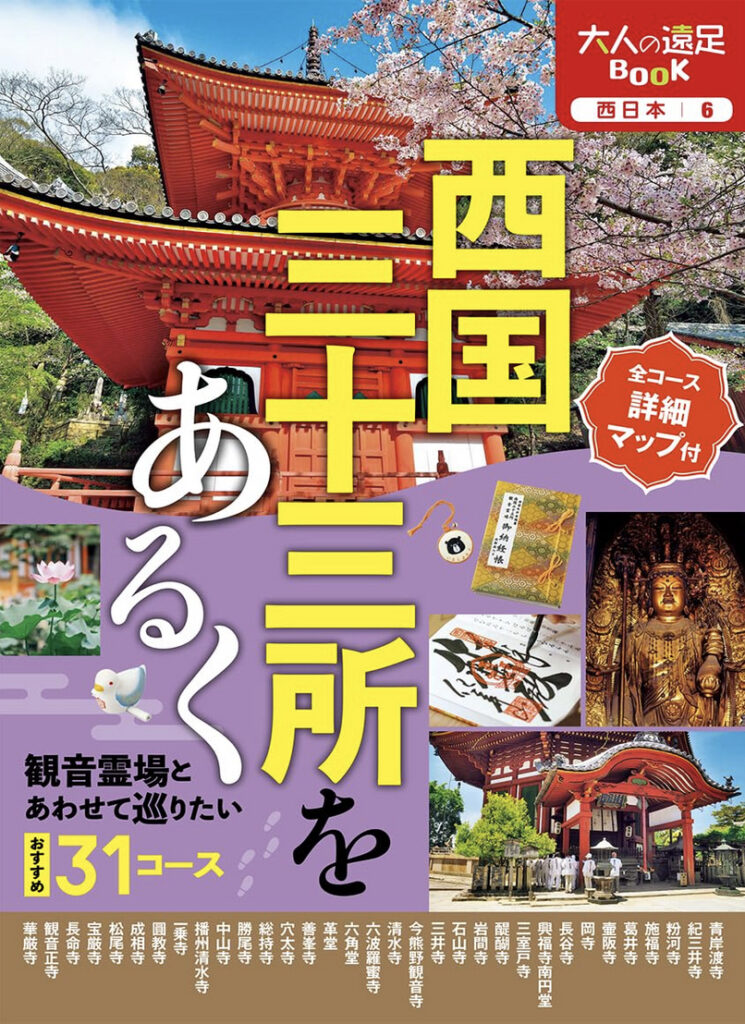
Walking the Saigoku Thirty-Three Temples
Otona no Ensoku BOOK
A guidebook for enjoying the pilgrimage and the pleasures of dedicated walking
Introduction & Overview
- What Is Esoteric Buddhism? Tendai and Shingon Explained in Simple Terms
- The Deep Connection Between the Saigoku Pilgrimage and Esoteric Buddhism | Why We Journey to Kannon Bodhisattva
Buddhas & Bodhisattvas
- What Are the 33 Forms of Kannon Bodhisattva? A Complete Guide to the Principal Images of the Saigoku Pilgrimage
- What Is the Difference Between Nyorai, Bosatsu, Myōō, and Ten? An Illustrated Guide to the Deities of Esoteric Buddhism
Practices & Culture
- The Meaning of the Heart Sutra Explained Simply | The World of the Sutras Chanted on Pilgrimage
- What Are Goshuin, Omiei, and Sange? The Esoteric Buddhist Culture You Encounter on the Saigoku Pilgrimage
Temples & History
Saigoku Pilgrimage of the Thirty-Three Temples — List of Sacred Sites
- No.12 Syohoji
- No.13 Ishiyamadera
- No.14 Miidera
- No.15 Imakumano-Knnonji
- No.16 Kiyomizudera
- No.17 Rokuharamitsuji
- No.18 Rokkakudo-Chohoji
- No.19 Kaudo-Gyoganji
- No.20 Yoshiminedera
- No.21 Anaoji
- No.22 Sojiji
- No.23 Katsuoji
- No.24 Nakayamadera
- No.25 Bansyu-Kiyomizudera
- No.26 Ichijyoji
- No.27 Engyoji
- No.28 Nariaiji
- No.29 Matsunoodera
- No.30 Chikubusima-Hogonji
- No.31 Chomeiji
- No.32 Kannonsyoji
- No.33 Kegonji