I began the Saigoku Pilgrimage of the Thirty-Three Temples in 2026. For the sacred sites I have already visited, I have written articles accompanied by my own photographs.
From here, I will have AI write support articles about the sites I have yet to visit — as a way of preparing for the journey ahead.
Perched on the slopes of Mount Nagusa in Wakayama City, Kimiidera Temple (紀三井寺) has welcomed pilgrims for roughly 1,250 years. Known as the second temple on the celebrated Saikoku Thirty-Three Kannon Pilgrimage (西国三十三箇所, Saikoku Sanjūsan-kasho), this ancient sanctuary is famous for two things: some of the earliest cherry blossoms in all of Japan, and its principal image of the Eleven-Faced Kannon (十一面観世音菩薩, Jūichimen Kanzeon Bosatsu), the bodhisattva of compassion. Whether you come for the blossoms, the pilgrimage, or the sweeping sea views, Kimiidera offers a rare blend of natural beauty and spiritual depth.
What Is Kimiidera Temple? A History Stretching Back 1,250 Years
The temple was founded in the Nara period, during the reign of Emperor Kōnin, in the first year of the Hōki era (AD 770). Its founder was a Chinese monk named Ikō Shōnin (為光上人), who crossed the notoriously rough East China Sea from Tang-dynasty China to spread Buddhist teachings in Japan.
According to temple tradition, Ikō Shōnin was a monk of deep devotion who traveled from province to province, hoping to relieve human suffering through the compassionate light of Kannon. During one of his journeys he happened upon this very spot. At midnight he perceived a mysterious radiance glowing halfway up Mount Nagusa (名草山). Climbing the mountain the next morning, he received a vision of a sacred image of the Thousand-Armed Kannon. That single night of spiritual revelation marks the true beginning of Kimiidera.
Overjoyed, the monk declared this to be “a sacred ground of Kannon’s compassion and an ideal place to spread the Buddhist Dharma.” It is a founding story that gives the temple its distinctive character even today.
The Principal Image and the Great Thousand-Armed Kannon
Ikō Shōnin carved an image of the Eleven-Faced Kannon with his own hands, performing the devotional practice of ittō sanrai (一刀三礼) — bowing three times for each stroke of the chisel. He then built a hall to enshrine it. This hand-carved statue remains the spiritual heart of the temple.
Kimiidera is also home to Japan’s largest wooden statue of the Thousand-Armed Kannon. Standing beneath it inside the hall, many visitors describe being momentarily lost for words at its overwhelming scale. The temple itself calls it a place of healing “watched over by Japan’s largest wooden Great Thousand-Armed Kannon image.” Alongside these treasures, Kimiidera preserves a number of important cultural properties accumulated over its long history.
Why Is Kimiidera Famous for Cherry Blossoms?
Ask anyone in Wakayama about spring, and Kimiidera is likely to come up. The temple is renowned across Japan for its early-blooming cherry blossoms (hayazaki-zakura), which open ahead of most other spots in the country. For that reason it is often treated as a herald of spring’s arrival.
Its location halfway up Mount Nagusa adds to the appeal. From the grounds you can look out over Wakanoura (和歌の浦), a coastal area recognized as a Japan Heritage site under the title “A Treasury of Scenic Beauty: Wakanoura.” The chance to enjoy blossoms and sea views together is a luxury few temples can offer.
- Nationally known as a spot for early-blooming cherry blossoms
- A hillside setting overlooking the Japan Heritage site “A Treasury of Scenic Beauty: Wakanoura”
- A special spring scene where cherry blossoms and ocean views overlap
What Is the “Sennichi-mairi” on August 9th?
If there is one date worth marking on the calendar, it is August 9th — the day of the Sennichi-mairi (千日詣, “Thousand-Day Visit”). Worshippers who visit on this single day are said to gain the merit of a thousand days of visits. For pilgrims, that is an extraordinary spiritual bargain.
The same date carries a beautiful legend. On August 9th, it is said, the Dragon Princess (Otohime) of the Dragon Palace comes to the temple bearing a dragon lantern (ryūtō). This mingling of Buddhism with the sea legends of Wakanoura gives the day a mysterious, distinctly local flavor.
Kimiidera also places great value on the eternal memorial of ancestral spirits, serving as a place where devotees may return as many times a year as they wish to deepen their connection with Kannon.
Kimiidera’s Place on the Saikoku Kannon Pilgrimage
Kimiidera is the second temple on what the temple describes as “a 1,300-year-old Japanese journey of life’s final preparations — the Saikoku Thirty-Three Kannon Pilgrimage.” This pilgrimage is one of Japan’s most representative Kannon-worship routes, and visiting each temple in turn is a way of forging a bond with the bodhisattva of compassion.
A welcome practical note: the admission fee for those who arrive on foot is currently free, and the temple has stated it intends to continue this policy for the time being. (Always check the official website for the latest information.) That makes it easy to include Kimiidera as part of a pilgrimage itinerary.
New attractions are also planned. In 2026 (Reiwa 8), the temple will unveil a plaster relief mural depicting the Haruko Inari legend (春子稲荷伝説鏝絵壁画) on January 18th, alongside a Great Prajnaparamita Sutra reading ceremony (初観音大般若経転読法会). On March 21st, the temple will hold its first “Hatsuuma Good-Fortune Mochi Throwing” event, featuring its first-ever “lucky woman” (fukujo).
How to Get to Kimiidera Temple
Kimiidera is located at 1201 Kimiidera, Wakayama City, and is accessible by both train and car.
By Train
- From Wakayama Station, transfer to the Kisei Main Line (Kinokuni Line) and take a local train southbound
- From the Mount Kōya direction, transfer at Hashimoto to the JR Wakayama Line and get off at Wakayama Station (about 2 hours 20 minutes)
By Car
- Exit the Hanwa Expressway at Wakayama IC or Wakayama Minami IC (an ETC-only smart interchange)
- From Wakayama IC, take the Kokutai Road about 4 km; from Wakayama Minami IC, head south on the Kokutai Road about 1.7 km
A note for pet owners: throughout the grounds, pets must be carried or transported in a basket, and pets are not permitted on the cable car. Please plan accordingly.
Frequently Asked Questions
- Q: What is the principal image (honzon) of Kimiidera?
- A: The principal image is a statue of the Eleven-Faced Kannon (Jūichimen Kanzeon Bosatsu), carved by the founder Ikō Shōnin himself through the devotional practice of ittō sanrai. The temple also enshrines Japan’s largest wooden statue of the Thousand-Armed Kannon.
- Q: When was Kimiidera founded?
- A: It was founded in the first year of the Hōki era (AD 770), during the reign of Emperor Kōnin in the Nara period, by the Chinese monk Ikō Shōnin — roughly 1,250 years ago.
- Q: When is the Sennichi-mairi held?
- A: It takes place every year on August 9th. A visit on this day is said to grant the merit of a thousand days, and legend tells that the Dragon Princess of the Dragon Palace comes to the temple bearing a dragon lantern on this date.
- Q: Is there an admission fee?
- A: For those who arrive on foot, admission is currently free and this policy is being continued for the time being. Please check the official website for the latest details.
- Q: Can I bring a pet?
- A: Throughout the temple grounds, pets must be carried or placed in a basket. Pets are not allowed on the cable car.
Conclusion
Kimiidera is a distinguished temple founded some 1,250 years ago by the Chinese monk Ikō Shōnin, and it stands as the second temple on the Saikoku Thirty-Three Kannon Pilgrimage. With the Eleven-Faced Kannon as its principal image and Japan’s largest wooden Great Thousand-Armed Kannon watching over its halls, the grounds truly live up to the description of “a sacred ground of Kannon’s compassion.”
In spring, crowds gather for its famous early-blooming cherry blossoms; in summer, the Sennichi-mairi and the dragon-lantern legend of August 9th add seasonal wonder. Combined with its hillside view over the Japan Heritage site of Wakanoura, Kimiidera promises a genuinely restful, spirit-soothing visit. If you find yourself in Wakayama, consider making it one stop on your own pilgrimage.
References
About Goshuin Stamp Books and Related Items
I usually collect the pre-written kakioki type of goshuin stamps, but for the Thirty-Three Temple Pilgrimage I wanted stamps written directly into a dedicated book, so I purchased one especially for the journey.
Goshuincho stamp books are also sold at the temples of the Saigoku Pilgrimage. However, the accordion-fold (jyabara) style can cause ink to bleed through to the other side. For that reason, I would recommend a bound style rather than accordion-fold — ideally one where each page is separated by an interleaving sheet of paper.
Nokyo-cho — Saigoku Thirty-Three Temples
Gold brocade binding (with vinyl cover) · Lightweight, quick-drying special washi paper that resists ink bleed-through
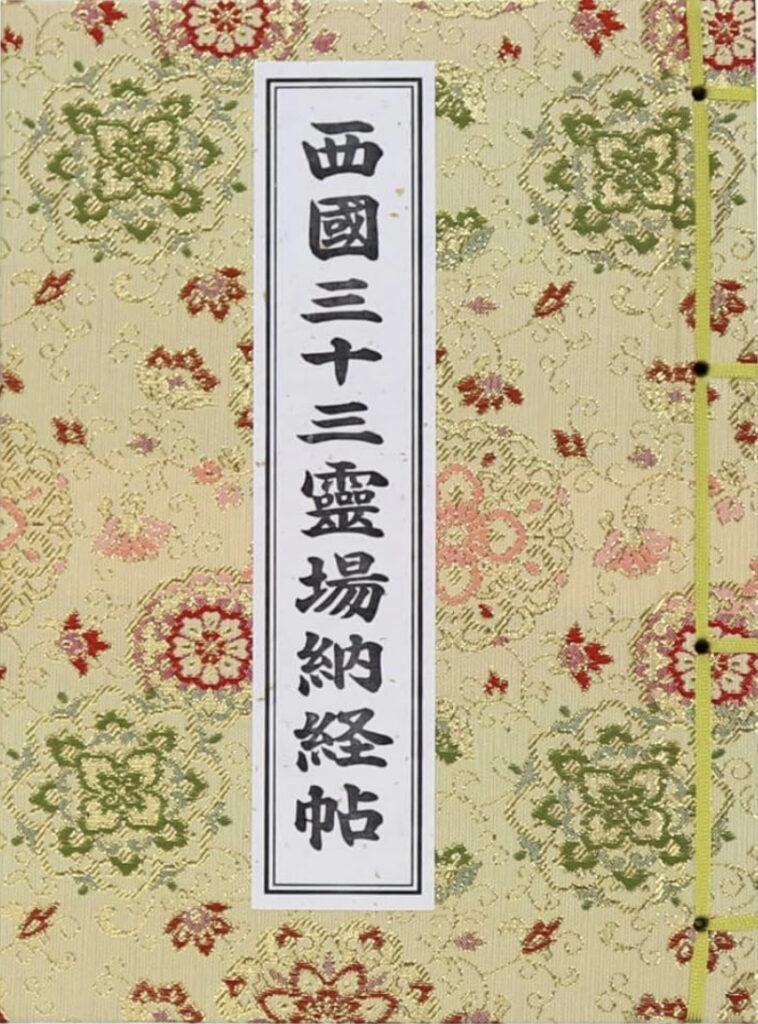
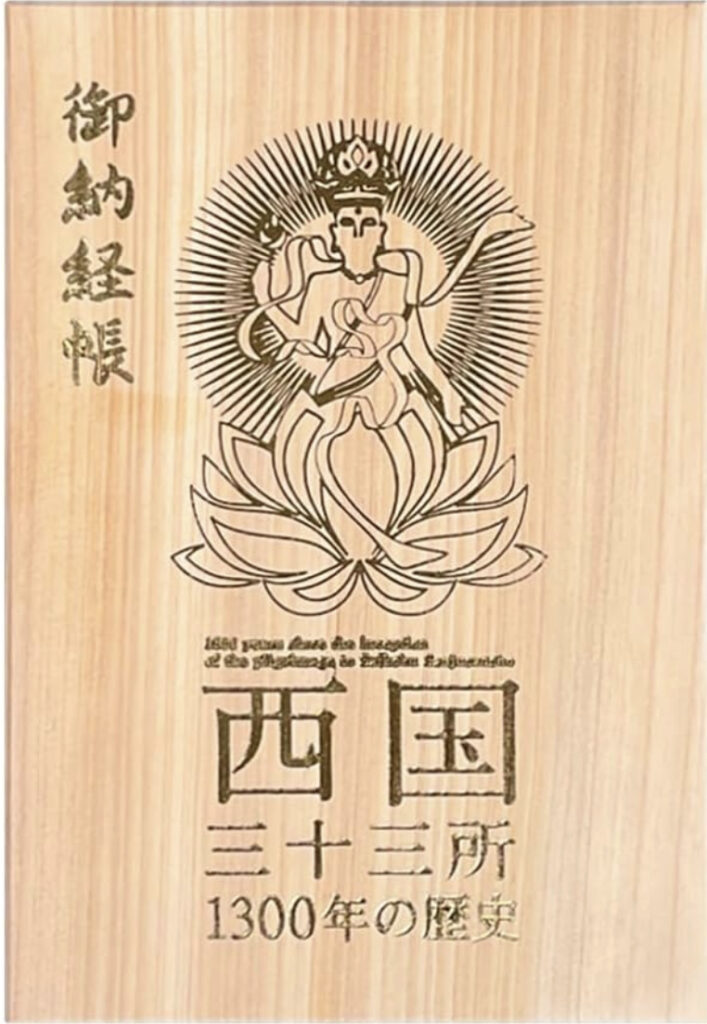
Nokyo-cho — Saigoku Thirty-Three Temples
Hinoki (Japanese cypress) solid wood binding · Handmade washi paper, accordion-fold double-layer style
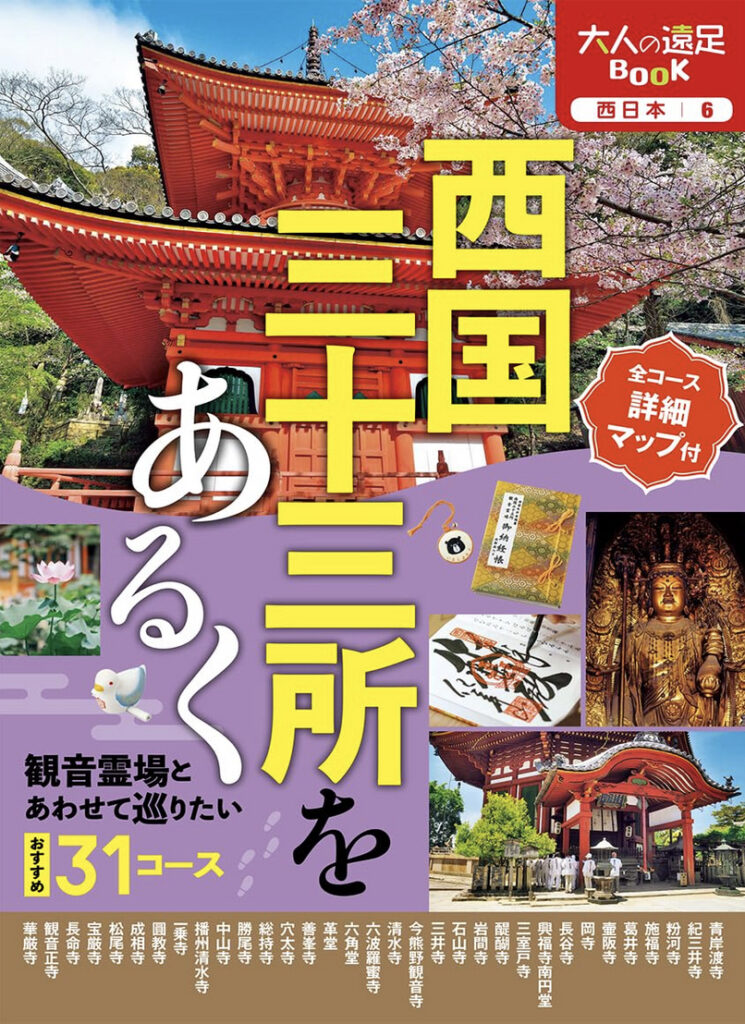
Walking the Saigoku Thirty-Three Temples
Otona no Ensoku BOOK
A guidebook for enjoying the pilgrimage and the pleasures of dedicated walking
Introduction & Overview
- What Is Esoteric Buddhism? Tendai and Shingon Explained in Simple Terms
- The Deep Connection Between the Saigoku Pilgrimage and Esoteric Buddhism | Why We Journey to Kannon Bodhisattva
Buddhas & Bodhisattvas
- What Are the 33 Forms of Kannon Bodhisattva? A Complete Guide to the Principal Images of the Saigoku Pilgrimage
- What Is the Difference Between Nyorai, Bosatsu, Myōō, and Ten? An Illustrated Guide to the Deities of Esoteric Buddhism
Practices & Culture
- The Meaning of the Heart Sutra Explained Simply | The World of the Sutras Chanted on Pilgrimage
- What Are Goshuin, Omiei, and Sange? The Esoteric Buddhist Culture You Encounter on the Saigoku Pilgrimage
Temples & History
Saigoku Pilgrimage of the Thirty-Three Temples — List of Sacred Sites
- No.12 Syohoji
- No.13 Ishiyamadera
- No.14 Miidera
- No.15 Imakumano-Knnonji
- No.16 Kiyomizudera
- No.17 Rokuharamitsuji
- No.18 Rokkakudo-Chohoji
- No.19 Kaudo-Gyoganji
- No.20 Yoshiminedera
- No.21 Anaoji
- No.22 Sojiji
- No.23 Katsuoji
- No.24 Nakayamadera
- No.25 Bansyu-Kiyomizudera
- No.26 Ichijyoji
- No.27 Engyoji
- No.28 Nariaiji
- No.29 Matsunoodera
- No.30 Chikubusima-Hogonji
- No.31 Chomeiji
- No.32 Kannonsyoji
- No.33 Kegonji