I began the Saigoku Pilgrimage of the Thirty-Three Temples in 2026. For the sacred sites I have already visited, I have written articles accompanied by my own photographs.
From here, I will have AI write support articles about the sites I have yet to visit — as a way of preparing for the journey ahead.
Kokawadera Temple (粉河寺, Kokawadera) is the third temple on the Saigoku Thirty-Three Kannon Pilgrimage (西国三十三箇所, Saigoku Sanjūsankasho), and one of Wakayama Prefecture’s most storied Buddhist sites. Located in Kinokawa City, it is beloved as a sacred ground of the “Yakuyoke Kannon” (厄除観音)—the Kannon who wards off misfortune—and continues to draw pilgrims from across Japan who come to encounter its expansive temple grounds and its principal image, the Thousand-Armed Kannon. In this guide, we’ll walk through the temple’s history, its highlights, its annual events, and what it’s actually like to visit.
What Is Kokawadera Temple and Where Does It Sit on the Saigoku Pilgrimage?
Kokawadera serves as the third stamp temple (札所, fudasho) on the Saigoku Thirty-Three Kannon Pilgrimage, one of Japan’s oldest and most famous Buddhist pilgrimage routes. The path begins at the first temple, Seigantoji in Nachikatsuura Town, continues to the second, Kimiidera in Wakayama City, and then leads onward to Kokawadera. All three of these opening temples lie within Wakayama Prefecture, and Kokawadera plays an important role in helping pilgrims settle into the rhythm of their journey.
The temple’s official website introduces it as the “Third Temple of Saigoku” and the “Yakuyoke Kannon.” For generations, local people have revered this Kannon as a deity who removes bad luck and protects against calamity. Set in the naturally rich landscape of Kinokawa City, the temple also offers the pleasure of worshipping while surrounded by the changing scenery of the four seasons.
The Vast Temple Grounds and Their Solemn Atmosphere
The first thing that surprises many visitors to Kokawadera is the sheer scale of its precincts. Step through the entrance, and imposing halls open up across your field of view while a slower, gentler sense of time seems to take hold. Walking the grounds, you’ll find that the route from the approach path (参道, sandō) to the main hall (本堂, hondō) becomes a small pilgrimage in itself—a stretch of ground where the mind naturally begins to settle. Practitioners of the Saigoku route often note that these transitional walks between gate and hall are where the spirit of the pilgrimage truly makes itself felt.
The Thousand-Armed Kannon: The Principal Image of Kokawadera
The principal object of worship (御本尊, gohonzon) at Kokawadera is the Thousand-Armed Kannon (千手観音, Senju Kannon). This form of Kannon is said to reach out with a thousand hands to save all people, and here the deity has long been cherished under the affectionate title of “Yakuyoke Kannon”—the Kannon who wards off misfortune. Many worshippers travel from distant regions to pray for protection against bad luck and for freedom from illness, particularly at the turning points of life.
The entire Saigoku Thirty-Three route is a pilgrimage devoted to Kannon worship, and among its temples, Kokawadera—with the Thousand-Armed Kannon as its central image—holds special importance as a place to form a spiritual bond with Kannon. Receiving a temple stamp (御朱印, goshuin) and quietly pressing your palms together in prayer can become a moment set apart from the everyday—a genuinely special interval in an otherwise busy trip.
What Annual Events Are Held at Kokawadera?
Throughout the year, Kokawadera hosts a variety of traditional observances. Below are the representative events described on the temple’s official website.
The Obon Tradition: Segaki-e
Each year on August 9, Kokawadera holds a traditional Obon (お盆) event known as Segaki-e (施餓鬼会), a memorial rite. Obon is the Japanese Buddhist season for honoring the spirits of ancestors. This important ceremony, distinctive to Kokawadera, offers memorial prayers for newly departed souls (新仏, niibotoke), for water children (水子, mizuko, the souls of children lost before or shortly after birth), and for the various spirits of each household.
On the day itself, worshippers reportedly stream in without pause from 4:00 a.m. until 10:00 p.m. That uninterrupted flow of people, from the small hours of the morning until late at night, speaks volumes about how deeply this observance is rooted in the local community. The official website even shares a traditional saying tied to the event: “On the ninth day of Bon—the Segaki of Kokawa—for the children without parents, an offering of water.” These words carry a quiet, long-transmitted spirit of remembrance. Requests for memorial services (回向, ekō) at the Segaki-e, along with any inquiries, are handled by phone at 0736-73-4830 (8:00 a.m.–5:00 p.m.).
A Sign of Spring: Kanbutsu-e (the Flower Festival)
On April 8, the temple holds Kanbutsu-e (灌仏会)—the observance celebrating the birth of the Buddha, popularly known as the Flower Festival (花祭り, hanamatsuri). At Kokawadera, a flower hall (花御堂, hanamidō) is decorated with a wide variety of grasses and flowers, and visitors pour sweet tea (甘茶, amacha) over a small statue of the infant Buddha. As a lovely bonus, sweet tea is also served to those who come to worship.
According to the official website, the 2020 Kanbutsu-e was carried out smoothly on Wednesday, April 8. The weather was fine that day, and a great many people came to visit. The flower hall, adorned in an array of colorful blossoms, adds a bright, celebratory touch to the spring precincts and seems to linger in the memory of many worshippers.
Points to Know Before You Visit
- Kokawadera is the third temple of the Saigoku Thirty-Three Kannon Pilgrimage, known as the “Yakuyoke Kannon.”
- The principal image is the Thousand-Armed Kannon (Senju Kannon).
- On August 9, the traditional Obon rite (Segaki-e) is held, with worship continuing from 4:00 a.m. to 10:00 p.m.
- On April 8, Kanbutsu-e (the Flower Festival) is held, and sweet tea is served.
- For inquiries about events, call 0736-73-4830 (8:00 a.m.–5:00 p.m.).
Frequently Asked Questions
- Q: Which number temple is Kokawadera on the Saigoku Pilgrimage?
- A: Kokawadera is the third temple on the Saigoku Thirty-Three Kannon Pilgrimage. It is located in Kinokawa City, Wakayama Prefecture, and is affectionately known as the “Yakuyoke Kannon,” the Kannon who wards off misfortune.
- Q: What is the principal image (gohonzon) of Kokawadera?
- A: The principal image is the Thousand-Armed Kannon (Senju Kannon), a form of Kannon said to save all people with a thousand hands. The temple draws devotion from those seeking protection against misfortune.
- Q: When is the Obon traditional event held?
- A: The traditional Obon rite (Segaki-e) is held on August 9, offering memorial prayers for newly departed souls, water children, and the various spirits of each household. On that day, worshippers arrive without pause from 4:00 a.m. until 10:00 p.m.
- Q: What can you do at the Flower Festival (Kanbutsu-e)?
- A: At the Kanbutsu-e on April 8, you can pour sweet tea over the infant Buddha statue housed in a flower hall decorated with grasses and flowers. Sweet tea is also served to visitors.
- Q: How can I inquire about the temple’s events?
- A: Requests for memorial services at the Segaki-e and other inquiries are accepted by phone at 0736-73-4830 (8:00 a.m.–5:00 p.m.).
Conclusion
As the third temple of the Saigoku Thirty-Three Kannon Pilgrimage, Kokawadera is a celebrated Wakayama temple where expansive grounds and devotion to the Thousand-Armed Kannon come vividly to life. Cherished by local people as the Yakuyoke Kannon, it gathers many worshippers for its seasonal observances, including the traditional Obon rite on August 9 and the Kanbutsu-e Flower Festival on April 8.
Walk the precincts for yourself, quietly bring your palms together beneath those imposing halls, and you may find a calm, unhurried stretch of time far removed from daily life. Whether as a stop along your Saigoku pilgrimage or as a destination in its own right on a journey through Wakayama, Kokawadera is well worth a visit.
References
About Goshuin Stamp Books and Related Items
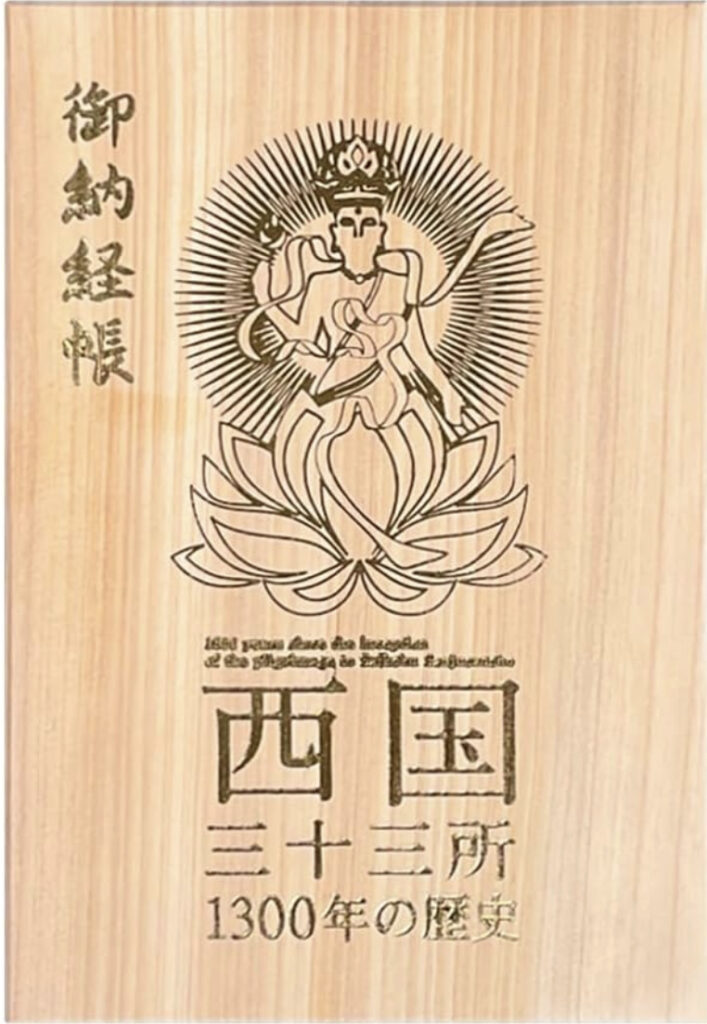
I usually collect the pre-written kakioki type of goshuin stamps, but for the Thirty-Three Temple Pilgrimage I wanted stamps written directly into a dedicated book, so I purchased one especially for the journey.
Goshuincho stamp books are also sold at the temples of the Saigoku Pilgrimage. However, the accordion-fold (jyabara) style can cause ink to bleed through to the other side. For that reason, I would recommend a bound style rather than accordion-fold — ideally one where each page is separated by an interleaving sheet of paper.
Nokyo-cho — Saigoku Thirty-Three Temples
Gold brocade binding (with vinyl cover) · Lightweight, quick-drying special washi paper that resists ink bleed-through
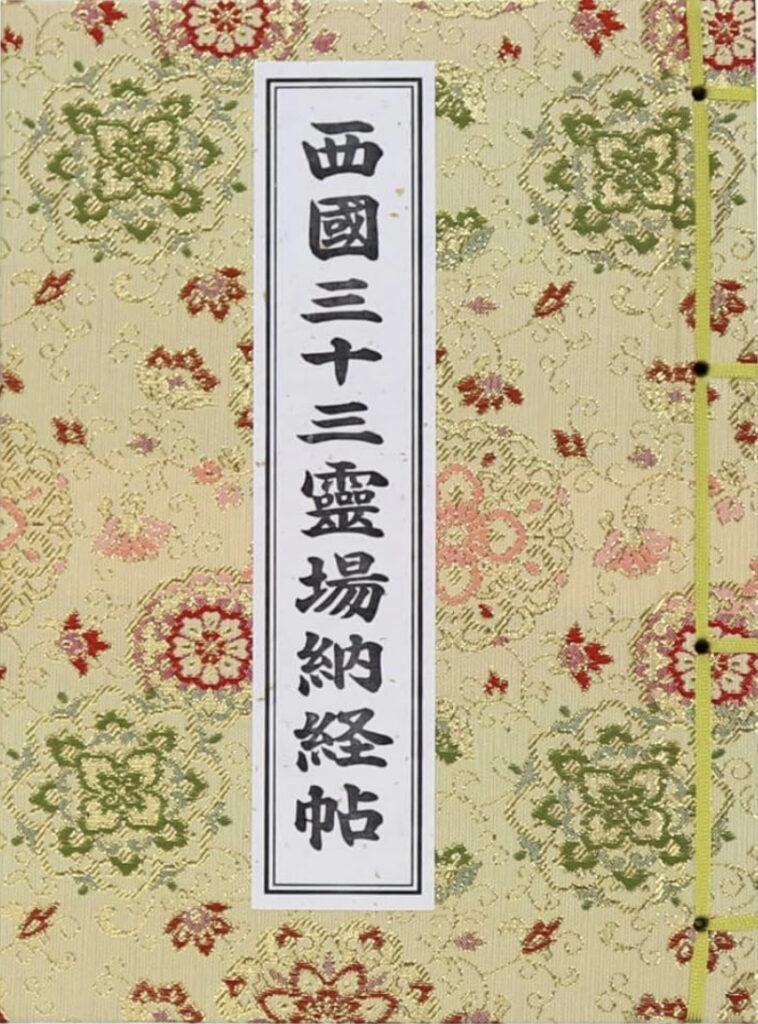
Nokyo-cho — Saigoku Thirty-Three Temples
Hinoki (Japanese cypress) solid wood binding · Handmade washi paper, accordion-fold double-layer style
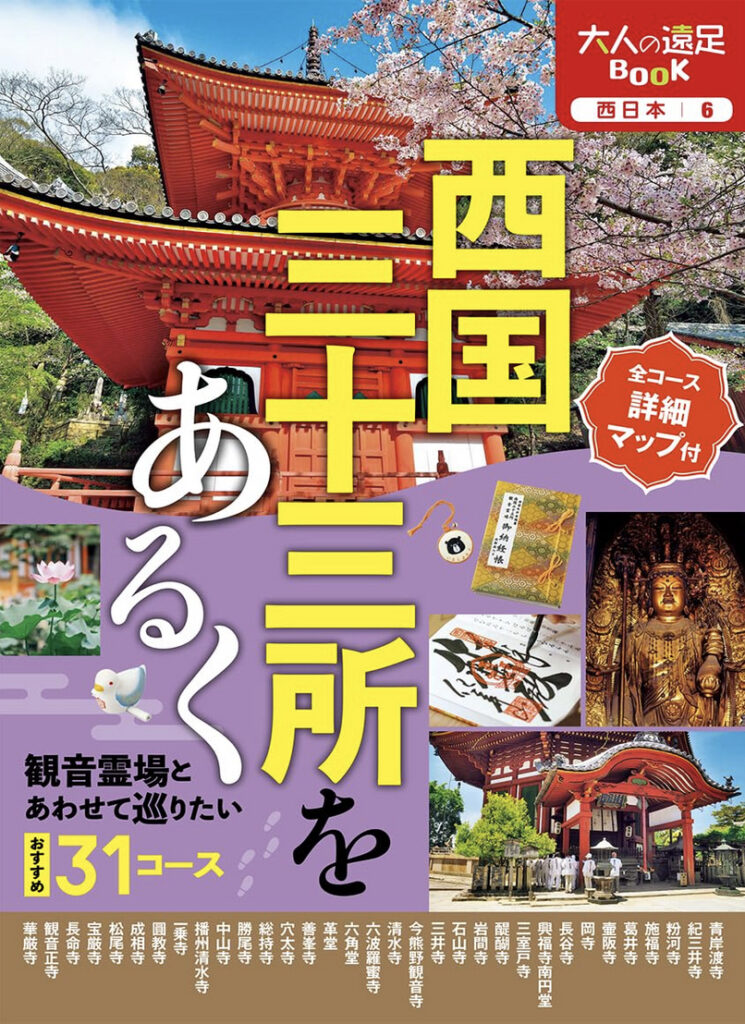
Walking the Saigoku Thirty-Three Temples
Otona no Ensoku BOOK
A guidebook for enjoying the pilgrimage and the pleasures of dedicated walking
Introduction & Overview
- What Is Esoteric Buddhism? Tendai and Shingon Explained in Simple Terms
- The Deep Connection Between the Saigoku Pilgrimage and Esoteric Buddhism | Why We Journey to Kannon Bodhisattva
Buddhas & Bodhisattvas
- What Are the 33 Forms of Kannon Bodhisattva? A Complete Guide to the Principal Images of the Saigoku Pilgrimage
- What Is the Difference Between Nyorai, Bosatsu, Myōō, and Ten? An Illustrated Guide to the Deities of Esoteric Buddhism
Practices & Culture
- The Meaning of the Heart Sutra Explained Simply | The World of the Sutras Chanted on Pilgrimage
- What Are Goshuin, Omiei, and Sange? The Esoteric Buddhist Culture You Encounter on the Saigoku Pilgrimage
Temples & History
Saigoku Pilgrimage of the Thirty-Three Temples — List of Sacred Sites
- No.12 Syohoji
- No.13 Ishiyamadera
- No.14 Miidera
- No.15 Imakumano-Knnonji
- No.16 Kiyomizudera
- No.17 Rokuharamitsuji
- No.18 Rokkakudo-Chohoji
- No.19 Kaudo-Gyoganji
- No.20 Yoshiminedera
- No.21 Anaoji
- No.22 Sojiji
- No.23 Katsuoji
- No.24 Nakayamadera
- No.25 Bansyu-Kiyomizudera
- No.26 Ichijyoji
- No.27 Engyoji
- No.28 Nariaiji
- No.29 Matsunoodera
- No.30 Chikubusima-Hogonji
- No.31 Chomeiji
- No.32 Kannonsyoji
- No.33 Kegonji