I began the Saigoku Pilgrimage of the Thirty-Three Temples in 2026. For the sacred sites I have already visited, I have written articles accompanied by my own photographs.
From here, I will have AI write support articles about the sites I have yet to visit — as a way of preparing for the journey ahead.
Tucked away on the forested slopes of Mount Makio (Makioyama) in Izumi City, Osaka, Sefukuji Temple is one of the most physically demanding stops along Japan’s oldest pilgrimage route. As the fourth temple of the Saikoku Thirty-Three Kannon Pilgrimage, Sefukuji has earned a lasting reputation among pilgrims for its notoriously steep approach path. Those who make the climb are rewarded not only with a serene mountain sanctuary, but with the quiet satisfaction that comes from testing one’s own endurance. In this guide, we’ll walk through the history, the highlights, and the practical tips you’ll want before setting out.
What Is Sefukuji Temple?
Sefukuji (pronounced “seh-foo-koo-jee”) is a temple of the Tendai school of Japanese Buddhism, one of the country’s historic Buddhist traditions. Its mountain name (sango) is Makioyama, taken directly from the peak on which it sits. Among the temples of the Saikoku pilgrimage, Sefukuji is remembered as unforgettable — largely because the path from the main gate (sanmon) up to the main hall (hondo) is so steep that it has often been described as a shugyo no reijo, a “sacred site of ascetic training.”
Set your foot on that path and you’ll understand why. The temple is wrapped in deep forest, and the still mountain air carries a cleanliness that feels worlds away from ordinary life. What surprises many visitors is that such a wild, solemn place has survived within the greater Osaka region — one of Japan’s most heavily urbanized areas.
Where Sefukuji Fits in the Saikoku Pilgrimage
The Saikoku Thirty-Three Kannon Pilgrimage (Saikoku Sanjusankasho) is a circuit of thirty-three temples dedicated to Kannon, the bodhisattva of compassion, spread mainly across the Kinki region of western Japan. It is regarded as the oldest pilgrimage route in the country. Sefukuji is the fourth of these temples, sitting along the route as pilgrims travel onward from the third temple, Kokawadera in Wakayama Prefecture. At each temple, pilgrims collect a goshuin — a hand-brushed temple seal — tracing the individual story of every stop along the way.
Why Is Sefukuji Famous for Its Steep Approach?
If Sefukuji is known for one thing, it is the difficulty of the climb to the main hall. From the mountain gate to the hondo, the route is a continuous ascent of stone steps and sloping paths, and it is not unusual for visitors to find themselves out of breath along the way. The one-way climb takes roughly thirty minutes — hardly a casual stroll.
And yet, that is precisely the point. There is a particular sense of accomplishment reserved for those who reach the top. Advancing one step at a time while sweat gathers on your brow, walking through shafts of light filtering between the trees — this is, in the truest sense, a “walking meditation” that settles the mind.
- Steep stone steps and slopes run the entire way from the gate to the main hall
- The one-way climb takes approximately thirty minutes
- Comfortable walking shoes and drinking water make the trip far more manageable
- The view and the feeling of achievement at the summit are part of the appeal
What to Keep in Mind Before You Climb
Because the path is genuinely steep, sneakers or other sturdy walking shoes are strongly recommended over anything less practical. The stone steps become slippery after rain, so tread carefully when the ground is wet. In the summer months, stay hydrated and set a pace that suits your own fitness rather than rushing. A little preparation transforms the climb from a struggle into a rewarding experience.
What Are the Highlights of Sefukuji?
Once the climb is behind you, the main hall appears, standing quietly among the trees. Because the temple occupies high ground on the mountain, the precincts open onto sweeping views of the surrounding peaks — and the landscape shifts its expression with every season. Watching those changes unfold is one of Sefukuji’s great pleasures.
In spring, fresh green foliage greets pilgrims; in autumn, the mountainsides blaze with colored leaves. The scenery that awaits only those who have completed the difficult climb carries an emotional weight that no photograph quite manages to convey. Practitioners of the pilgrimage often say the reward feels earned in a way that ordinary sightseeing never does.
The Stillness of a Mountain Sanctuary
The grounds of Sefukuji are filled with the silence of the deep forest. Step away from the noise of the city, tune your ears to birdsong and the sound of the wind, and you’ll feel your mind gradually settle. It is a place that reminds you the act of pilgrimage is not mere tourism, but time set aside to face yourself — a quality that has drawn seekers to these mountains for centuries.
Frequently Asked Questions
- Q: Which number temple is Sefukuji on the Saikoku pilgrimage?
- A: Sefukuji is the fourth temple of the Saikoku Thirty-Three Kannon Pilgrimage. It is located on Mount Makio in Izumi City, Osaka Prefecture.
- Q: How steep is the approach path?
- A: The route from the mountain gate to the main hall is a continuous ascent of stone steps and slopes, taking roughly thirty minutes one way. It is known as one of the most demanding approaches on the entire Saikoku pilgrimage.
- Q: What should I wear to visit?
- A: Because of the steep stone steps and slopes, sneakers or other comfortable walking shoes are recommended. Take extra care after rain, when the steps can become slippery.
- Q: What Buddhist school does Sefukuji belong to?
- A: Sefukuji is a temple of the Tendai school of Japanese Buddhism. Its mountain name is Makioyama.
Conclusion
Sefukuji, the fourth temple of the Saikoku Thirty-Three Kannon Pilgrimage, is a mountain sanctuary in Osaka best known for its demanding approach on Mount Makio. The climb from the gate to the main hall is far from easy — but that difficulty is exactly what makes the sense of achievement at the top, and the stillness of the forest that surrounds it, so extraordinary.
For anyone hoping to use pilgrimage as a way to face themselves, or simply to steady the mind within the quiet air of the mountains, Sefukuji is likely to become an unforgettable stop. Lace up a good pair of walking shoes, prepare a little water, and try tackling that famously steep path for yourself.
References
- Wikipedia — 施福寺 (Sefukuji)
- Saikoku Thirty-Three Temples Pilgrimage Association — Official Website (https://www.saikoku33.gr.jp/)
About Goshuin Stamp Books and Related Items
I usually collect the pre-written kakioki type of goshuin stamps, but for the Thirty-Three Temple Pilgrimage I wanted stamps written directly into a dedicated book, so I purchased one especially for the journey.
Goshuincho stamp books are also sold at the temples of the Saigoku Pilgrimage. However, the accordion-fold (jyabara) style can cause ink to bleed through to the other side. For that reason, I would recommend a bound style rather than accordion-fold — ideally one where each page is separated by an interleaving sheet of paper.
Nokyo-cho — Saigoku Thirty-Three Temples
Gold brocade binding (with vinyl cover) · Lightweight, quick-drying special washi paper that resists ink bleed-through
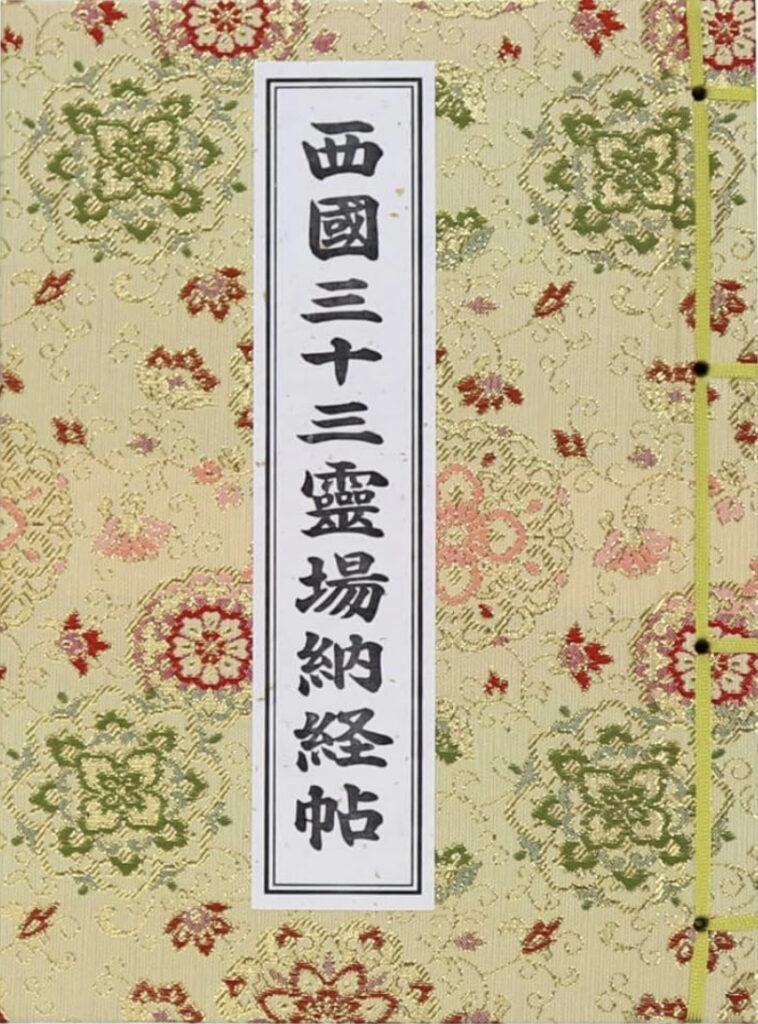
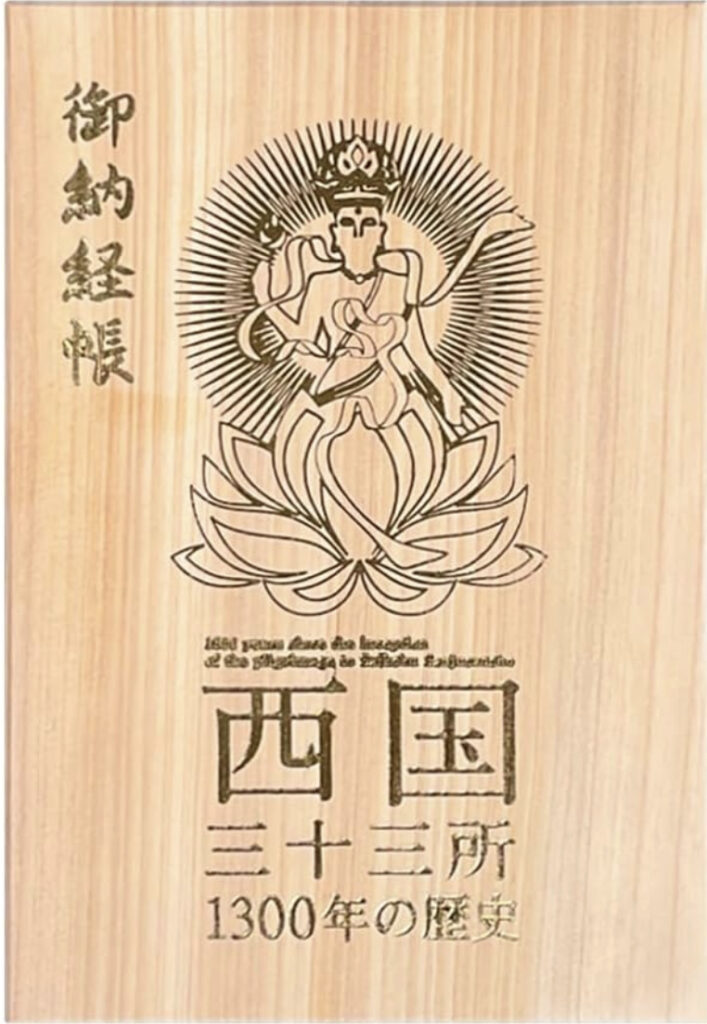
Nokyo-cho — Saigoku Thirty-Three Temples
Hinoki (Japanese cypress) solid wood binding · Handmade washi paper, accordion-fold double-layer style
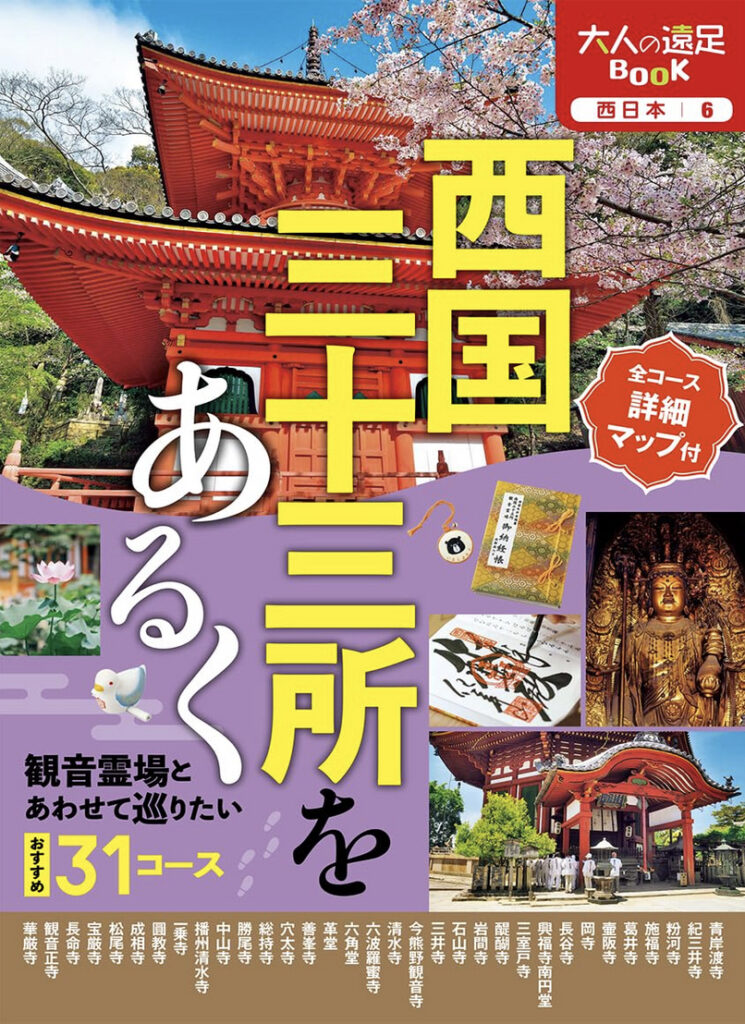
Walking the Saigoku Thirty-Three Temples
Otona no Ensoku BOOK
A guidebook for enjoying the pilgrimage and the pleasures of dedicated walking
Introduction & Overview
- What Is Esoteric Buddhism? Tendai and Shingon Explained in Simple Terms
- The Deep Connection Between the Saigoku Pilgrimage and Esoteric Buddhism | Why We Journey to Kannon Bodhisattva
Buddhas & Bodhisattvas
- What Are the 33 Forms of Kannon Bodhisattva? A Complete Guide to the Principal Images of the Saigoku Pilgrimage
- What Is the Difference Between Nyorai, Bosatsu, Myōō, and Ten? An Illustrated Guide to the Deities of Esoteric Buddhism
Practices & Culture
- The Meaning of the Heart Sutra Explained Simply | The World of the Sutras Chanted on Pilgrimage
- What Are Goshuin, Omiei, and Sange? The Esoteric Buddhist Culture You Encounter on the Saigoku Pilgrimage
Temples & History
Saigoku Pilgrimage of the Thirty-Three Temples — List of Sacred Sites
- No.12 Syohoji
- No.13 Ishiyamadera
- No.14 Miidera
- No.15 Imakumano-Knnonji
- No.16 Kiyomizudera
- No.17 Rokuharamitsuji
- No.18 Rokkakudo-Chohoji
- No.19 Kaudo-Gyoganji
- No.20 Yoshiminedera
- No.21 Anaoji
- No.22 Sojiji
- No.23 Katsuoji
- No.24 Nakayamadera
- No.25 Bansyu-Kiyomizudera
- No.26 Ichijyoji
- No.27 Engyoji
- No.28 Nariaiji
- No.29 Matsunoodera
- No.30 Chikubusima-Hogonji
- No.31 Chomeiji
- No.32 Kannonsyoji
- No.33 Kegonji