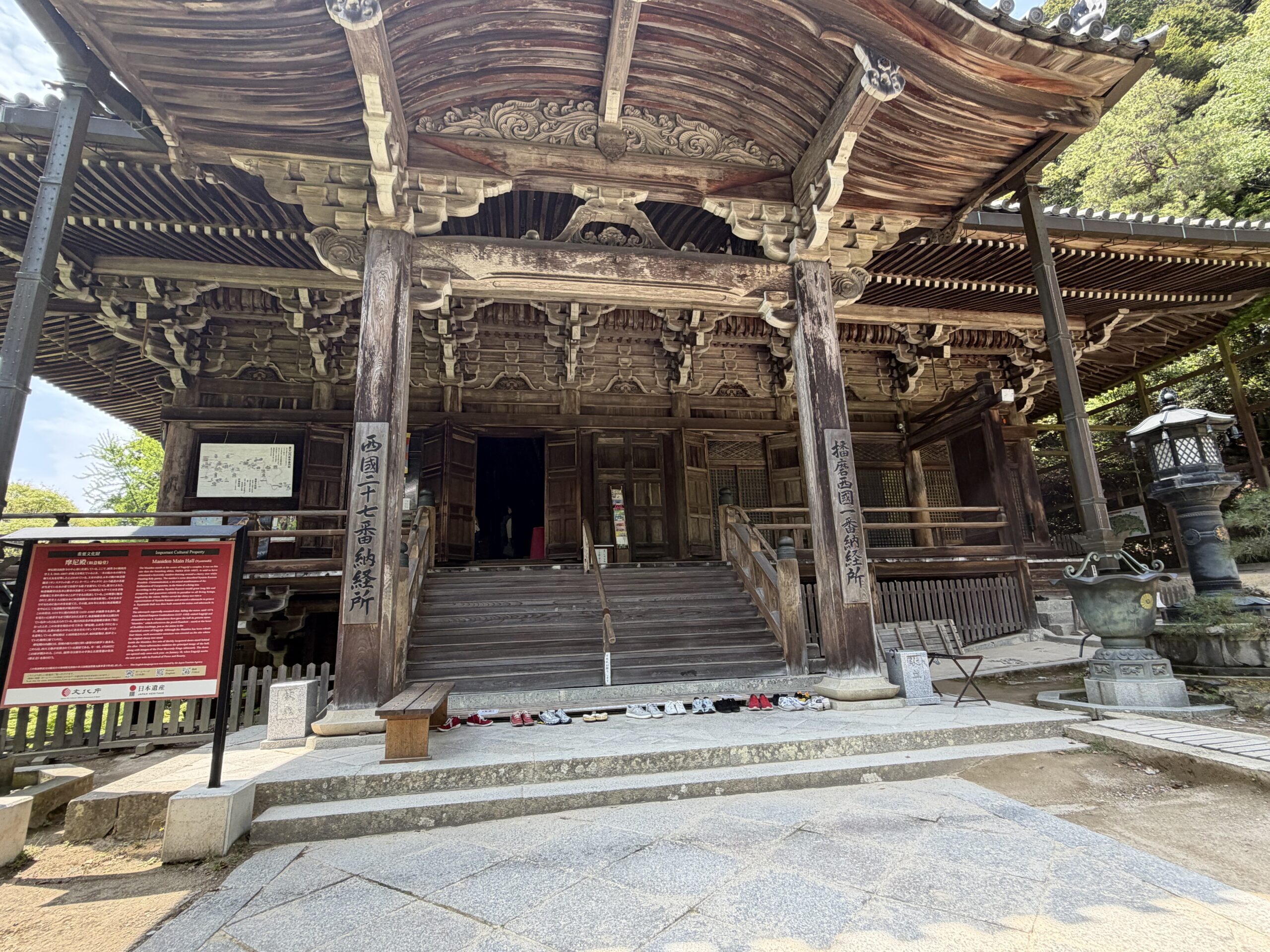
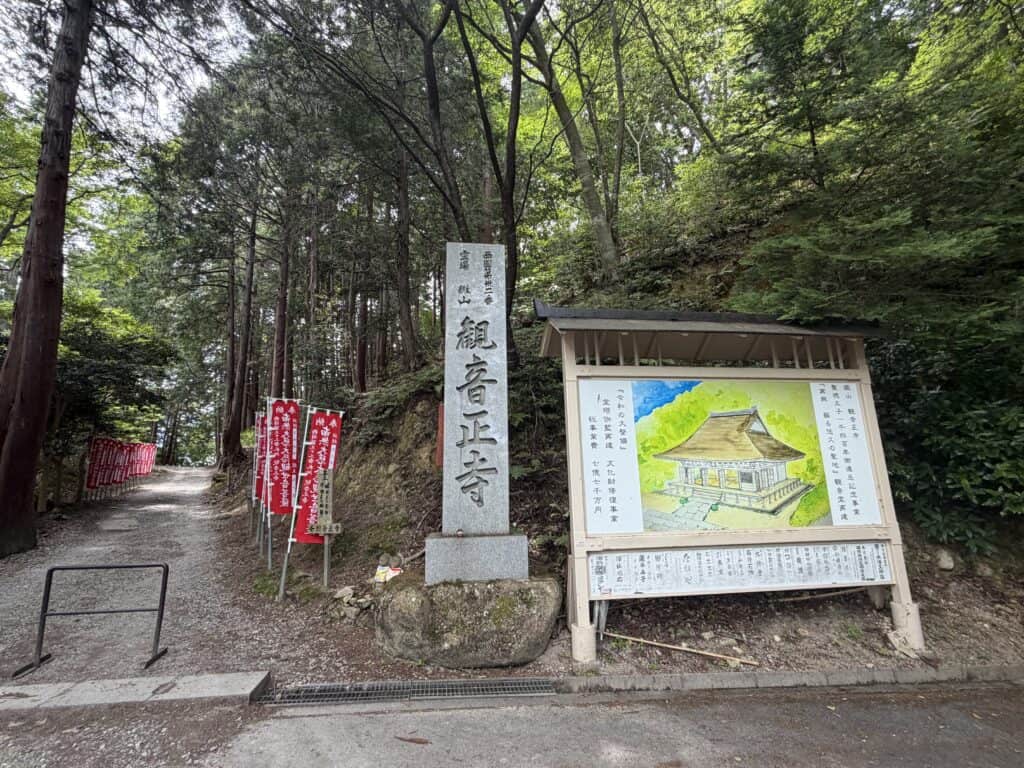
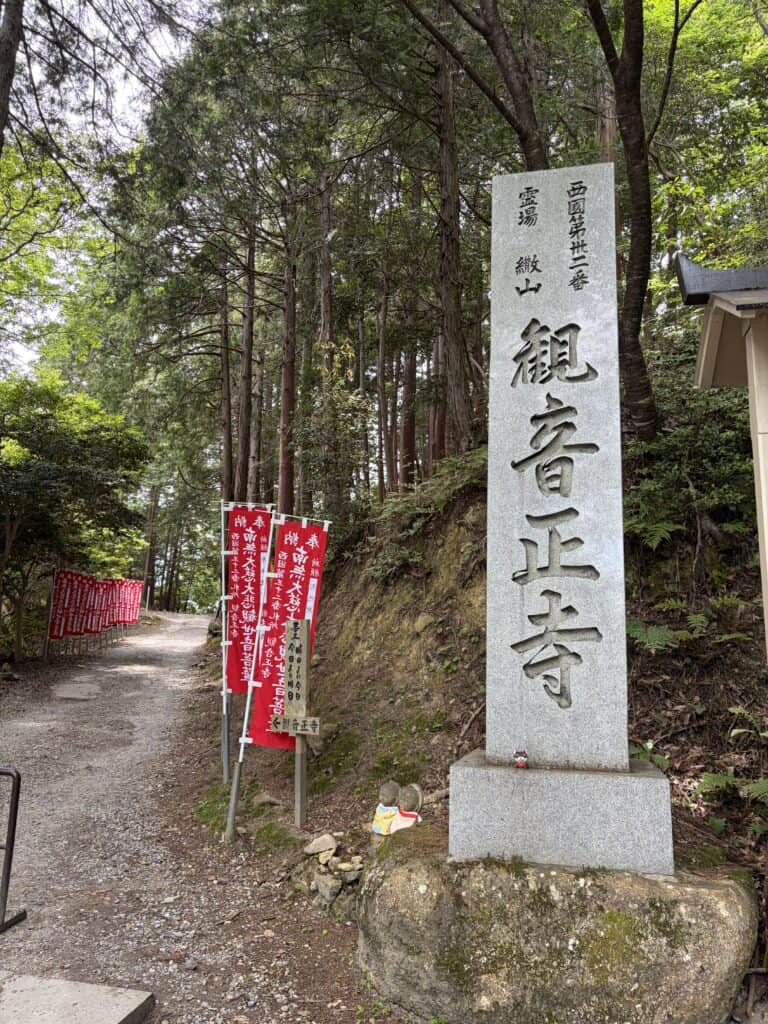
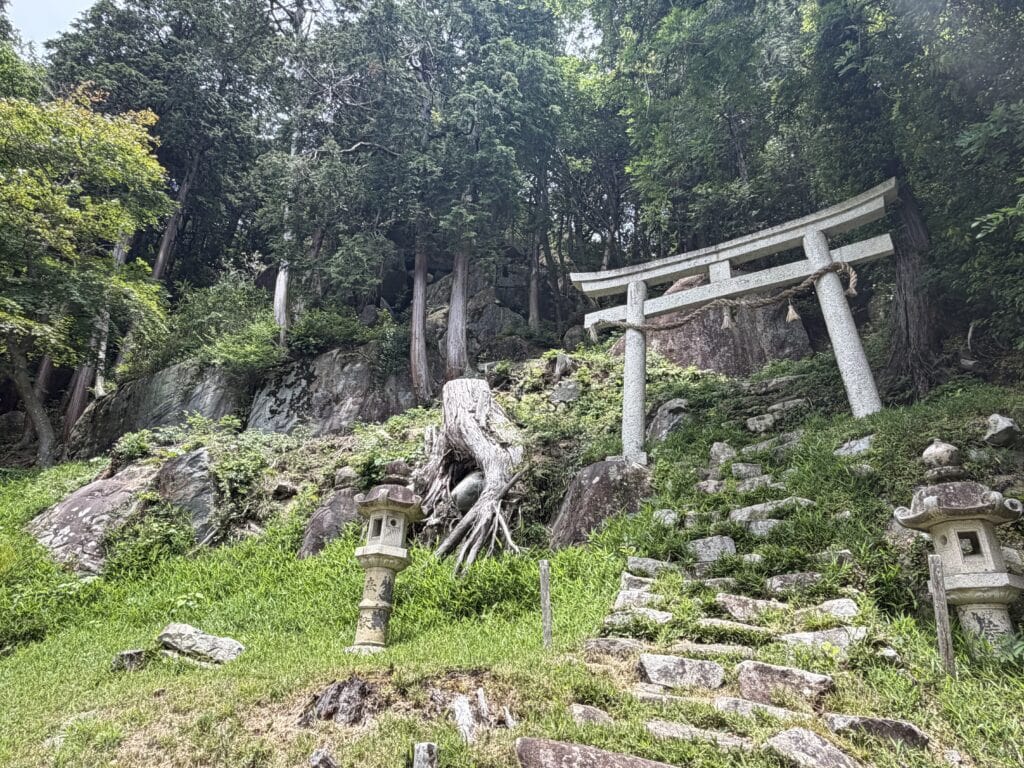
On a clear day in June, I visited Kannon-shoji Temple.
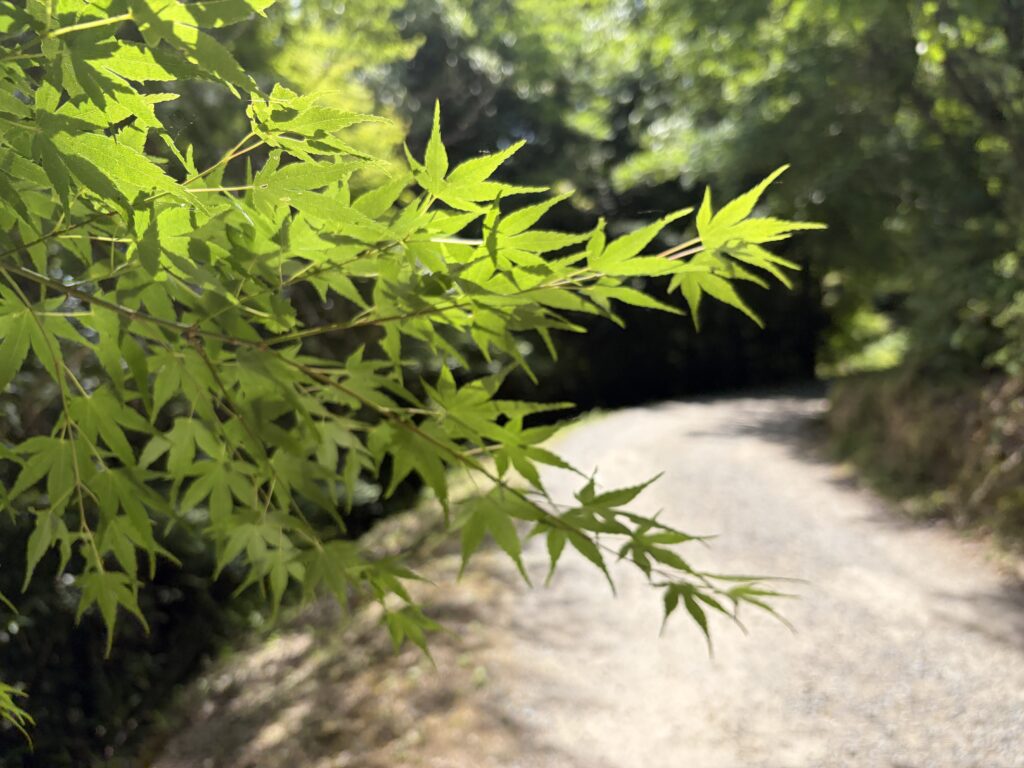
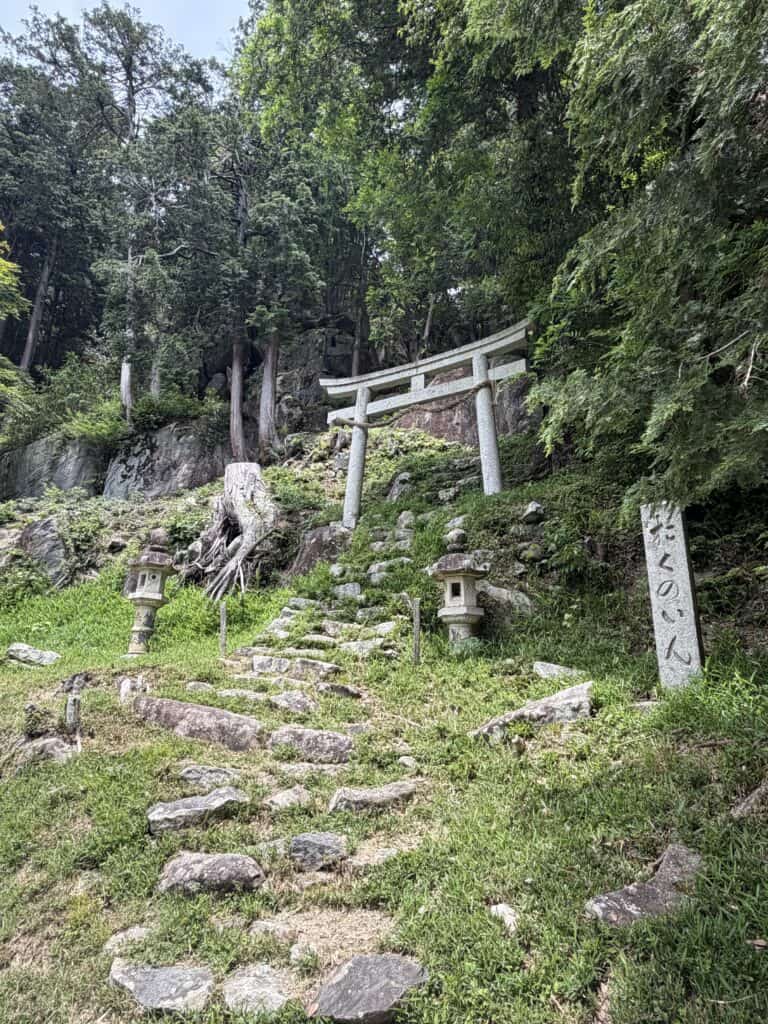
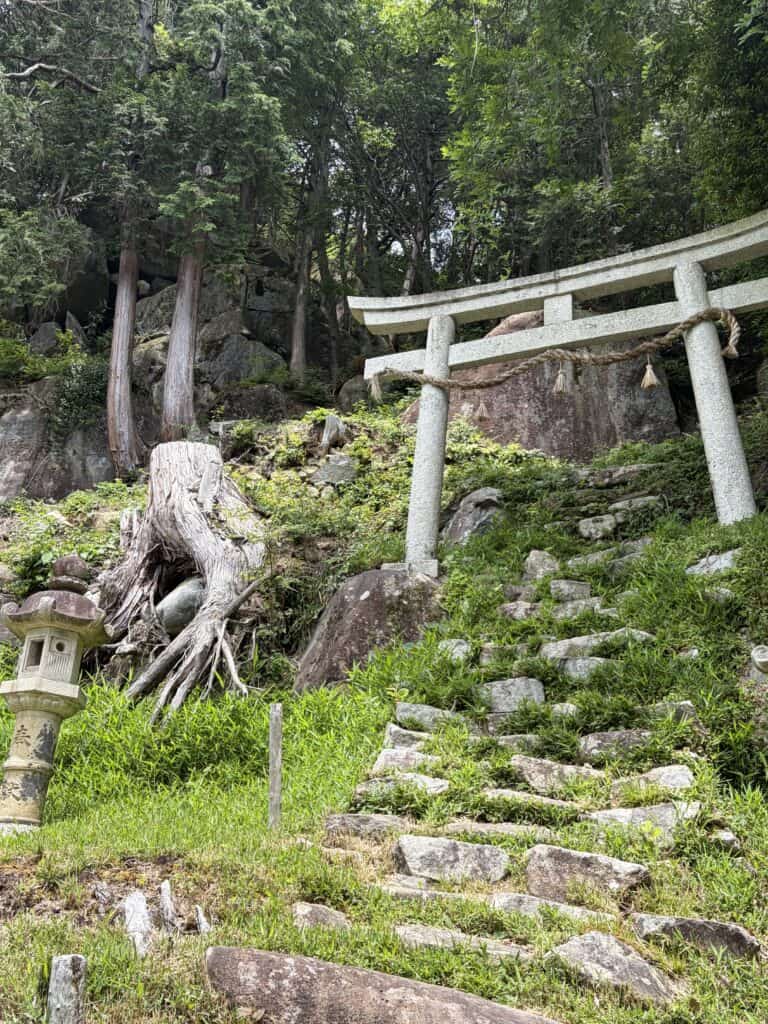
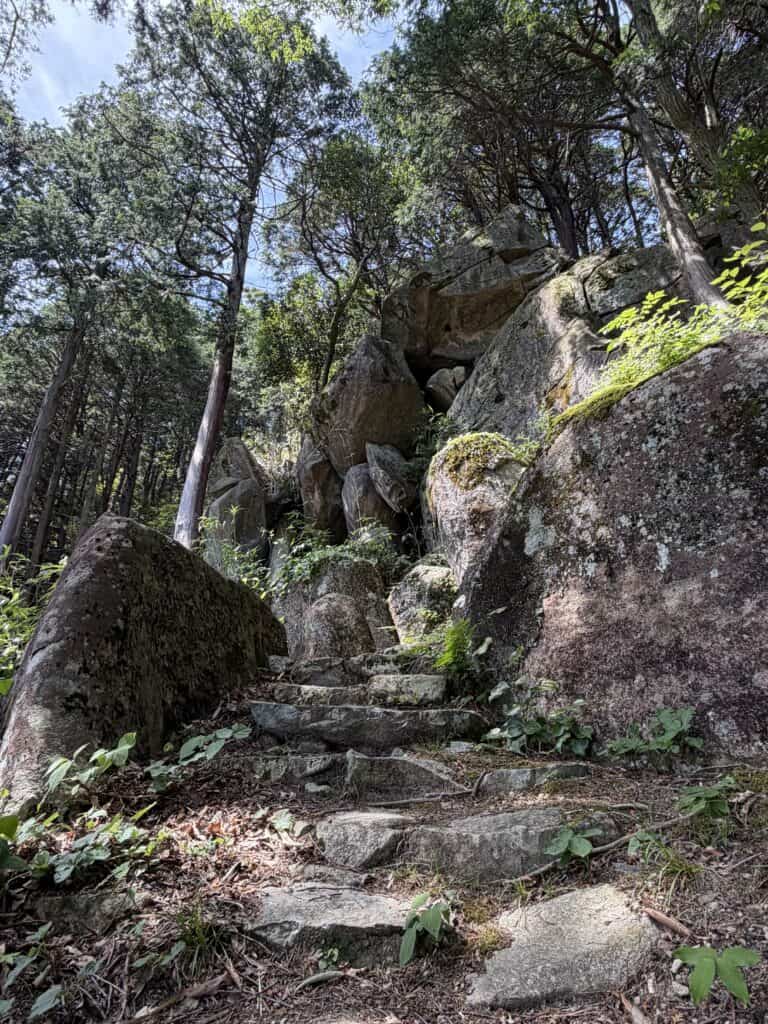
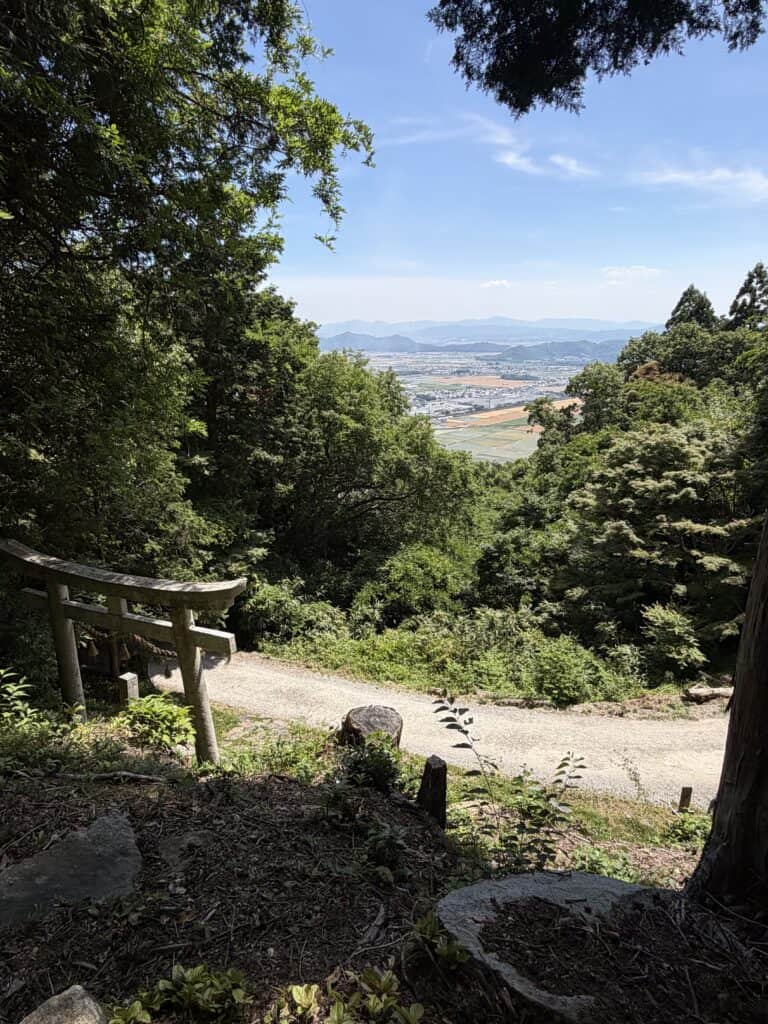
This time I gave up on the stairs and drove up to the parking lot, then continued on foot from there.
I had AI write a support article about Kannon-shoji. The photos are all original.
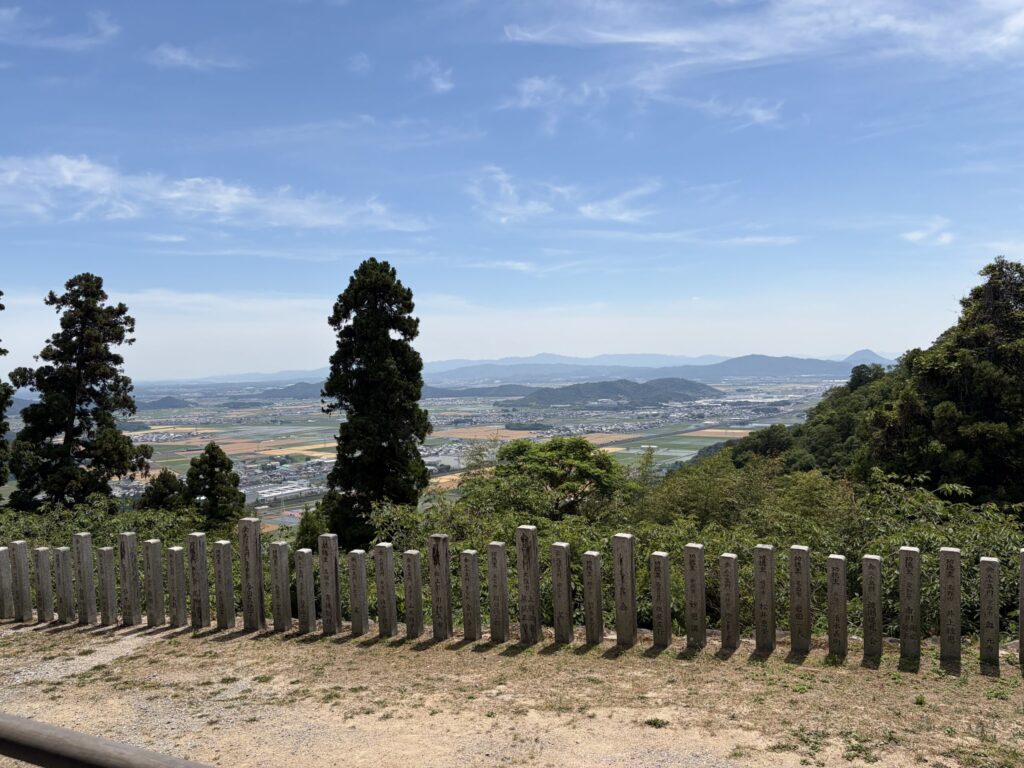
Perched near the summit of Mount Kinugasa in Omihachiman, Shiga Prefecture, Kanonshoji Temple (Kannon Shōji) is the 32nd sacred site on the Saikoku Thirty-Three Kannon Pilgrimage (Saikoku Sanjūsankasho). Sitting at roughly 432 meters above sea level, this ancient mountain temple greets visitors with something you rarely see at a Buddhist site: a large white elephant. For pilgrims nearing the end of one of Japan’s oldest pilgrimage routes, the climb to Kanonshoji rewards them with sweeping views of Lake Biwa and a sanctuary unlike any other along the way.
If you’ve ever wondered what makes a single temple worth the steep ascent, this one offers a rare blend of legend, samurai-era history, and living devotional practice. Let’s take a closer look.
What Is Kanonshoji Temple?
Officially known as Kinugasa Kanonshoji, the temple belongs to an independent branch of the Tendai school of Buddhism. Its principal object of worship is Senju Sengen Kanzeon Bosatsu—the Thousand-Armed, Thousand-Eyed Kannon, the bodhisattva of compassion. According to temple tradition, the site was founded in 605 (the 13th year of Empress Suiko’s reign) by Prince Shōtoku himself, who is said to have established it after granting the wish of a mermaid he encountered in the area. Whether you take the legend literally or not, that detail alone hints at how unusual this place feels.
The first thing that catches most visitors’ eyes is the white elephant statue stationed in front of the main hall. In Buddhist tradition, the elephant serves as the mount of Fugen Bosatsu (the bodhisattva of wisdom and practice) and symbolizes wisdom and compassion. This particular elephant is carved from Indian white marble, and its luminous surface makes it a favorite photo spot. When the morning light hits it, the contrast against the dark mountain forest is genuinely striking—it’s hard to walk past without pausing.
The Two Nio Guardian Statues That Welcome You
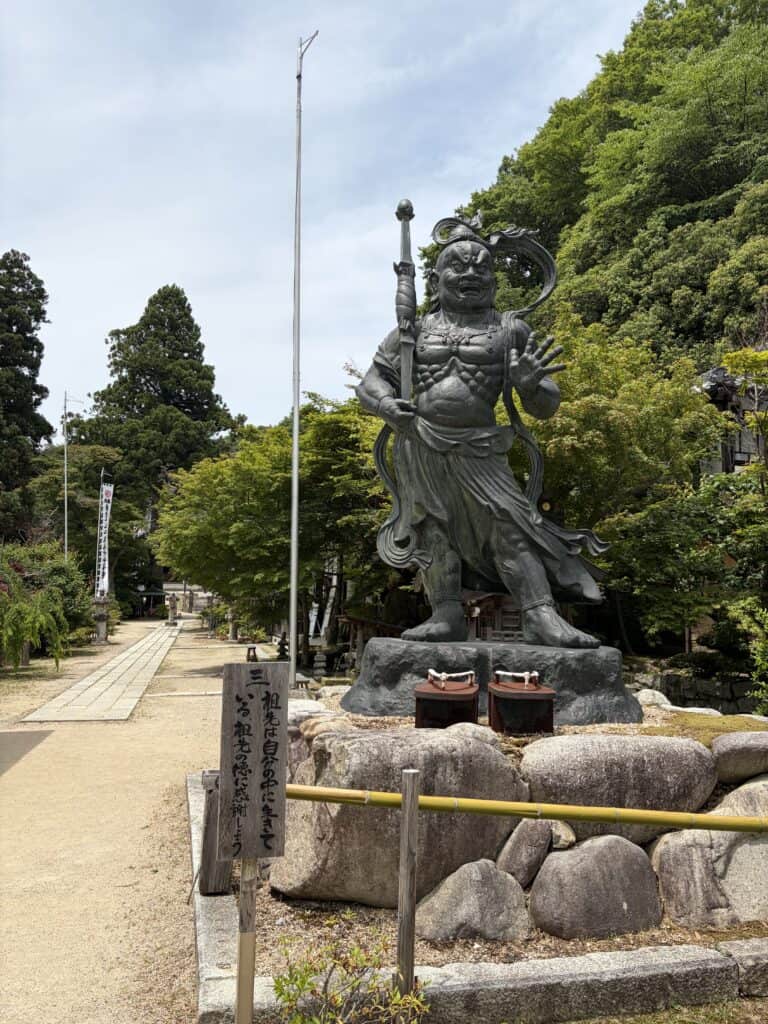
At the entrance from the approach path into the temple grounds, two Nio statues stand watch. They served as gate guardians in an era when the temple had no formal sanmon gate.
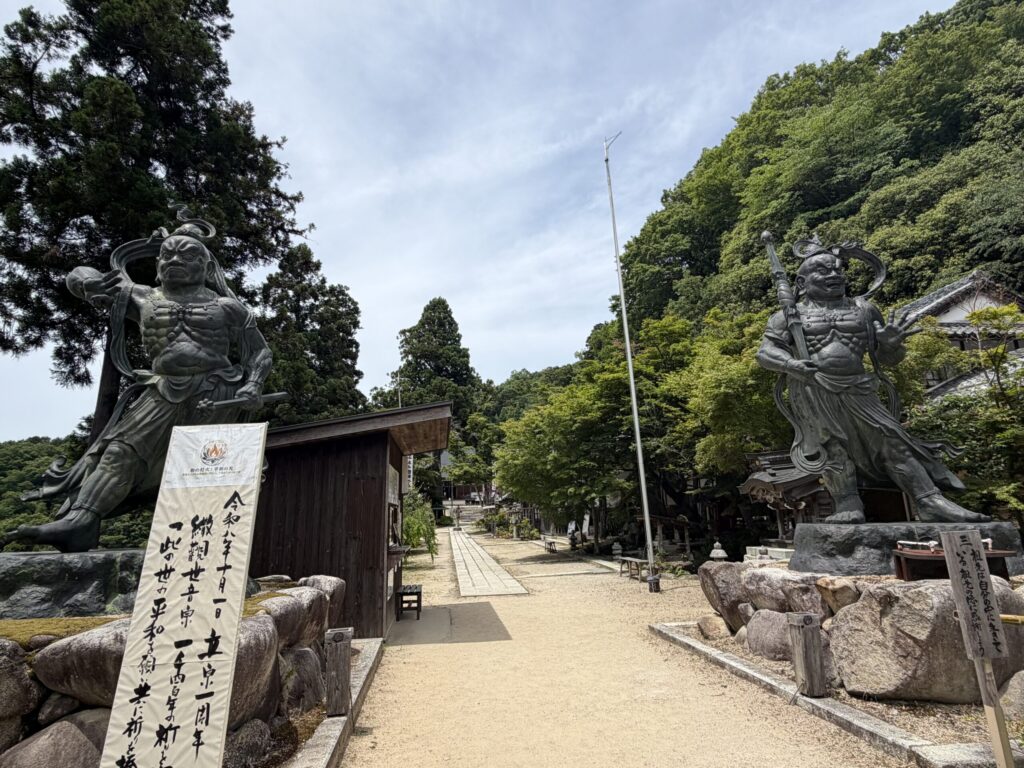
The History Behind the Main Hall and Its Buddha
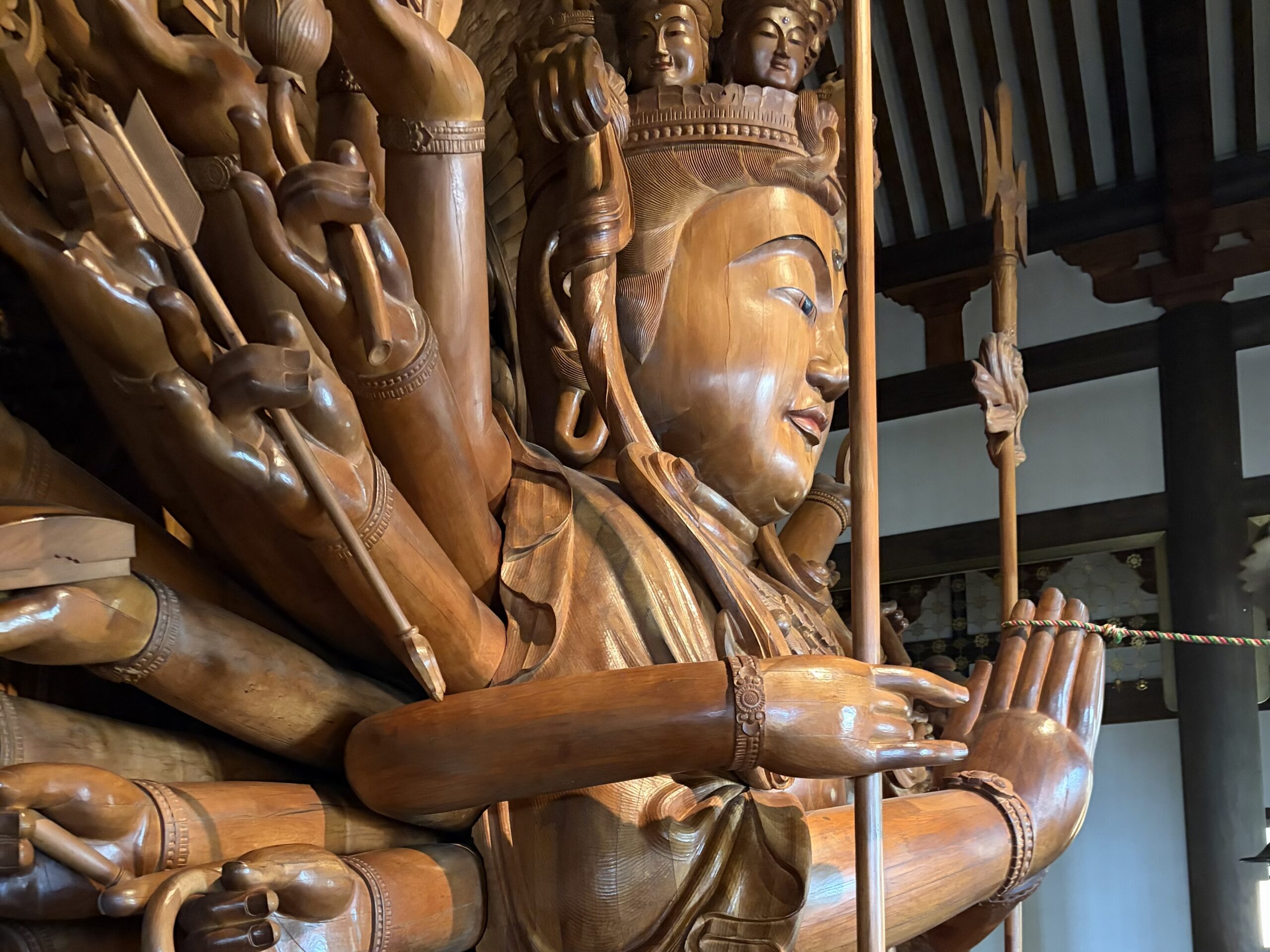
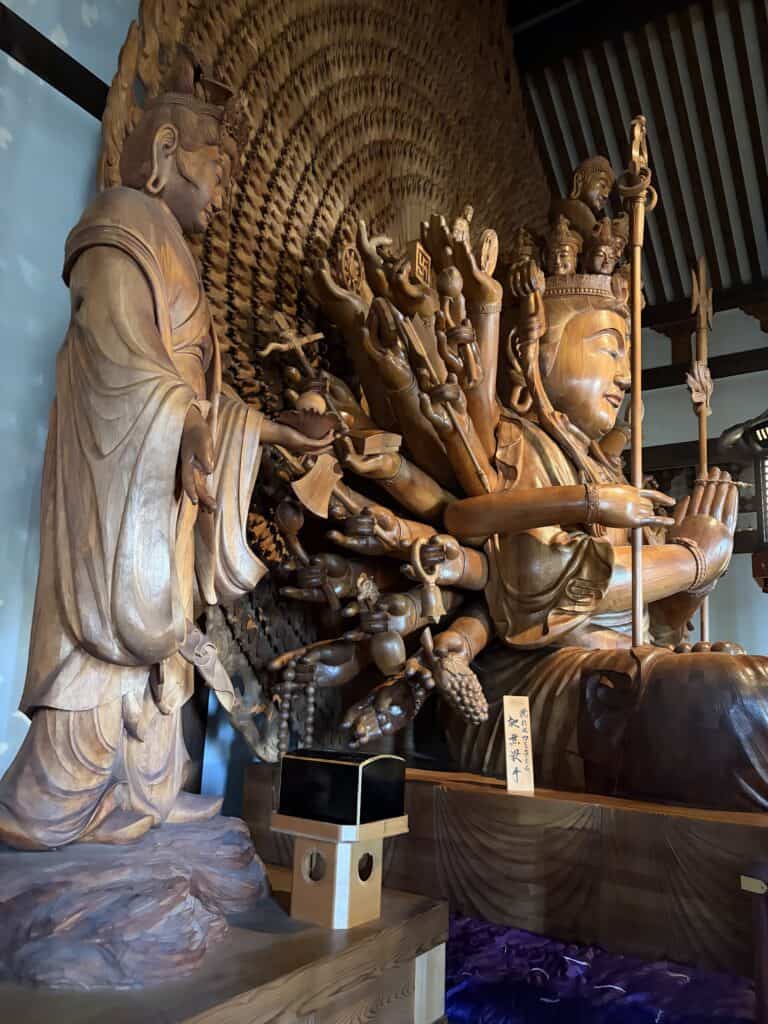
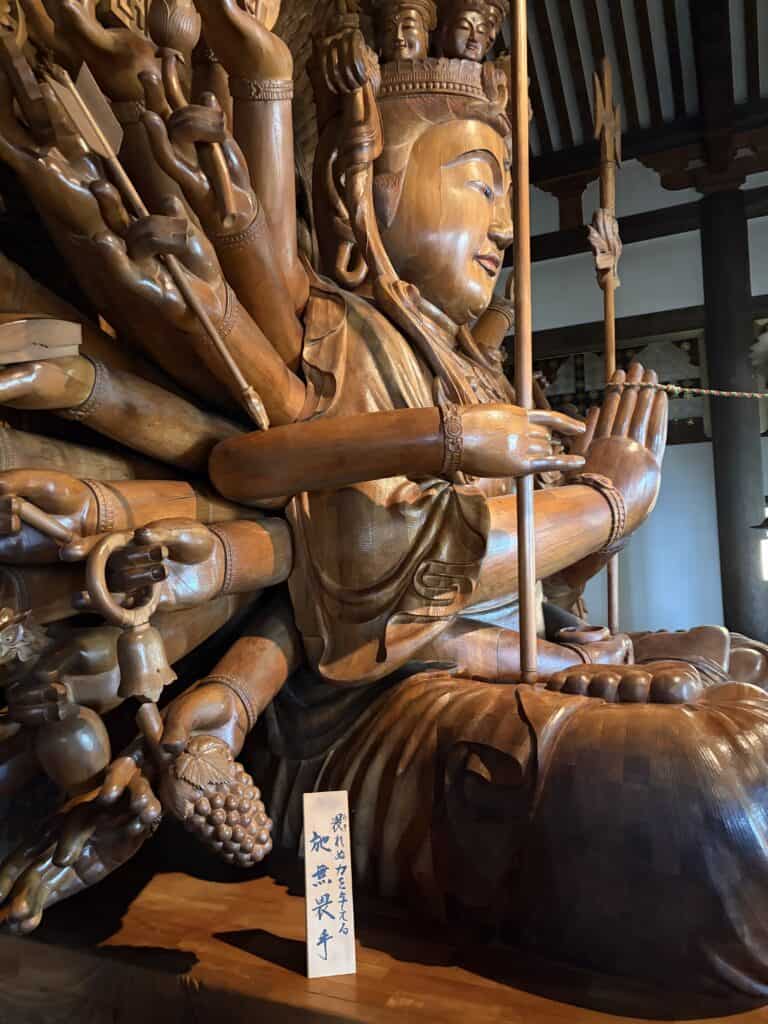
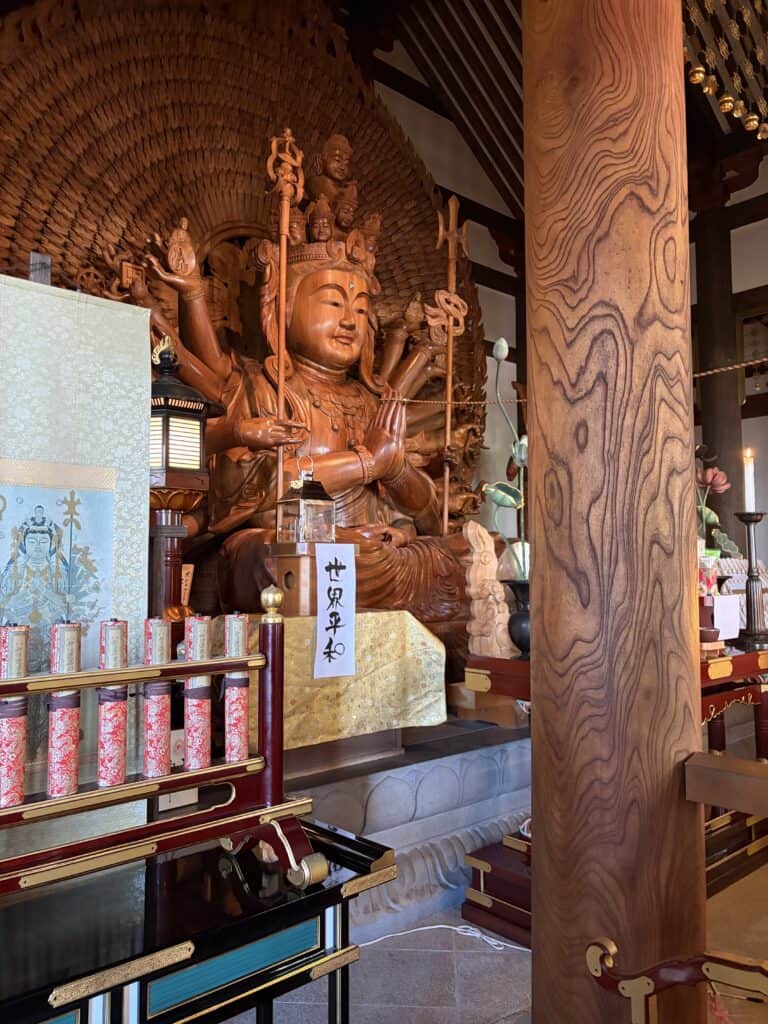
The current main hall is relatively new. The original structure was destroyed by fire in 1993, and the hall standing today was rebuilt in 2004. The reconstruction came with an extraordinary commission: a new principal image carved from roughly 23 tons of white sandalwood (byakudan) imported from India. A seated Thousand-Armed Kannon made entirely of sandalwood is exceptionally rare in Japan, and visitors who step into the hall sometimes notice the faint, sweet fragrance of the aromatic wood lingering in the air.
Before the fire, the original image had been a hibutsu—a hidden Buddha shown to the public only on rare occasions. The rebuilt statue, by contrast, is displayed so worshippers can view it up close and at leisure. For anyone with an interest in Buddhist sculpture, this is a chance to study the monumental work of contemporary master craftsmen rather than squinting at a figure locked behind closed doors. That accessibility is part of what makes a visit here so satisfying.
Stone Stacking and Prayers for Love
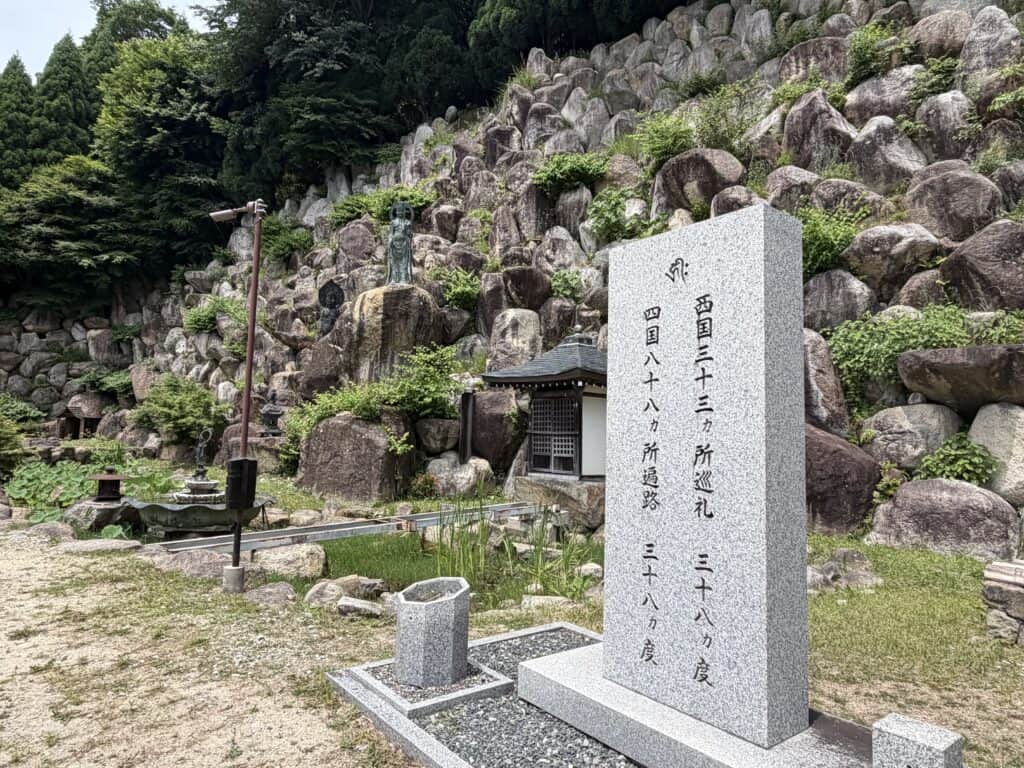
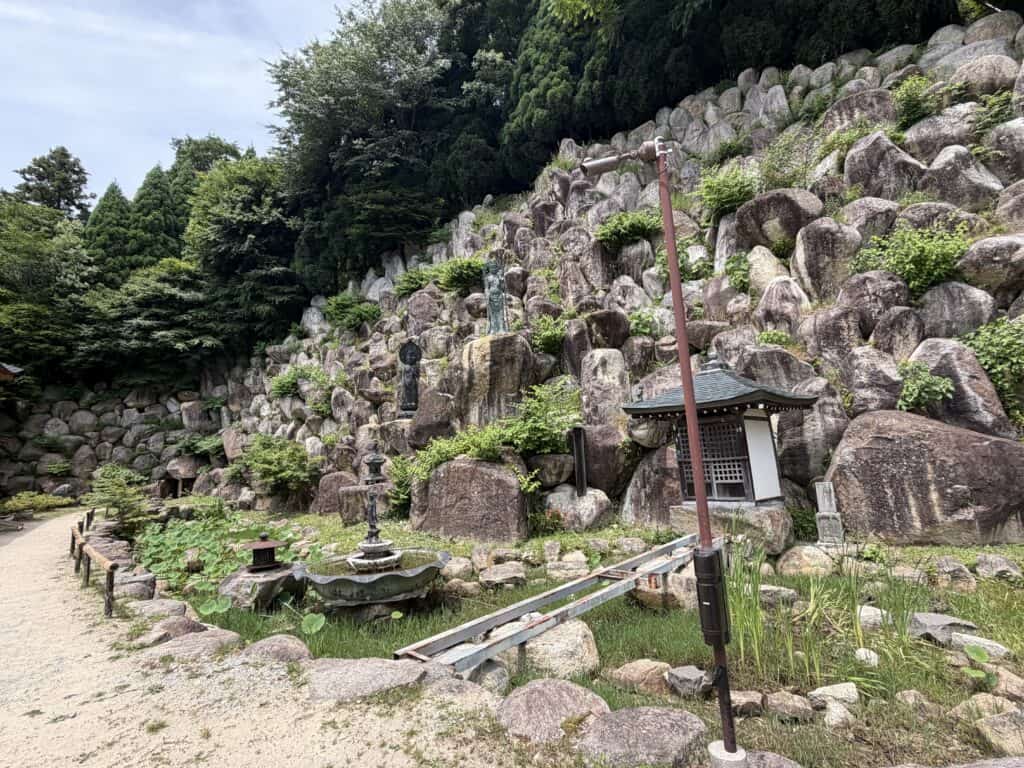
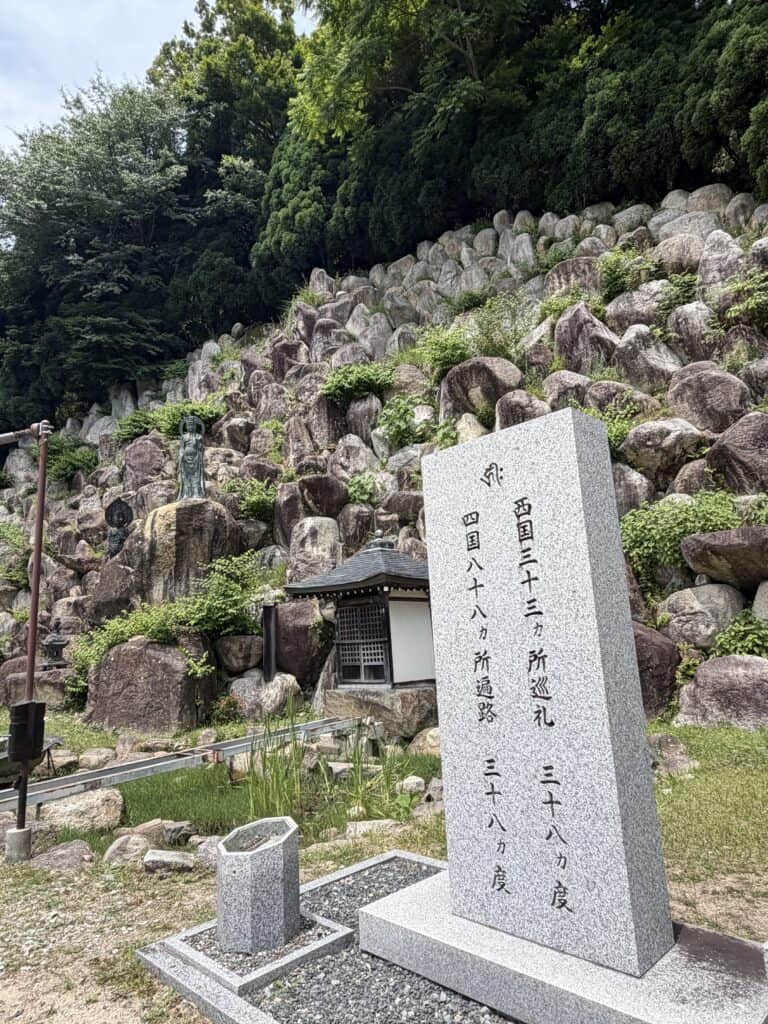
In recent years Kanonshoji has gained attention for blessings related to enmusubi—the forging of romantic and human connections. Behind the main hall you’ll find an area where visitors stack stones while making a wish, alongside countless small stone Buddha figures arranged in quiet rows. There’s almost always someone there with hands pressed together in prayer. This particular devotional culture isn’t found at the other pilgrimage stops, and it gives the temple a distinct personality that’s worth lingering over.
How to Get to Kanonshoji and What to Know Before You Go
Because the temple sits atop a mountain, there are several ways to reach it, each suited to a different kind of visitor:
- The Front Approach (stone-step route): Take a taxi from Notogawa Station or Azuchi Station on the JR Biwako Line, then climb more than 1,200 stone steps. This is the route for the physically fit.
- The Back Approach (forest road route): Drive up a toll forest road and walk about 10 minutes from the parking lot. This is the easiest option by far.
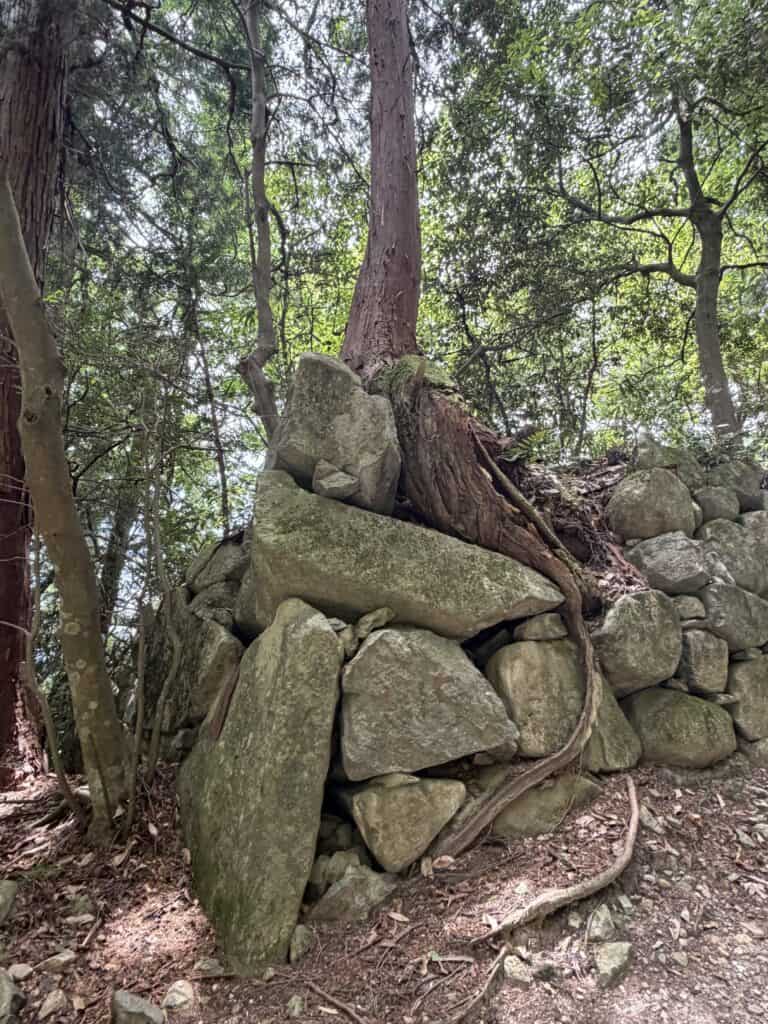
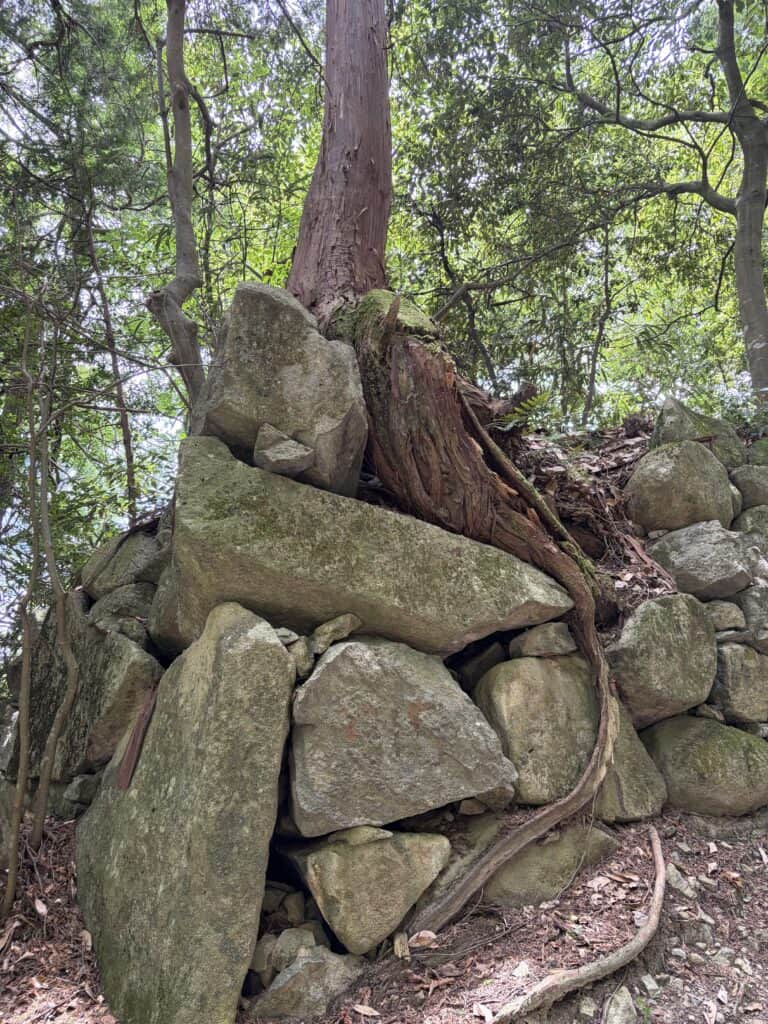
- The Kannonji Castle Ruins route: A hiking trail recommended for history lovers, letting you pass the castle’s stone walls on the way up.
Having walked the front approach myself, I can say the path through the natural forest stays comfortably cool even in summer, with birdsong echoing the whole way up. That said, the steps go on and on—proper walking shoes and plenty of water are non-negotiable. In winter, snow and ice can close the forest road entirely, so it’s wise to check the temple’s official information before setting out.
Goshuin and Sutra Offerings
You can receive a goshuin (a calligraphic temple seal) at the nokyo-sho (sutra-offering office) beside the main hall. Many pilgrims collect their seals in a dedicated Saikoku Thirty-Three pilgrimage book, and as the 32nd site, Kanonshoji is typically inscribed with the characters “Daihiden” (Hall of Great Compassion) in brush ink. Since the 33rd and final site—Kegonji Temple in Gifu Prefecture—marks the completion of the entire pilgrimage, Kanonshoji holds special weight as the last major stop before kechigan, the fulfillment of the journey.
Frequently Asked Questions
- Q: How long does a visit to Kanonshoji take?
- A: If you use the forest road route, it’s about a 10-minute walk from the parking lot to the main hall, and roughly one hour including your visit. If you climb the stone steps of the front approach, allow 30 to 40 minutes one way.
- Q: Can I drive there?
- A: Yes. The back approach uses a toll forest road (a fee applies for passenger cars) that takes you up to a parking lot near the summit. Be aware that some sections are narrow, so drive carefully.
- Q: What does the white elephant statue mean?
- A: The elephant is the mount of Fugen Bosatsu and symbolizes wisdom and compassion. Kanonshoji’s white elephant is carved from Indian marble and has become a popular photo spot in recent years.
- Q: Can I receive a goshuin seal?
- A: Yes, at the sutra-offering office beside the main hall. As the 32nd Saikoku site, it is inscribed with “Daihiden.”
Conclusion
Kanonshoji brings together threads you won’t find woven so tightly anywhere else: a founding legend tied to Prince Shōtoku, the lingering presence of a Sengoku-era castle, a sandalwood Kannon of staggering scale, and a marble white elephant standing guard over Lake Biwa. As the 32nd stop on the Saikoku pilgrimage—the threshold before completion—it deserves more than a quick photo and a hurried descent. Take your time on the climb, breathe in the cedar-scented air, and let the panoramic view of the lake settle the mind. Whether you’re a serious pilgrim or simply curious about Japan’s mountain temples, the journey up Mount Kinugasa is one that stays with you.
References
- Kanonshoji Official Website
- Saikoku Thirty-Three Kannon Pilgrimage Official Website
- Biwako Visitors Bureau
Addendum
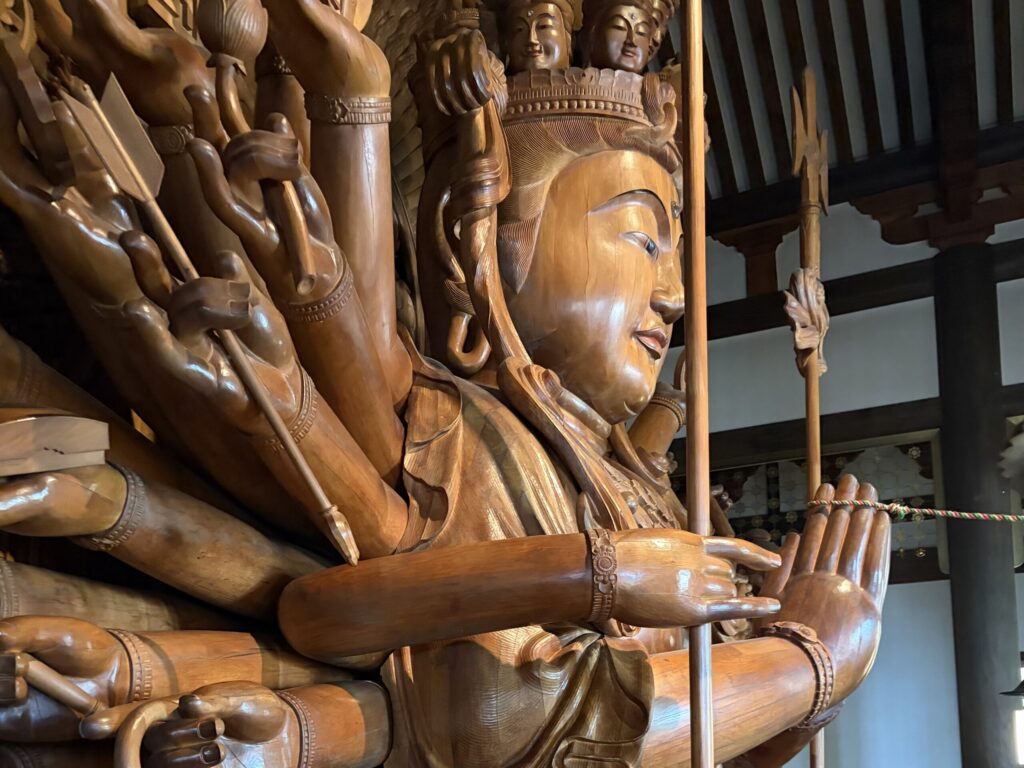
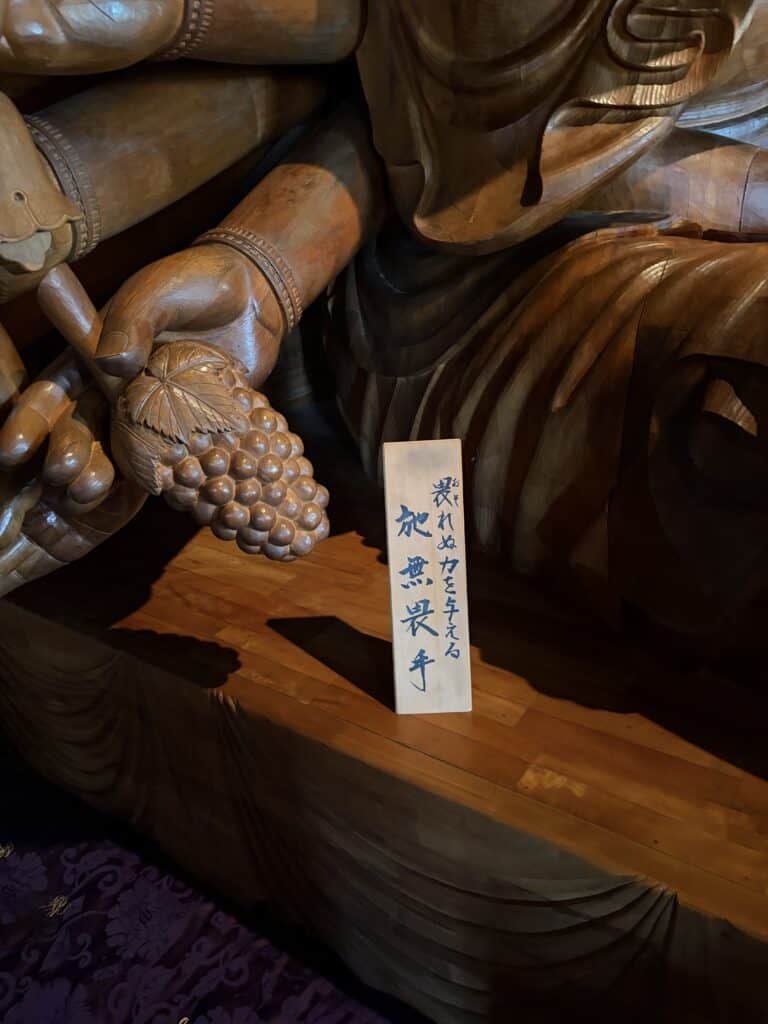
The main hall was filled with the gentle fragrance of sandalwood.
After receiving my goshuin stamp, I was able — for an additional fee — to view the solid sandalwood Senju Kannon Zazo (Thousand-Armed Kannon Seated Statue) up close.
The statue stands 6.3 meters tall, and its presence is truly overwhelming.
I was also handed a sange (scattered flower offering) and invited to gently touch the principal image with it.
The sange used to touch the Kannon, filled with your prayers, can be taken home as a keepsake.
Additionally, a cord symbolizing a karmic connection with Kannon is tied around your wrist — rather like a friendship bracelet.
I would strongly recommend visiting this temple in person.
About Goshuin Stamp Books and Related Items
I usually collect the pre-written kakioki type of goshuin stamps, but for the Thirty-Three Temple Pilgrimage I wanted stamps written directly into a dedicated book, so I purchased one especially for the journey.
Goshuincho stamp books are also sold at the temples of the Saigoku Pilgrimage. However, the accordion-fold (jyabara) style can cause ink to bleed through to the other side. For that reason, I would recommend a bound style rather than accordion-fold — ideally one where each page is separated by an interleaving sheet of paper.
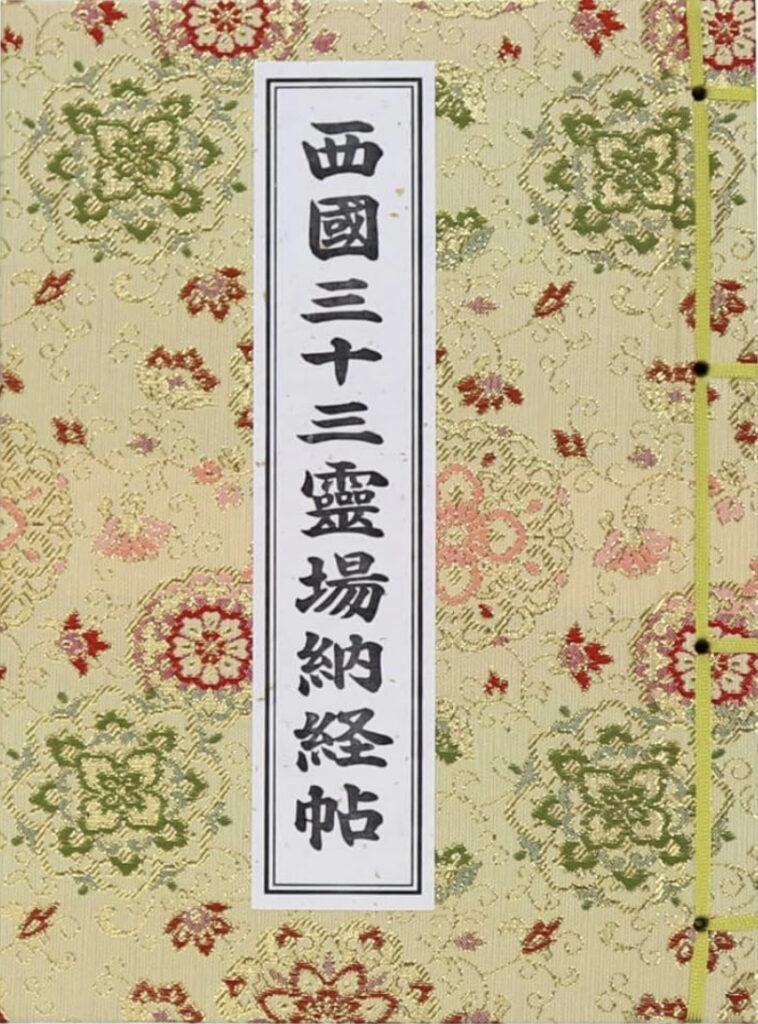
Nokyo-cho — Saigoku Thirty-Three Temples
Gold brocade binding (with vinyl cover) · Lightweight, quick-drying special washi paper that resists ink bleed-through
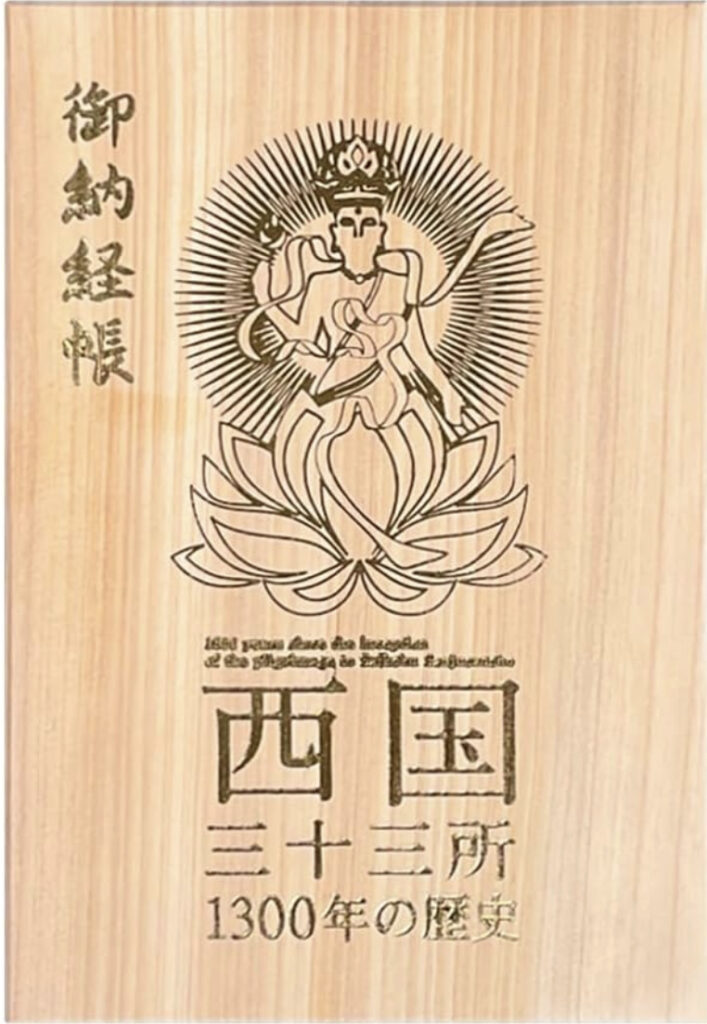
Nokyo-cho — Saigoku Thirty-Three Temples
Hinoki (Japanese cypress) solid wood binding · Handmade washi paper, accordion-fold double-layer style
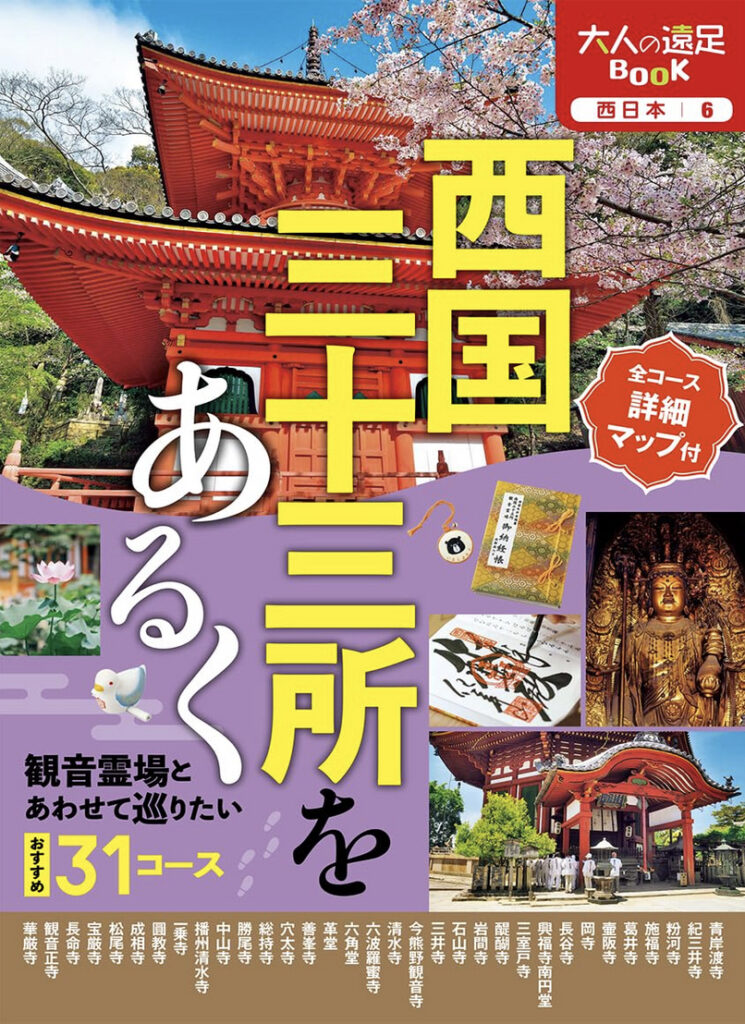
Walking the Saigoku Thirty-Three Temples
Otona no Ensoku BOOK
A guidebook for enjoying the pilgrimage and the pleasures of dedicated walking
Introduction & Overview
- What Is Esoteric Buddhism? Tendai and Shingon Explained in Simple Terms
- The Deep Connection Between the Saigoku Pilgrimage and Esoteric Buddhism | Why We Journey to Kannon Bodhisattva
Buddhas & Bodhisattvas
- What Are the 33 Forms of Kannon Bodhisattva? A Complete Guide to the Principal Images of the Saigoku Pilgrimage
- What Is the Difference Between Nyorai, Bosatsu, Myōō, and Ten? An Illustrated Guide to the Deities of Esoteric Buddhism
Practices & Culture
- The Meaning of the Heart Sutra Explained Simply | The World of the Sutras Chanted on Pilgrimage
- What Are Goshuin, Omiei, and Sange? The Esoteric Buddhist Culture You Encounter on the Saigoku Pilgrimage
Temples & History
Saigoku Pilgrimage of the Thirty-Three Temples — List of Sacred Sites
- No.12 Syohoji
- No.13 Ishiyamadera
- No.14 Miidera
- No.15 Imakumano-Knnonji
- No.16 Kiyomizudera
- No.17 Rokuharamitsuji
- No.18 Rokkakudo-Chohoji
- No.19 Kaudo-Gyoganji
- No.20 Yoshiminedera
- No.21 Anaoji
- No.22 Sojiji
- No.23 Katsuoji
- No.24 Nakayamadera
- No.25 Bansyu-Kiyomizudera
- No.26 Ichijyoji
- No.27 Engyoji
- No.28 Nariaiji
- No.29 Matsunoodera
- No.30 Chikubusima-Hogonji
- No.31 Chomeiji
- No.32 Kannonsyoji
- No.33 Kegonji