I began the Saigoku Pilgrimage of the Thirty-Three Temples in 2026. For the sacred sites I have already visited, I have written articles accompanied by my own photographs.
From here, I will have AI write support articles about the sites I have yet to visit — as a way of preparing for the journey ahead.
Tucked into the hillside of Asuka in Nara Prefecture, Okadera Temple (岡寺, Okadera) holds a special place in Japanese religious history as the seventh temple on the Saikoku Thirty-Three Kannon Pilgrimage (西国三十三所, Saikoku Sanjūsansho) and, remarkably, Japan’s very first yakuyoke (厄除け, warding off misfortune) sacred site. For anyone drawn to Japanese culture, ancient history, and the quiet power of pilgrimage, this roughly 1,300-year-old temple offers a rare chance to stand at the heart of ancient Japan.
In this guide, you’ll find everything worth knowing before you visit: the temple’s history, its reputation for warding off bad luck, its principal object of worship, and the practical details of hours, fees, and access.
What Is Okadera Temple? An Ancient Site on an Asuka Hillside
Okadera sits midway up a hill known as Okayama, on the eastern edge of Asuka Village (明日香村, Asuka-mura) in Takaichi District, Nara Prefecture. According to temple tradition, it was founded roughly 1,300 years ago by the priest Gien Sōjō (義淵僧正) at the imperial request of Emperor Tenji (天智天皇).
What makes the location so compelling is its historical weight. The temple stands close to the site of the Asuka Itabuki Palace (飛鳥板蓋宮, Asuka Itabuki-no-miya), once the very center of Asuka-kyō, an early capital of Japan. Students of Japanese history will recognize this ground: the Itabuki Palace is where the Taika Reform (大化の改新, Taika no Kaishin) unfolded—one of the pivotal political events in the nation’s early formation. Today the temple lies just east of the Asuka Village Hall, still the administrative heart of the area.
Walking up the sloping approach through the Asuka countryside, you’ll spot the temple’s mountain gate framed in greenery. There’s a particular feeling that comes over visitors here—the awareness that prayers have been offered on this exact spot for thirteen centuries, in the middle of place names lifted straight from history textbooks. It tends to steady the step and quiet the mind.
Why Is Okadera Called Japan’s First Yakuyoke Sacred Site?
Okadera bears the formal designation of “Saikoku Number Seven, Japan’s First Yakuyoke Sacred Site.” For centuries, worshippers seeking protection from misfortune have traveled here from across the country, making it one of the most storied temples of its kind.
One practical detail that surprises many first-time visitors: applications for yakuyoke blessings are accepted every single day, all year round. While the tradition is most closely tied to those in their yakudoshi (厄年)—the unlucky years believed to invite calamity—the temple welcomes anyone, regardless of age or circumstance, to request a prayer suited to their own wishes.
The range of blessings offered includes:
- Protection from misfortune and traffic safety (厄除交通安全)
- Household safety and harmony (家内安全)
- Recovery from illness (病気平癒)
- Safe childbirth (安産祈願)
- Prosperous business (商売繁盛)
Because the temple accommodates such a broad spectrum of everyday hopes, even visitors who aren’t in an unlucky year can drop by and take part. It’s an easy, welcoming stop for those simply curious to experience the ritual.
Understanding “Kazoedoshi” and “Man-nenrei” Age Counting
If you’re thinking about a yakuyoke blessing, it helps to understand how ages are counted in this tradition. According to Okadera’s own guidance, kazoedoshi (数え年) treats a person as one year old at the moment of birth—the reasoning being that the time spent in the mother’s womb counts as year zero. By contrast, man-nenrei (満年齢), the standard modern method, counts a newborn as zero years old.
Because unlucky years are traditionally calculated using kazoedoshi, it can be tricky to know whether a given year applies to you. The temple’s official website publishes an age reference chart for yakudoshi, and the version for Reiwa 8 (2026) has already been updated. Checking it before your visit is a sensible move.
What Are the Highlights of Okadera Temple?
Beyond its history, Okadera is treasured as a sacred site of the yakuyoke Kannon—the Bodhisattva of compassion invoked here for protection against misfortune. The grounds are wrapped in a solemn, dignified atmosphere that feels entirely fitting for a place set in the ancient land of Asuka.
Take your time wandering the precincts and you’ll find quiet moments unfolding against a backdrop of Asuka’s mountains. For those walking the Saikoku Thirty-Three Kannon Pilgrimage, reaching Okadera marks an important step in the journey from the sixth to the seventh temple. Receiving a goshuin (御朱印, temple seal stamp) here, you can feel the weight of Asuka’s history through your fingertips.
Consider building your visit into a wider day of exploration. The Asuka Itabuki Palace ruins and the historic sites around Asuka Village Hall lie close at hand, and other treasures of ancient Japan—such as the Ishibutai Kofun (石舞台古墳) burial mound and Asukadera Temple (飛鳥寺)—dot the surrounding area within walking distance. Setting aside a full day to stroll the region rewards the effort.
Okadera Temple Hours, Admission, and Access
Here are the essentials to have on hand when planning your trip:
- Address: 806 Oka, Asuka-mura, Takaichi-gun, Nara 634-0111
- Phone: 0744-54-2007
- Hours: 8:30–17:00 (December–February: 8:30–16:30)
- Last entry: 16:50 (December–February: 16:20)
- Admission: Adults (university age and above) ¥500 / High school students ¥400 / Junior high students ¥400
One point deserves careful attention: viewing the interior of the main hall (内拝, naihai). From January through March, the temple conducts ongoing yakuyoke memorial services, and during this period general visitors cannot enter the main hall’s interior. Even from April through December, interior viewing may be temporarily suspended for ceremonies or events. If seeing inside the main hall is important to you, it’s worth confirming in advance via the official website or by phone.
Frequently Asked Questions
- Q: Which number temple is Okadera on the Saikoku Pilgrimage?
- A: Okadera is the seventh temple on the Saikoku Thirty-Three Kannon Pilgrimage. It is also known as Japan’s very first yakuyoke (misfortune-warding) sacred site.
- Q: When can I apply for a yakuyoke blessing?
- A: Applications are accepted every day throughout the year. You don’t need to be in an unlucky year—the temple offers prayers for traffic safety and protection from misfortune, household harmony, recovery from illness, safe childbirth, prosperous business, and more.
- Q: How much is admission?
- A: Adults (university age and above) pay ¥500, while high school and junior high students each pay ¥400.
- Q: Can I view the interior of the main hall at any time?
- A: No. From January through March, interior viewing is closed to general visitors due to ongoing yakuyoke memorial services. Even between April and December, interior viewing may be temporarily suspended for ceremonies or events.
- Q: Where is Okadera located?
- A: It stands at 806 Oka, Asuka-mura, Takaichi-gun, Nara, midway up the Okayama hillside in Asuka. It sits near the Asuka Itabuki Palace—where the Taika Reform took place—and just east of Asuka Village Hall.
Conclusion
As the seventh temple of the Saikoku Thirty-Three Kannon Pilgrimage, Okadera carries some 1,300 years of history—founded, according to tradition, by Gien Sōjō at the imperial wish of Emperor Tenji. Long cherished as Japan’s first yakuyoke sacred site, it has drawn generations of visitors hoping to ward off misfortune.
Even if you’re not in an unlucky year, the temple welcomes prayers for household safety, recovery from illness, and many other wishes, making it an easy and rewarding stop alongside sightseeing in Asuka. Check the visiting hours and the restrictions on interior viewing before you go, then let yourself enjoy a few peaceful moments at the heart of ancient Japan.
References
About Goshuin Stamp Books and Related Items
I usually collect the pre-written kakioki type of goshuin stamps, but for the Thirty-Three Temple Pilgrimage I wanted stamps written directly into a dedicated book, so I purchased one especially for the journey.
Goshuincho stamp books are also sold at the temples of the Saigoku Pilgrimage. However, the accordion-fold (jyabara) style can cause ink to bleed through to the other side. For that reason, I would recommend a bound style rather than accordion-fold — ideally one where each page is separated by an interleaving sheet of paper.
Nokyo-cho — Saigoku Thirty-Three Temples
Gold brocade binding (with vinyl cover) · Lightweight, quick-drying special washi paper that resists ink bleed-through
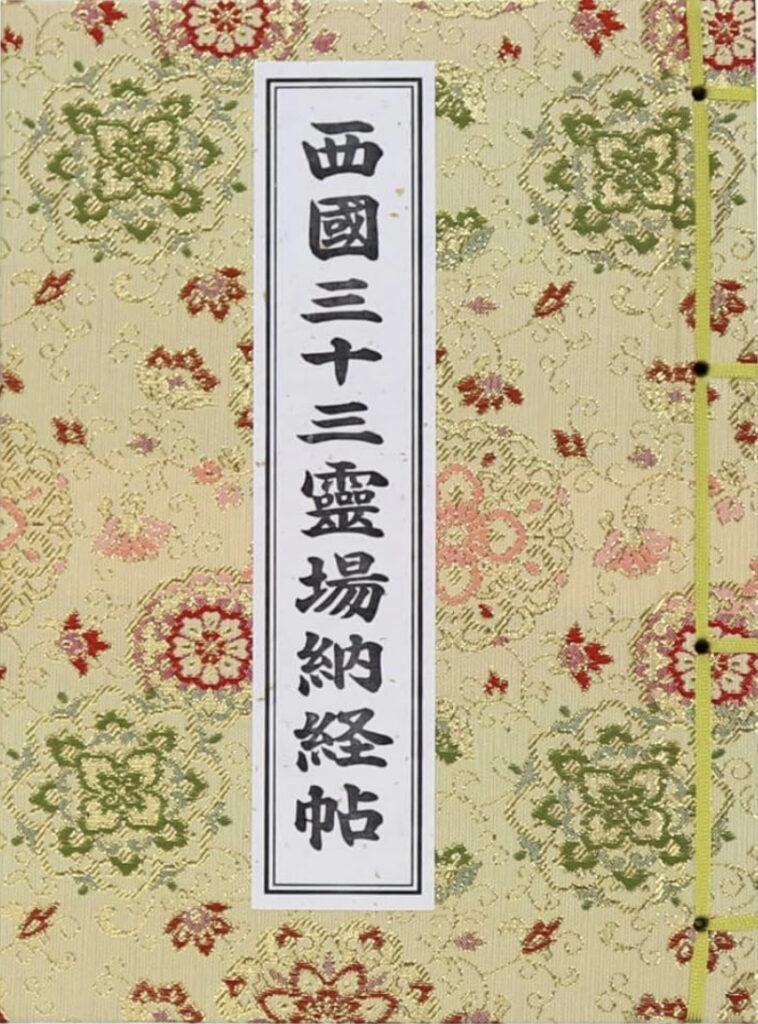
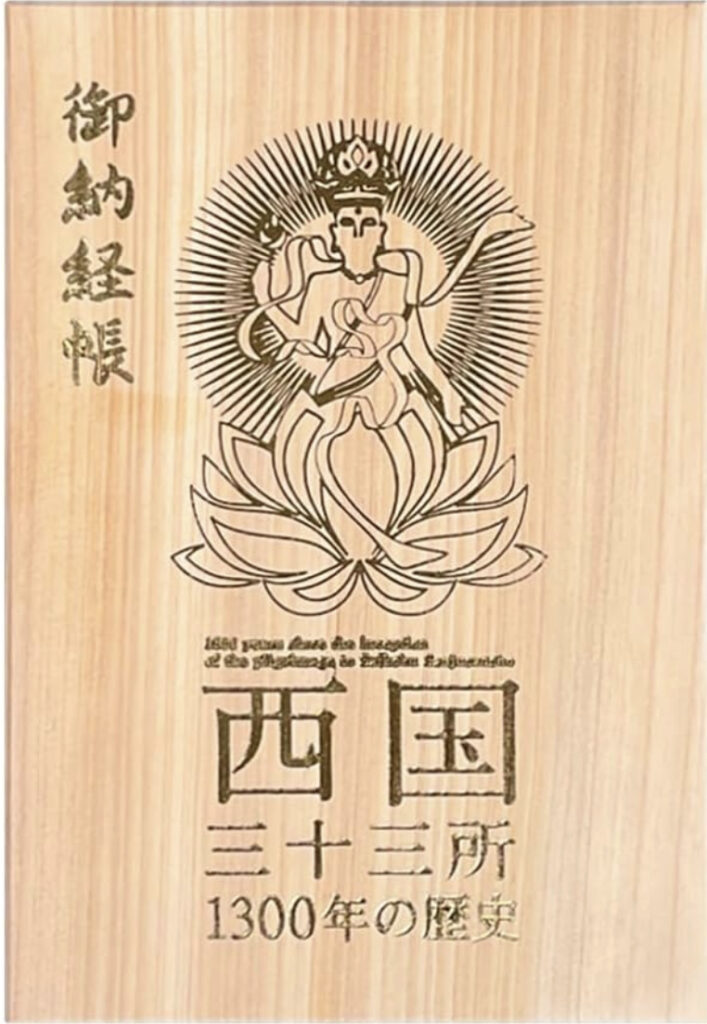
Nokyo-cho — Saigoku Thirty-Three Temples
Hinoki (Japanese cypress) solid wood binding · Handmade washi paper, accordion-fold double-layer style
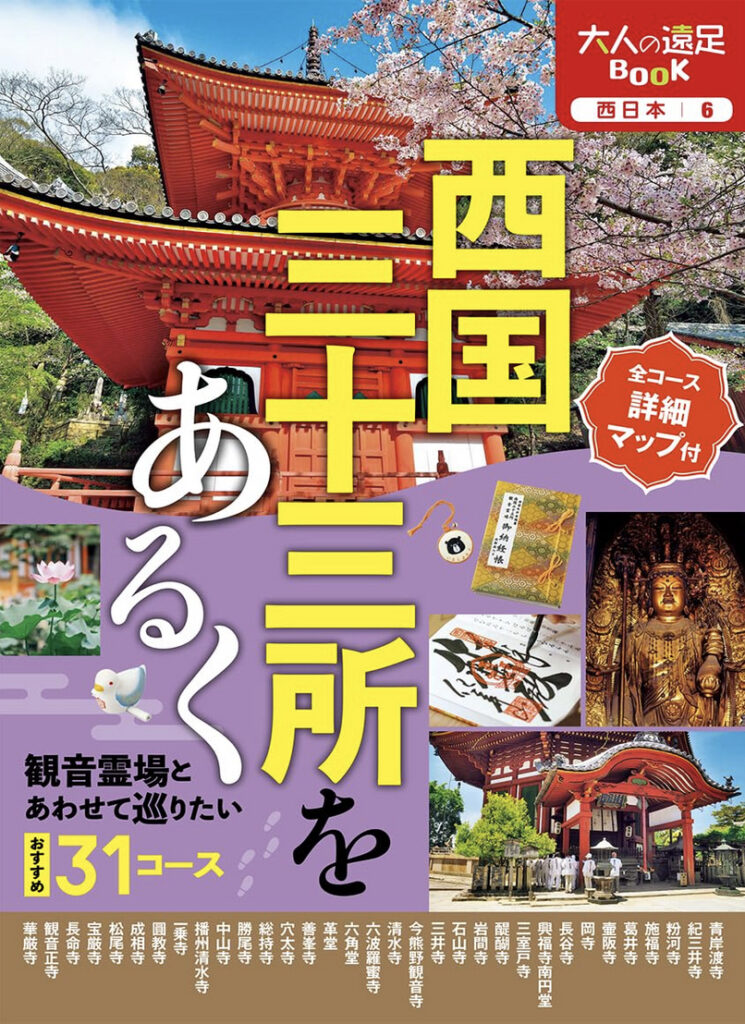
Walking the Saigoku Thirty-Three Temples
Otona no Ensoku BOOK
A guidebook for enjoying the pilgrimage and the pleasures of dedicated walking
Introduction & Overview
- What Is Esoteric Buddhism? Tendai and Shingon Explained in Simple Terms
- The Deep Connection Between the Saigoku Pilgrimage and Esoteric Buddhism | Why We Journey to Kannon Bodhisattva
Buddhas & Bodhisattvas
- What Are the 33 Forms of Kannon Bodhisattva? A Complete Guide to the Principal Images of the Saigoku Pilgrimage
- What Is the Difference Between Nyorai, Bosatsu, Myōō, and Ten? An Illustrated Guide to the Deities of Esoteric Buddhism
Practices & Culture
- The Meaning of the Heart Sutra Explained Simply | The World of the Sutras Chanted on Pilgrimage
- What Are Goshuin, Omiei, and Sange? The Esoteric Buddhist Culture You Encounter on the Saigoku Pilgrimage
Temples & History
Saigoku Pilgrimage of the Thirty-Three Temples — List of Sacred Sites
- No.12 Syohoji
- No.13 Ishiyamadera
- No.14 Miidera
- No.15 Imakumano-Knnonji
- No.16 Kiyomizudera
- No.17 Rokuharamitsuji
- No.18 Rokkakudo-Chohoji
- No.19 Kaudo-Gyoganji
- No.20 Yoshiminedera
- No.21 Anaoji
- No.22 Sojiji
- No.23 Katsuoji
- No.24 Nakayamadera
- No.25 Bansyu-Kiyomizudera
- No.26 Ichijyoji
- No.27 Engyoji
- No.28 Nariaiji
- No.29 Matsunoodera
- No.30 Chikubusima-Hogonji
- No.31 Chomeiji
- No.32 Kannonsyoji
- No.33 Kegonji