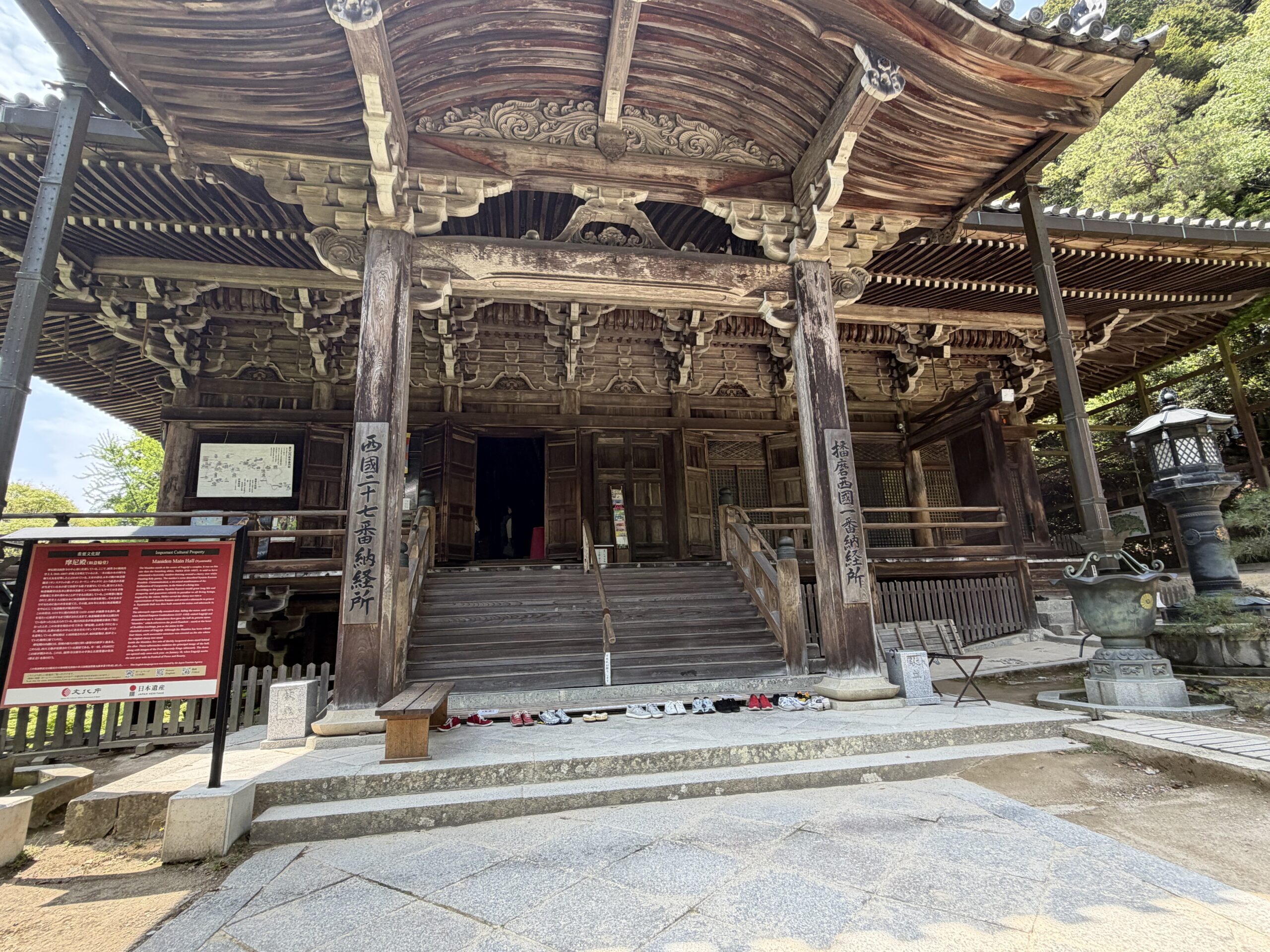
I began the Saigoku Pilgrimage in 2026.
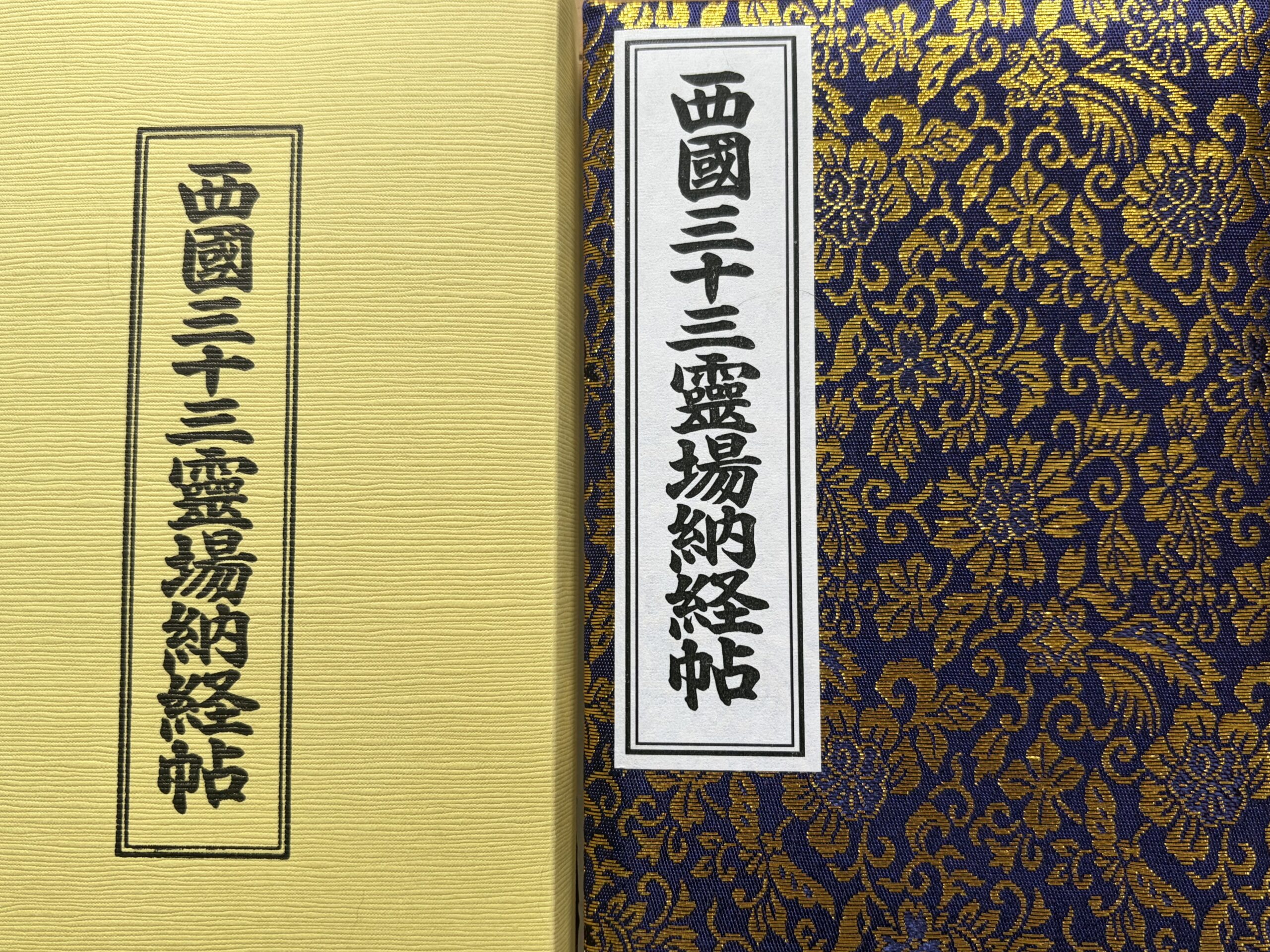
It all started with the Noh chant Chikubushima. I had always wanted to visit the island someday. And then I realized — Rokuhara Mitsuji in Kyoto, which I visited last year; Rokkakudo, which I have been to several times; and Sōjiji, my local temple — all of these are sacred sites on the Saigoku Pilgrimage. Some can be reached by train; others are better visited by car. I thought: better to go while I can still drive. I decided to visit in whatever order I liked, without worrying about the prescribed sequence or dress code. I bought a dedicated 納経帳 (pilgrimage stamp book) at Sōjiji and set out on my journey.
The following is an AI-written guide to the Saigoku Pilgrimage for those who are new to it.
Many people have heard of the “Saigoku Pilgrimage” but may not know exactly what it involves. This ancient pilgrimage route — said to be the oldest in Japan — has been gaining renewed popularity in recent years as a journey for collecting goshuin (temple stamps), sightseeing, or simply seeking peace of mind. In this article, we explain the history, how to visit, and what to prepare for those thinking of starting the Saigoku Pilgrimage.
What Is the Saigoku Pilgrimage?
The Saigoku Sanjūsan-kasho (西国三十三箇所) is a circuit of 33 sacred sites (fudasho) dedicated to Kannon (the Bodhisattva of Compassion), spread across two prefectures and five others in the Kinki region — Osaka, Kyoto, Hyogo, Shiga, Nara, Wakayama, and Gifu. Completing all 33 sites is called kechigan (結願), meaning the fulfillment of a vow.
The number 33 comes from the Buddhist teaching that Kannon transforms into 33 different forms to save all beings. With roughly 1,300 years of history, this pilgrimage is considered the very origin of Japan’s pilgrimage culture.
History of the Saigoku Pilgrimage
The origins of the pilgrimage are traditionally traced to 718 CE (Yōrō 2). According to legend, the monk Tokudō Shōnin of Hasedera Temple in Yamato Province fell gravely ill and entered a state of near-death, during which he received a divine message from the King of Hell to spread the merit of visiting 33 Kannon pilgrimage sites.
The pilgrimage was later revived by Emperor Kazan during the Heian period and organized into its present form. By the Edo period, it had become widely popular among ordinary people, who traveled the route combining religious devotion with the pleasures of travel.
How to Do the Saigoku Pilgrimage
There are no fixed rules — you can visit at your own pace and in your own way. Here are the main approaches.
Forward or Reverse Order
Visiting the sites in order from Site 1 is called jun-uchi (順打ち); visiting in reverse from Site 33 is called gyaku-uchi (逆打ち). Going in order is the most common approach, but feel free to start from whatever site is most convenient for you.
Getting Around
- By car: The most efficient option and ideal for beginners. Many sites have dedicated parking.
- By public transport: Trains and buses are available to many sites — perfect for those who enjoy the journey itself.
- On foot: The traditional pilgrimage style. Demanding in time and energy, but deeply rewarding.
How Long Does It Take?
You don’t need to complete the pilgrimage all at once. Most people visit a few sites at a time on weekends or during holidays. Many pilgrims take several years to complete all 33 — and that gradual progression is part of the joy.
What to Prepare
If you plan to undertake the pilgrimage seriously, dedicated items can make the experience more meaningful. You don’t need everything at the start, but the following are useful:
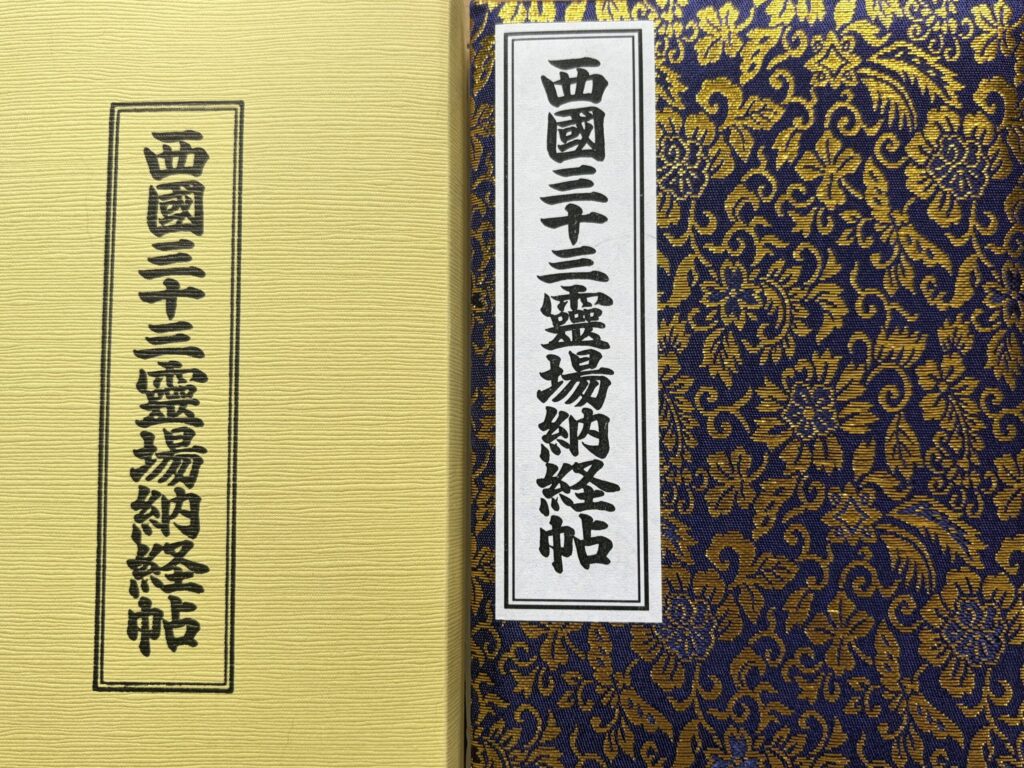
- 納経帳 (nokyo-cho) — Stamp book: The booklet in which you collect the official goshuin stamp and calligraphy at each site. It becomes a treasured record of your journey.
- 輪袈裟 (wa-gesa) — Simplified stole: A short stole worn around the neck, considered formal attire for visiting the sites.
- 納札 (osame-fuda) — Votive slip: A slip of paper inscribed with your name and address, offered at the main hall of each site as proof of your visit.
- 数珠 (juzu) — Prayer beads: Held in hand during worship.
- Candles and incense: Used for offering light and fragrance at each site.
These items can be purchased at the shops of Site 1, Seigantoji Temple, or at Buddhist goods stores. Many pilgrims simply start with a stamp book — begin however feels right for you.
Basic Etiquette at Each Site
Upon arriving at a site, the general order of worship is as follows:
- Bow at the main gate (sanmon) before entering the grounds
- Purify your hands and mouth at the water basin (temizuya)
- Light a candle and incense at the main hall
- Offer your osame-fuda, place a coin offering, and recite a sutra or simply bow in prayer
- Receive your goshuin stamp at the stamp office (nokyo-jo)
Don’t overthink it. What matters most is approaching Kannon with a sincere and open heart.
Summary
The Saigoku Pilgrimage is Japan’s oldest pilgrimage route, with 1,300 years of history. It is both a journey of faith and a wonderful opportunity to encounter historic temples, beautiful nature, and regional culture. There are no strict rules — you are free to visit at your own pace and in your own order.
Whether you’re drawn by the goshuin, a desire for reflection, or simply the love of travel, everyone has their own reason for beginning. Why not pick up a stamp book and start at the nearest site? Once you take that first step, a journey full of meaning awaits.
References
- Saigoku Sanjūsan-kasho Official Website
- Agency for Cultural Affairs — Japan Heritage: Saigoku Sanjūsan-kasho
- Wakayama Tourism Federation Official Site
About Goshuin Stamp Books and Related Items
I usually collect the pre-written kakioki type of goshuin stamps, but for the Thirty-Three Temple Pilgrimage I wanted stamps written directly into a dedicated book, so I purchased one especially for the journey.
Goshuincho stamp books are also sold at the temples of the Saigoku Pilgrimage. However, the accordion-fold (jyabara) style can cause ink to bleed through to the other side. For that reason, I would recommend a bound style rather than accordion-fold — ideally one where each page is separated by an interleaving sheet of paper.
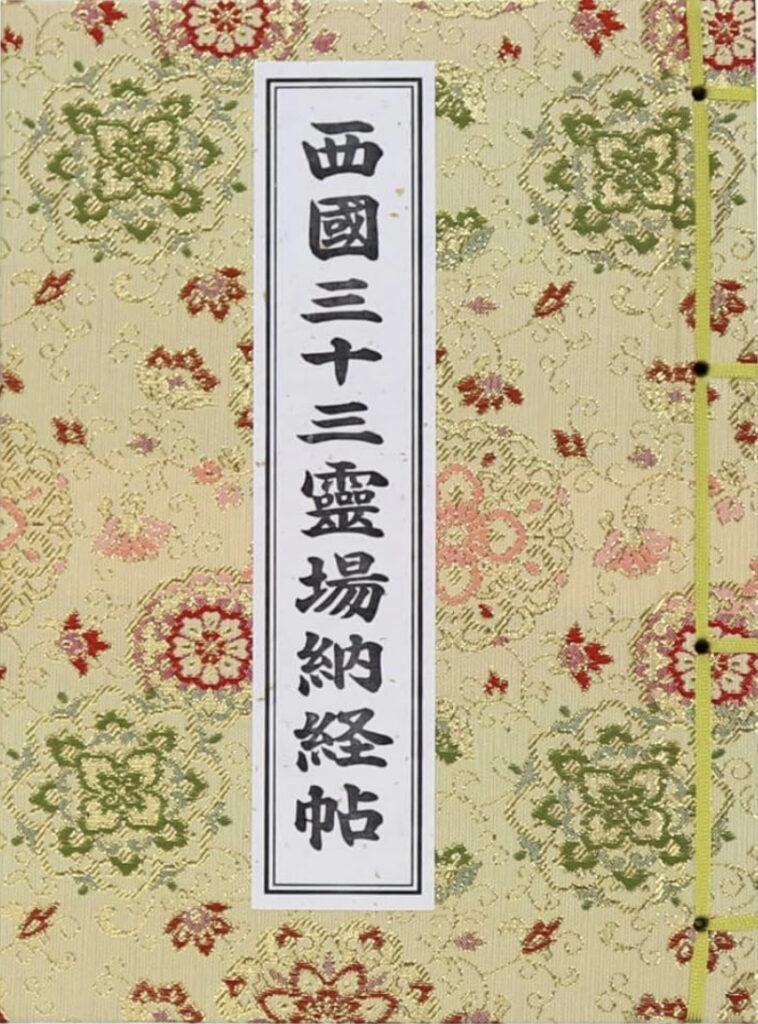
Nokyo-cho — Saigoku Thirty-Three Temples
Gold brocade binding (with vinyl cover) · Lightweight, quick-drying special washi paper that resists ink bleed-through
Nokyo-cho — Saigoku Thirty-Three Temples
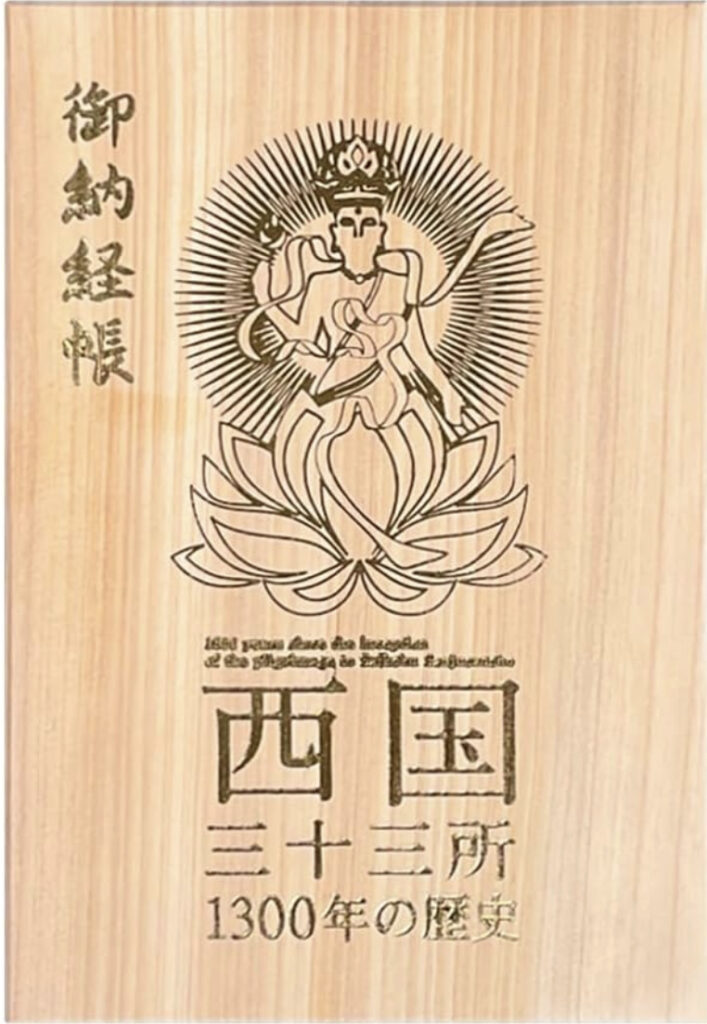
Hinoki (Japanese cypress) solid wood binding · Handmade washi paper, accordion-fold double-layer style
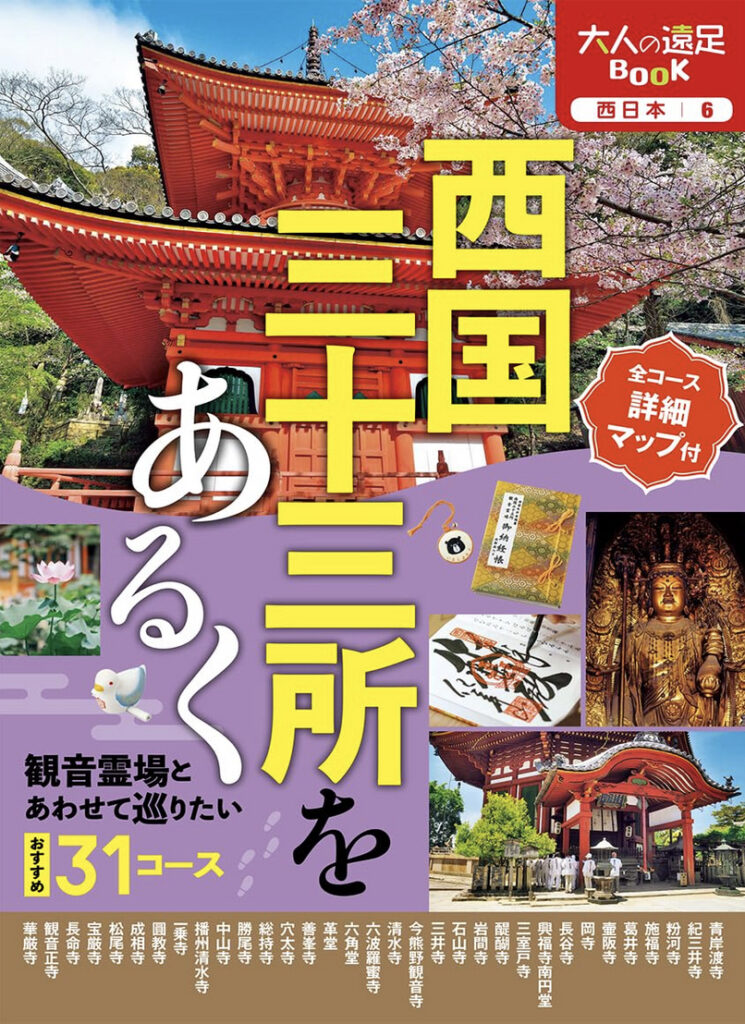
Walking the Saigoku Thirty-Three Temples
Otona no Ensoku BOOK
A guidebook for enjoying the pilgrimage and the pleasures of dedicated walking
Introduction & Overview
- What Is Esoteric Buddhism? Tendai and Shingon Explained in Simple Terms
- The Deep Connection Between the Saigoku Pilgrimage and Esoteric Buddhism | Why We Journey to Kannon Bodhisattva
Buddhas & Bodhisattvas
- What Are the 33 Forms of Kannon Bodhisattva? A Complete Guide to the Principal Images of the Saigoku Pilgrimage
- What Is the Difference Between Nyorai, Bosatsu, Myōō, and Ten? An Illustrated Guide to the Deities of Esoteric Buddhism
Practices & Culture
- The Meaning of the Heart Sutra Explained Simply | The World of the Sutras Chanted on Pilgrimage
- What Are Goshuin, Omiei, and Sange? The Esoteric Buddhist Culture You Encounter on the Saigoku Pilgrimage
Temples & History
Saigoku Pilgrimage of the Thirty-Three Temples — List of Sacred Sites
- No.12 Syohoji
- No.13 Ishiyamadera
- No.14 Miidera
- No.15 Imakumano-Knnonji
- No.16 Kiyomizudera
- No.17 Rokuharamitsuji
- No.18 Rokkakudo-Chohoji
- No.19 Kaudo-Gyoganji
- No.20 Yoshiminedera
- No.21 Anaoji
- No.22 Sojiji
- No.23 Katsuoji
- No.24 Nakayamadera
- No.25 Bansyu-Kiyomizudera
- No.26 Ichijyoji
- No.27 Engyoji
- No.28 Nariaiji
- No.29 Matsunoodera
- No.30 Chikubusima-Hogonji
- No.31 Chomeiji
- No.32 Kannonsyoji
- No.33 Kegonji